

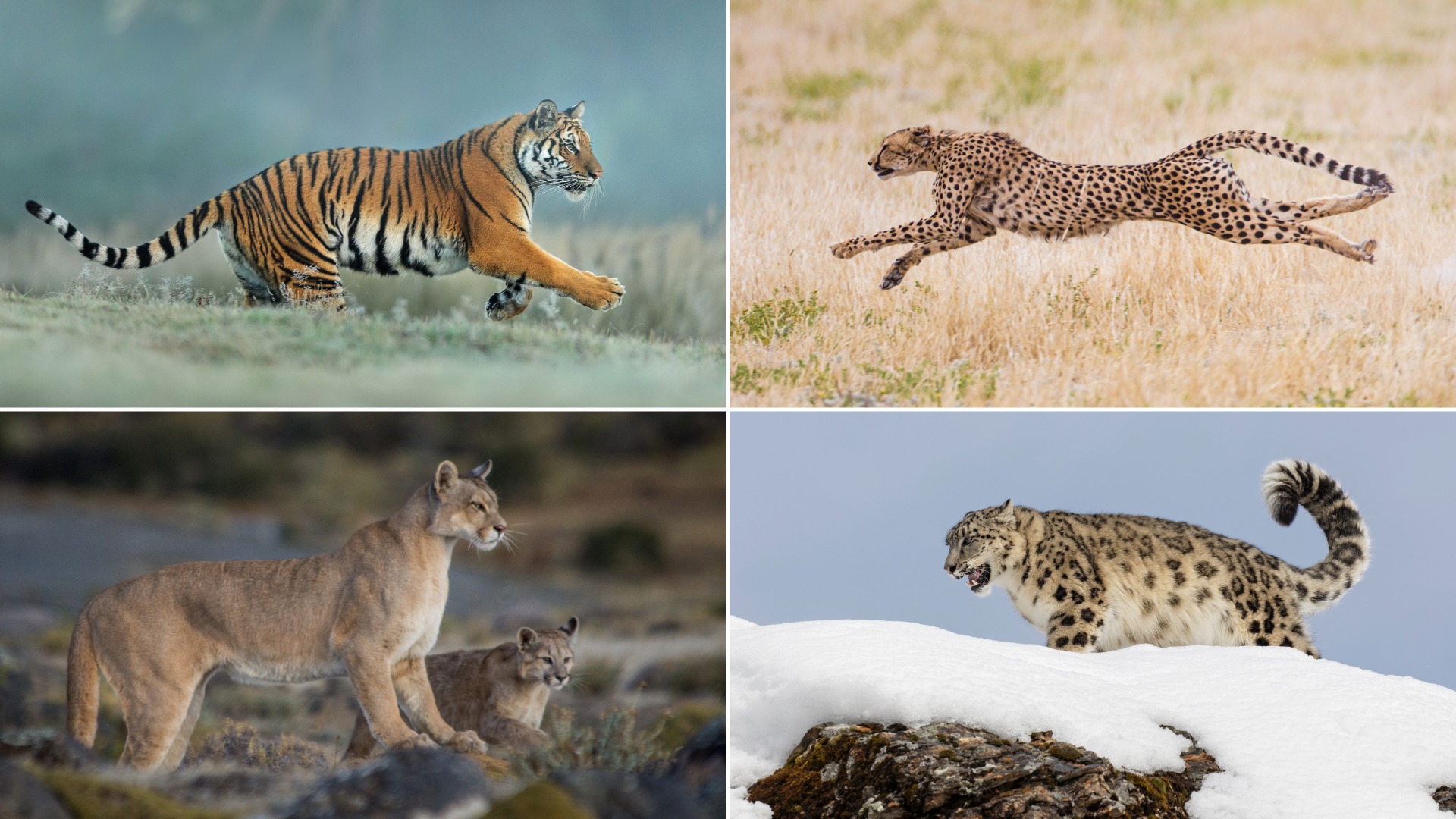
Growing up, there were always cats in the house. The domestic kind, of course. Those seemingly mild-mannered creatures curled up in your lap that can suddenly morph into wild things that attack your hand or inexplicably zoom around the house.
Combine that with National Geographic television specials and countless episodes of Mutual of Omaha’s Animal Kingdom, and by the time I was old enough to travel the world on my own, I was obsessed with seeing the super-sized versions of my household pets on their home turf.
Here are some of those stories…
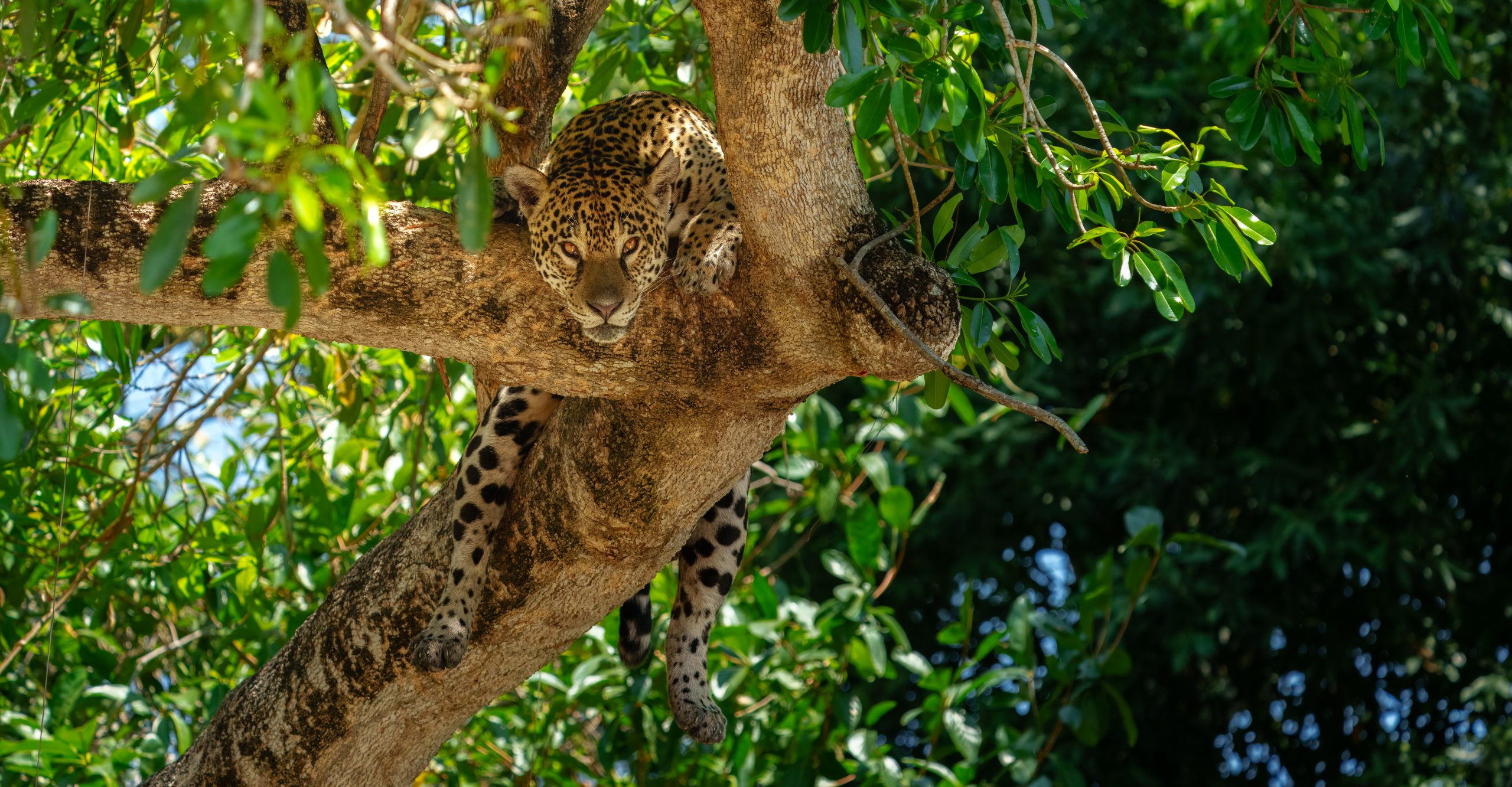
Female jaguar known as Medrosa. Photographed by Nat Hab Staff © Megan Brief on Safari in Brazil’s Pantanal.
Jaguars: Brazil
The biggest big cat in the Americas ranges all the way from the Chiricahua Mountains of southwest Arizona to the rainforest of northern Argentina near Iguazu Falls. But the absolute best place to see them in the wild is the Pantanal wetlands of Brazil.
With the remote town of Porto Jofre as my base, I spent three days exploring the waterways of Pantanal Matogrossense National Park in a small motorboat with half a dozen other big cat enthusiasts.
I wasn’t sure what to expect starting out from Porto Jofre on the first morning. But the brawny big cats did not disappoint. Over those three days, we spotted 11 jaguars, including a mother leading her two cubs across the Cuiabá River right in front of our boat, and a lone male stalking and leaping onto a caiman crocodile.
Yet the encounter that left the most lasting impression was coming face to face with a young male jaguar around 10 yards away on the opposite side of a clump of lily pads. Nothing he couldn’t leap in a single bound. Camera raised as I sat in the bow, the cat was looking straight at me.
It was a rare moment, being so close to an animal that could easily rip your face off, that wouldn’t think twice about having you for dinner. A rush of fear mixed with marvel that something could be so beautiful and dangerous at the same time.
As the title declares, Nat Hab’s Jaguars & Wildlife of Brazil’s Pantanal adventure takes you deep into the homeland of the western hemisphere’s most fearsome feline.
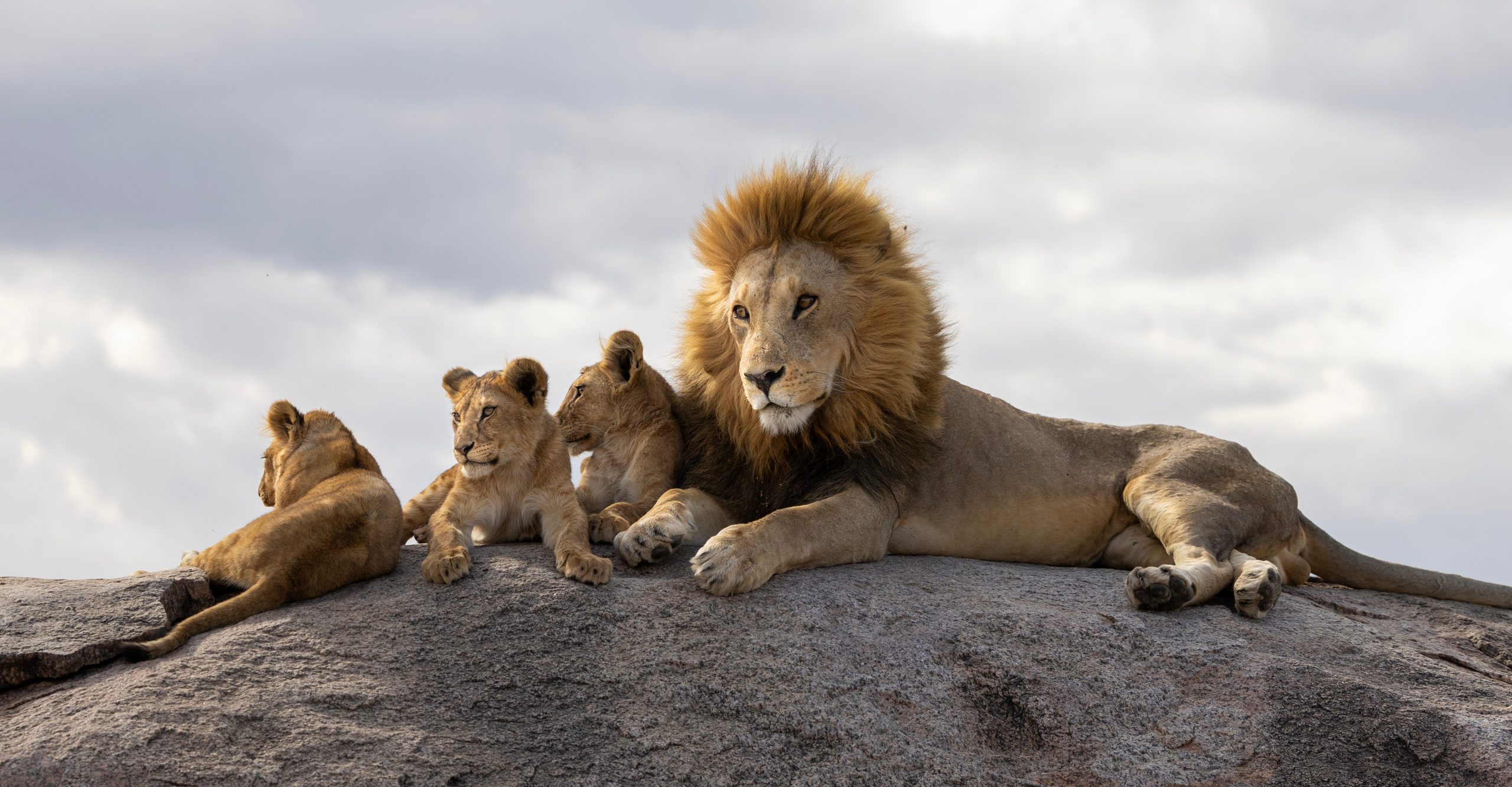
Lions photographed by Nat Hab Staff © Court Whelan on Nat Hab’s trip, Pride of East Africa: Kenya & Tanzania.
Lions: Tanzania
The king of all cats roams at least 20 African countries and India’s Thar Desert. I’ve had great lion encounters in national parks up and down the continent. But the one that stands out happened in Ngorongoro Crater in northern Tanzania.
With close-up elephant, buffalo, zebra, flamingo and wildebeest sightings, our afternoon game drive was already incredible. But it kicked into hyperdrive when we came across three lionesses and their cubs along the edge of Lake Magadi in the crater bottom.
Crouching behind reeds, the lionesses were in hunting mode, their eyes fixed on a small herd of zebra grazing the lakeside grass. And suddenly they sprang. The zebra quickly retreated into the lake, I suppose thinking the lions wouldn’t follow them. But the water was so shallow it didn’t even faze the cats. By the time their lightning attack was finished, each of the lionesses had taken down a fully grown zebra to feed themselves and their cubs.
That wasn’t the end of our thrills that day. Around the other side of Lake Magadi, our Land Cruiser was charged by one of the rare black rhinos that call Ngorongoro home. It came within a few feet of my side of the open-sided truck before we picked up enough speed to pull away.
Natural Habitat Adventures offers several ways to discover a crater often called the eighth wonder of the natural world.
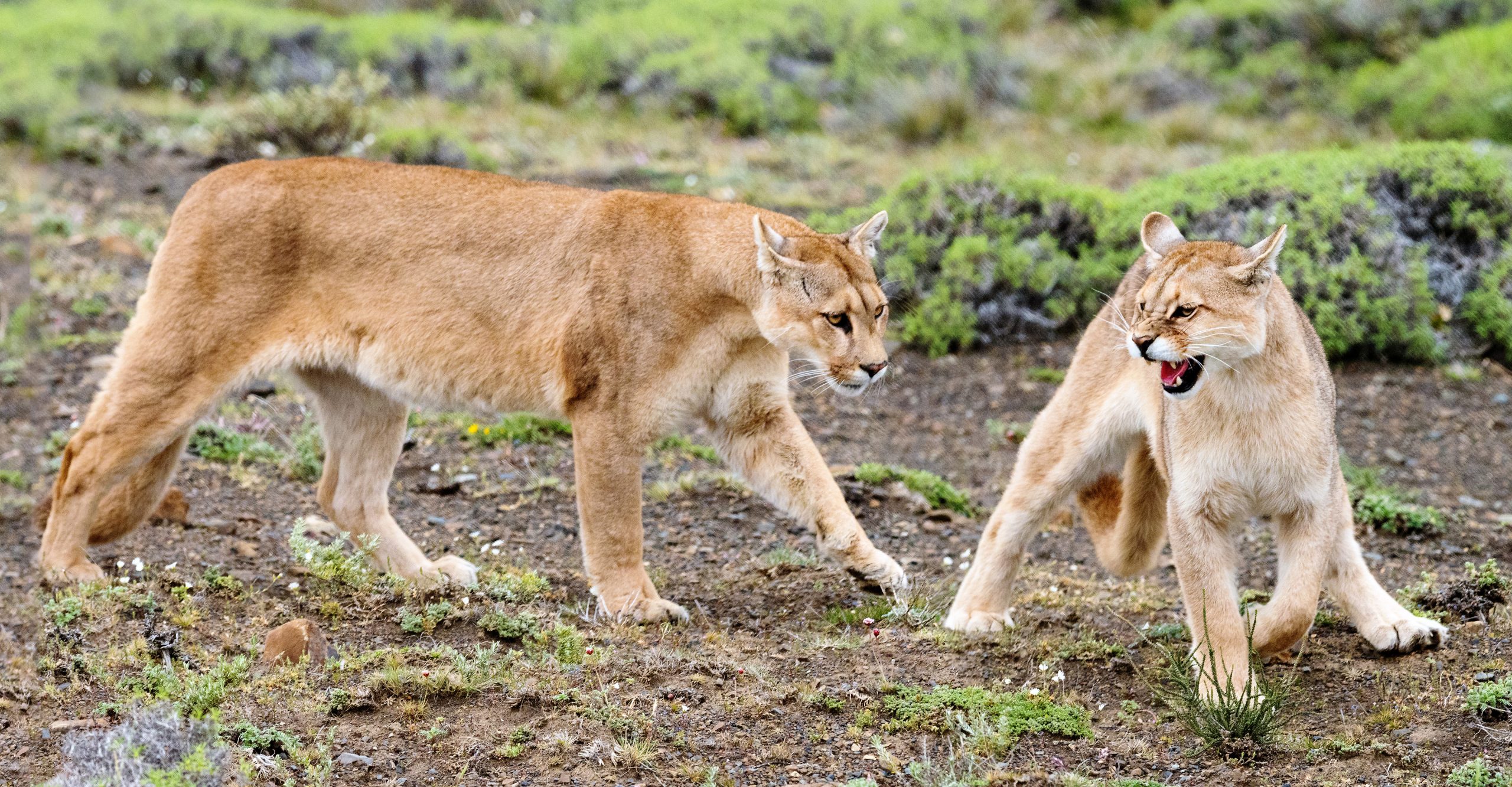
Pumas photographed by Nat Hab Expedition Leader © Cassiano “Zapa” Zaparoli.
Pumas: Chile
In all the time I’ve lived in the western United States, I’ve only ever seen one mountain lion in the wild. I was around five years old, and my family was visiting an aunt and uncle who lived in the mountains of southern California. My dad woke me up at daybreak and asked me to look outside the bedroom window: right outside was a cougar slinking past our cabin.
On a visit to Torres del Paine National Park in the Patagonia region of southern Chile, I had high hopes of spotting the South American version. They’re subspecies of the same big cat—Puma concolor concolor in South America and Puma concolor couguar in North America. But the Chilean version has a distinctive appearance, a thicker coat that protects them from the harsh weather in the Andes and Patagonia.
With a wildlife guide leading the way, we trekked the Hunter’s Trail on the south side of the national park. The “hunter” in this case being the puma. We saw plenty of animals, herds of guanaco (the puma’s favorite food), flightless Darwin’s rhea birds, Andean condors riding the updrafts beside the towering granite peaks, and even a culpeo (Andean fox).
And we found signs that big cats had recently traveled the same route: tracks, scat and a partially consumed guanaco. However, no puma sightings on that particular day.
Since then, Torres del Paine has introduced puma tracking with guides who follow their locations day to day and can almost guarantee a sighting. Needless to say, that’s on my current travel bucketlist.
Nat Hab’s Wild Patagonia journey offers a rare chance to see impressive peaks, glaciers, and pumas all in one place.
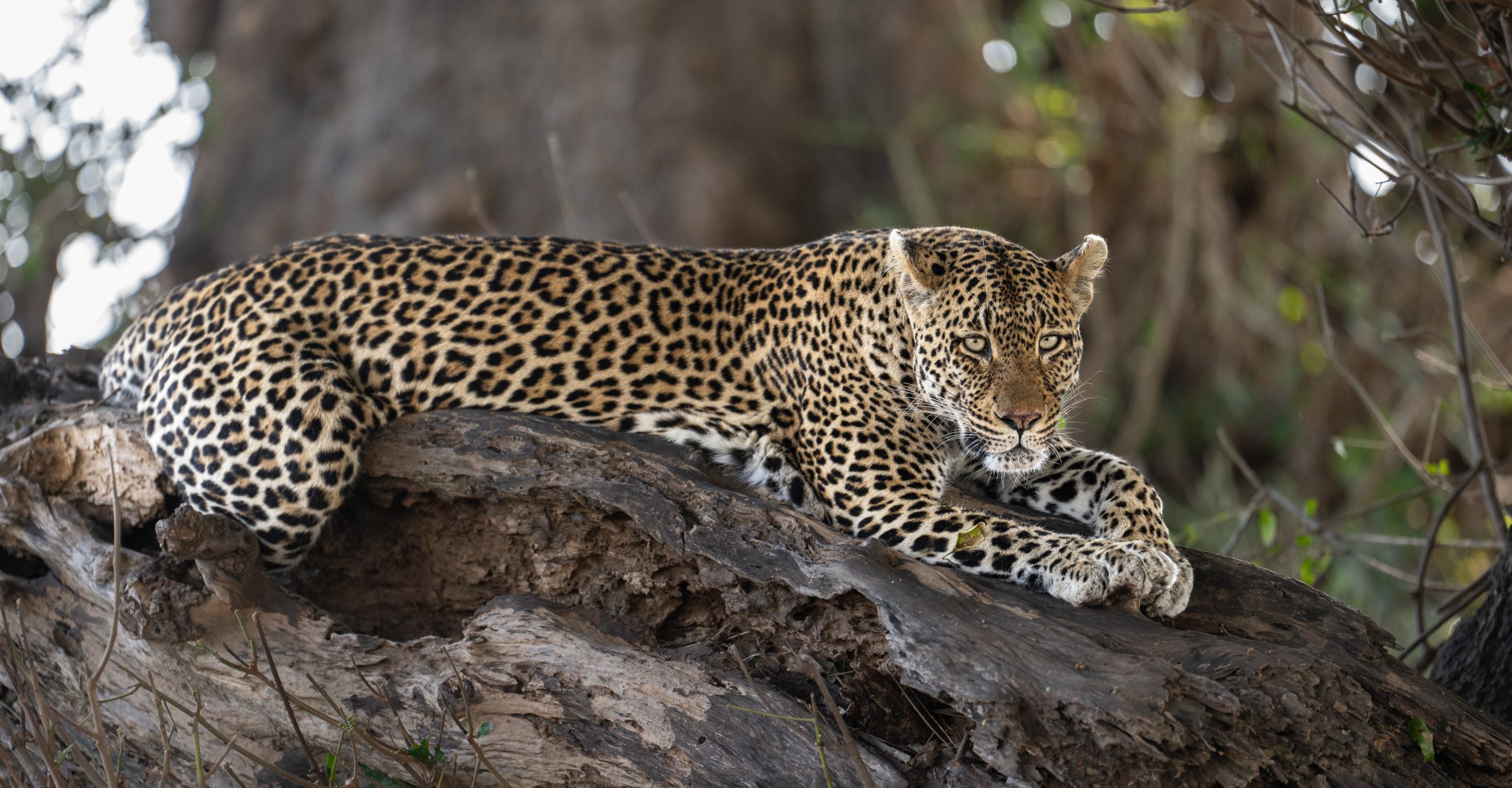
Leopard © Richard de Gouveia.
Leopards: Kenya
Cougar sightings are famously common in Los Angeles (including a cat called P-22 that featured in a National Geographic photo with the Hollywood sign as a backdrop). But it’s actually leopards that seem to adapt best to a wide variety of landscapes, from Indian cities to the African savanna.
I spotted them (pun intended) in the Serengeti and Zambia’s South Luangwa National Park. But far and away my most dramatic leopard encounter came on the Laikipia Plateau of north central Kenya on the traditional lands of the Samburu people.
On a daytime game drive, my Samburu guide noticed an antelope carcass hanging over a tree branch—a traditional leopard strategy for saving their food from other carnivores. He suggested we return that evening and see if the big cat would return for a meal.
We waited in the dark, no one speaking a word as we sat in the Land Cruiser and waited. Finally, there was movement in the bush beside the tree—a magnificent female leopard checking us out. She never felt confident enough to approach her kill, but we were able to watch her for at least half an hour as she circled our vehicle and the tree.
We returned the following night and waited again. The antelope was still hanging over the branch, but the leopard didn’t appear. A gut feeling made our guide move the truck right next to the tree—and out popped a leopard head! Not more than 10 feet away. She’d been there the whole time.
The Laikipia region is easily included in an Exclusive Kenya – Custom Safari that includes a chance to see leopards, black rhinos, sitatunga antelopes and other rare species.
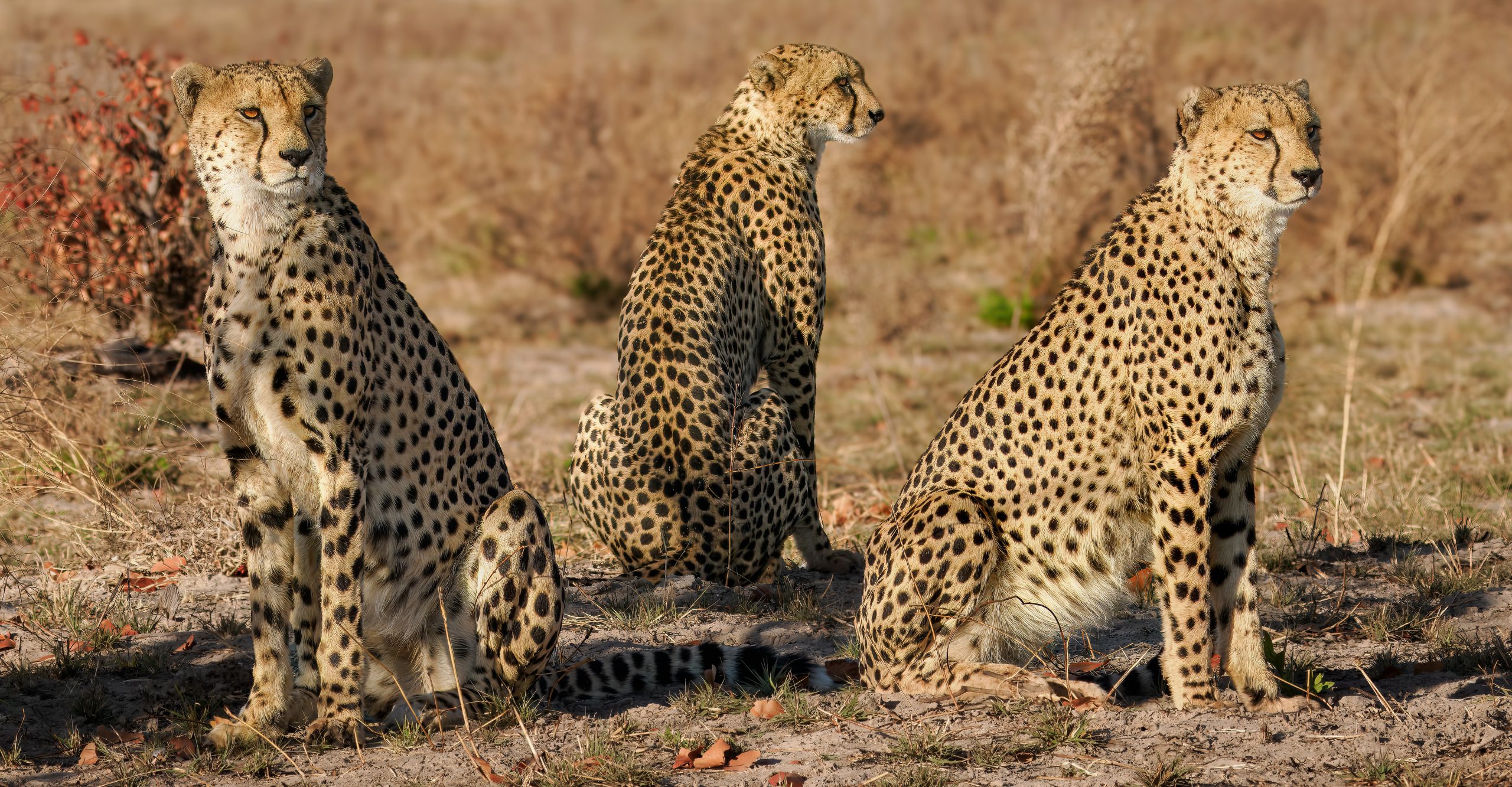
Cheetahs © Nat Hab Guest Helene Hoffman.
Cheetahs: South Africa
The world’s fastest land animal is the most threatened of the big cats in Africa. The wide open spaces of the Serengeti Plains are probably the best place to see them in the wild. On the other hand, my only encounter was in South Africa’s Kruger National Park—three cheetahs walking down the middle of a dirt road—on my very first African safari.
You can get up close and personal with cheetahs at several places that rescue orphaned or injured cats and then rehabilitate them for release back into the wild. These include the renowned International Research & Education Center in Otjiwarongo, northern Namibia and Ashia’s Cheetah Center near Cape Town, South Africa.
Tracking cheetahs on foot is one of the many adventures that feature in Nat Hab’s Family South Africa — Custom Safari.
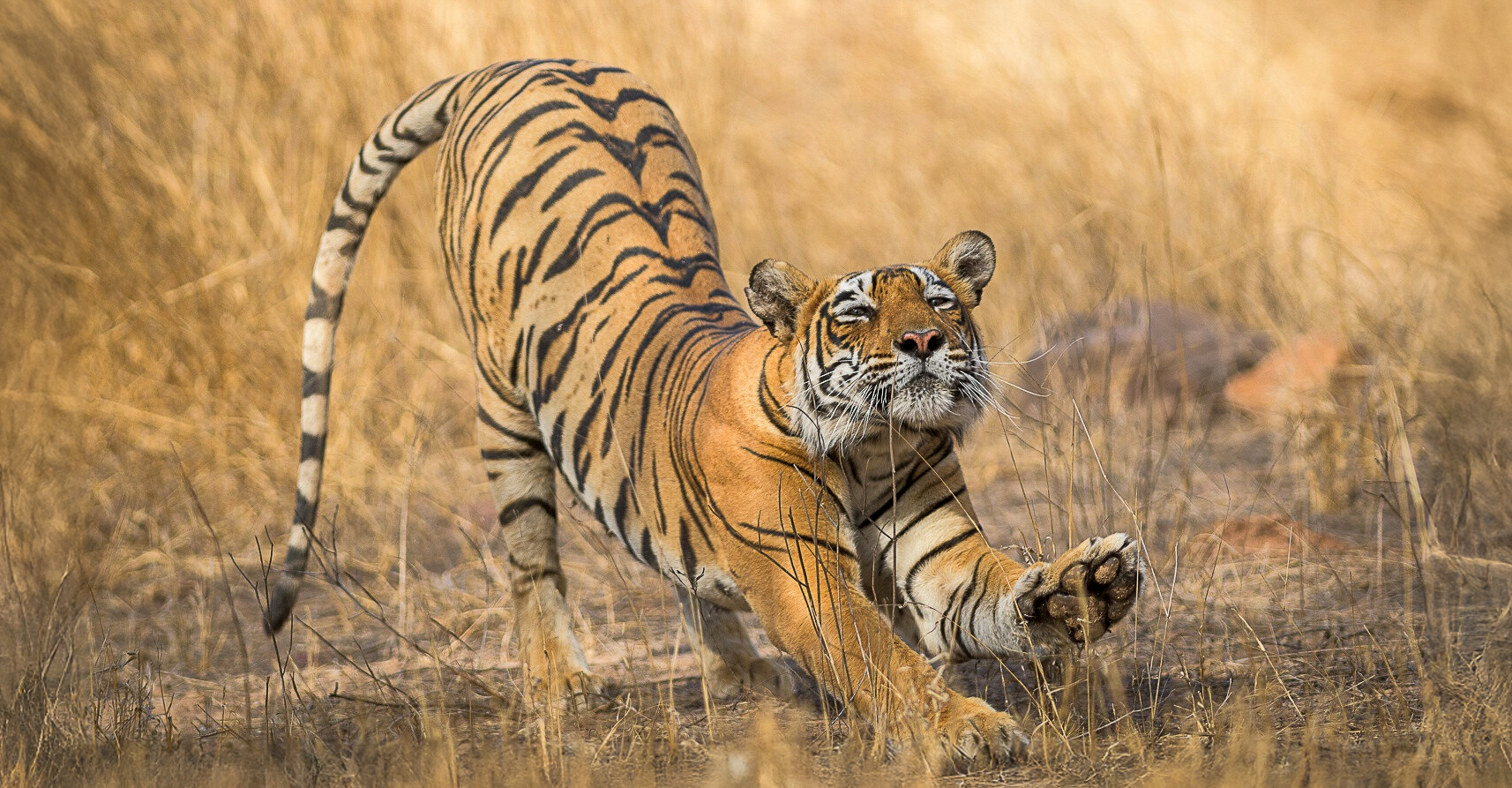
Bengal tiger © Nat Hab Expedition Leader Aditya Panda.
Tigers & Snow Leopards: Asia’s Big Cats
Truth be told, I’ve never seen tigers or snow leopards in the wild. But that doesn’t mean that I won’t at some future time!
Tigers were once found all the way from the Sea of Japan to the Black Sea. Nowadays, their range is restricted to less than a dozen Asian nations. Wildlife experts estimate there are probably more tigers in captivity now than in the wild, but the odds of seeing free range cats are better than they were a few decades ago.
Around two-thirds of the wild population lives in India, which has made tremendous strides to ensure their continued existence by curbing poaching and other human interactions. In fact, the Indian tiger population has more than doubled since the turn of the 21st century to around 3,500 individuals.
Snow leopards might be the strangest (and most beautiful) of all the big cats. They are high altitude animals that relish steep rocky locations with patches of snow where they can blend right into the landscape while hunting the wild mountain goats and sheep that comprise the bulk of their diet.
Although they are found as far north as Mongolia and Siberia, their renowned range is the Himalayas, in particular the remote Ladakh region of northwest India. With an estimated population that could be as high as 600 animals—Asia’s highest density—Ladakh has become the epicenter of snow leopard trekking.
Anyone who takes on the challenge should be ready for steady hiking at elevations between 9,000 and 15,000 feet, where the cats dwell in summer.
Nat Hab offers two different snow leopard adventures in high-altitude Ladakh and four different ways to see Bengal tigers in lowland India.
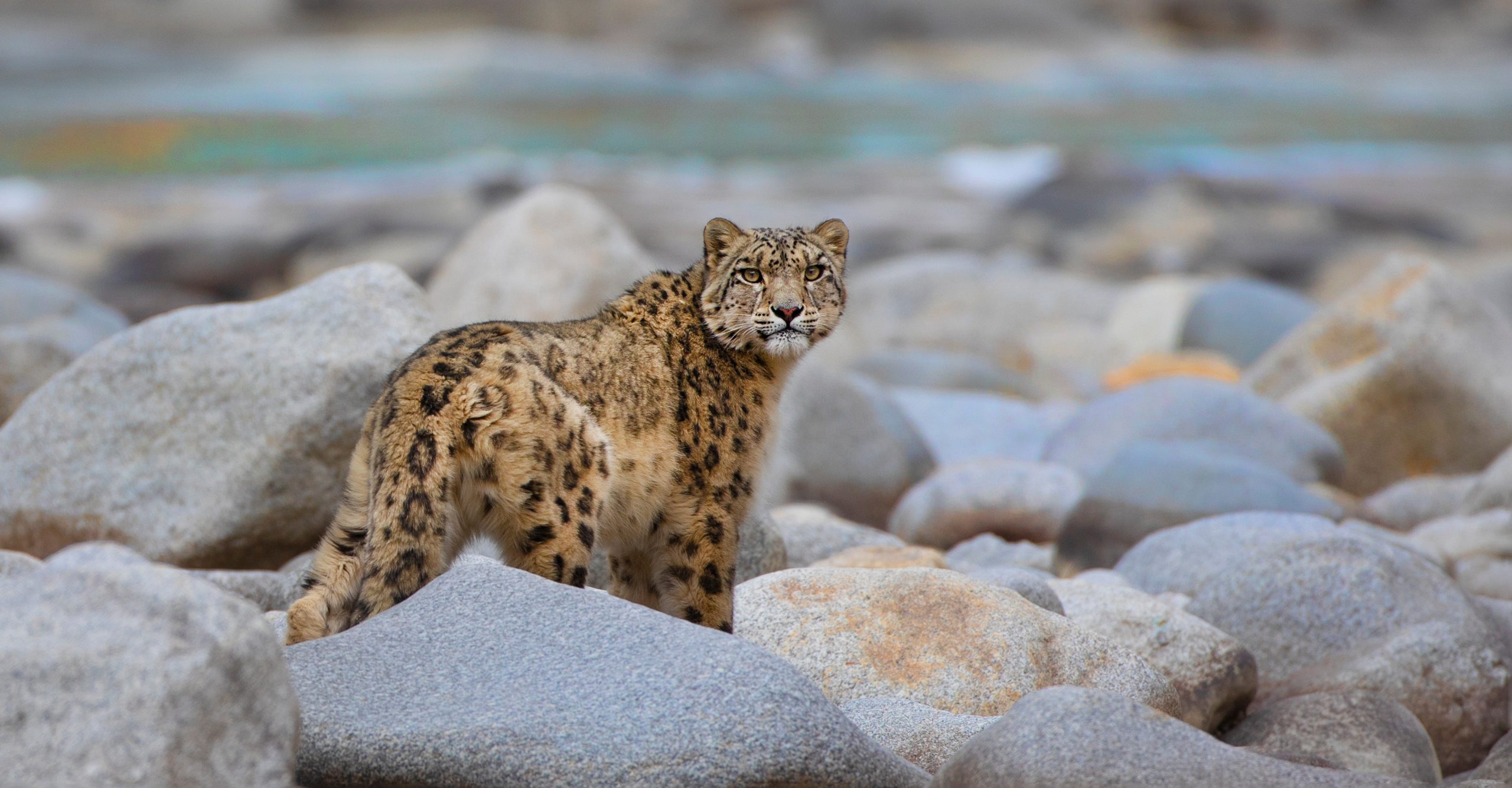
Snow leopard, Indus River © Nat Hab Expedition Leader Phalgun Patel