

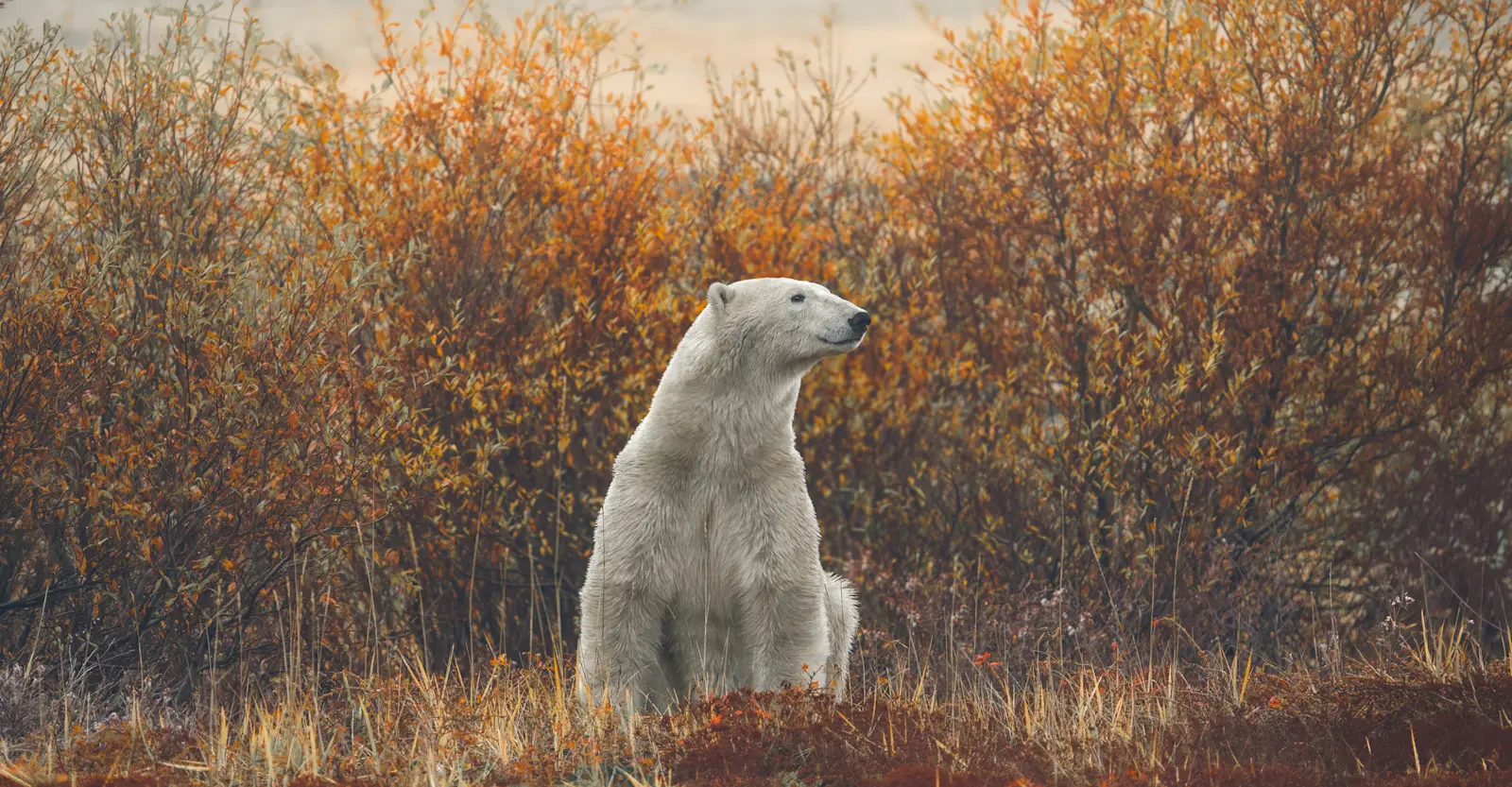
There’s a short window from late August through mid-September that offers Churchill’s most varied experiences, when travelers can catch the tail end of beluga season, watch polar bears on land as they wait for Hudson Bay to freeze, and search out the aurora borealis as dark skies return after months of long, light days.
Churchill’s early fall shoulder season is a short window when river wildlife, waiting polar bears and dark northern skies can all be experienced in an Arctic adventure:
- by Zodiac among belugas in the Churchill River,
- Polar Rover watching polar bears on the tundra,
- helicopter over the Hudson Bay coast,
- on foot among autumn arctic plants, and
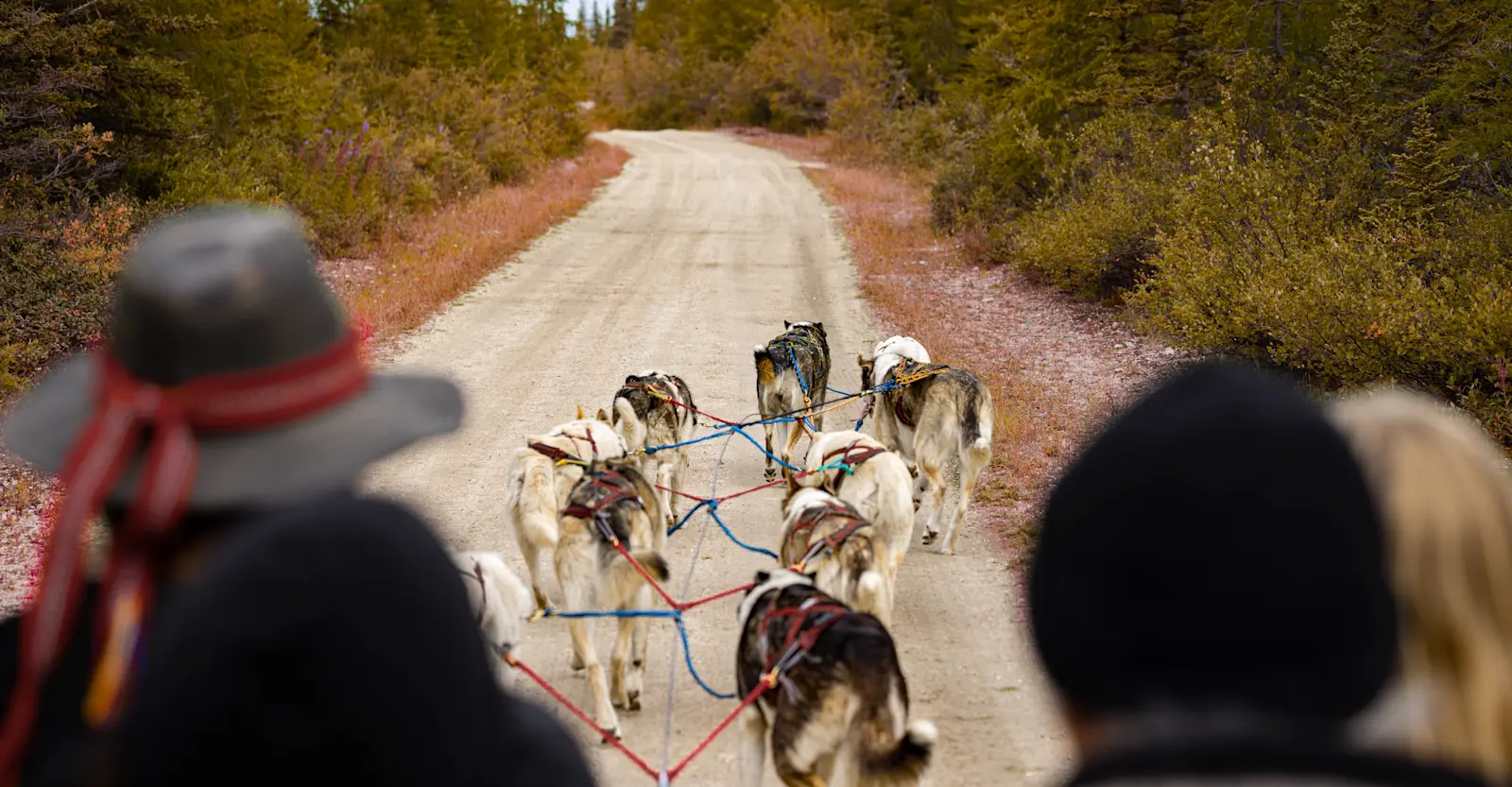
- by sled dog cart with a local musher.
Natural Habitat Adventures’ new 8-day Churchill Autumn: Polar Bears, Whales & the Aurora itinerary runs from the end of August through mid-September and offers a special look at Churchill as a northern community, wildlife crossroads and subarctic landscape in seasonal transition.
Why visit Churchill between beluga and polar bear seasons?
Each autumn, polar bears gather along Hudson Bay as they wait for sea ice to form so they can hunt seals. Nat Hab’s classic October and November itineraries focus on that peak polar bear season. The early fall itinerary runs before the busiest bear-viewing period ramps up.
During the quieter shoulder season, belugas are still in the Churchill River before their northward migration. Polar bears are still on land. Nights are growing dark again. Together, they offer conservation-minded travelers a glimpse of a region where wildlife, people, sea ice, coastal wetlands, tundra, rivers and marine systems are closely connected.
Around Churchill in the early autumn, the connections are visible as whales in the river, bears along the coast, foxes and hares on the tundra, migrating birds overhead and local communities in transition.
What wildlife can travelers see in Churchill in early fall?
Early fall wildlife viewing in Churchill can include:
- Polar bears, including mothers with cubs
- Beluga whales in the Churchill River
- Caribou
- Arctic fox and red fox
- Arctic hare
- Ptarmigan, especially Willow Ptarmigan as autumn approaches
- Migratory birdlife including Snow Geese, shorebirds, Snow Buntings and Blackpoll Warblers
- Autumn tundra plants and wildflowers
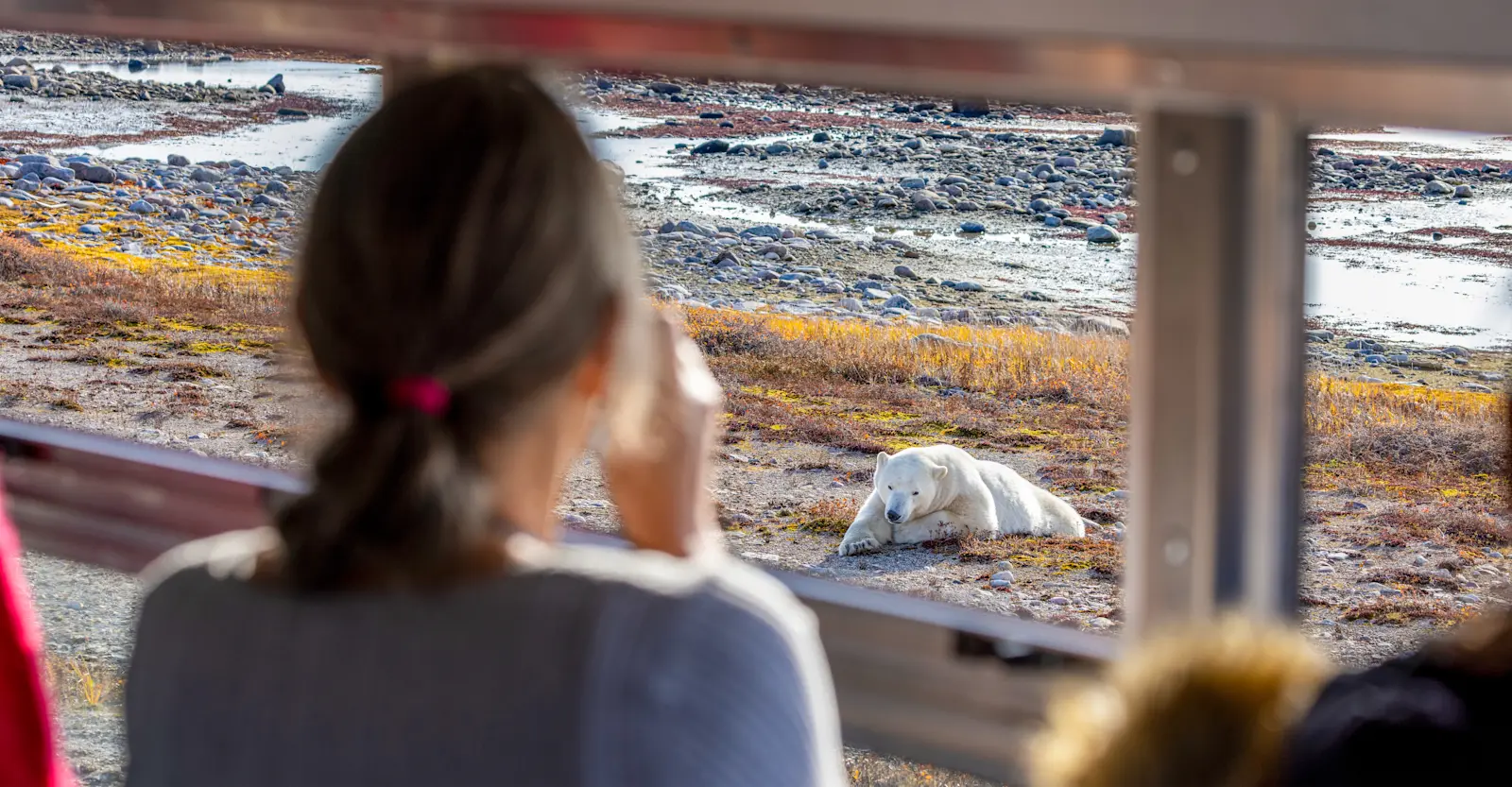
The early autumn Churchill itinerary explores several habitats, including tundra, boreal forest and the seacoast of Hudson Bay. The experience also changes by mode of travel. Guests may see belugas from a Zodiac or kayak, scan the tundra from a custom Polar Rover, look down over the Hudson Bay coast by helicopter and walk through the landscape with an Expedition Leader interpreting wildlife behavior, seasonal patterns and Arctic adaptations.
For travelers who enjoy photography, early fall adds color. By late August, the tundra around Churchill can shift into rich autumn color, with arctic bearberry turning red, tamarack glowing gold and grasses fading toward yellow green.
Are belugas still in the Churchill River in September?
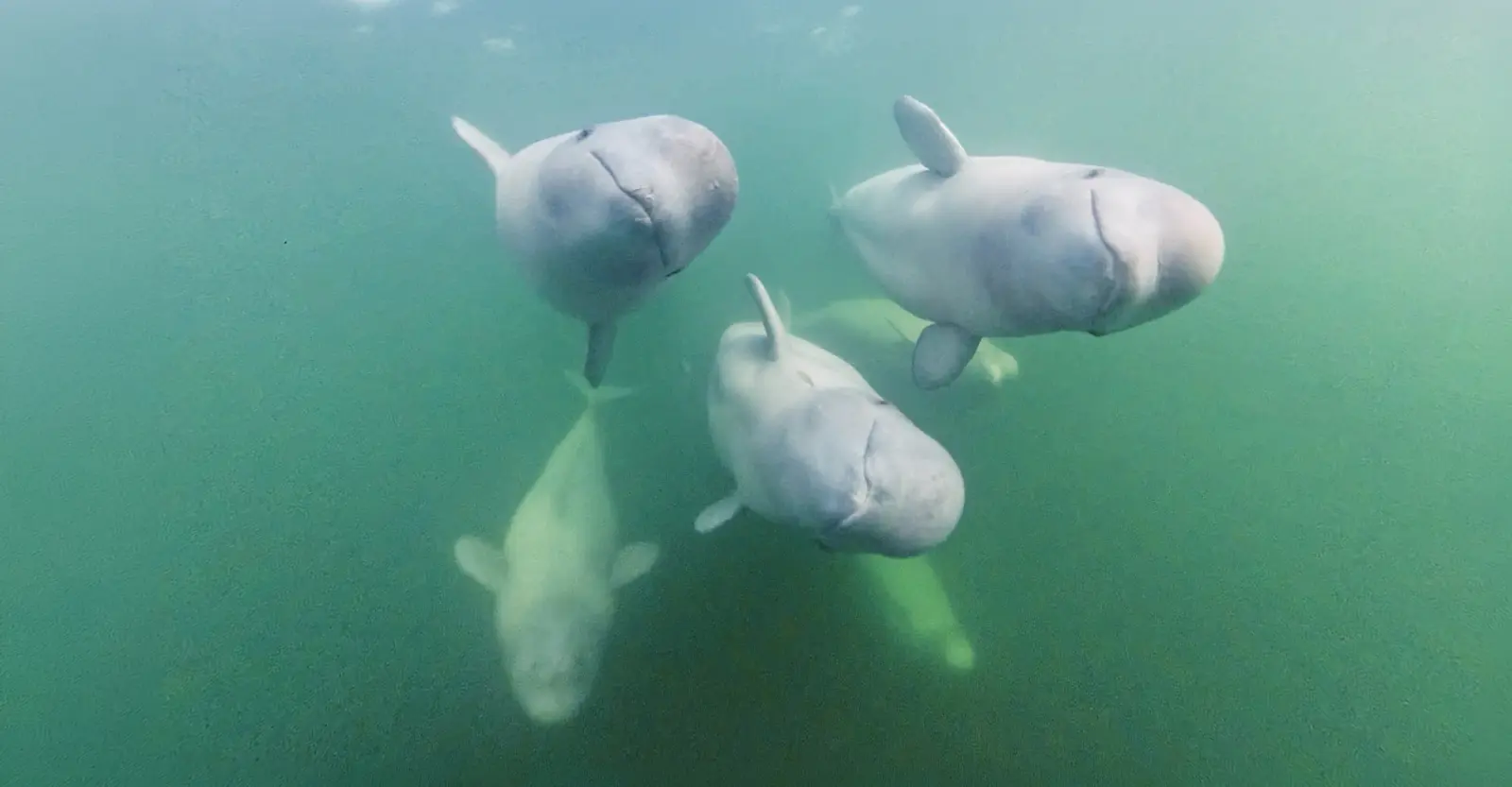
The Western Hudson Bay beluga population is Canada’s largest, estimated at approximately 55,000 individuals. The whales use the western Hudson Bay coast as summering habitat and gather in large numbers near the Churchill, Seal and Nelson River estuaries. These estuaries provide predator protection, molting, feeding and calving habitat.
During the summer peak, Parks Canada estimates that 3,000 to 5,000 belugas explore the Churchill River estuary daily. The whales arrive from mid-June to early July and begin migrating north again in mid-September. The autumn itinerary catches the tail end of Churchill’s beluga season.
What can guests expect from Churchill’s polar bears in the early autumn?
In late August and early September, polar bears roam on land, waiting for colder temperatures and the return of sea ice on Hudson Bay. Once ice forms on Hudson Bay, Churchill’s polar bears move out to hunt seals.
WWF estimates the global polar bear population at 22,000 to 31,000 and notes that polar bears spend much of their lives in, around or on water, especially sea ice. Summer Arctic sea ice is shrinking by at least 13% per decade, and changes in sea ice thickness and melt timing place ice-dependent animals at risk.
For travelers in Churchill, waiting polar bears are part of a larger story of a changing Arctic.
When do the northern lights return to Churchill?
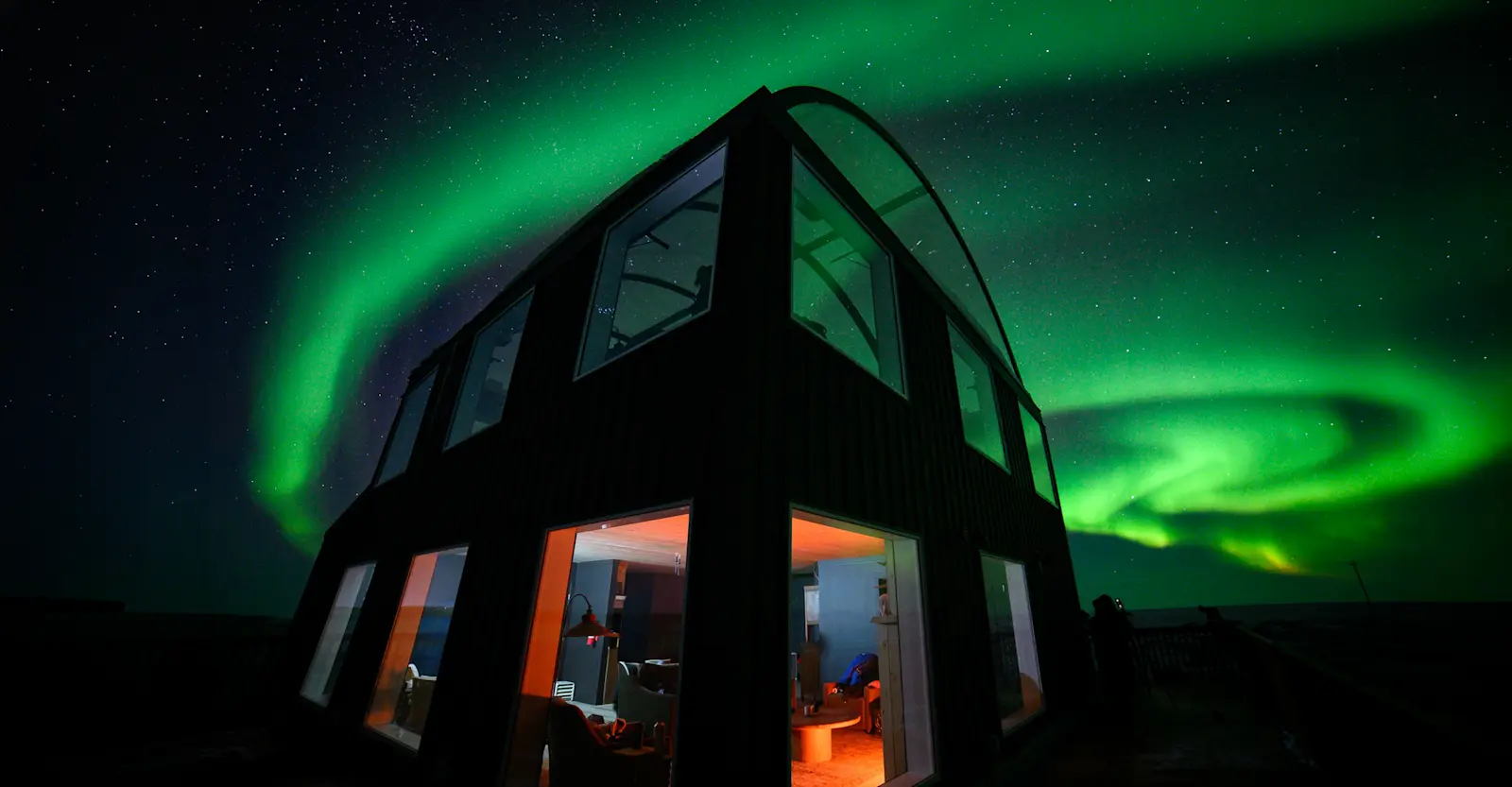
The northern lights require darkness, clear skies and solar activity. Unfortunately, they can’t be scheduled or assured; that’s part of the fun and surprise! By late August, Churchill’s nights are darkening again. The change of seasons gives travelers on the Churchill autumn itinerary a chance to watch for the aurora borealis and catch them when conditions align.
Two nights at White Whale Lodge, located outside Churchill away from artificial light, plus a visit to Nat Hab’s Boreal Lounge, a two-story aurora-viewing structure with a heated interior, large windows and an arched glass top, offer opportunities for stargazing and northern lights photography and viewing if the conditions are right.
One of the clearest ways the autumn itinerary differs from a summer beluga trip is in increased opportunity to see the northern lights. Summer in the North brings long, light days. As autumn approaches, the night sky grows dark again.
For travelers, that means the day’s wildlife viewing may continue into a very different kind of watching after dark. An autumn day in Churchill might begin with belugas in the river, continue with tundra wildlife and end with scanning the sky for the aurora borealis.
How does Nat Hab’s autumn itinerary differ from Churchill polar bear itineraries?
Natural Habitat Adventures offers a variety of Churchill itineraries, including peak-season polar bear adventures, Tundra Lodge experiences, specialized polar bear photo expeditions, summer beluga-focused departures and winter northern lights trips.
The early autumn itinerary offers adventure in the overlap of several of those. Churchill Autumn: Polar Bears, Whales & the Aurora takes advantage of:
- Belugas, bears and possible aurora in one trip
- Autumn tundra color
- Multiple modes of exploration
- A sled dog experience with a local musher
- A helicopter landing at a vacant polar bear den
- Churchill experience before the busiest bear season
This is the Churchill itinerary for travelers who want more than a single species or iconic encounter. In Churchill’s shoulder season, the Arctic does not appear in a single image; it contains river, coast, tundra, town, dogs, den, lodge and sky.
For travelers drawn to wildlife, photography, northern culture and the science of a changing Arctic, Nat Hab’s Churchill Autumn Adventure offers a rare way to experience the Canadian subarctic as one season gives way to the next.