

National Geographic called Brazil’s Pantanal “the Wild Wet,” an appropriate name for a vast area of untouched wetlands teeming with wildlife. The region harbors one of the greatest concentrations of wildlife in South America, including 159 mammal species. Here are five of the strangest species in the Pantanal:
The World’s Largest Rodent: The Capybara

The largest capybara ever recorded was a 201-pound wild female from Brazil. © Edward Parker/WWF-Canon
The capybara is the world’s largest rodent and a relative of the guinea pig. Adult capybaras grow 3.5 to 4.5 feet long and typically weigh 77 to 146 pounds. The largest capybara ever recorded was a 201-pound wild female from Brazil. Capybaras are semi-aquatic and are often found in wetlands such as the Pantanal. Capybaras are selective herbivores, feeding on one plant species while ignoring others. They are less picky about other foods—capybaras sometimes eat their own feces as a source of gut bacteria.
Rhino Relations: The Brazilian Tapir

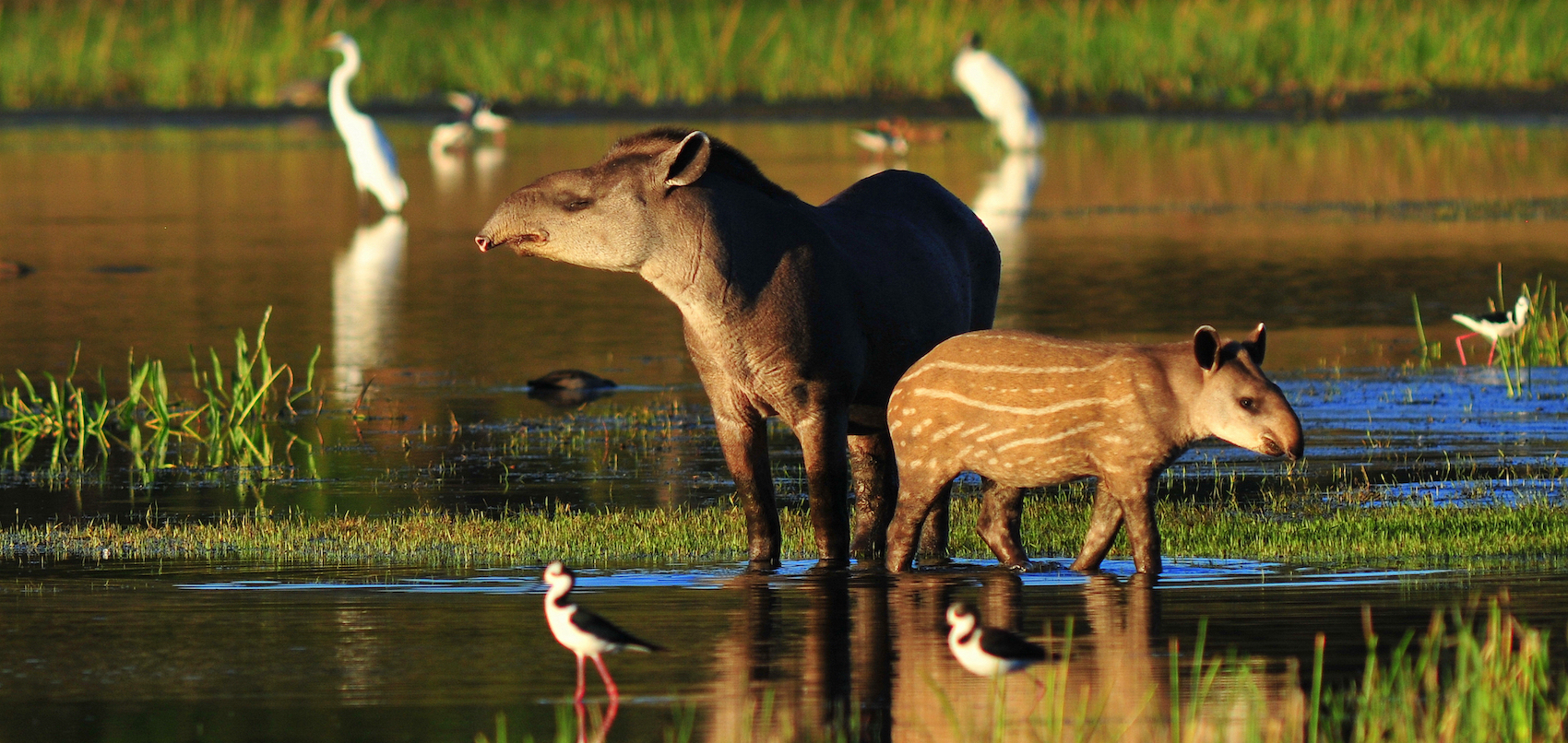
Though it may not look like it, the Brazilian tapir is related to horses and rhinos. © Michel Gunther/WWF-Canon
The Brazilian tapir, also known as the lowland tapir, is one of South America’s largest land mammals. The tapir ranges from 6 to 8 feet in length and can weigh between 300 and 700 pounds. Tapirs are excellent swimmers and divers and will run to water when threatened. It uses its snout to hunt for leaves, shoots and small branches. The Brazilian tapir is considered “vulnerable,” threatened by habitat loss due to deforestation and illegal hunting.
The “Hog-Nosed Raccoon”: Coati

Coati. © Michel Gunther/WWF-Canon
The South American coati is sometimes called the “hog-nosed raccoon” because of its piglike snout and raccoonlike stripes on its tail. Like raccoons, coatis have double-jointed ankles that can rotate 180 degrees, allowing them to climb down trees. Coatis vary in color, from orange-red to gray, and their tails are half their body length. Coatis search for fruits high in forest canopies. Coatis are social animals and warn each other of danger with alarm calls, sending the group high into the trees.
The Toothless Southern Tamandua

The name tamandua means “anteater” in the Tupi language. © Michel Gunther/WWF-Canon
Tamanduas have no teeth, but they do have a tongue that can reach up to 15 inches in length. Thankfully, their diet of ants, termites and some fruit doesn’t require too much chewing. Tamanduas walk on the outer surfaces of their forefeet to avoid puncturing themselves with their long claws. When attacked, they cling to a branch with their hindfeet and tail, leaving their powerful forearms free for self-defense. Tamanduas also use their powerful forearms to rip open insect nests and hives. They have small eyes and poor vision, which they compensate for with excellent hearing and smell.
The Solitary Maned Wolf
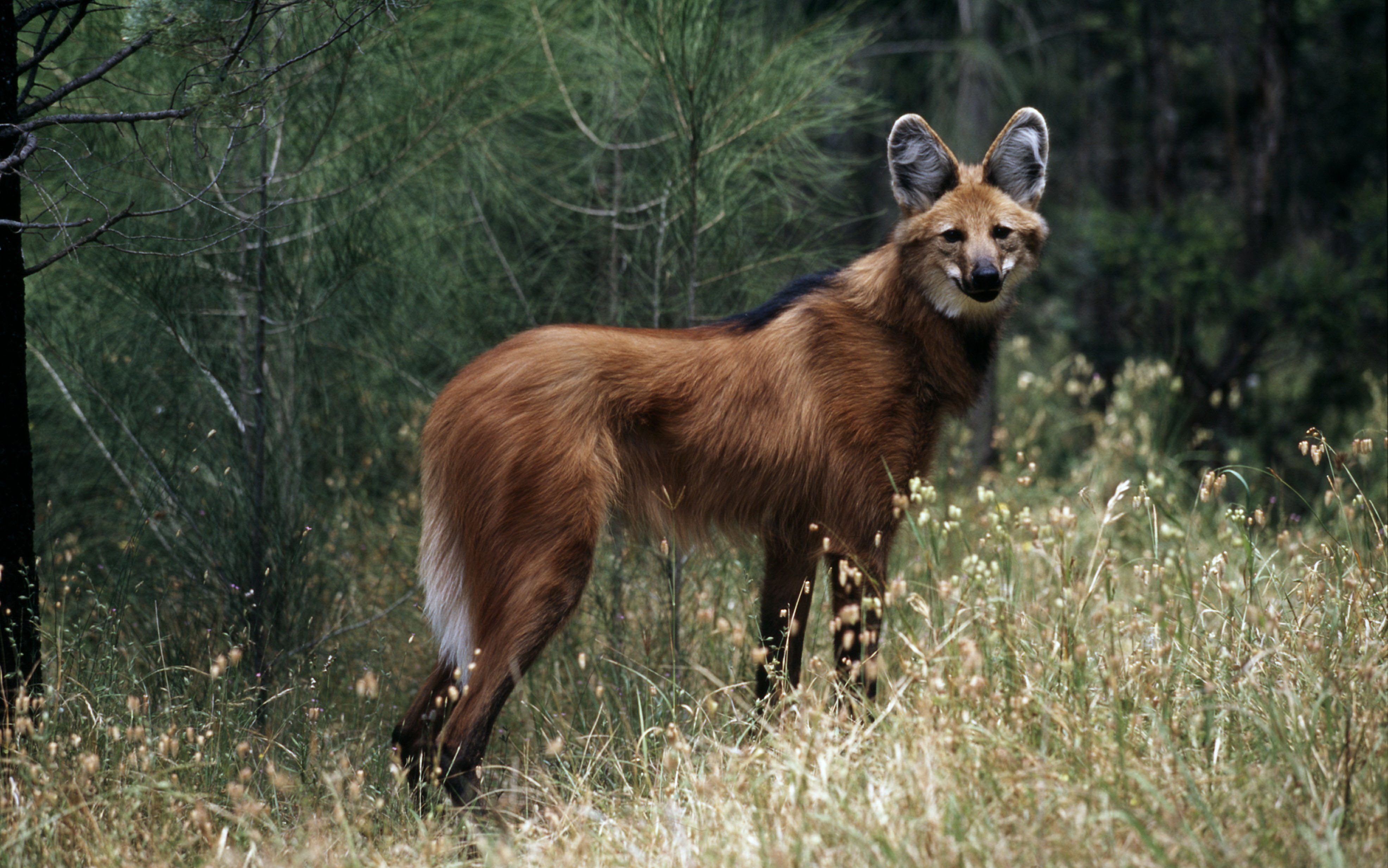
The maned wolf is a part of the Canidae family and is in a genus all its own. © Martin Harvey/WWF-Canon
Despite its name, the maned wolf is not actually a wolf. Unlike wolves, which typically hunt and move in packs, the maned wolf is a solitary creature. The maned wolf uses its mane to look bigger and display aggression when threatened. The maned wolf has long legs adapted to the wolf’s native tall grasslands. Its urine has a distinctive odor that earned it the nickname “skunk wolf.” The maned wolf uses its urine to mark buried prey, paths and territory; the distinctive odor is so strong that it has sent police near zoos on the hunt for cannabis smokers. The maned wolf is considered near threatened because of habitat loss and hunting.