

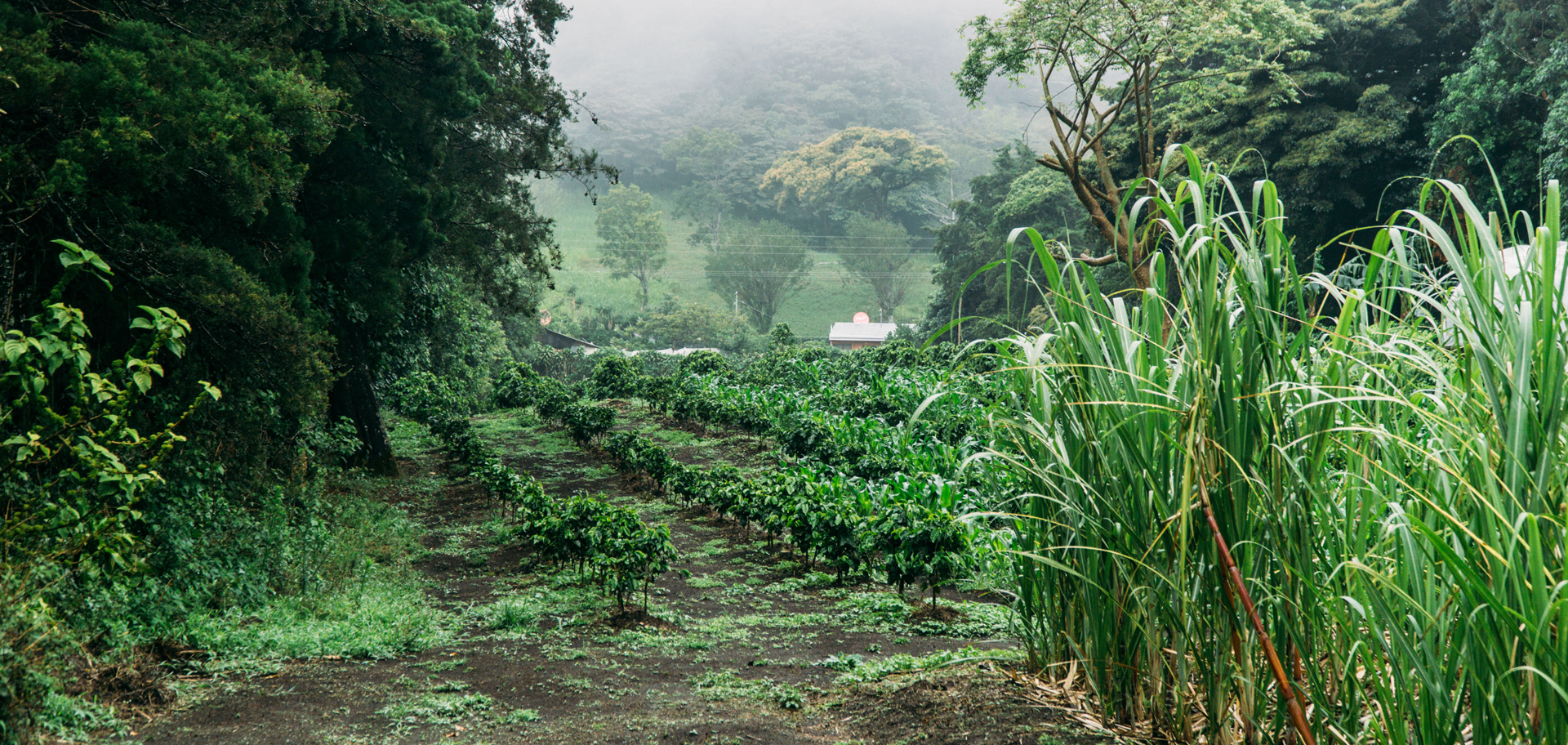
It’s no surprise that Costa Rica is a country filled with beautiful natural ecosystems. Its coasts are bustling with marine life, and its interior is blanketed with some of the most biodiverse forests in the world. More than half of Costa Rica is now forested, but that wasn’t always the case.
How Costa Rica Brought Back Its Forests
Beginning in the 1940s, loggers cleared large areas of land for crops and livestock, destroying nearly half of the country’s forest cover. Recognizing the economic and ecological value of preserving its forests, the Costa Rican government introduced stricter protections in the 1990s, making it illegal to clear forests without approval. These measures, combined with payments to landowners for the environmental services their properties provide when managed sustainably, have helped Costa Rica restore its forests to the levels seen today.

© Noah Patterson / WWF
The impact of these policies was clear on our recent trip with Natural Habitat Adventures. Not only were we struck by Costa Rica’s natural beauty, but we were also inspired by the passion of the people in the communities we visited. It was evident that they understood the important role the environment plays and how closely people and nature are connected.
Wildlife and Sea Turtles in Tortuguero
This idea first surfaced at the very beginning of our trip in Tortuguero. As we explored the canals in search of wildlife, our boat driver, a local resident, never failed to spot even the smallest animal from what seemed like miles away. He was knowledgeable about every bird, fish, sloth and monkey, and we could see his excitement each time he spotted something new. We must have seen and learned about more than 20 animals during our short time on the water.
The hotel where we stayed also offered the opportunity to watch a sea turtle lay her eggs on the beach at night. We boarded another boat to reach the beach, where we met our guide for the evening. She immediately welcomed us, and her passion came through as she told us stories about the turtles while we walked along the pitch-black beach.
She explained how important these tours are to sea turtle conservation and emphasized how excited she was to lead us. And the experience did not disappoint.
Our guide took us to a nest where a sea turtle was laying her eggs and showed us how to observe using a very dim red light so we would not disturb her. We rotated every few minutes to give another group the opportunity to watch, but during our time there, we were able to ask questions. She answered every one with enthusiasm and encouraged us to ask more.
Learning from the Forest in Corcovado
Our next stop was Corcovado National Park on Costa Rica’s Pacific coast. As we made our way to our hotel overlooking the water, we wondered what could be better. Our question was answered the next day when we began our hike through the park.
We were accompanied by a friend of our Expedition Leader who belonged to an Indigenous community in the region. Not only did we learn about local flora and fauna, but we also heard his stories about how his community lived from and alongside the surrounding environment.
At one point, it began to rain. He ran to a plant, pulled off a leaf and asked us to rub it against our skin. The wax from this type of plant had traditionally been used to help protect people from the rain. That small moment made all of us feel more connected to the forest.

© Noah Patterson / WWF
Food, Stories and Conservation in Monteverde
From Corcovado, we traveled by boat, plane and bus to Costa Rica’s cloud forest in Monteverde. It was a beautiful drive along winding roads. Our Expedition Leader shared stories about places along the way, and we stopped at a local restaurant in San Ramon.
The staff was expecting us and had prepared a family-style meal. The owners greeted us warmly and were excited to share their cuisine. It was an enjoyable experience filled with laughter and, of course, good food.
Once we arrived in Monteverde, we settled into our rooms and met with a representative from a Costa Rican conservation organization. She gave us a presentation about a vulnerable bird in the region, the three-wattled bellbird.
The presentation included scientific information but also explained the bird’s role in the ecosystem and why its protection matters. We searched for three-wattled bellbirds during our hikes over the following days and finally saw one. As we peered through our binoculars, her message about protecting the species remained top of mind.
Living with the Volcano at Arenal
The final stop on our journey was Arenal Volcano, a few hours from Monteverde. We stayed at a lodge near the base of the volcano, with broad views of the surrounding landscape.
The setting also served as a reminder of how closely people and nature depend on one another. The observatory continues to monitor volcanic activity and its effects on the surrounding area. We swam in hot springs heated by geothermal activity beneath the ground.
Everywhere we went, we were part of nature—not separate from it.

© Noah Patterson / WWF
Carrying Pura Vida Home
Costa Rica is a popular travel destination for many reasons. Some visitors come to enjoy its beaches, while others explore its forests, but Natural Habitat Adventures also introduced us to the cultural values that shape life in Costa Rica.
We learned from local people at every stage of the trip and plan to carry those lessons into our everyday lives. Costa Rica’s forests, wildlife and landscapes left a deep impression, but so did its people and the spirit of pura vida.
By Jack Boeve, Manager of Strategic Operations and Planning for WWF, and Noah Patterson, Digital Technical Lead/Developer, Web and Apps Lead Engineer for WWF