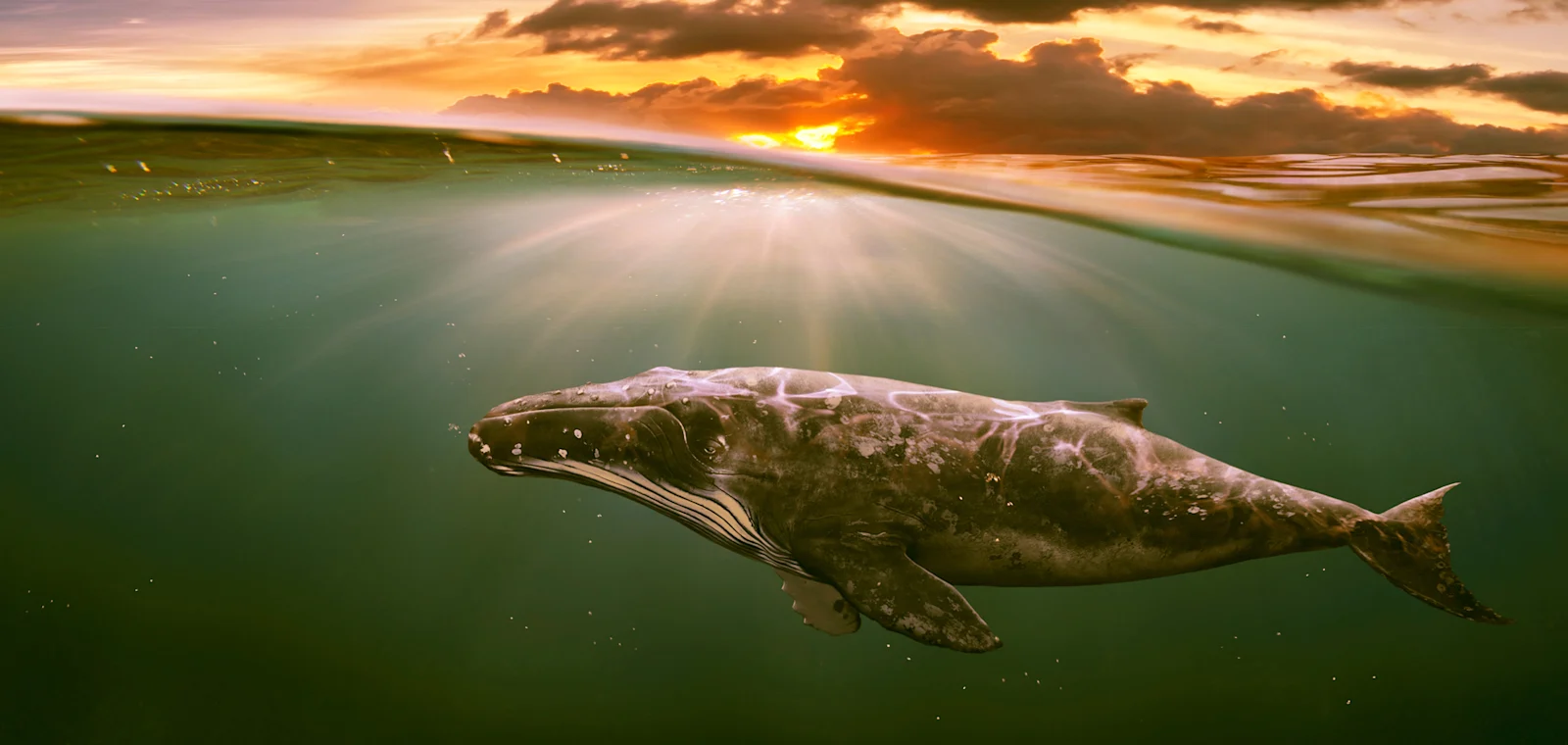
Whales Are Trying to Talk to Us

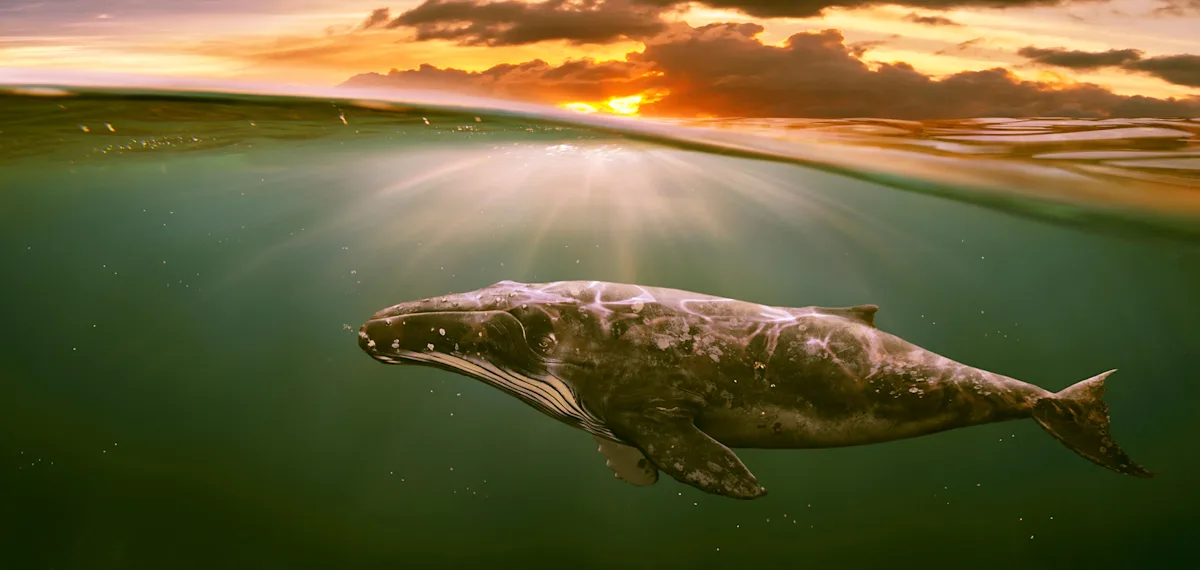
Recently, several scientists from the SETI (Search for Extraterrestrial Intelligence) Institute have had close encounters with nonhuman, intelligent beings. These creatures blew bubble rings toward them, in what could be a sophisticated form of nonverbal communication.
The nonhuman beings, however, were not from another planet. They were humpback whales,, opens in new tab demonstrating surprising displays that have never before been documented.
The researchers believe these recent interactions are far more than play behaviors. They could potentially help us refine our methods for detecting extraterrestrial life. In fact, we’re learning that the curiosity, intelligence and social complexity of whales makes them ideal analogues for developing communication models that we’ll be able to use beyond Earth.
Baleen whales evolved unique larynxes
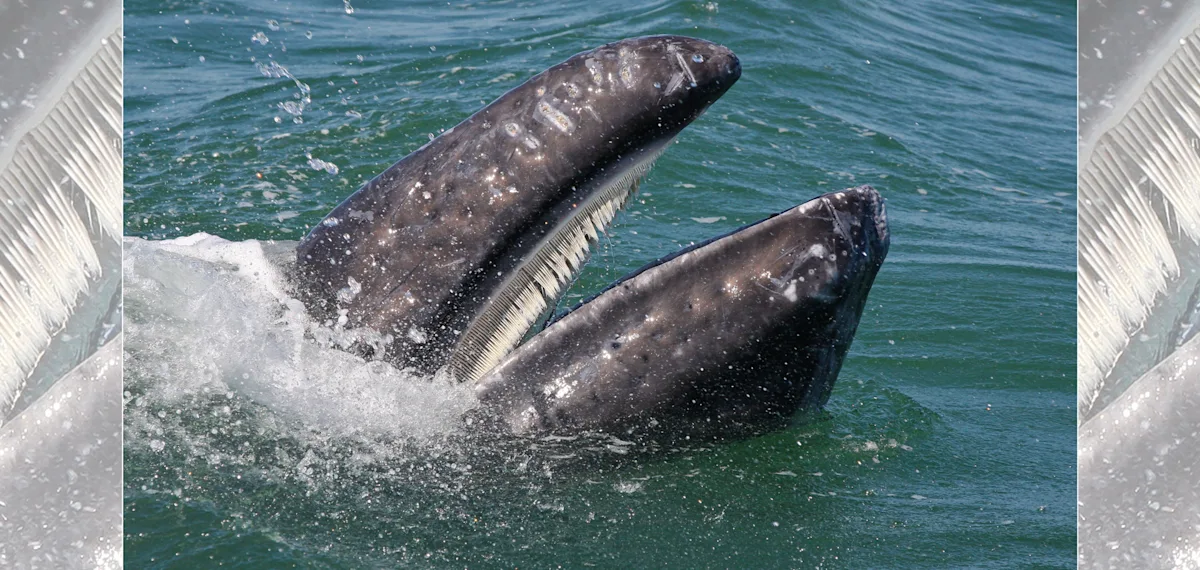
Baleen whales, opens in new tab are the largest animals to have ever roamed our planet; and as top predators, they play a vital role in marine ecosystems. To communicate across vast distances and find each other, baleen whales critically depend on producing sounds that travel far in dark and murky oceans. However, since whale songs were first discovered more than 50 years ago, it has remained a mystery as to how baleen whales create their complex vocalizations.
In February 2024, however, voice scientists at the University of Southern Denmark and the University of Vienna in Austria published a study in the journal Nature, opens in new tab that reveals that baleen whales evolved unique structures in their larynxes that enable their low-frequency vocalizations—but which also limit their communication range.
The researchers say that baleen and toothed whales evolved from land mammals that had larynxes serving two functions: protecting airways and sound production. However, their transition to aquatic life placed new and strict demands on their larynxes to prevent choking underwater. Nevertheless, baleen whales can still produce some sounds, but they developed unique, novel structures to do so.
First, the tiny cartilages in the human larynx—called the arytenoids—that change the position of our vocal folds have altered dramatically in whales, transforming into a large, long cylinder fused at the base to form a big, U-shaped, rigid structure that extends nearly the full length of the larynx. This is probably due to the need to keep an inflexible, open airway when a whale has to move a huge amount of air in and out during explosive surface breathing. The U-shaped structure pushes against a large, fatty cushion on the inside of the larynx. When a whale pushes air from the lungs past this cushion, it starts to vibrate; and this generates very low-frequency, underwater sounds.
The scientists report that working on the biology and physiology of whales was challenging. Strandings provided some rare opportunities to learn about these amazing animals; but even then, it was hard to gather data because tissues rapidly decay. Whales are known to “explode” on the beach. But thanks to Danish and Scottish Marine Mammal Stranding Networks, the researchers were able to quickly extract the larynxes of a humpback, minke, opens in new tab and sei whale, opens in new tab for close investigations in the lab.
To understand how muscle activity could change the calls, the researchers built a computational model of the entire whale larynx that included accurate, 3D shapes of the larynx and its muscles. That made it possible to simulate, for example, how the frequency is controlled through muscle modulation, and the model predicted the natural vocalizations of the whales extremely well.
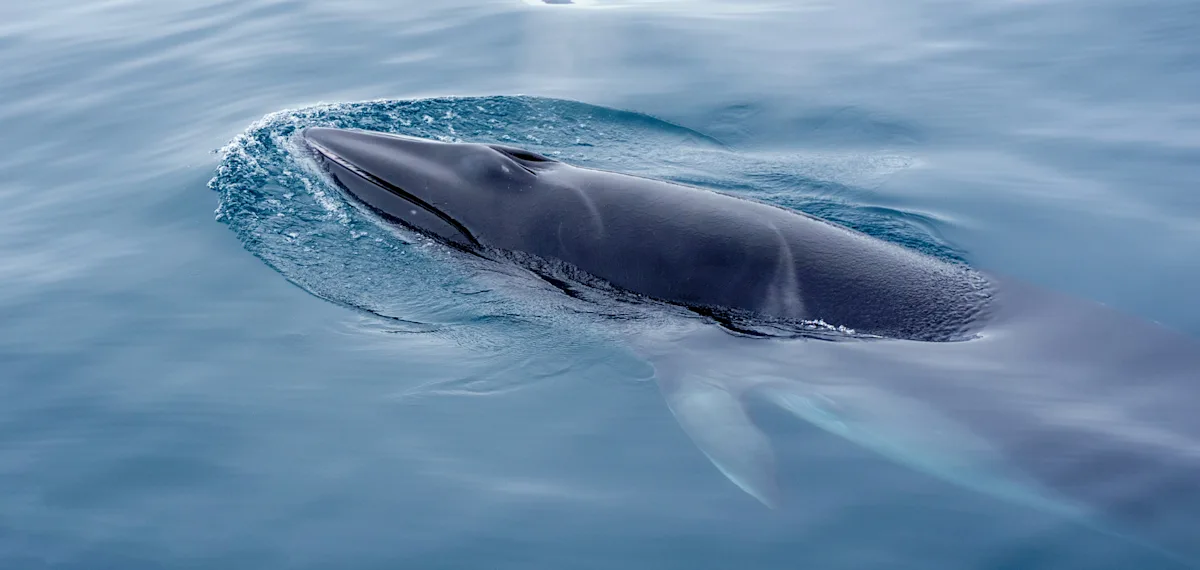
These newly discovered anatomical features that allowed whales to successfully communicate in the vast oceans, however, also posed insurmountable physiological limits for many baleen whales. Combining experiments and models, the University of Southern Denmark and University of Vienna researchers provided the first evidence that baleen whales are physiologically incapable of escaping anthropogenic noise. Such clamor masks the whales’ voices and thus limits their communication range. Regrettably, state the researchers, the predicted frequency range and maximum communication depth of 328 feet completely overlaps with the dominant frequency range and depth of human-made noise caused by shipping traffic.
Humpback whales moved their singing sites
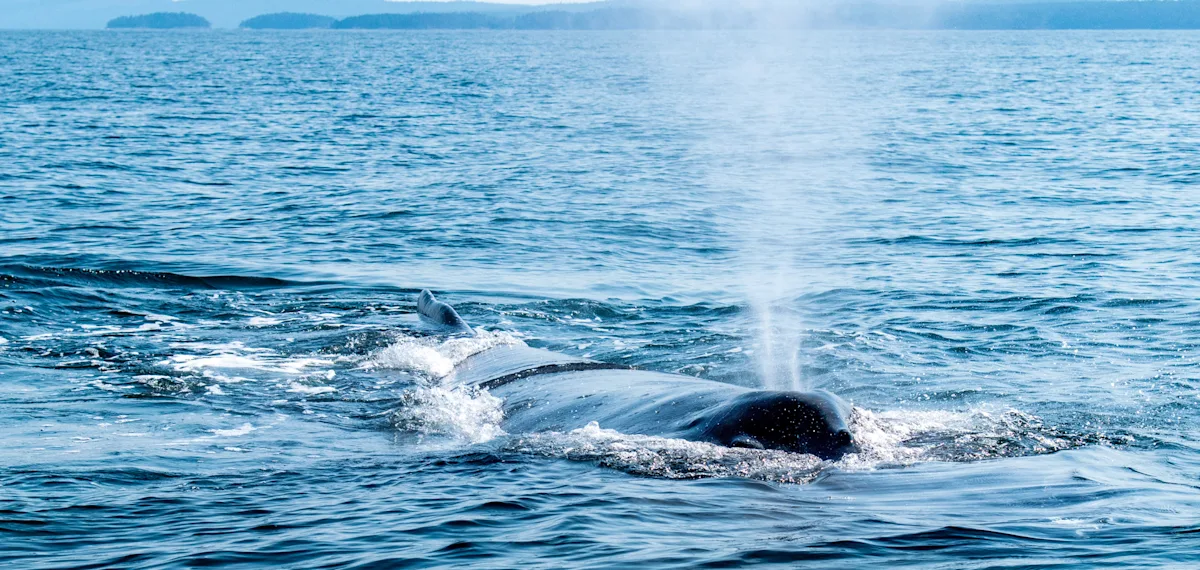
Just off the island of Maui in Hawaii, humpback whale singing in the winter months dominates the marine soundscape. However, despite decades of research, many questions regarding the behaviors and songs of humpback whales remain unanswered.
To shed some light on some of those unknowns, researchers from the University of Hawaii—in partnership with NOAA’s Hawaiian Islands Humpback Whale National Marine Sanctuary, opens in new tab—used a combination of underwater listening devices and visual surveys to track both the acoustic patterns and physical movements of whales in the high-density, Hawaiian breeding grounds. It’s the first effort of its kind to use specialized acoustic sensors to localize individual singers in order to understand their daily variations in movements, shore distance and spacing. This helped contextualize the visual results and overcome some of the limitations from land-based observations of their movements.

Humpback whale songs are presumed to play an important role in breeding. The findings from this study, published in the journal Royal Society Open Science, opens in new tab in January 2024, reveal a daily pattern where whales move their singing away from shore throughout the day and return near shore in the evening.
These results highlight the significance for male singers of an environment that is teeming with acoustic commotion. The scientists identified potential drivers for the daily onshore-offshore migrations: nearshore environments that are too crowded with whales during the day, and offshore areas that are too noisy with the chorus of other animals in the evening. The dynamic movements of singers may reduce the chances of their songs being drowned out, ensuring that other whales hear them.
Discussions of noise pollution concerning marine mammals have previously been dominated by concerns over anthropogenic noise, state the researchers in their conclusion. Potential acoustic masking from natural sources, including one whale obscuring another whale’s song, has been mostly overlooked. By exploring possible drivers of the observed patterns, they say, we add to our understanding of how animals that rely on acoustic signals adopt behavioral strategies to mitigate masking from loud environments.
Humpback whales signaled a willingness to “talk”
But songs aren’t the only way that whales are flexing their communication skills.
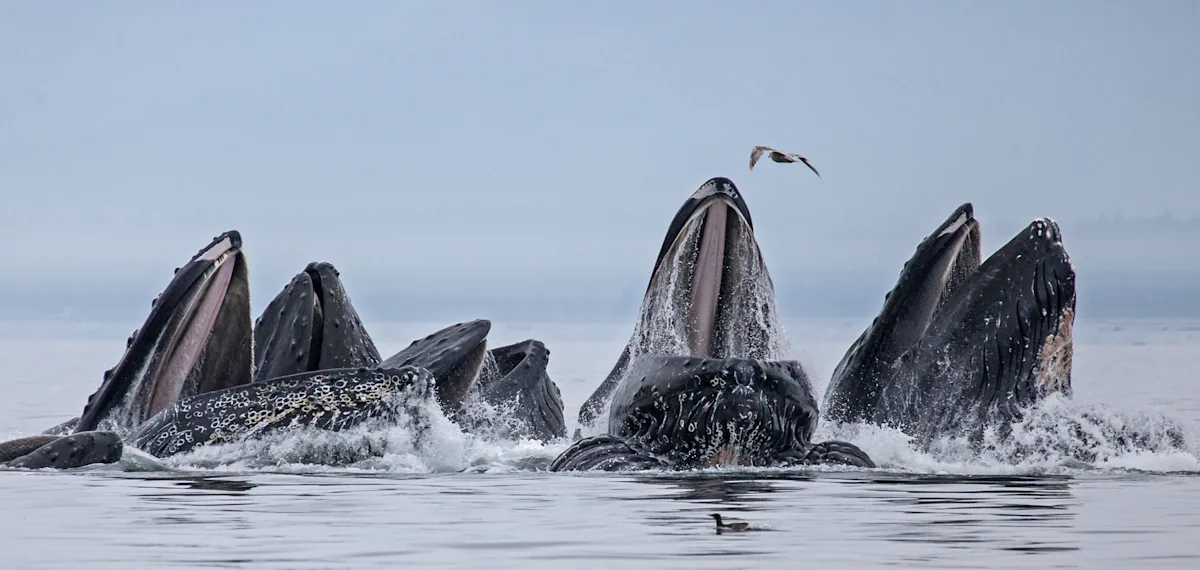
Highly intelligent humpback whales communicate extensively with each other through both calls and songs, have complex social systems and use nets made of bubbles to catch fish—and, perhaps, to talk to us. They also often exhibit friendly, inquisitive behavior towards boats and human swimmers.
In November 2023, a team of scientists from the Alaska Whale Foundation,, opens in new tab the SETI Institute, opens in new tab and the University of California, Davis, reported in the science journal Peer J, opens in new tab that they had experienced one of these amicable, curiosity-driven encounters. In response to a recorded humpback “contact call” played into the sea via an underwater speaker, a humpback whale named Twain approached and circled the team’s boat, while replying in a conversational style to the whale “greeting signal.” During the 20-minute exchange, Twain responded to each playback call and matched the interval variations between each signal. The researchers believe that this was the first such communicative exchange between humans and humpback whales in “humpback language.”
Even more remarkable meetings were described in the journal Marine Mammal Science, opens in new tab in May 2025. Again, a team of scientists from the SETI Institute and the University of California, Davis, were involved. They documented, for the first time, a dozen humpback whales from populations around the world blowing large bubble rings—like a human smoker blowing smoke rings—in people’s direction in an apparent attempt to playfully interact, observe human responses and/or engage in some form of communication. The encounters represented 12 bubble-ring-production episodes involving 39 rings made by 11 individual whales.
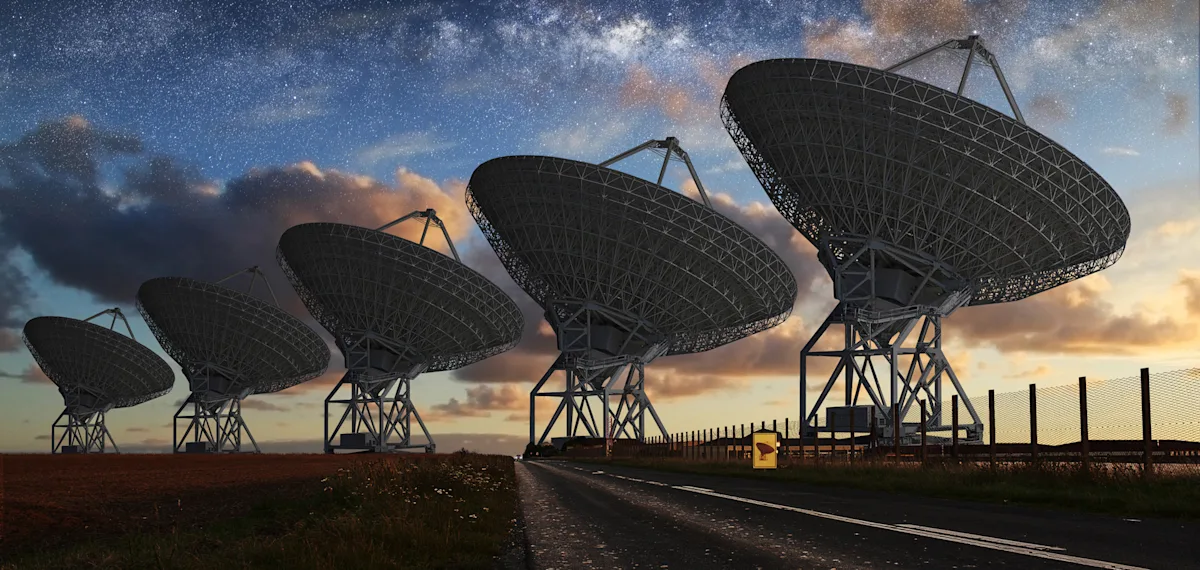
Similar to studying Antarctica or other landscapes as a proxy for Mars, the SETI Institute is studying intelligent, non-terrestrial (in this case, aquatic), nonhuman communication systems to develop intelligence filters that will aid in parsing cosmic signals for signs of extraterrestrial life. These patterns of bubble production in cetaceans are of great interest, as they constitute a mode of communication not available to land-based mammals.
Because of current limitations on technology, scientists are making an important assumption in the search for extraterrestrial intelligence: that it will be interested in making contact and, therefore, will target human receivers. They say that assessment is supported by the independent evolution of such behavior in humpback whales.
Whale songs represented the sound of our planet
The first acoustic recordings of humpback whale songs, opens in new tab by Katy and Roger Payne in 1970 profoundly resonated with humanity, started the flourishing field of marine bioacoustics and sparked global interest in marine conservation efforts. These recordings were deemed so important that they were included on the Voyager Golden Record, which was launched aboard both the Voyager 1 and Voyager 2 spacecraft in 1977 as a message to any potential extraterrestrial civilizations. The inclusion of these songs was a deliberate choice and a recognition of their beauty and complexity. They were seen as an integral sound of our planet, meant to represent the diversity of cultures and life on Earth.
The Paynes made people aware of how quietly musical the seas were before humans started the widespread use of propeller ships and continuously running, shipboard generators. Those were the seas whales evolved in. Compared to the 1970s, our oceans are now even more filled with human-made noise from drilling activity, seismic guns and shipping lanes.
I wonder if we can still say that whale songs are the iconic sound of our planet.
Here’s to finding your true places and natural habitats,
Candy