


Valentine’s Day is celebrated annually on February 14th. It’s typically marked by giving gifts—such as cards, flowers or chocolates—to those you love. Humans, however, are not the only animals that feel love. ©Pixeo Design/Shutterstock.com
Every February 14th, we celebrate Valentine’s Day, a time that has become synonymous with emotional connections and loving relationships. It’s often marked by romantic gestures, such as giving chocolates or flowers, writing a love letter, preparing a candlelight dinner, holding hands—or kissing.
Surprisingly, scientists have traced kissing back to early primates, suggesting it began long before humans evolved. Great apes and even Neanderthals, our extinct human relatives, shared forms of kissing millions of years ago. And yet while the behavior appears to have persisted through evolution as a bonding or social tool, its patchy presence across human cultures hints at a mix of biology and cultural invention.
Love songs, too, annually take center stage on February 14th; and again, nature has a multitude of versions. More than a decade of acoustic recordings of grouper grunts, known as their “love songs,” are providing new insights into how sound can be used to monitor and manage vulnerable fish populations. By sifting through 12 years of the groupers’ noises, scientists have discovered major shifts in how they compete and spawn. Courtship calls once dominated, but territorial sounds have surged, suggesting changes in population structures. Machine learning helped decode the patterns quickly, offering a groundbreaking way to monitor and conserve reef fish.

Since kissing occurs in only 46% of human cultures, we don’t know yet if it’s an evolved behavior or a cultural invention. ©PeopleImages/Shutterstock.com
Of course, a day focused on love is also going to be a popular one for elopements. Unfortunately, though, when wildlife gets the notion to run away with livestock, often people—who can suffer impacts that range from economic loss to death—and wild animals—who are often endangered—end up at dangerous odds.
Kissing began millions of years before humans
While kissing is seen in many animal species, it poses an evolutionary puzzle for scientists: the act can spread disease and does not appear to directly boost survival or reproduction. Although kissing holds strong cultural and emotional meaning for many human groups, its evolutionary background has rarely been examined in detail.
That’s why a group of researchers led by biologists at England’s University of Oxford recently conducted the first cross-species attempt to trace the origins of kissing using the evolutionary relationships among primates, the first time that anyone has taken such a broad lens to examine this behavior. To perform their analysis, the team first needed to define what counts as a kiss, since many mouth-to-mouth actions resemble the behavior without being the same thing. Because they were comparing species across a wide evolutionary range, the definition had to work universally. They defined kissing as “nonaggressive, mouth-to-mouth contact that does not involve food transfer.”
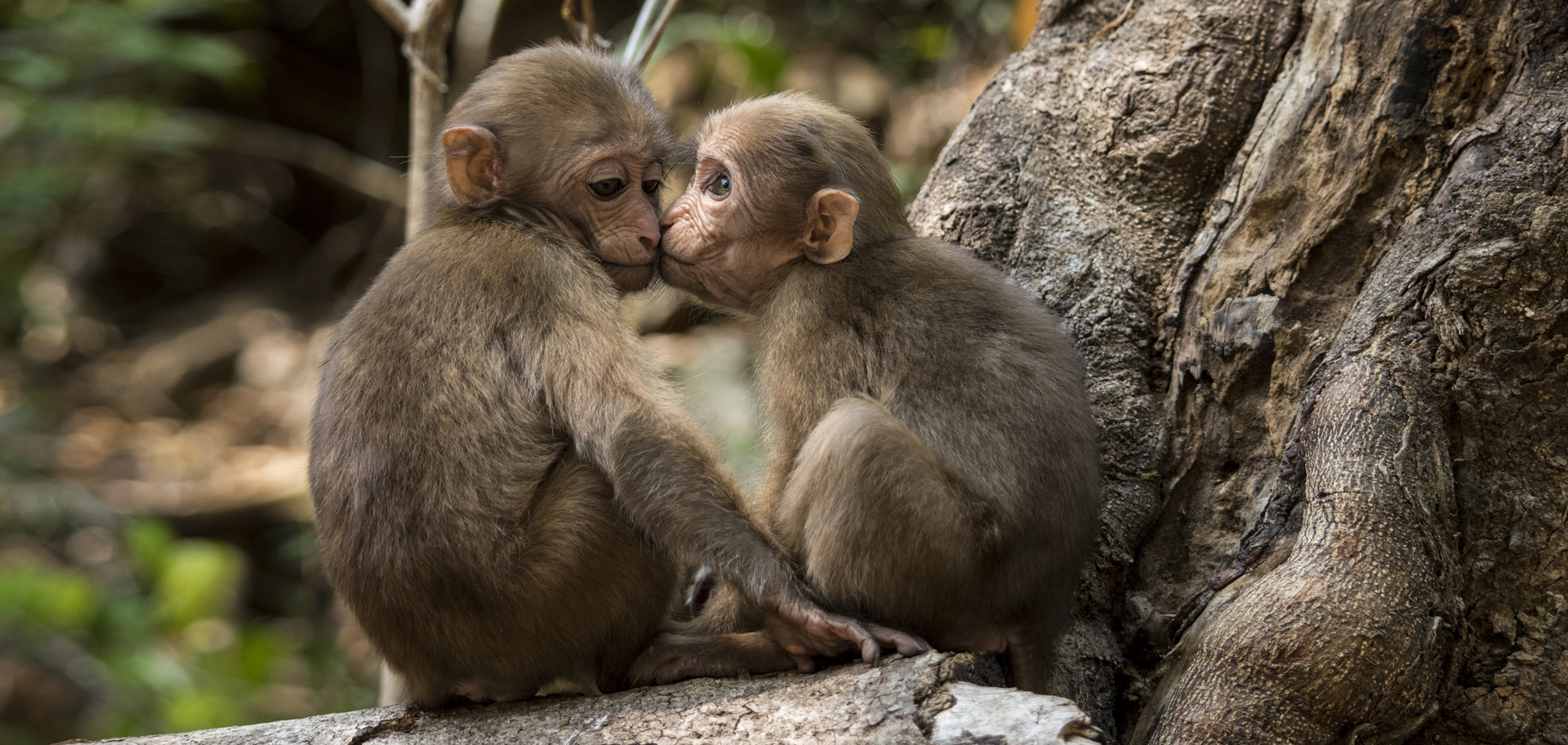
Evidence shows that kissing may have originated in ancient primates. Kissing behavior is observed in today’s monkeys, who seem to enjoy affectionate communication. ©Kittisak Srithorn/Shutterstock.com
After settling on this definition, the researchers reviewed the scientific literature to identify modern primates known to engage in kissing. Their focus was on apes and monkeys that evolved in Africa, Asia and Europe, including bonobos, chimpanzees and orangutans.
The next stage involved a phylogenetic analysis (meaning that it’s based on natural evolutionary relationships) in which kissing was coded as a trait and placed onto the primate family tree. Using a statistical method (called Bayesian modeling), the University of Oxford team simulated millions of possible evolutionary scenarios to estimate how likely it was that various ancestors also kissed. The model ran 10 million times to provide strong statistical confidence in the results.
The findings, published in the journal Evolution and Human Behavior in January 2026, show that kissing has deep roots in large apes, emerging in their ancestor between 21.5 to 16.9 million years ago. This behavior appears to have persisted through evolution and is still observed in most species within this group.
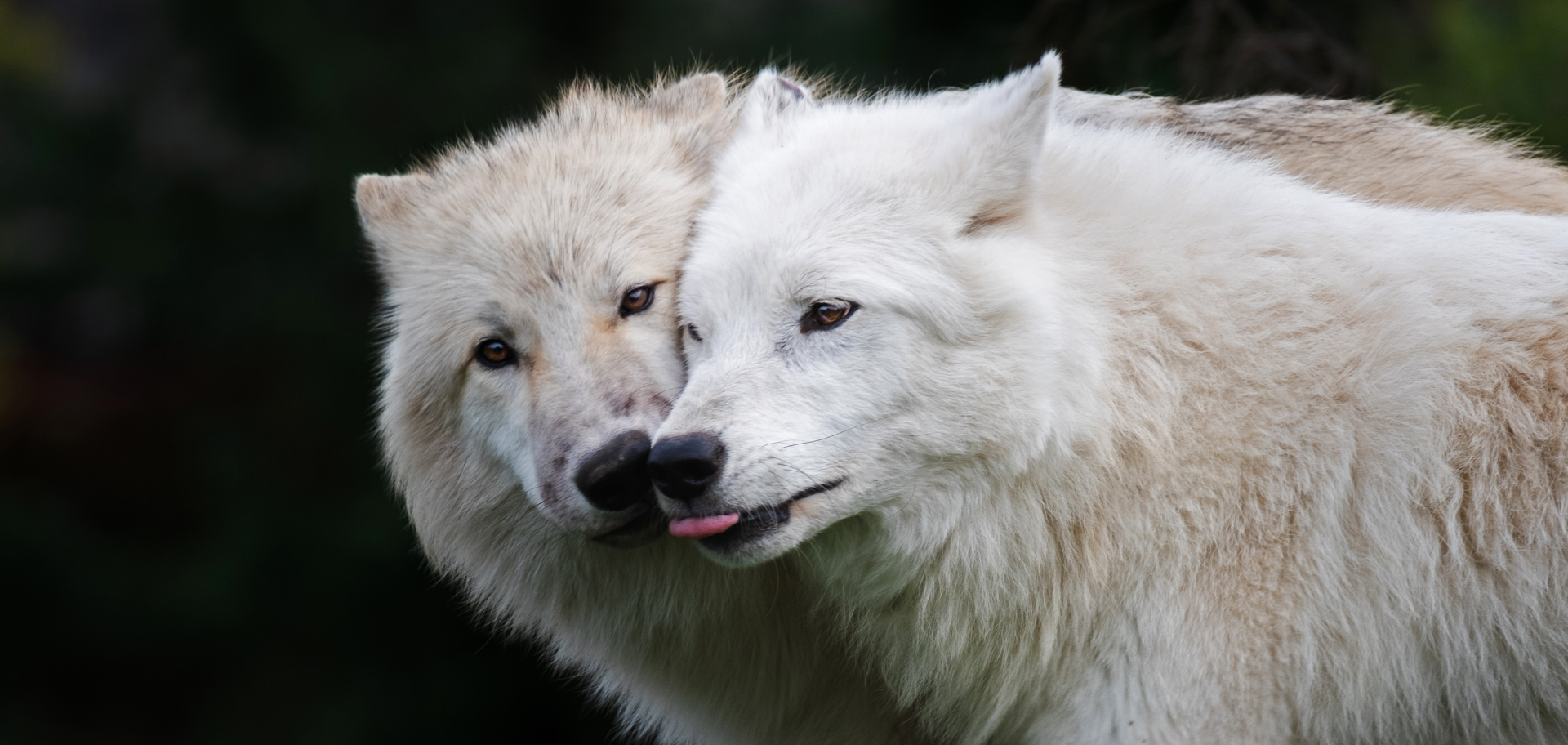
Wolves have been seen engaging in smooching or mouth-to-mouth contact, likely for bonding reasons. ©Louis Shoots/Shutterstock.com
The team also concluded that Neanderthals likely kissed. This conclusion is supported by earlier research showing that humans and Neanderthals interbred and exchanged oral microbes (via saliva transfer), implying that kissing was part of their interactions.
The researchers conclude that while data is still limited—especially beyond the large apes—the project provides a standardized way to report kissing behaviors in nonhuman animals in future studies. They’ve shown that by integrating evolutionary biology with behavioral data, informed inferences about traits that don’t fossilize—like kissing—can be made for both modern and extinct species.
Fish love songs have been recorded for 12 years
Red hinds (Epinephelus guttatus), a commercially important Caribbean grouper species, are protogynous hermaphrodites, starting life as females and later becoming males. Each winter, they travel more than 18 miles to offshore sites to spawn under the full moon (using the lunar light for mating rituals and territorial displays) in large gatherings. Males use rhythmic, low-frequency sounds to attract mates and to defend their localities. This predictable behavior makes them especially vulnerable to overfishing during spawning season.
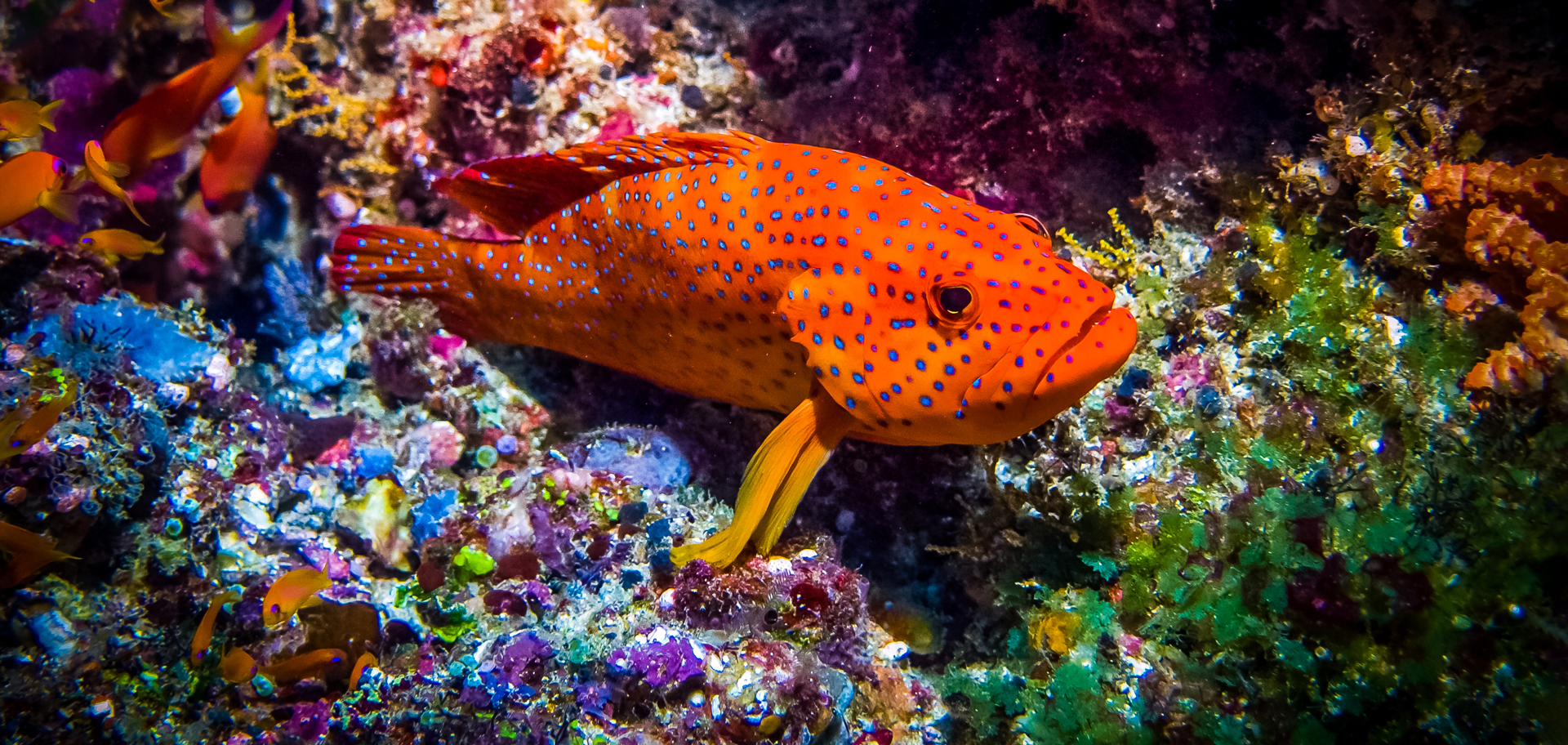
Red hinds are found in tropical and subtropical waters of the western Atlantic Ocean, ranging from North Carolina to Brazil. They inhabit rocky reefs, ledges and mangrove areas, in depths up to about 150 feet. They comprise much of the grouper catch in commercial and recreational fisheries. ©AlexPurple/Shutterstock.com
To examine how the reproductive behavior of red hinds has changed over time, Florida Atlantic University’s Harbor Branch Oceanographic Institute scientists, in collaboration with colleagues from Puerto Rico’s HJR Reefscaping, the University of Puerto Rico and the University of the Virgin Islands, forwent traditional survey methods and instead turned to passive acoustic monitoring. This technique enables continuous, long-term surveilling of reproductive behavior, even in remote or hard-to-access areas, without disrupting the animals or their habitats. The researchers analyzed more than 2,000 hours of underwater recordings from a single spawning site off Puerto Rico’s west coast, which has been continuously monitored since 2007.
Unlike most acoustic studies that track general sound levels, this research focused on specific mating calls tied to distinct behaviors. Red hinds produce two primary sound types: one for courtship and another for territorial defense. Tracking these sounds over time allowed researchers to detect subtle shifts in spawning behaviors and population dynamics.
The analysis confirmed a consistent seasonal pattern in the spawning activity of red hinds, closely aligned with lunar cycles. However, one of the most striking findings was a notable shift in the balance of call types over the 12-year period. Between 2011 and 2017, calls linked to courtship were more common. But starting in 2018, calls linked to competition and territorial behavior became dominant, nearly tripling over the study period.
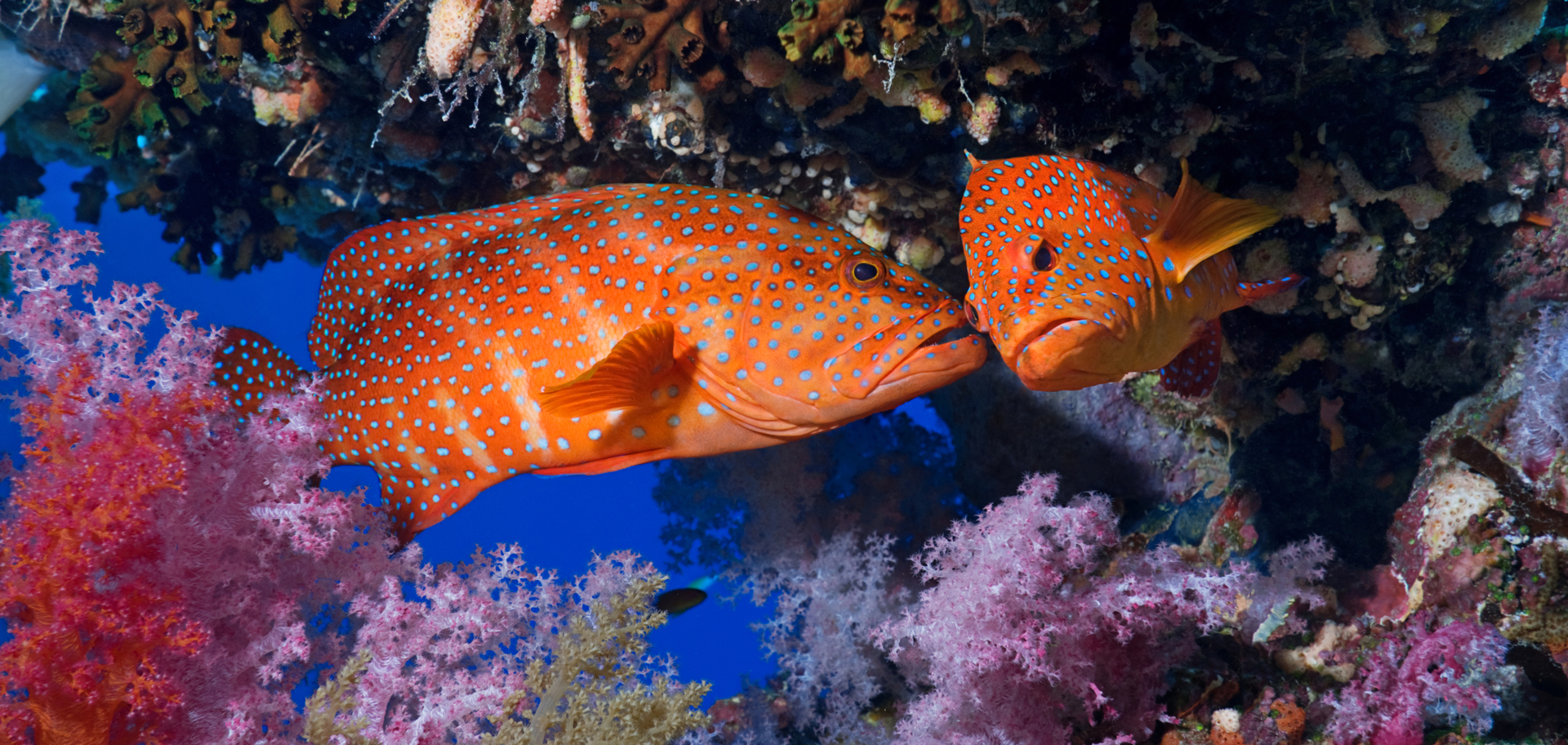
Passive acoustics and advanced machine-learning tools are transforming our understanding of the ocean. By tuning in to red hind “love songs,” researchers can detect any early warning signs of stress. This kind of data is essential for developing strategies to protect spawning grounds and sustain fisheries. ©Levent Konuk/Shutterstock.com
The researchers say that this shift could indicate changes in the population, such as an increase in the number of older or more dominant males; changes in sex ratios; or even a change in the core spawning area. They also observed more frequent and multiple peaks in sound production in recent years, suggesting that spawning may now be spread over more days in each lunar cycle than in the past. These fluctuations could be responses to environmental or population shifts.
The study, published in the ICES Journal of Marine Science, is one of the most extensive and uninterrupted acoustic datasets ever assembled for a reef fish species. It shows that passive acoustic monitoring can be a powerful tool for tracking reproductive behavior over time and detecting early signs of behavioral or population changes, information that is critical for managing and conserving red hinds and similar reef fish species, conclude the scientists. Even a single underwater microphone can reveal a lot about fish populations; and with consistent, long-term monitoring, early warning signs—like shifts in population stress or spawning behavior—can get picked up and give resource managers the information they need to adapt conservation strategies before it’s too late.
Livestock that now elopes with wildlife
Imagine being on a treeless plain with an angry, 2,000-pound, testosterone-crazed, wild camel or wild yak barreling down on you, and you possess only stones as your weapons, propose Colorado State University scientists. While conserving endangered and threatened species is a globally recognized priority, what about the concerns of pastoralist populations around the world who experience conflict between these species and their domestic animals? Many pastoralists are Indigenous peoples with only sticks and stones as defenses against aggressive wild males trying to usurp domestic females—either by lobbing them at wild intruders or building stone walls to contain livestock.
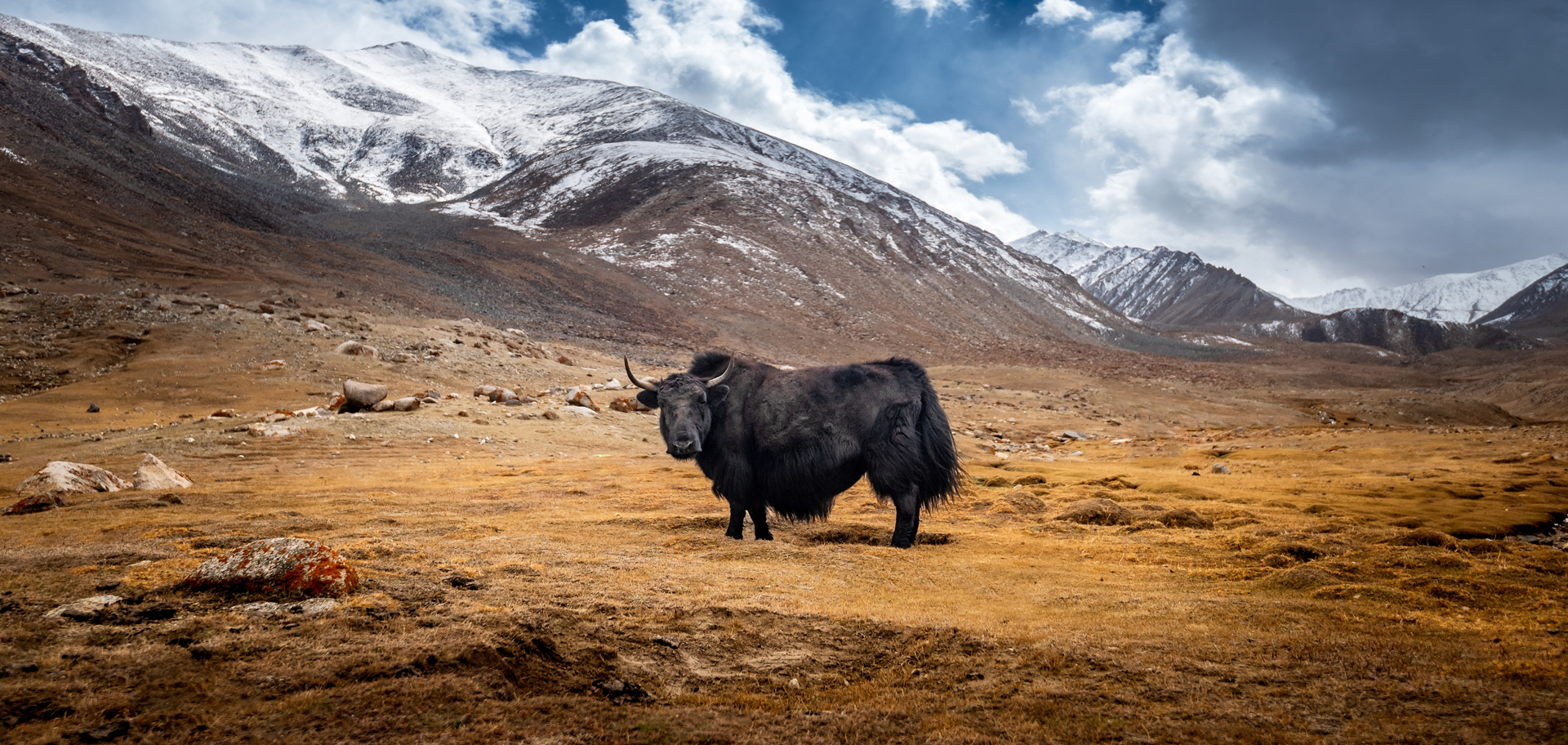
In Nepal, wild yaks were once considered regionally extinct. These elusive animals were rediscovered in the high-altitude Upper Humla in 2014 and are now critically endangered, threatened by habitat loss, poaching and hybridization with domestic yaks. ©sittitap/Shutterstock.com
The problem cuts both ways, though: pastoralists who tangle with wildlife might lose livestock and income or suffer injury or death. However, when wildlife clashes with livestock keepers, the wildlife usually loses.
Wild males that interfere with herders by attempting to court domestic females are sometimes killed out of retaliation. In Nepal, endangered wild yaks, wild camels, elephants, bantengs and gaurs (the latter two are Southeast Asian cattle) often clash with pastoralists while looking for mates. Bison, ibex, wild sheep and guanacos (llama-like wild camels in South America) also seek to procreate with domestic relatives, sometimes to their peril.
However, before judging these frisky, four-legged Casanovas, say the Colorado State University researchers, understand that their mating pool is limited. For some of these native species, less than 1% exist in the wild. The wild ancestors to domesticated stock are displaced as their habitats shrink—sometimes due to the expansion of livestock grazing lands. In places where livestock owners have guns, wild relatives have been killed to prevent intermingling. Such was the fate of many reindeer.
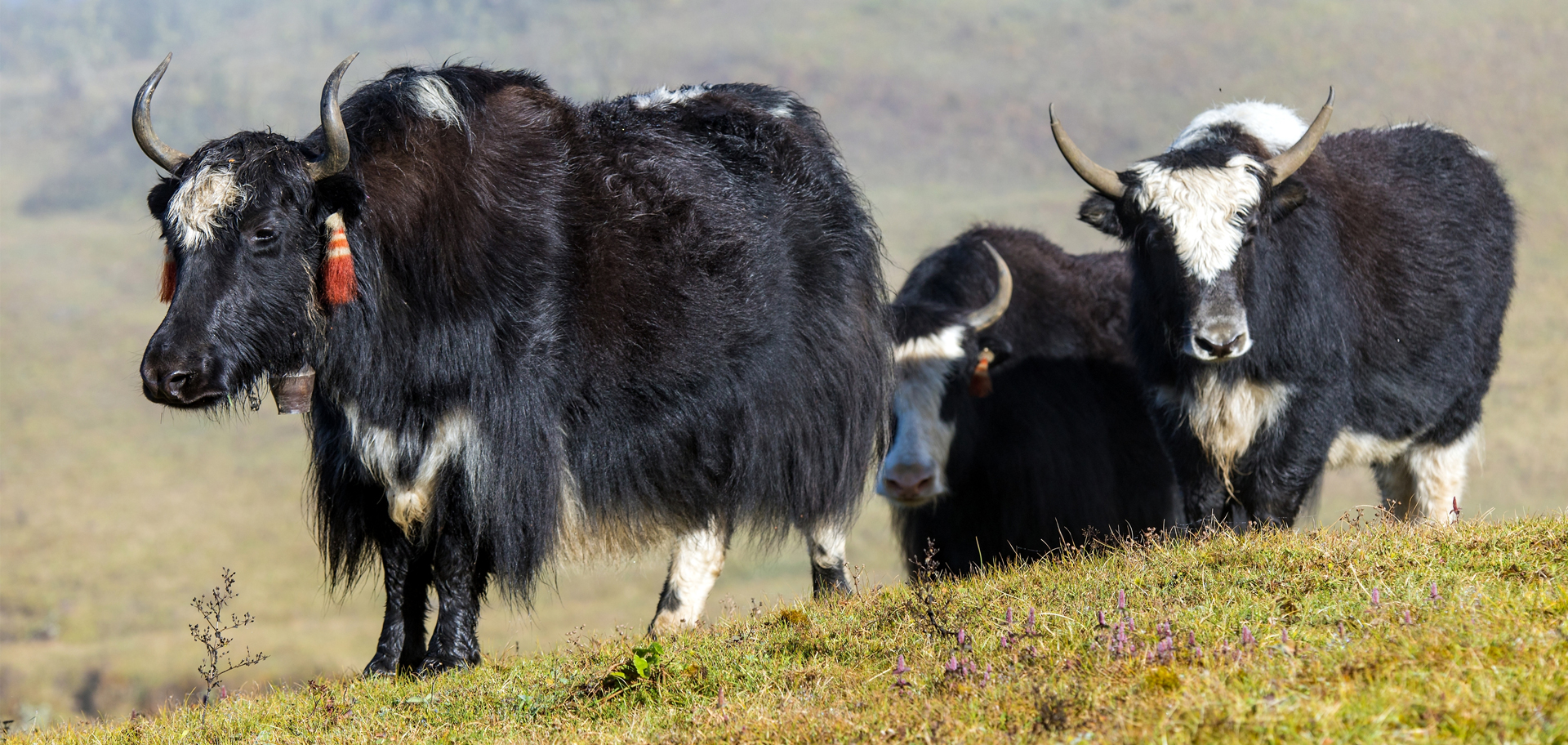
Domestic yaks are smaller, more varicolored and less aggressive than their larger, darker and more combative wild counterparts. Domestic yaks have been selectively bred over centuries for traits like meat, milk, wool and transport, leading to the differences in sizes, colors and temperaments. ©Daniel Prudek/Shutterstock.com
Reindeer and caribou—biologically the same species with different names based on geography—live in the northern reaches of the globe in feral, free-ranging, wild and domestic forms. Wild reindeer numbers have declined dramatically, with some subspecies listed as endangered, mostly due to habitat loss. Domestic Eurasian reindeer were introduced into western Alaska in the 1890s to offer an additional source of food and fiber for the local Indigenous Inupiat peoples. Wild male reindeer, however, lured away domestic females for breeding. Herders in Asia and northern Europe experienced similar conflict; and wild interlopers were kept in check on all three continents through lethal means, to the benefit of herders and to the detriment of biodiversity.
Hybridization and disease spread between wild ancestors and domestic descendants is a global issue affecting conservation and pastoral livelihoods—even in the United States, where bison and bighorn sheep can become susceptible to disease when exposed to domestic partners or vice versa. Herders sometimes favor hybridization because genes from wild progenitors are thought to enhance the hardiness of domestic stock. However, conservationists fear the continuous introgression with domestic relatives because it may gradually erode the genetic integrity of wildlife, leading to the dilution of the wild gene pool over time.
The intermingling of wild animals and livestock may challenge only a small segment of the global human population, but it affects pastoralists on nearly every continent—Africa, the Americas, Asia, Australia and Europe. And while the issue is geographically widespread, solutions must be locally specific and consider community perspectives, state the Colorado State University authors of the study that was published in the journal Global Ecology and Conservation in August 2024. To reduce human-wildlife conflict, conservationists, government officials and herders must come together to develop culturally conscious best practices and solutions, they wrote.

Many animals form strong attachments, display affection and show grief. This Valentine’s Day, celebrate the love around you, whether it’s with a fellow human being or with one of the better-than-humans among us. ©Olga Alper/Shutterstock.com
Love surrounds us
I don’t think there’s any question about whether nonhuman animals experience love. Like us, many animals form strong attachments, display affection and show grief. Such deep bonds go beyond simple instinct.
I hope that you have a happy Valentine’s Day, and that you get the opportunity to celebrate the love that you feel and see around you, whether it’s with a fellow human being or with one of the better-than-humans among us.
Here’s to finding your true places and natural habitats,
Candy