

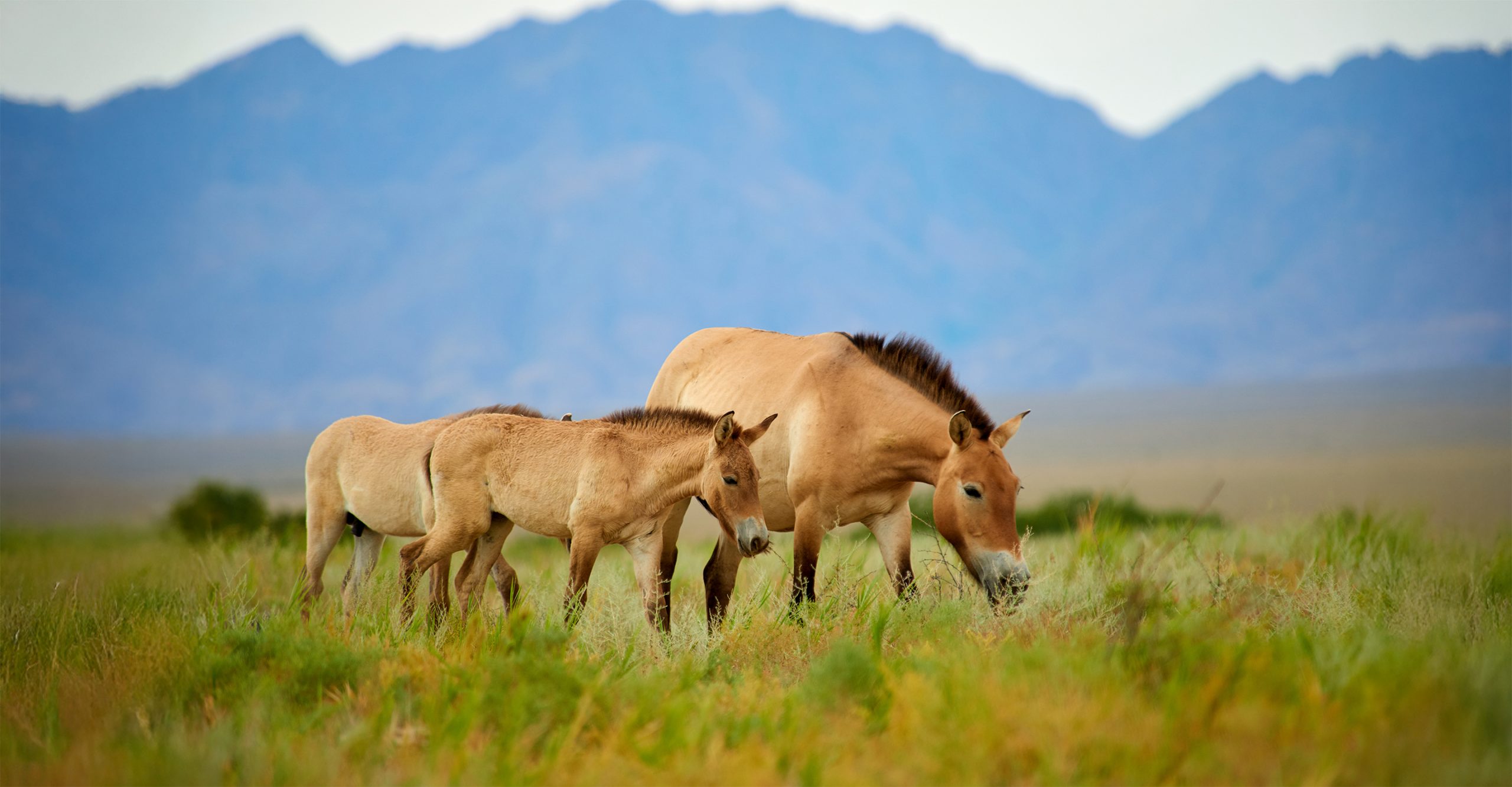
Przewalski’s horses, once endemic to the grasslands of central Asia and known in Mongolia as takhi, have been on some wild rides lately:
—One showed up on a ranch in Colorado, another in Utah.
—One broke out of a trailer carrying him from a zoo in Prague to freedom in Kazakhstan.
—A small herd has been introduced in Spain’s Iberian Highlands.
From being declared extinct in the wild in 1969 when there were only an estimated 200 individuals worldwide, to roaming Mongolia’s steppe in herds hundreds-strong, the stocky little horses are fast becoming emblematic of global conservation success.
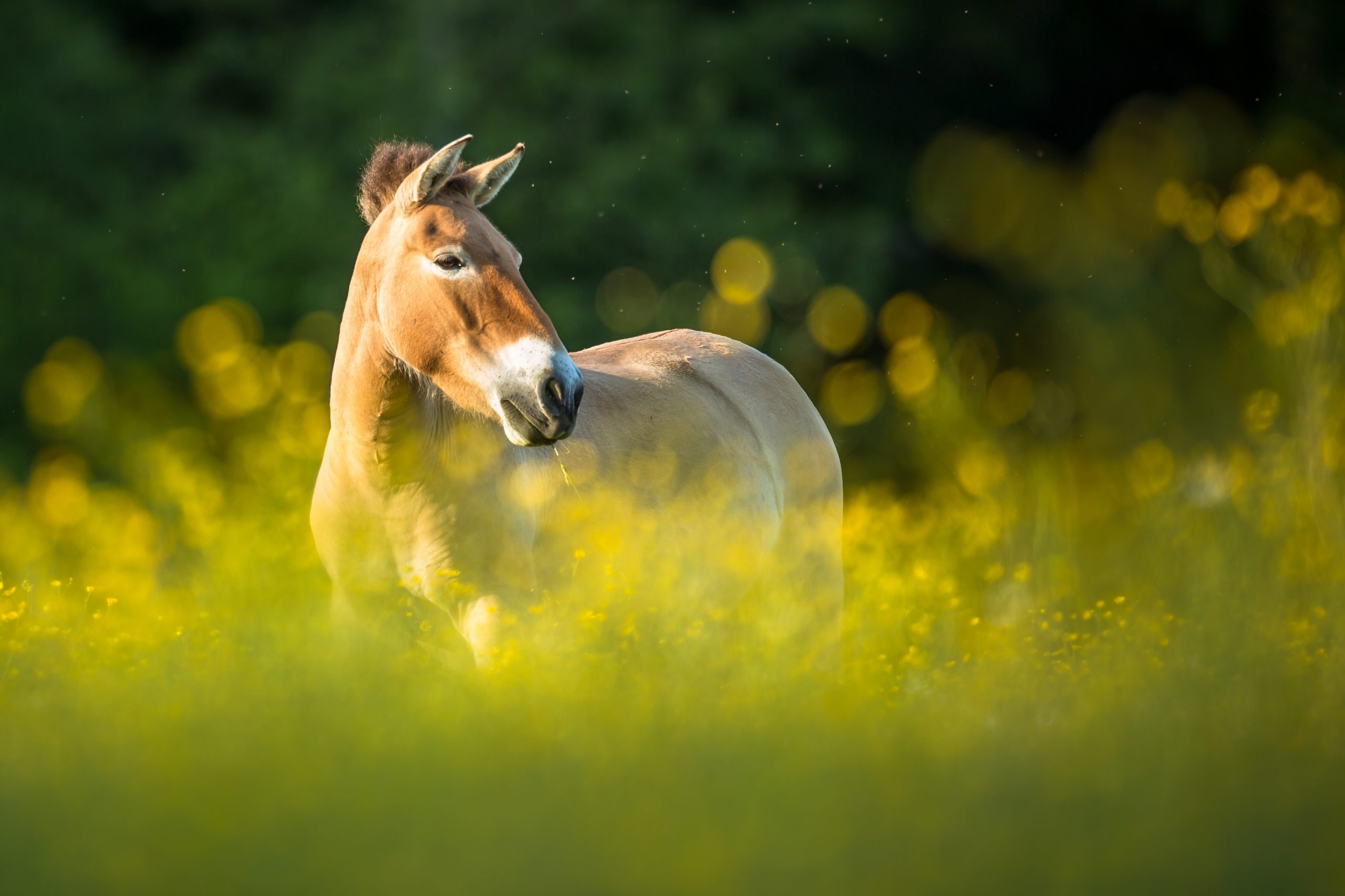
Where can travelers encounter Przewalski’s horses, or takhi, today?
Today, hundreds of takhi roam freely in Mongolia’s Hustai National Park, offering travelers one of the most meaningful opportunities anywhere to observe wild horses living as they have for millennia.
Guests on Nat Hab’s Untamed Mongolia itinerary enjoy special access, generally reserved only for researchers, to Hustai National Park’s core zone where the largest herd of takhai in Mongolia roam.
What makes Przewalski’s horses different from other horses?
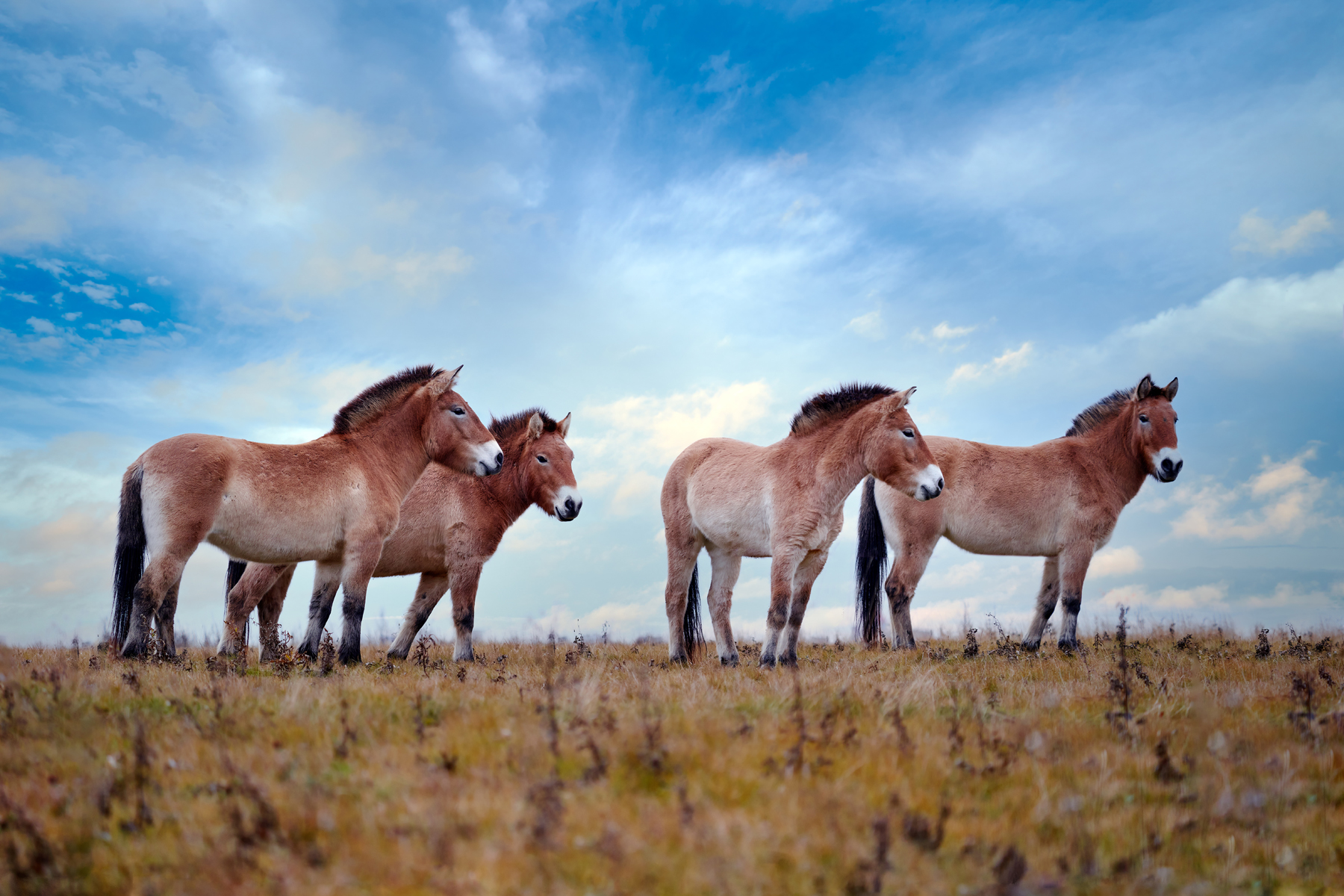
Takhi, compact, dun-colored, are often described as the world’s last surviving lineage of truly wild horse. Their return to the wild is not the result of a single project or organization, but of more than three decades of international conservation cooperation that brought the species back from the brink, and back to its ancestral range.
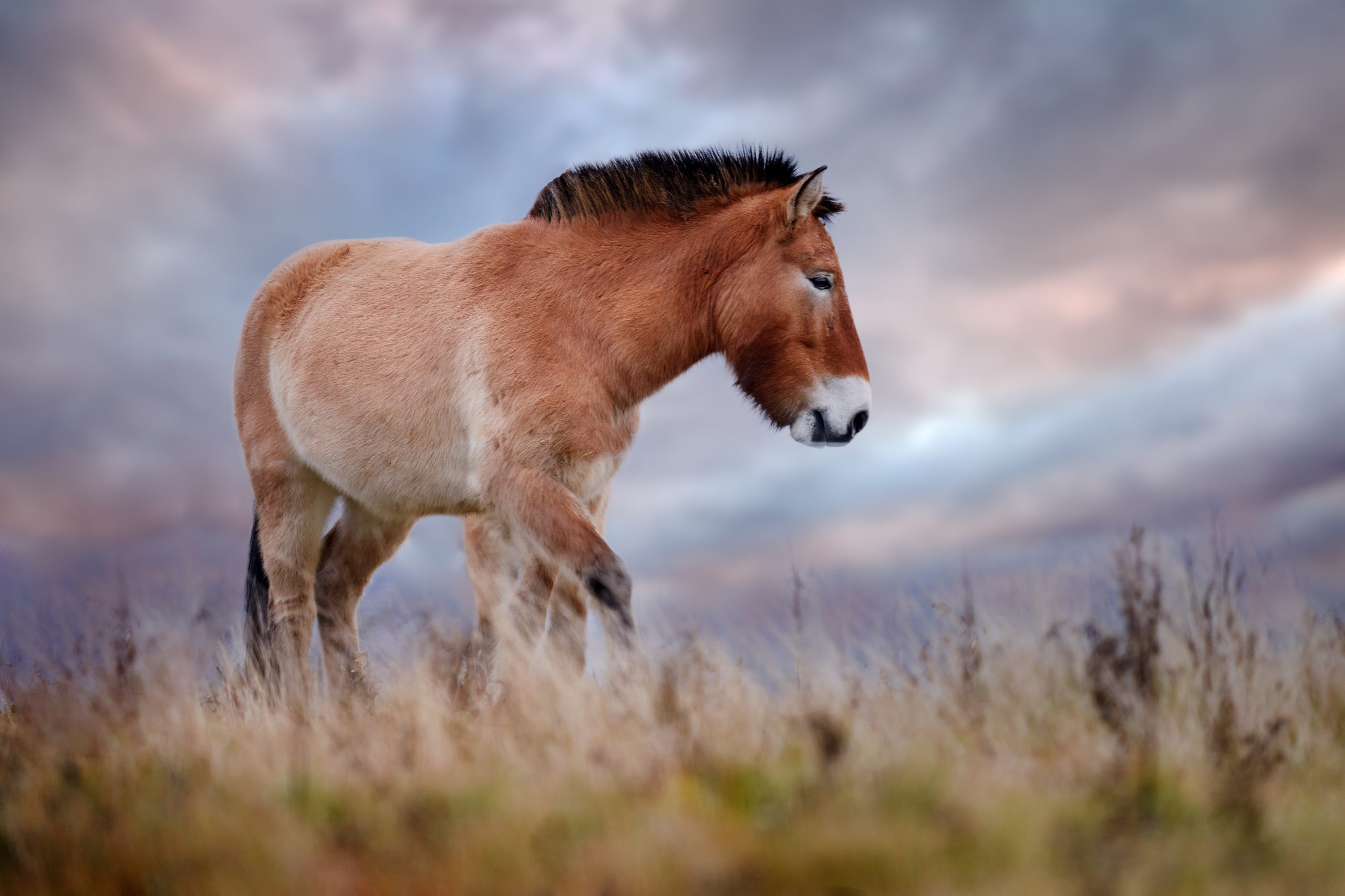
Przewalski’s horses are not feral domestic horses. They retain physical, genetic, and behavioral traits shaped entirely by life on the Central Asian steppe.
Key characteristics include:
—66 chromosomes, compared with 64 in domestic horses
—An evolutionary split from domestic horse lineages tens of thousands of years before domestication
—Short and stocky builds, upright manes, no forelock, dark dorsal and leg markings
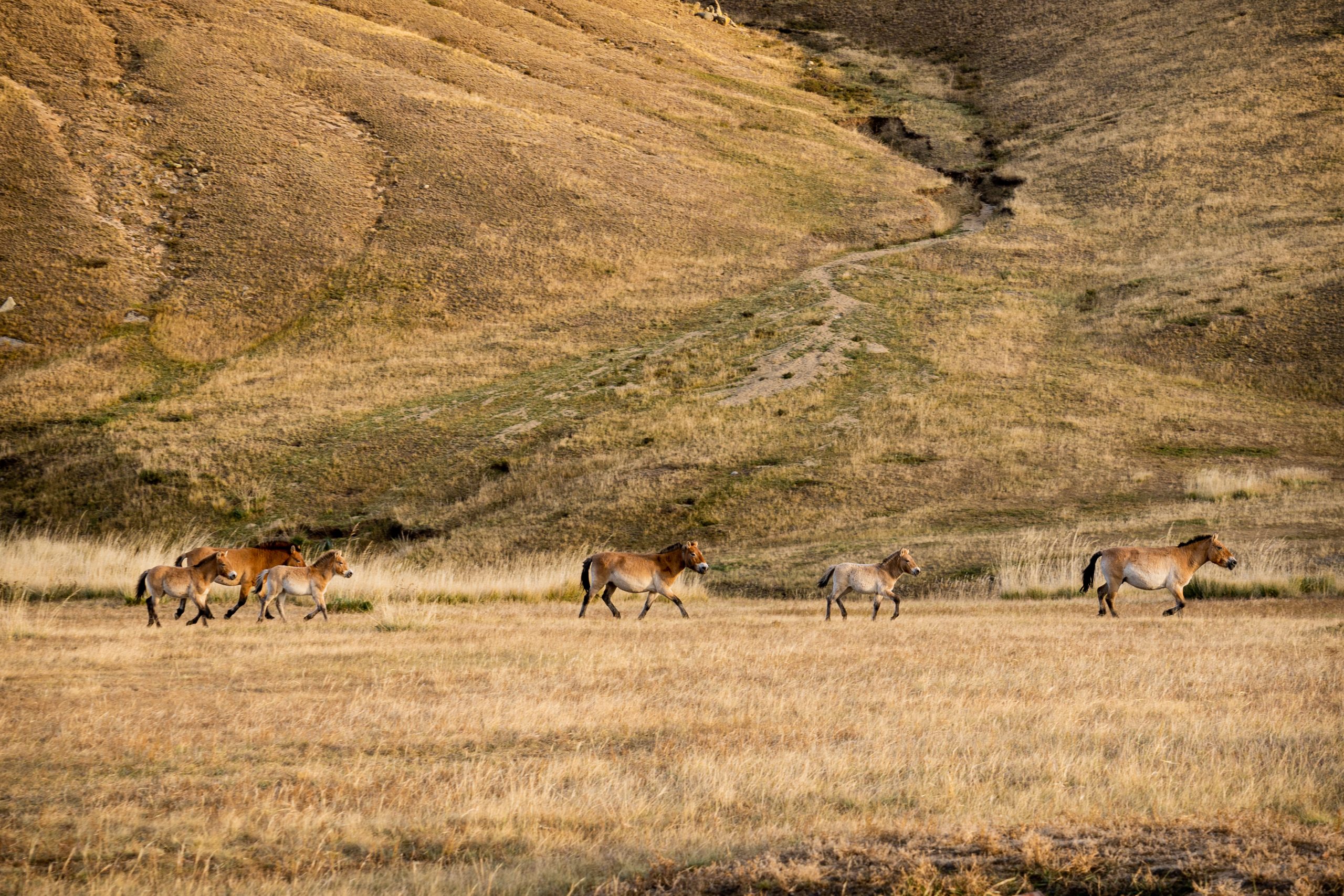
In the wild, takhi form stable social groups led by a dominant stallion, accompanied by mares and foals. Young males gather in bachelor herds until they can establish groups of their own. Unlike domestic horses, takhi retain a strong flight response and avoid close contact with humans. Observing them at Hustai reveals equine behavior shaped entirely by natural selection.
Conservation organizations including WWF emphasize takhi’s ecological role as a native wild grazer. Przewalski’s horses evolved without human management and continue to play an essential role in steppe ecosystems.
Why did takhi disappear from the wild?
By the mid-20th century, Przewalski’s horses had vanished from their native range due to:
—Habitat loss and competition with livestock
—Overhunting
—Hybridization with domestic horses
—Political and social upheaval across Central Asia
In 1969 fewer than 200 Przewalski’s horses remained worldwide, all in captivity and all descended from a small founder population captured before the mid-20th century. The species survived through carefully coordinated international zoo-based breeding programs that preserved its remaining genetic diversity before reintroduction.
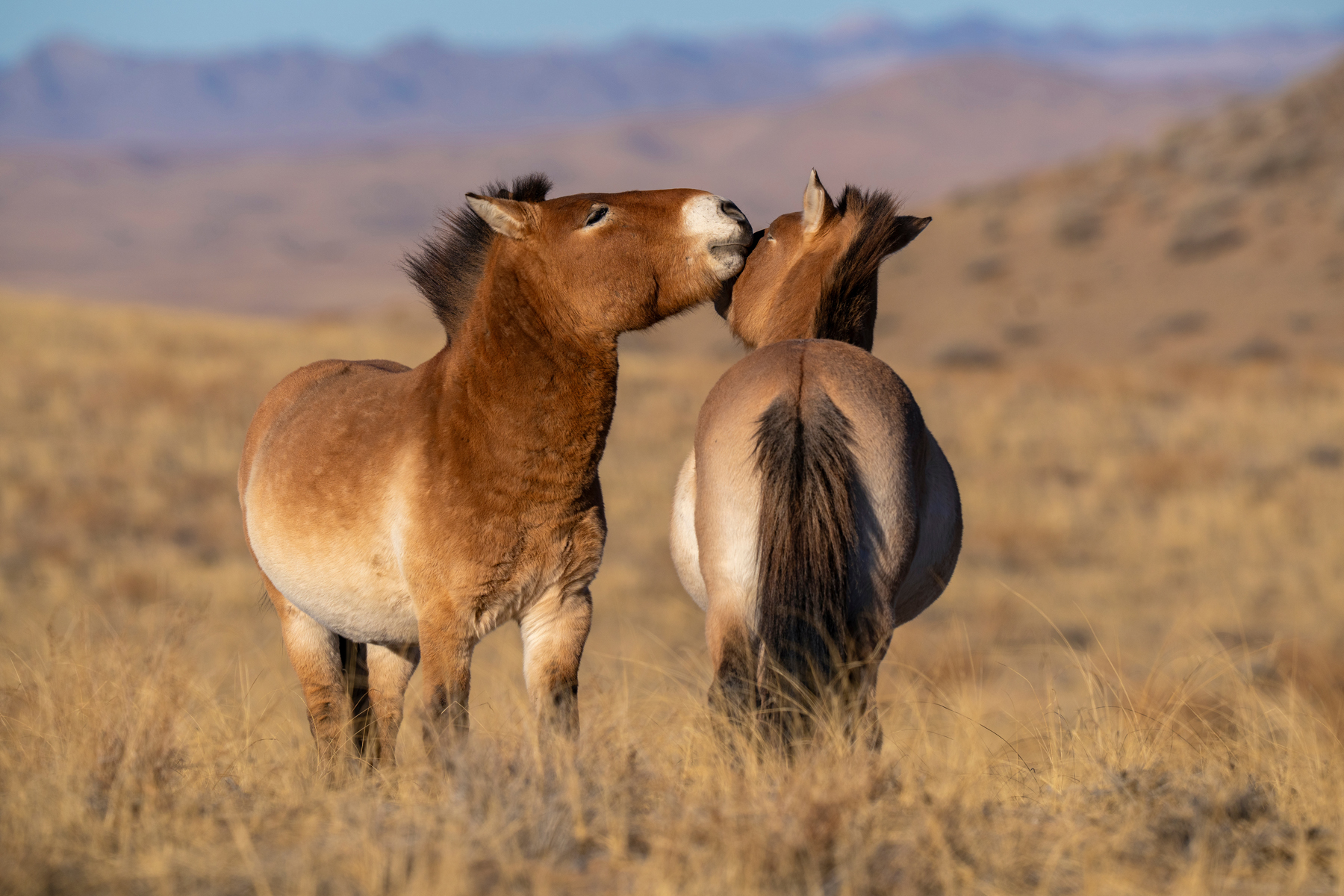
How did Przewalski’s horses return to Mongolia?
Modern takhi recovery began in the early 1990s with two priorities:
—maintaining genetic diversity through careful breeding and
—restoring the species to multiple sites within its historic range.
Implementation began in Mongolia and China, making Mongolia one of the earliest testing grounds for whether captive-bred takhi could survive as wild animals.
On June 5, 1992, the first 16 Przewalski’s horses arrived at Hustai National Park. Numerous additional releases followed at other Mongolian sites, including Great Gobi B Strictly Protected Area and Khomiin Tal in western Mongolia. Now approximately 1000 takhai roam across Mongolia.
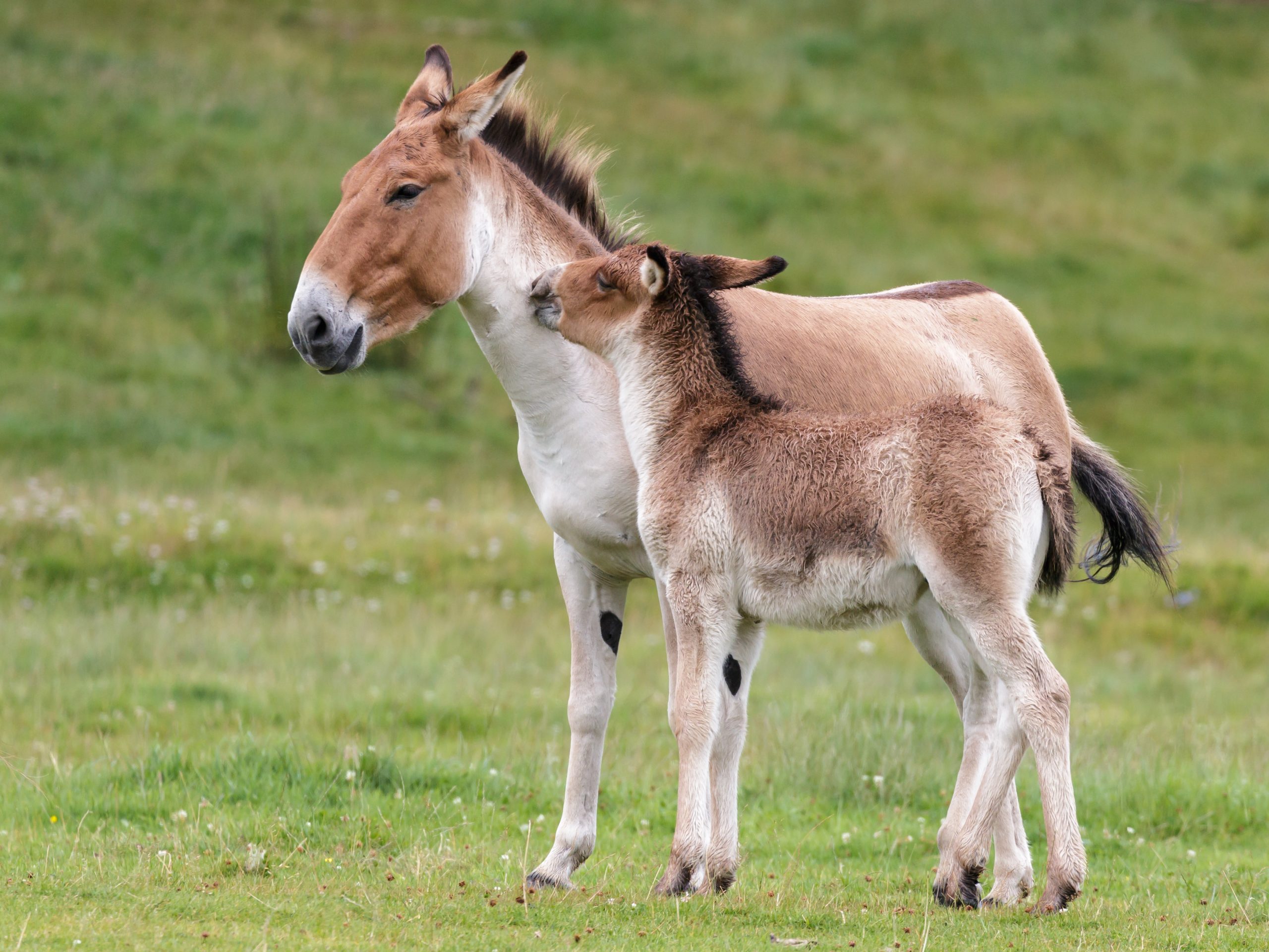
Why is Hustai National Park central to takhi recovery?
Hustai National Park represents one of the first places where Przewalski’s horses successfully re-established as free-ranging wild animals. Today it is home to around 450 takhi, nearly half of Mongolia’s free-ranging population.
Hustai’s mountain steppe landscape proved suitable for takhi to reproduce naturally and form self-sustaining herds, providing early proof that the species could once again survive without intensive human intervention.
From our private mobile ger camp in the mountain steppe of Hustai’s buffer zone, Nat Hab guests have special permitted access near the Core Zone and use researcher-only routes for wildlife drives. This is where takhi (Przewalski’s horses) thrive.
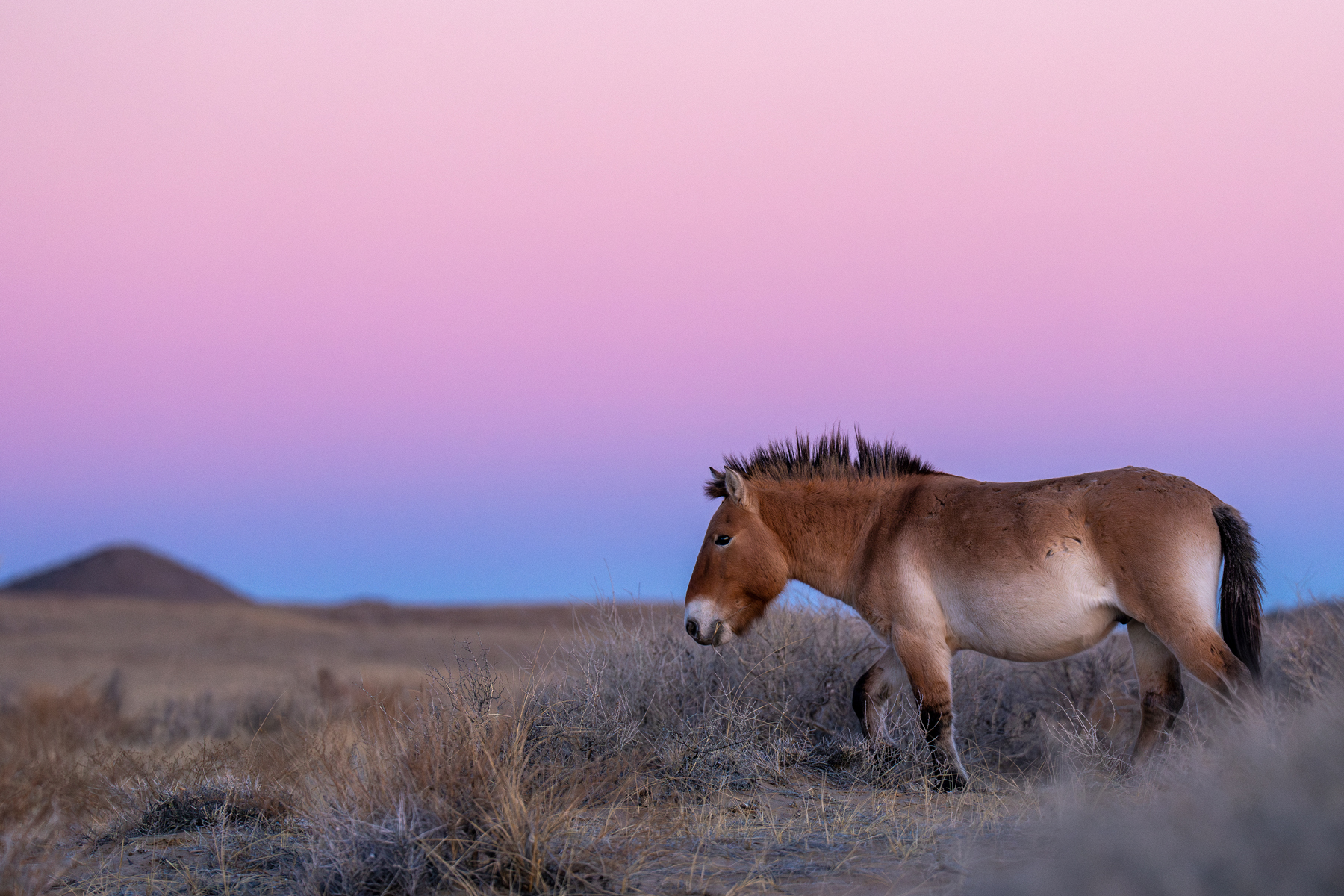
Wildlife Spotting in Mongolia’s Hustai National Park
Hustai National Park also supports a rich community of wildlife, with documented populations including:
—Wapiti/Red deer:A common sight within the park
—Mongolian gazelle: Large populations inhabit the grasslands
—Siberian ibex
—Siberian marmot: Burrowing rodents that live in family groups
—Gray wolf: Elusive but present, sometimes tracked with park biologists
—Eurasian lynx
—Pallas’s cat (manul): An elusive, nocturnal feline rarely seen in daylight
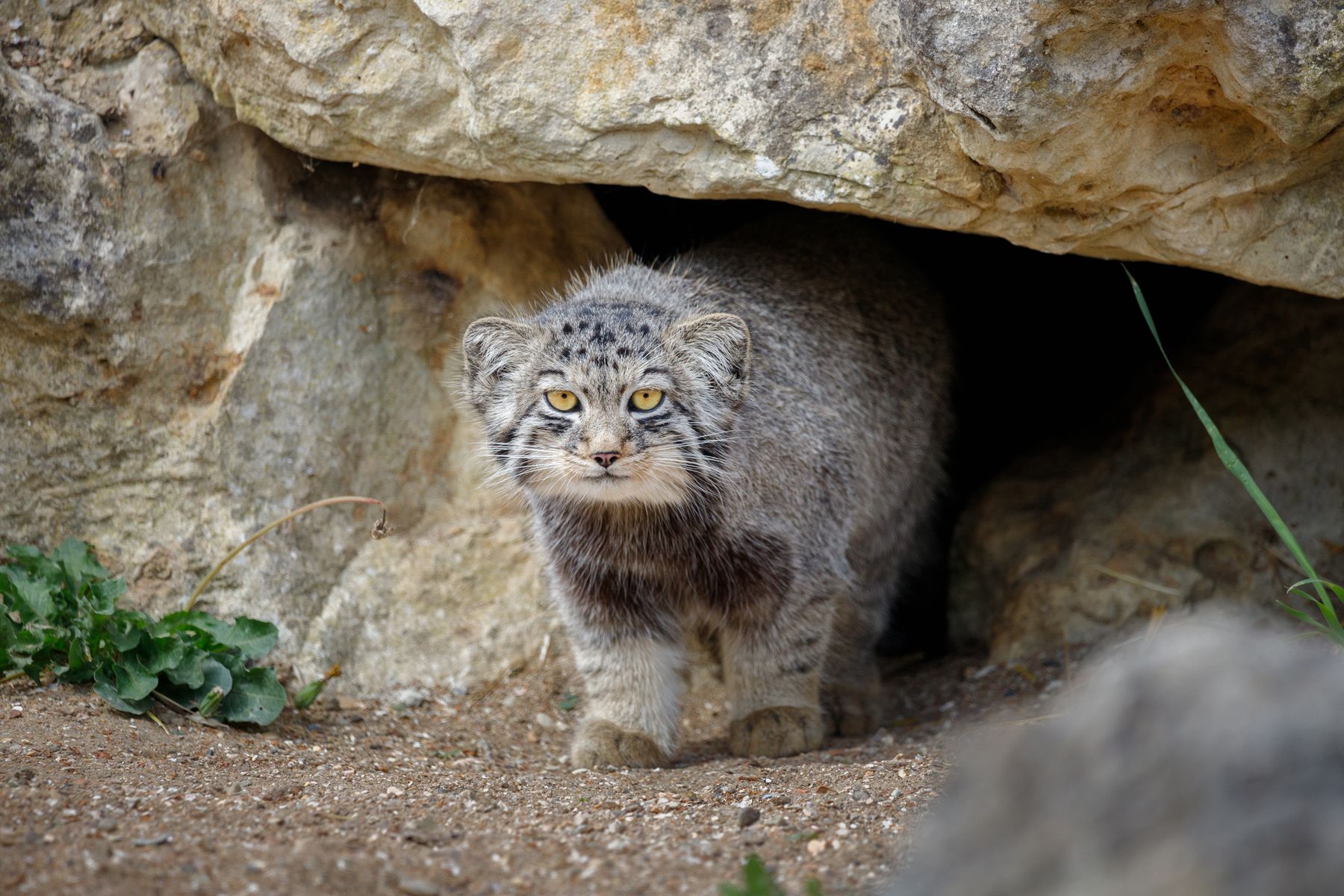
Pallas’s cat (manul)
Birdwatching in Hustai National Park
Hustai is designated an Important Bird Area (IBA) with consistent reports of ~270 bird species, including:
—Golden eagle: A common resident raptor
—Lammergeier: An impressive bearded vulture
—Black stork: A striking wading bird
—Great bustard: A large ground-dwelling bird of the steppe
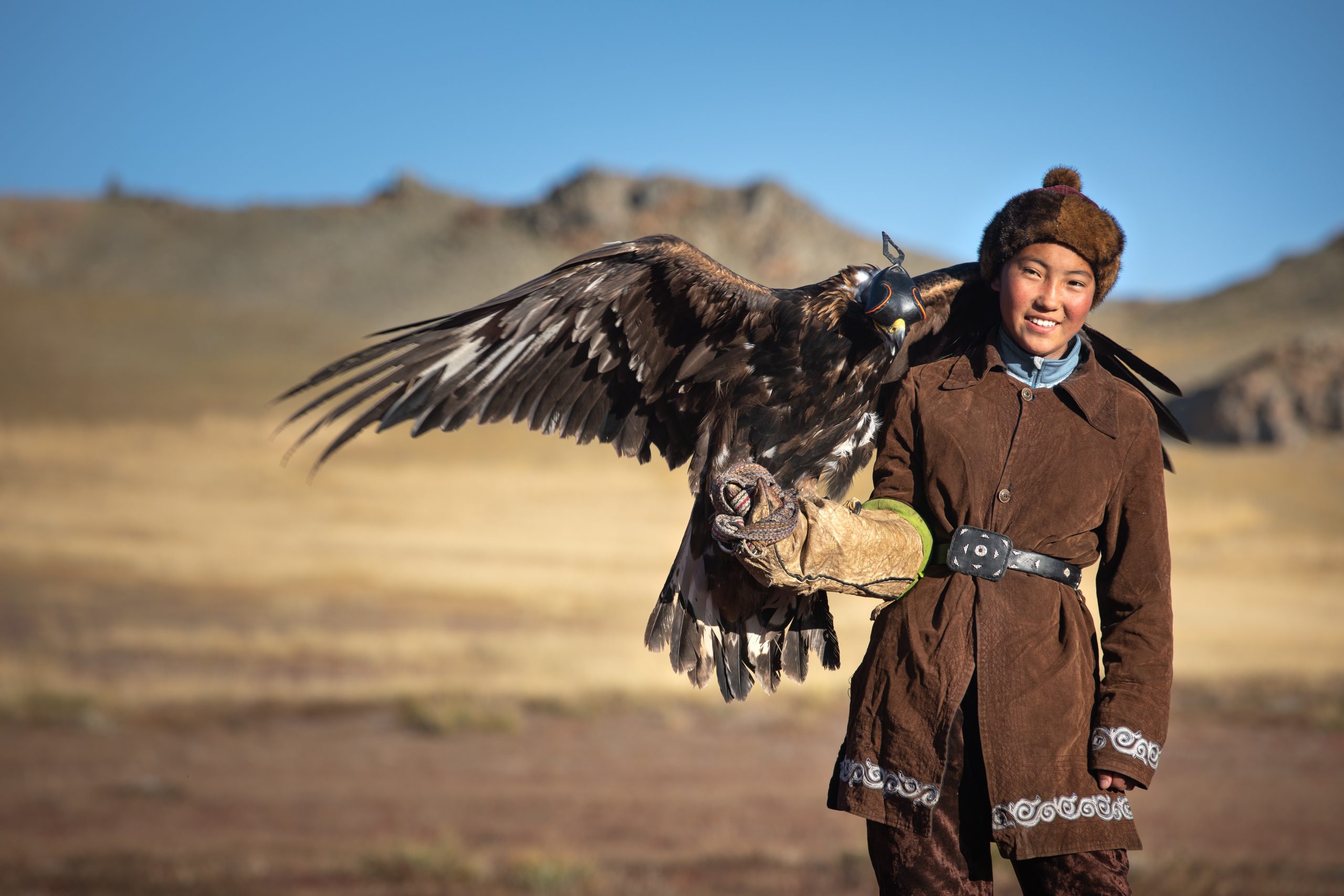
Kazakh Huntress with her golden eagle in Ulgii, Western Mongolia.
How do culture and archaeology connect to takhi survival?
Takhi recovery at Hustai is inseparable from Mongolia’s long relationship with horses. Takhai are frequently depicted in art.
Archaeological sites within the park, including 4,000-year-old deer stones and burial mounds, reveal how horses have shaped life on the steppe for millennia.
On Nat Hab’s Untamed Mongolia expedition, guests stay in a private mobile ger camp within Hustai’s buffer zone. Visits with local nomadic families highlight an enduring horse culture, where riding remains a skill learned in early childhood and livestock stewardship supports coexistence with wildlife.
Why the takhi’s return to Mongolia matters
The return of Przewalski’s horses to Mongolia is a rare conservation success built on patience and partnership. From fewer than 200 captive animals to thriving wild herds and reintroductions in China, Kazakhstan, even Spain, the Przewalski’s horse recovery demonstrates what is possible when international cooperation aligns with long-term stewardship.
Every takhi seen today at Hustai traces its lineage back to a small group of zoo-bred horses and a decision made more than 30 years ago to give the world’s last wild horse a second chance on its ancestral steppe. Encountering these animals in the wild is a chance to witness a conservation success story currently unfolding.
Natural Habitat Adventures’ Untamed Mongolia expedition offers rare access to the places and people that made this recovery possible, inviting guests to witness one of the most meaningful wildlife returns of our time.
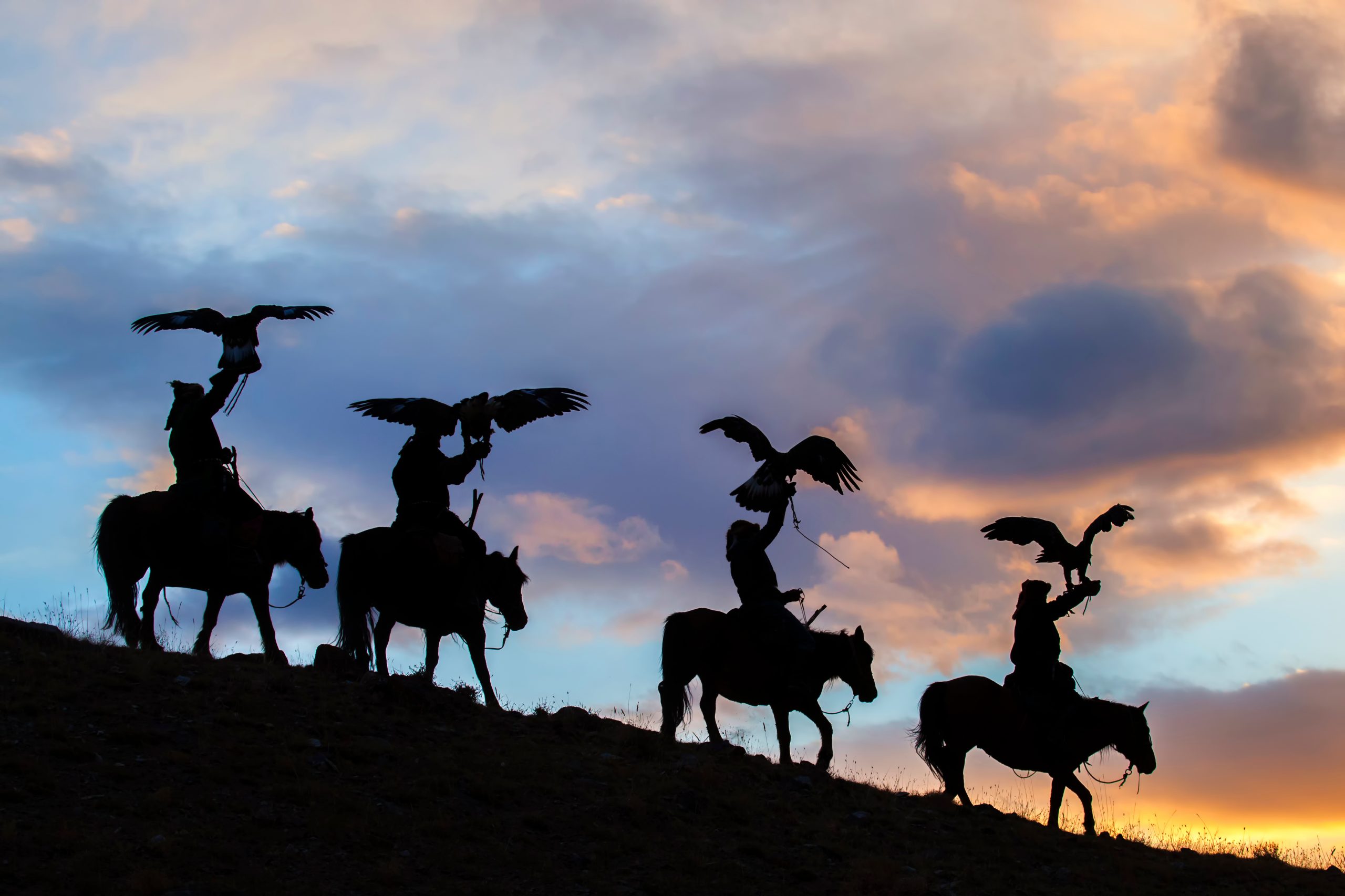
Silhouette of Mongolian Eagle Hunters on horseback.