

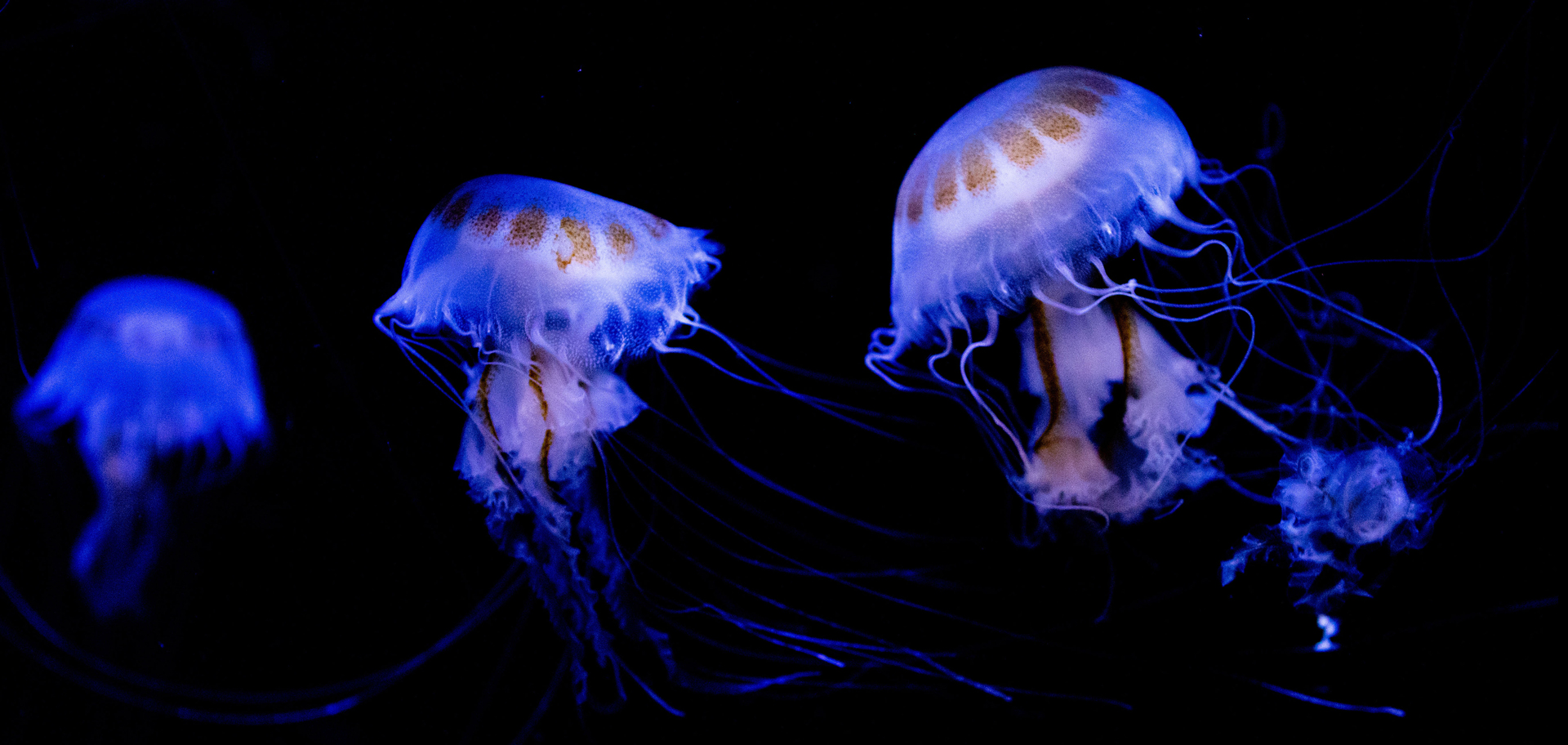
About 50% of jellyfish species are bioluminescent. They generate a blue or green glow through chemical reactions to attract prey, to communicate, and to confuse and defend against their attackers.
Natural lights in nature come in two familiar forms: bioluminescence and fluorescence. They differ primarily by their light source: bioluminescence is a chemical reaction within an organism that creates its own light, while fluorescence is a physical process where an organism or object absorbs external light and reemits it. In other words, bioluminescence acts like a glow stick, whereas fluorescence behaves like a fluorescent dye.
Recently, researchers discovered fluorescent pigments in the feathers of long-eared owls that can only be seen by humans with the help of ultraviolet (UV) light. And deep below the Earth’s surface, mineral and rock formations hide a secret brilliance. Under a black light, however, chemicals fossilized within them gleam in radiant colors. Scientists hope to use these fluorescent features to understand how the caves formed and the conditions for supporting life in extreme—and even extraterrestrial—environments.
On the bioluminescence side, scientists are making strides in understanding firefly population dynamics on a continental scale. A new study indicates that fireflies—part of the beetle order—are sensitive to various environmental factors, from short-term weather conditions to longer climatic trends. Could the iconic, natural lights from these insects soon wink out?
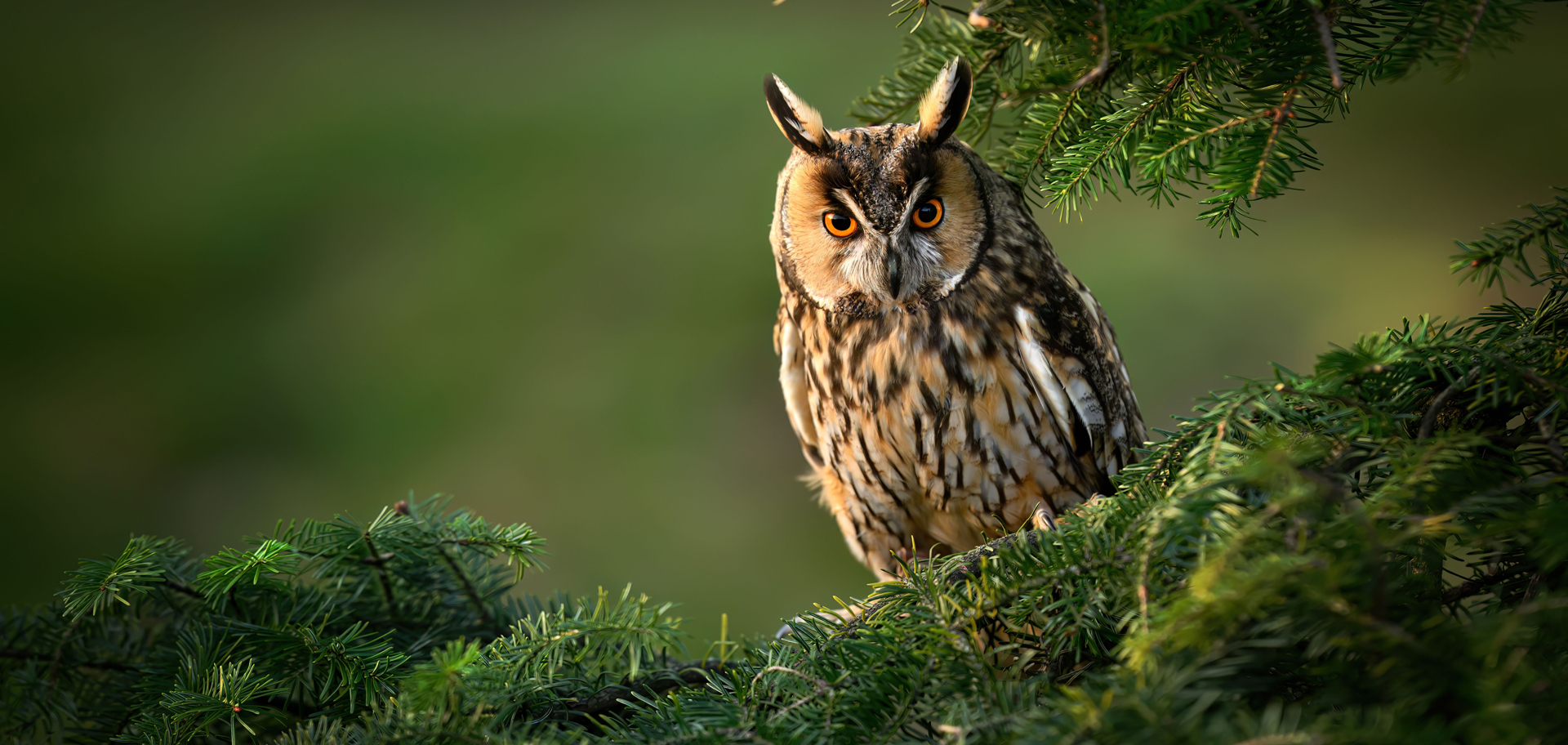
Long-eared owls seem to wear a surprised expression thanks to ear tufts that typically stand straight up like exclamation points. These nocturnal hunters roost in dense foliage, where their camouflage makes them hard to find.
Fluorescent bird plumage
When we look around in nature, we can see an astounding variety of physical differences in wildlife: beaks, claws, flippers, fur, hooves, paws, scales and wings, for example. But now, researchers from Pennsylvania’s Drexel University’s College of Arts and Sciences reveal that there is likely even more variation concealed from our perception.
In a study published in The Wilson Journal of Ornithology in March 2025, the Drexel University scientists report their discovery of fluorescent pigments in the feathers of long-eared owls that can only be seen by humans with the help of ultraviolet light.
To conduct the research, the Drexel team used a fluorometer, a device that measures fluorescence (the light that is emitted after absorbing radiation, such as ultraviolet light), to assess the amount of fluorescent pigments in the feathers of long-eared owls migrating through the Upper Peninsula of Michigan in the spring of 2020.
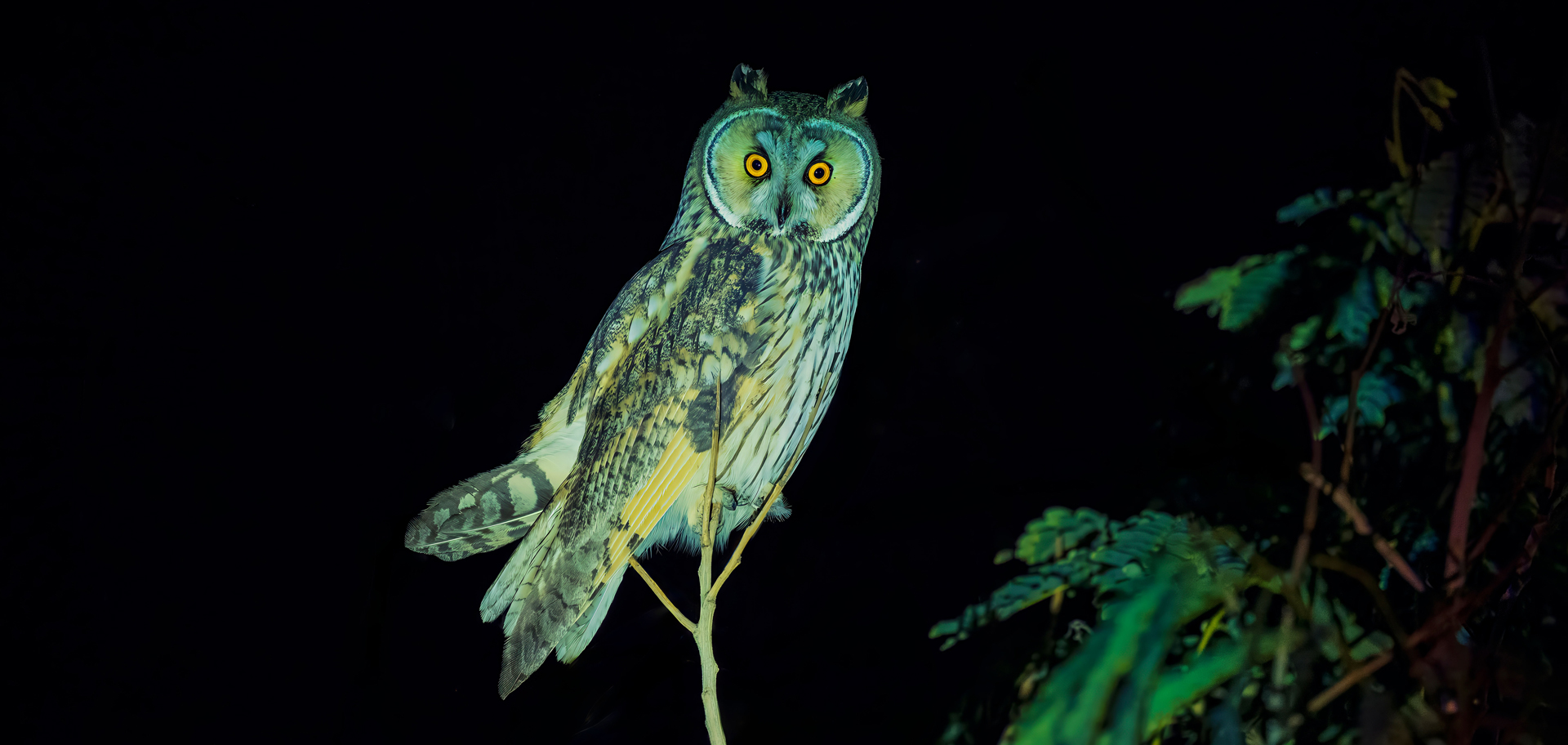
Fluorescent feathers in owls could be used to age birds in the field, since the intensity of their glow dissipates with time.
The researchers state that although identifying which species have fluorescent pigments is important, describing how such pigments vary within a species is needed to understand what their function is. In many bird species, pigments are used by males to attract females, which is why most people think of males as being more colorful than females. But the Drexel research team suspects that the function of these pigments is not necessarily related to sexual signaling. In fact, female long-eared owls were found to have a much higher concentration of these pigments in their feathers. Moreover, this trait didn’t follow a strict binary; the amount of fluorescent pigments in these owls existed on a spectrum related not only to gender but to age and size, as well.
In their conclusion, the researchers explain that fluorescent pigments have likely been used by animals for a long time, but technology has limited the study—or even acknowledgement of the pigments—until very recently. Discovering this “hidden” trait in long-eared owls is just the beginning of learning what the fluorescence means, where else it can be found, how it got there and why it’s there. This, they say, is an exciting time to be interested in studying bird plumage.
Fluorescent cave formations
While long-eared owls show us that fluorescence glows above us in the skies, caves are demonstrating that it is also deep beneath our feet. Recently, scientists found that under a black light, chemicals fossilized within mineral and rock formations in South Dakota’s Wind Cave shine in dazzling shades of blue, green and pink. Scientists are using these fluorescent features to understand how the caves formed and how life can be supported in extreme environments, which might reveal how life could persist in faraway places, such as on Jupiter’s icy moon Europa.
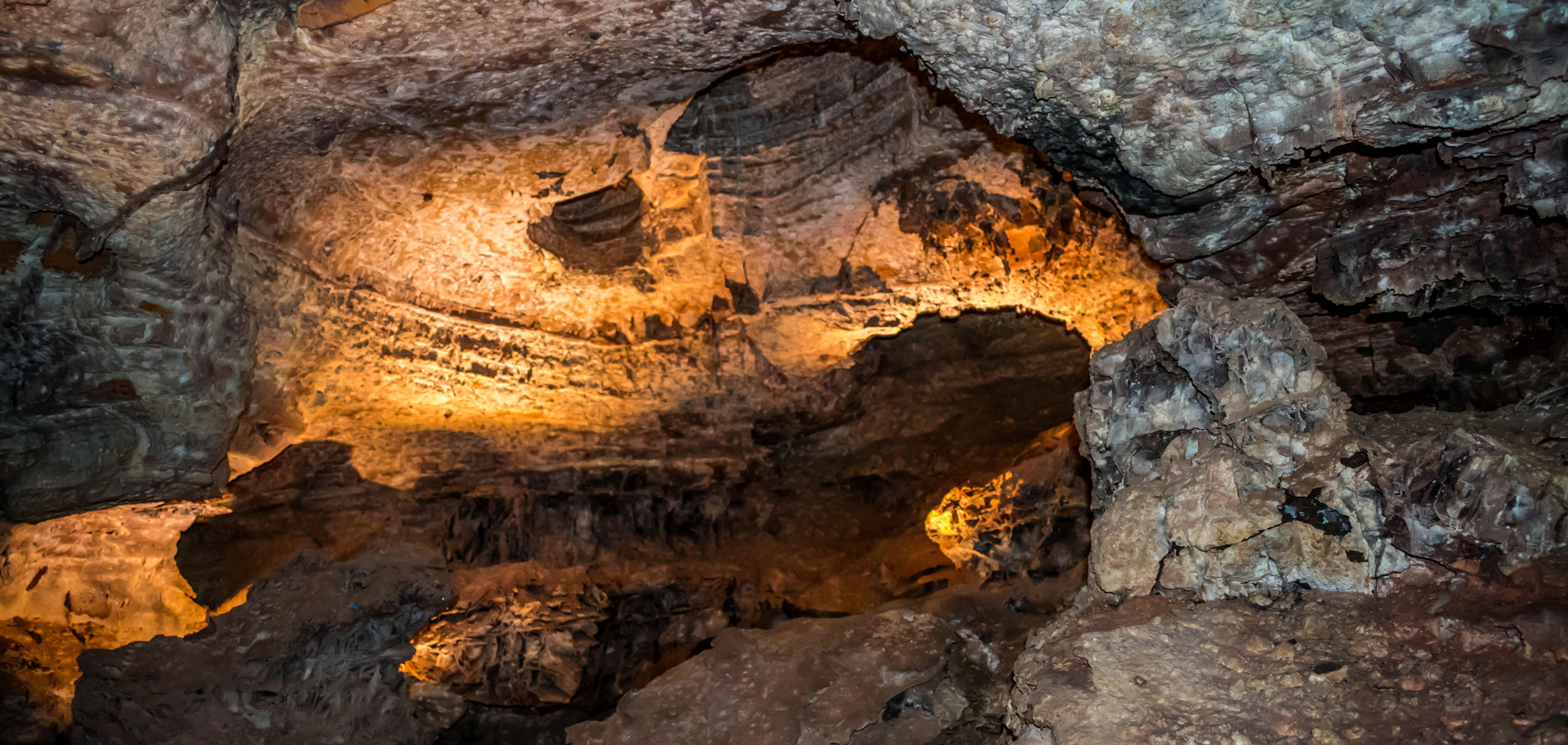
Wind Cave National Park, located in the Black Hills of South Dakota, is renowned for being one of the world’s longest and most complex caves. In 1903, it became the first cave designated as a national park. Researchers come here to better understand the chemistry that’s taking place underground.
The chemistry in South Dakota’s Wind Cave is likely similar to places like Europa—and easier to reach. That’s why astrobiologists at the University of Northern Iowa ended up hundreds of feet belowground to investigate the life-forms and minerals in these cold, dark conditions.
As the astrobiologists began to venture into new areas of Wind Cave and other caves across the U.S., they mapped the rock formations, passages, streams and organisms they found. As they explored, they used black lights to look at the minerals in the rocks.
At first glance, most of the walls looked completely blank and devoid of anything interesting, state the scientists. But when they turned on the black lights, what used to be just a plain, brown wall would suddenly turn into a bright, otherworldly canvas with layers of fluorescent minerals that, for example, could indicate where a pool of water used to be 10,000 or 20,000 years ago. Almost like “chemistry fossils,” the colors corresponded with different concentrations and types of inorganic and organic compounds.
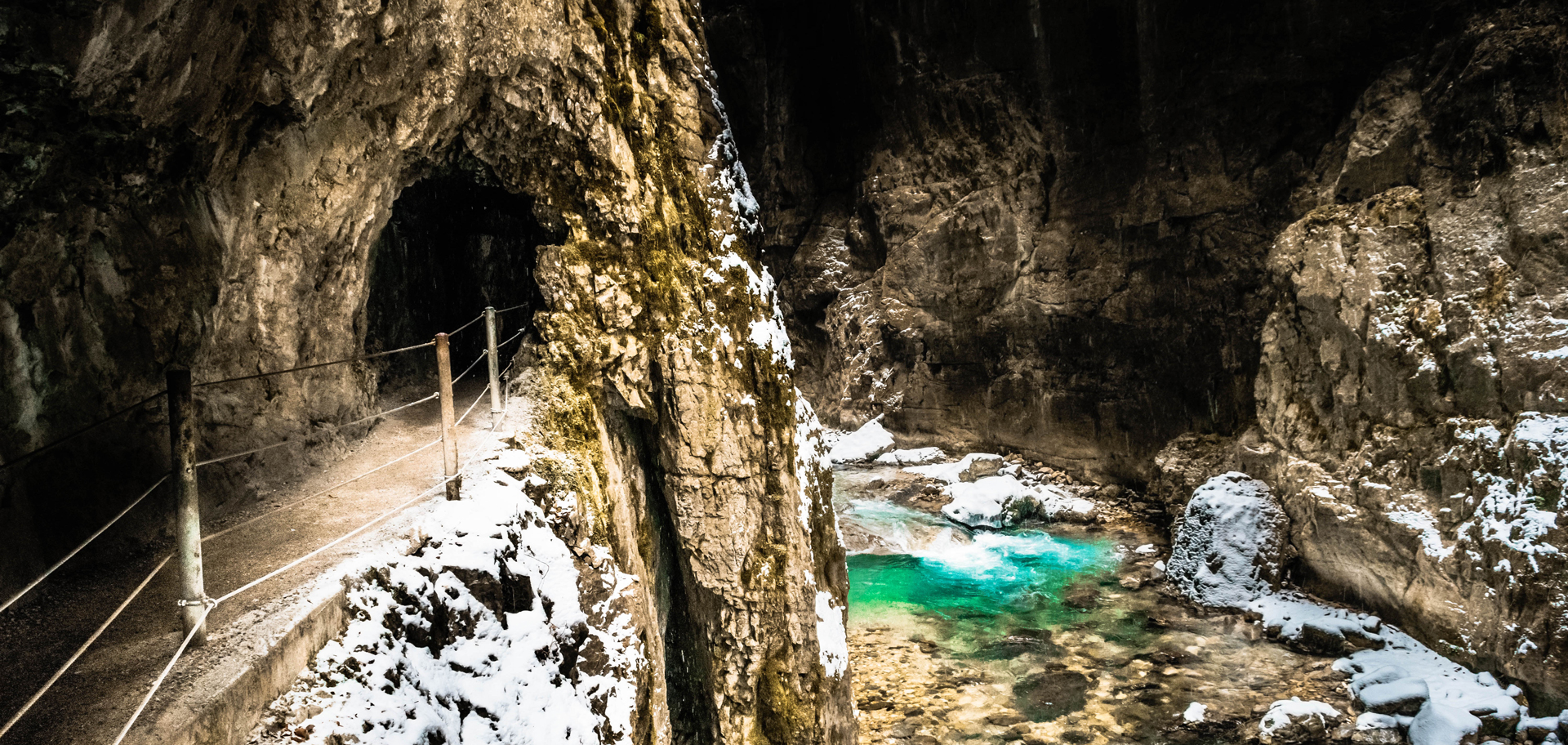
Mystery Cave is the longest cave system in Minnesota, running more than 13 miles. The cave consists of a beautiful mix of flowstone, pools, stalactites and stalagmites. Conducting science here, however, is challenging, requiring squeezing through spaces less than a foot wide for hundreds of feet. ©McGhiever, Wikimedia Commons
Typically, to understand the chemical makeup of a cave feature, a rock sample is removed and taken back to the lab. But the University of Northern Iowa researchers collected the fluorescent spectra—which is like a fingerprint of the chemical makeup—of different surfaces using a portable spectrometer while on their expeditions. That way, they could take the information with them but leave the cave intact.
Even with that, however, doing science in a cave is challenging. For example, in the 48-degrees-Fahrenheit temperature of Minnesota’s Mystery Cave, the team had to bury the spectrometer’s batteries in hand-warmers to keep them from dying. Other times, to reach an area of interest, the scientists had to squeeze through spaces less than a foot wide for hundreds of feet, sometimes losing a shoe (or a pair of pants) in the process. Or, they’d have to stand knee-deep in freezing cave water to take a measurement and hope that their instruments didn’t go for an accidental swim.
Despite these hurdles, the caves have revealed a wealth of information. In South Dakota’s Wind Cave, the team found that manganese-rich waters had carved out the cave and produced the zebra-striped calcites within, which glowed pink under black lights. Since calcite is weaker than the limestone also comprising the cave, it’s believed that when the calcite rocks shattered, they worked to expand the cave, too. And that’s a very different cave-forming mechanism than has previously been examined.
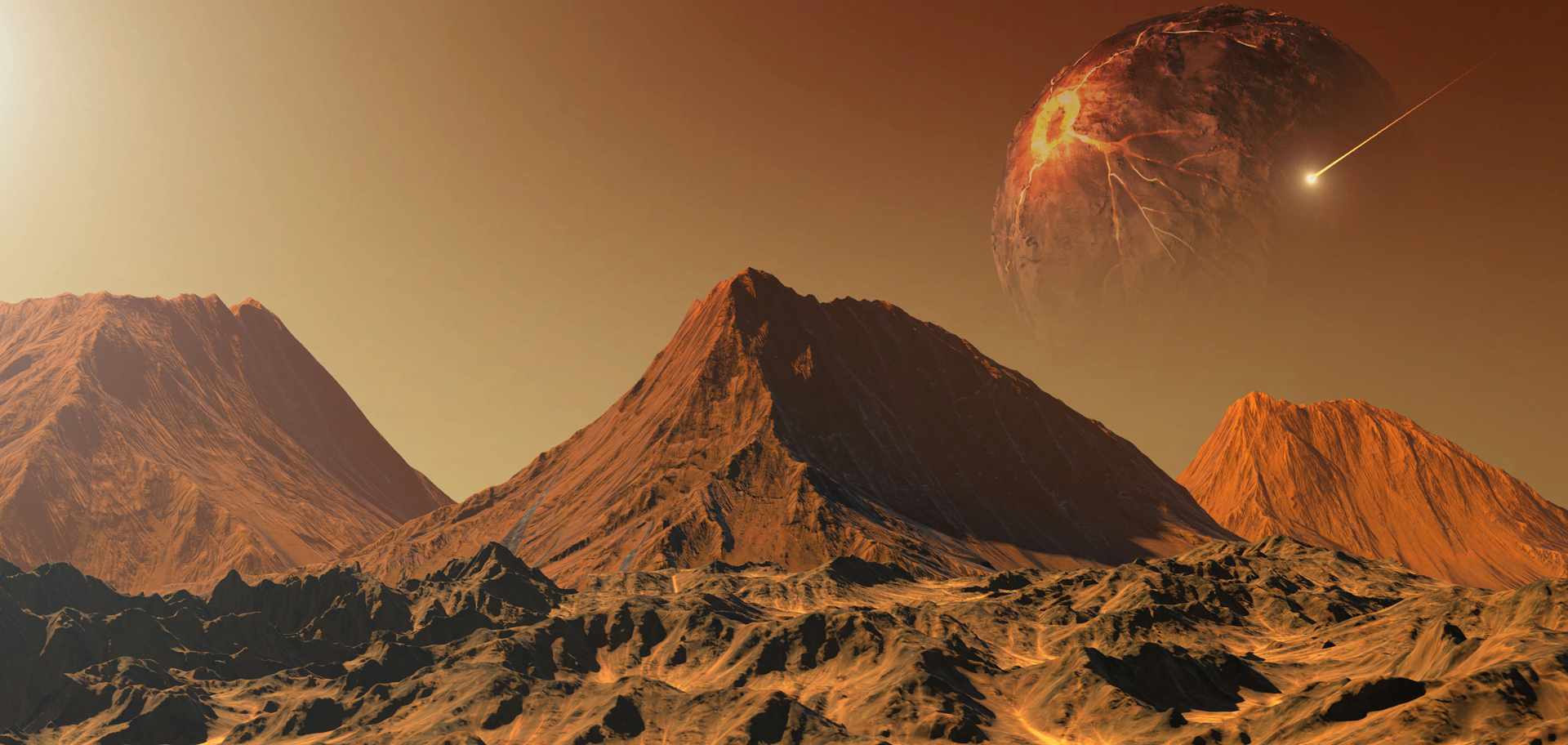
Scientists hope to use fluorescent features in caves to understand how to support life in extreme—and even extraterrestrial—environments.
In the future, the scientists hope to further confirm the accuracy of the fluorescence technique by comparing it to traditional, destructive methods. They also want to investigate the cave water that fluoresces to understand how life on Earth’s surface has affected life deep underground and—reconnecting to the team’s astrobiological roots—learn how similar, mineral-rich water may support life in the far reaches of our solar system. Others are using the information collected during the fieldwork to build a publicly accessible inventory of fluorescent fingerprints to provide additional facts for Wind Cave’s traditional maps and paint a more complete picture of its formation and history. Further exploration of caves as simulated environments for astrobiological extremophiles, development of an autonomous spectrometer to make measurements easier and possible for future extraterrestrial missions, and studies of biometrics to help keep extreme-environment pioneers safe are planned.
Bioluminescent forest insects
While fluorescent lights are being newly found all around us, some of nature’s bioluminescent lights may be going out. A landmark study conducted by the University of Kentucky Martin-Gatton College of Agriculture, Food and Environment; Pennsylvania’s Bucknell University; The Pennsylvania State University; and the United States Department of Agriculture has shed light on the precarious situation facing firefly populations across North America.
To analyze these population changes, the researchers used a mix of 24,000 field surveys from the Firefly Watch citizen science initiative and advanced machine-learning techniques. They integrated large-scale datasets on climate, land use, soil types, species abundance and weather to precisely model and predict firefly population patterns at the local level across the Eastern U.S.
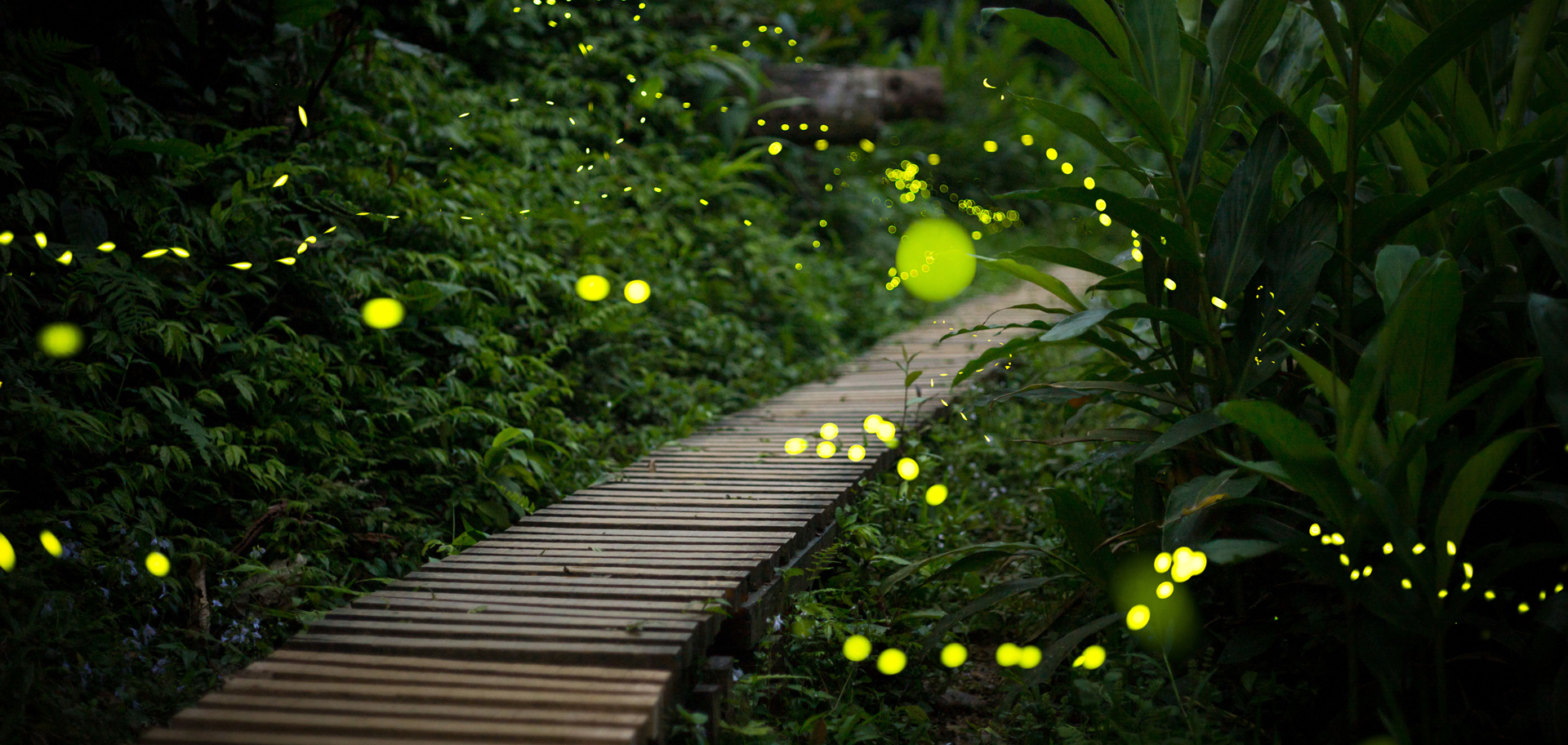
Firefly population declines are not uniform across all climates or regions. Some species adapted to dryer environments, for example, may be less affected by certain weather changes, whereas others are more vulnerable. This highlights the need for tailored conservation strategies.
Key findings from the paper, published in the journal Science of the Total Environment in June 2024, indicate that fireflies are sensitive to various environmental factors, from short-term weather conditions to longer climatic trends. Subtle changes in climate patterns, especially related to temperature, are significantly impacting firefly breeding cycles and habitat quality. Fireflies thrive in temperate conditions, with wet and warm summers creating the ideal breeding environment and cold winters supporting the survival of immature stages, such as eggs, larvae and pupae.
However, as global temperatures rise, these conditions become less predictable and, often, less hospitable. Changes in precipitation patterns—another critical factor of firefly survival—have led to either overly dry conditions that reduce larval survival or excessively wet conditions that can flood breeding grounds and disrupt life cycles. Firefly larvae, which are predatory, require moist soil conditions because the humidity supports soft-bodied invertebrates like the slugs and snails that they eat.
Artificial lights at night are also affecting fireflies. Firefly larvae living in the soil are particularly vulnerable to changes in light exposure, as it could alter their developmental cycles. In urban areas, light pollution from commercial signs and streetlights is particularly disruptive, since it interferes with the fireflies’ bioluminescent communication essential for mating. Urban growth, including establishing impervious surfaces like buildings, sidewalks and roads, also poses a significant threat to firefly populations by invading natural habitats and decreasing available breeding areas.
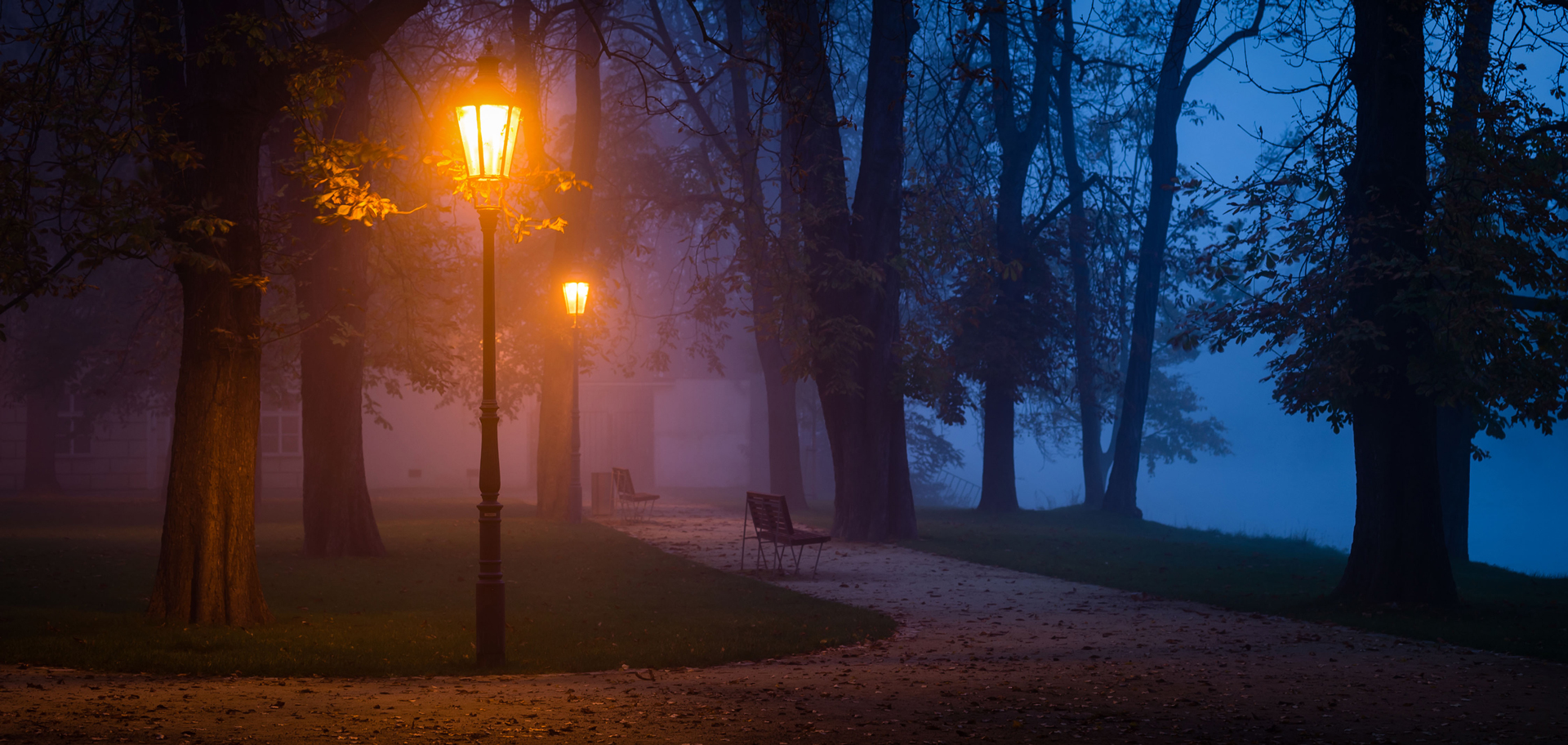
Fireflies are markedly less common in areas with nighttime lights.
Certain agricultural practices, too, are contributing to the decline of fireflies. The extensive use of herbicides and pesticides has been linked to decreased firefly numbers, likely due to reduced prey availability and direct toxicity. Some agricultural areas, however, support a high level of firefly density, perhaps because some practices (such as livestock grazing) encourage the meadow-like conditions that benefit fireflies. The study warns against increasing agricultural intensification, though, especially practices that reduce the moist environments and organic debris firefly larvae require to thrive.
While scientists previously knew that agricultural intensification, climate change and urbanization can affect biodiversity, less was known about how these complex factors interact and what people can do in their own backyards, towns and cities to support the various species of fireflies. To mitigate these impacts, implementing wildlife-friendly agricultural practices that support the insects, preserving natural habitats and reducing light pollution is essential. But while the citizen science data in this study looked at fireflies in the aggregate, the scientists say that they would like people to get more training in species identification so that they can provide more specifics on protecting the particular fireflies living in different areas.
If you’re interested in learning more about the climate conditions, land use and weather in your location, you can use Penn State’s Beescape tool, which provides location-specific habitat quality scores for pollinators.
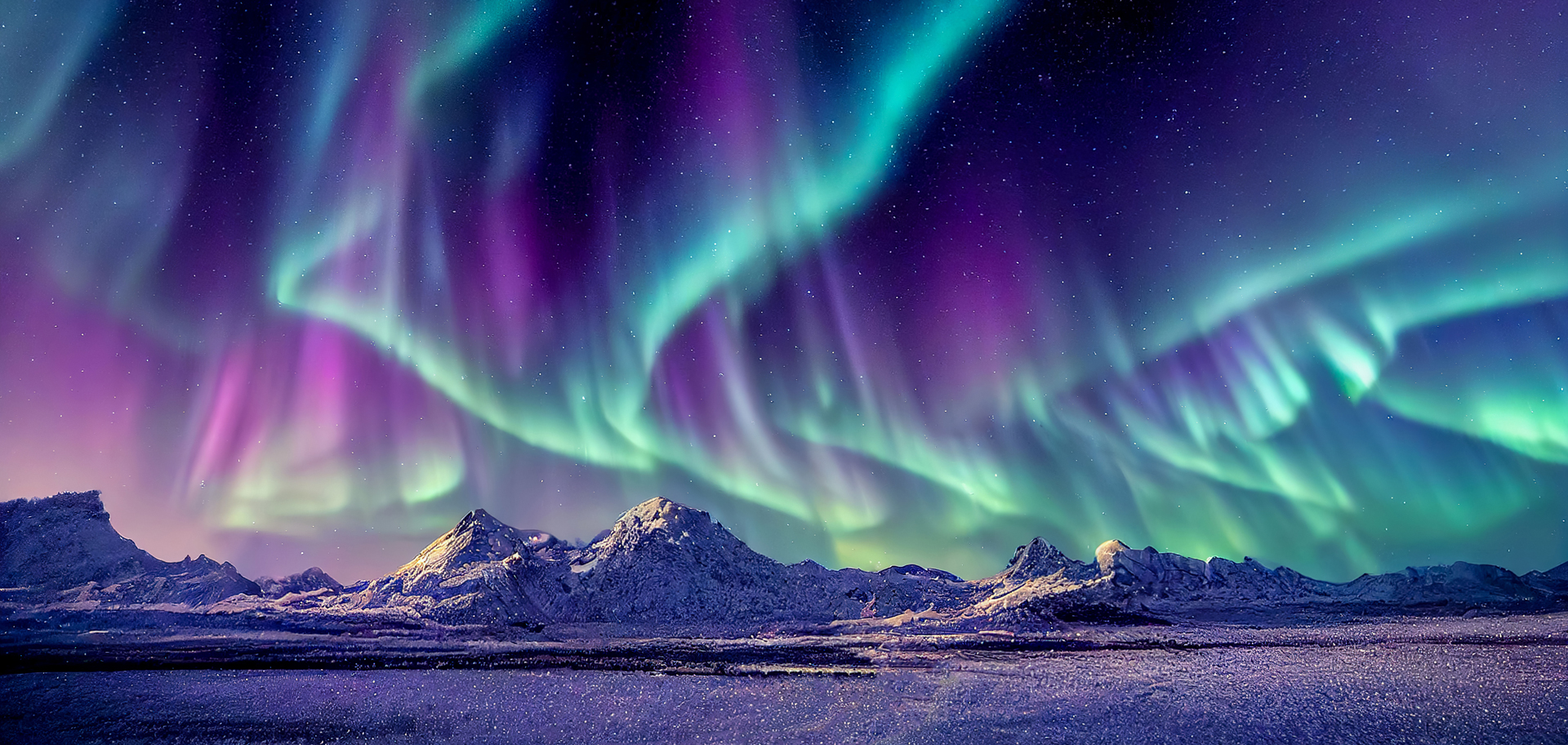
The northern lights, also known as the aurora borealis, are one of nature’s most spectacular natural light displays. Auroras occur when charged particles from the sun collide with gases in Earth’s upper atmosphere.
Fading natural lights
The decline of fireflies is more than the loss of a beloved natural spectacle; it signals broader ecological disruptions that could have cascading effects on other species and environments. Fireflies play a role in the food web, serving as prey for some species and as predators for many invertebrates. Their disappearance could have unforeseen repercussions on local biodiversity.
Equal to that biodiversity loss, I think, is the loss to our spirits and souls. Seeing nature’s lights—whether they be in the form of the aurora borealis overhead, a feather in a near sky, a glowworm in the soil or a cave belowground—serves as a bridge between the cosmos and the human experience, offering a rare moment of beauty, stillness and profound awe at being a part of something larger and much more magnificent than ourselves.
Here’s to finding your true places and natural habitats.
Candy