Live from Churchill: Nov 2, 2009
A daily field report on polar bears from our guide Steve Selden in our Churchill, Manitoba office! Check out our polar bear tours here.
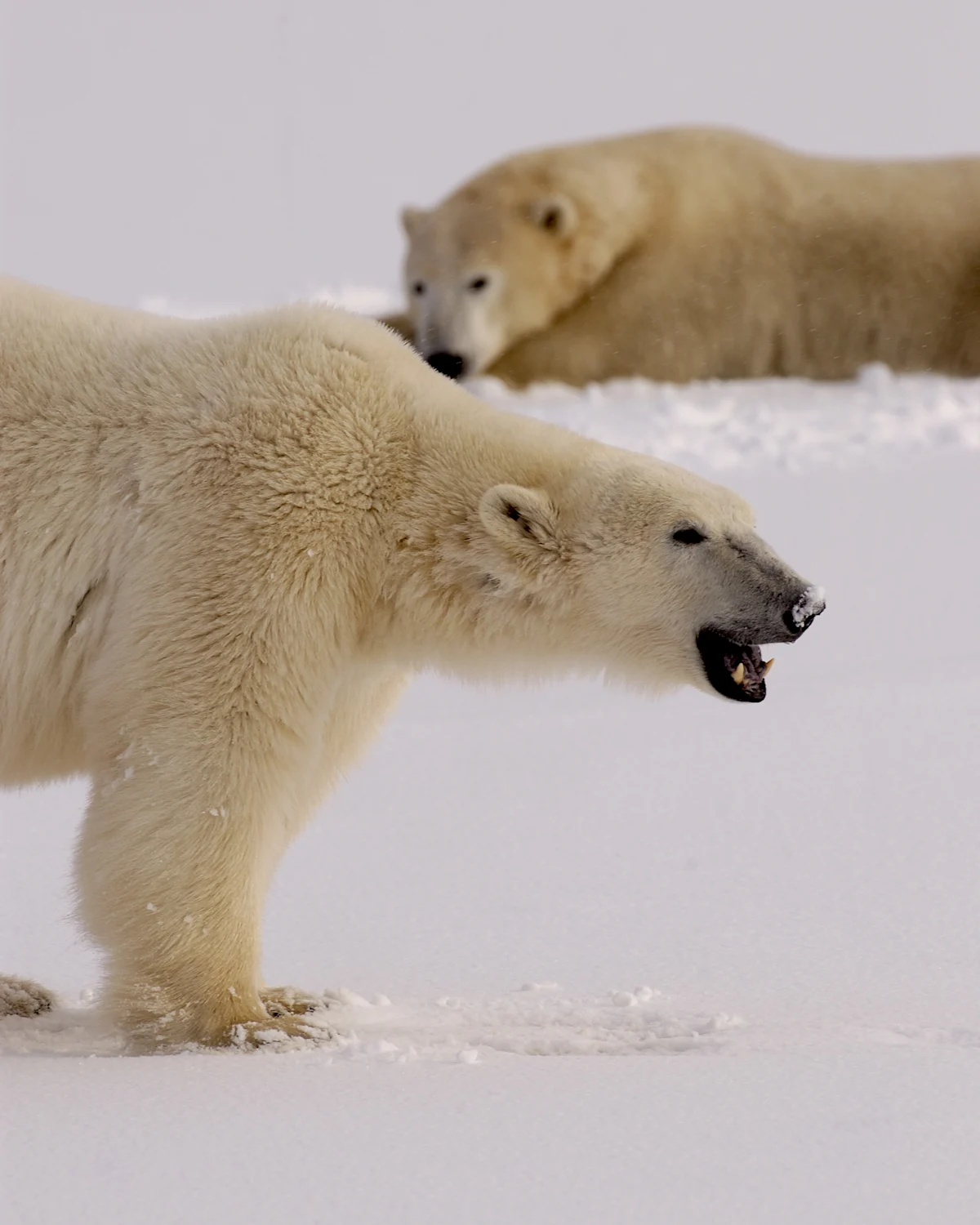
Sunny skies and cold, cold temperatures around 15°F were the order of the day yesterday and the Polar Bears were on the move all over the tundra and in and around Churchill. Just outside of the city limits, Conservation Officers were busy patrolling to keep the bears at “Bay”…as in the Hudson Bay and out of the town.
Another bear lift at the compound, second in two days, drew a huge crowd as a massive bear was raised and delivered north. Churchill Operational staff scrambled to gather groups in town and transport them to the lift near the airport. All came together nicely as nearly all our travelers were able to view the unique, surreal scene. The groups quickly retreated to their respective buses from the biting cold. What an incredible event.
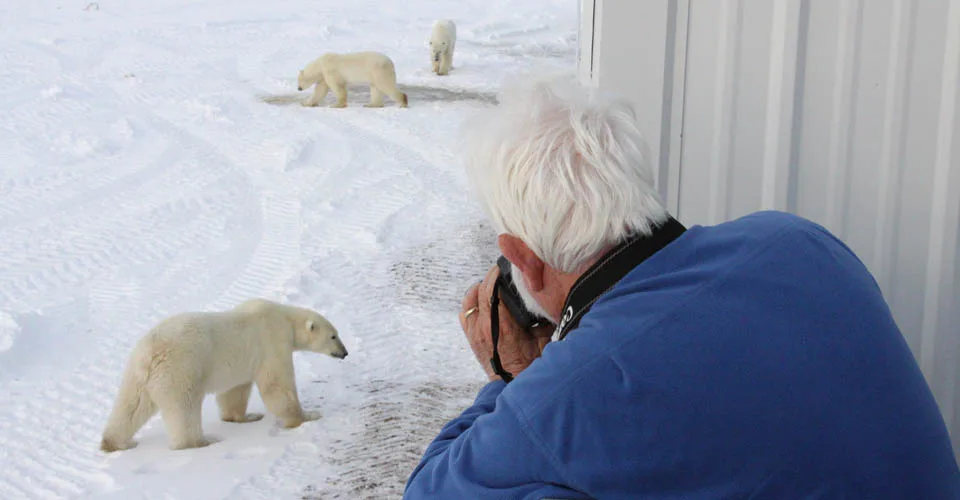
On the tundra it was business as usual with plenty of bears to go around. Guide Elise and her loyal travelers counted up 30 bears throughout the day. Many wandered toward the shore as the cold seemed to persuade them to do. It does seem that colder temps tend to convince the bears to gravitate toward the coast a little more as they associate the chill with increased ice. Once the ice forms solid out into the bay, the bears will start to test the surface. In a few weeks they will move out onto the bay and start the winter quest for seals as sustenance. Just the edges of the bay are frozen at this point so there’s still time on land.
The group watched as bears poked around the shallows sniffing and poking at the ice. One big male came over to the rover and stood on hind legs next to the vehicle without touching…majestic. Coming back to launch, the beautiful sunset provided an amber haze for photos of some Willow Ptarmigan.
Guide Leah and her group spotted around 10 bears including a curious big male up against the front of the rover. And Guide Brad’s travelers reported good bears with one glowing white bear on the rocks by Gordon Point. With some ice as a backdrop this was a postcard shot for photographers in the rover. Later a mom and her two cubs were chased by a male across a frozen pond. The male relented and mom gathered up the kids.
Last but surely not least, Guide Sandra and crew saw eight bears out by the Flats area in the East. These included a very skiddish female, a quite friendly yet indifferent male that was curious enough to constantly check out the rover and its contents. With the amazing glow from the waning sunset, Sandra hurried her folks back to town for some perfect group shots next to the huge, stone Inukshuk behind the town complex building. The Inukshuk is a marker made from stones in a crude form of a human being that is used by Inuit to mark trails and herd Caribou. It’s also the 2010 Vancouver Olympic Games official symbol.