
Happy World Rhino Day! Take this Quiz to Test your Rhino IQ!

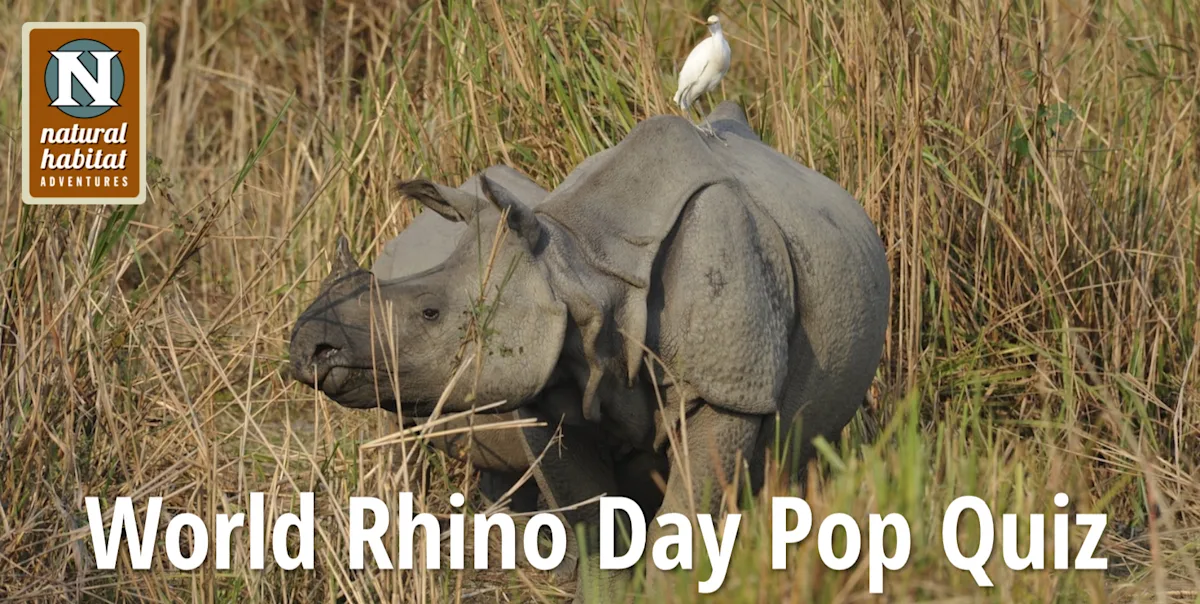
Q: Why do birds often perch on rhinos backs?
a. Predators can’t attack them
b. They get lonely
c. Their wings get tired
d. They feed on parasites
Scroll down to the bottom to see the answer!
See how much you know about rhinos with WWF’s fun Rhino IQ game, opens in new tab. They also have an Elephant IQ game!
World Rhino Day is more important than ever this September 22 because habitat destruction and poaching are pushing rhinos closer to the brink of extinction in Africa and Asia. Here are some ways we can all help save this threatened species:
1. Travel to see rhinos in the wild. Taking a trip to see rhinoceros in their natural habitat creates economic opportunities and promotes conservation of rhinos within the community.
2. Use sustainable wood and paper products. This preserves precious trees that make up rhino habitat.
3. Don’t buy rhino horn products. Not only is buying rhino parts or products illegal, it also increases demand for these products.
Watch this short video to learn what WWF is doing for rhino conservation, like the rhino translocation projects to help boost the growth rate of black rhino populations in Africa.
And the answer to the question at the top?
d. They feed on parasites. Birds literally get a free lunch on rhinos! By riding a rhino’s back, the birds can feast on the parasites found on the rhino’s skin. This is good for the rhino too, a mutually beneficial relationship between two animals known as symbiosis.