

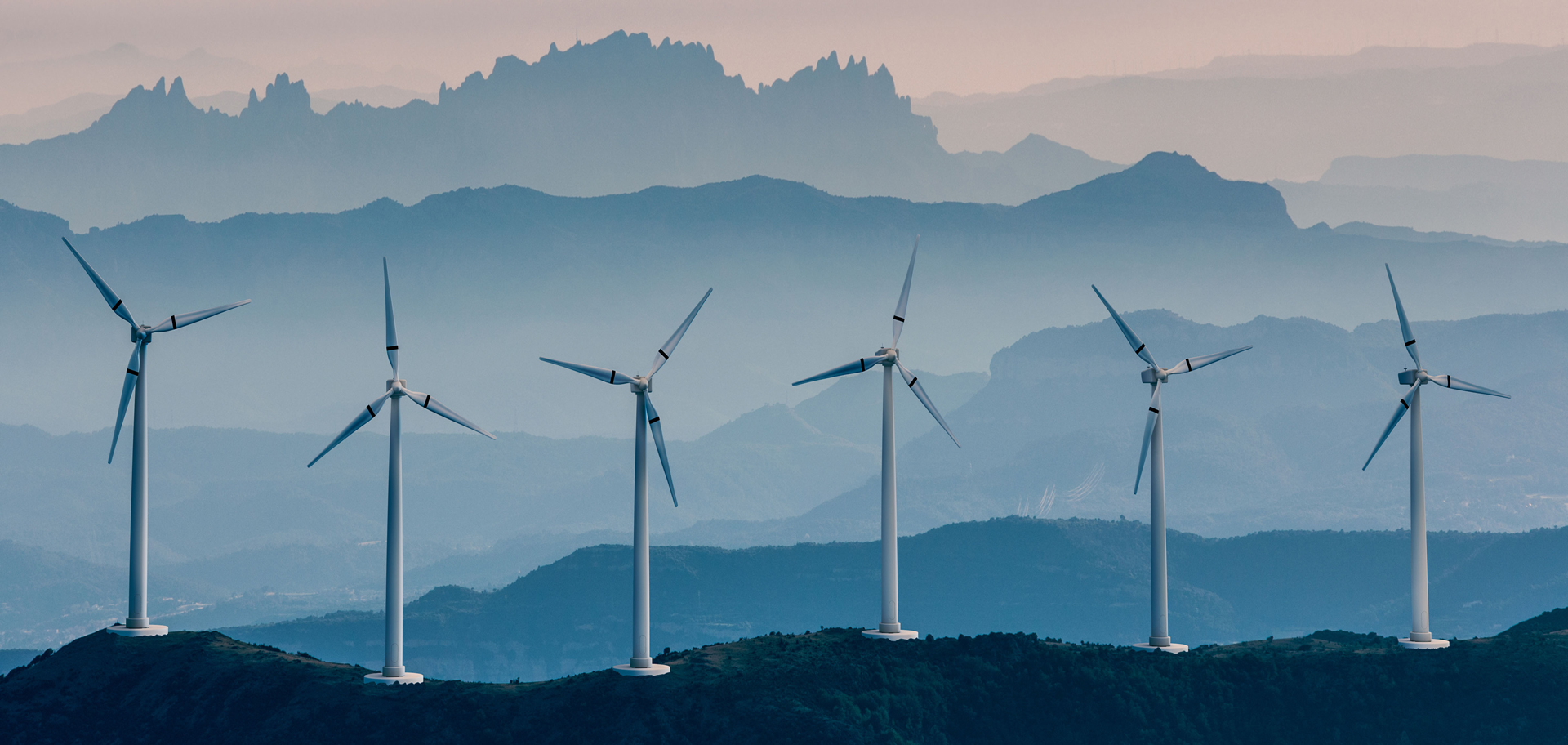
“Our Power, Our Planet” is the theme for Earth Day 2026. Accelerating the transition to clean energy is part of the message. Wind energy is one of the cleanest, most sustainable energy sources available, producing zero air pollutants and no greenhouse gases while operating.
The theme for the 56th annual Earth Day, April 22, 2026, is “Our Power, Our Planet.” According to the official Earth Day website, “it emphasizes collective action, community mobilization and the role of individuals in defending environmental protections, accelerating the transition to clean energy and ensuring a sustainable future.” Although the theme is the same as the one for Earth Day 2025, this year the focus has shifted from pledges to direct participation, encouraging individual action to affect change in local communities.
The notion of collective action and community mobilization is reflected in a recent study that investigated emissions data from hundreds of U.S. cities that either conducted a greenhouse gas emissions inventory or reported they employed sustainability staff. The cities that conducted an inventory showed a statistically significant reduction in emissions between 2010 and 2015, while those with sustainability staff did not. These results demonstrate that directly addressing emissions is meaningful.
In the area of environmental protections, new eco-friendly technology can capture and destroy PFAS, the dangerous “forever chemicals” found worldwide in water. This novel material works hundreds to thousands of times faster and more efficiently than current filters, even in river water, tap water and wastewater. After trapping the chemicals, the system safely breaks them down and refreshes itself for reuse. It’s a rare one-two punch against pollution: fast cleanup and sustainable destruction. And, after spinning for less than two years, it’s been verified that a wind farm can offset the carbon emissions generated across its entire 30-year lifespan.

“Leptophis mystacinus,” a type of parrot snake, was recognized as a unique species in January 2025. Growing up to 34 inches long, it is arboreal, nonvenomous and may be endemic to Brazil’s Cerrado, a shrinking tropical savanna. ©N. R. Albuquerque, R. H. Martins, P. S. Carvalho, D. B. Shepard & D. J. Santana, Wikimedia Commons
We’re also making progress in ensuring a sustainable future. The search for life on Earth is speeding up—not slowing down. Scientists are now identifying more than 16,000 new species each year, revealing far more biodiversity than expected across animals, fungi, plants and beyond. Many species remain undiscovered, especially insects and microbes, and future advances could unlock millions more. Each new find also opens doors to more conservation efforts, medical breakthroughs and resilient ecosystems.
Collective action and community mobilization: conducting greenhouse gas emissions inventories
For years, cities have been taking on efforts to reduce their carbon footprint by reducing greenhouse gas emissions. Yet little has been done to verify if such work has the intended outcome. Now, new research from the University of Kansas found that completing a greenhouse gas emission inventory moves the needle toward mitigation.
The researchers say that the development of a greenhouse gas emissions inventory reflects considerable investigation into the source and amount of local emissions, increasing the ability to manage mitigation efforts. Along with completing such an inventory, employing sustainability directors or professionals in city government are two of the most common methods cities have used to reduce emissions and boost sustainability, and the University of Kansas team wanted to examine this understudied area of how effective those efforts are.

“Sustainability” can refer to any number of efforts a municipality can employ, but when an American city conducts a greenhouse gas emissions inventory, it reduces its CO2 emissions significantly more than it would have otherwise.
To come to their conclusion, the scientists gathered data from cities across the United States, identifying whether they had an emissions inventory and/or sustainability staff in place in both 2010 and 2015. Because the goal was to determine the difference that these investments generate, only those without them in place in 2010 were included in the analysis. This yielded a sample of 702 municipalities for analyzing an emissions inventory and 484 for studying a sustainability staff. The research team then used satellite-gathered emissions data to calculate the emissions released within the cities’ boundaries and compared the differences in emissions from the two points in time for groups of cities that did and did not make these investments.
Emissions from on-site residential settings and on-road traffic were examined. The results showed that conducting an emissions inventory results in about 22 fewer pounds of emissions per capita, primarily via residential emissions. The addition of sustainability staff, however, did not show a statistically significant reduction.
In their results, published in the journal Cities in April 2025, the scientists reiterated that the findings do not mean that employing sustainability staff is not a worthwhile investment for cities. Sustainability can mean many things; and just because the study did not find that the addition of staff results in fewer emissions does not mean that those people have not influenced important improvements in other areas. And because greenhouse gas emissions are influenced by many factors—including climate, macroeconomics and higher-level policy—some argue that local efforts aren’t large enough to matter. But the causal reduction shown following an emissions inventory is meaningful and adds to an area of research that was lacking.

Man-made PFAS, or “forever chemicals,” date back to the 1940s. They have been used in many everyday products—including in waterproof clothing—and have been linked to health problems such as high cholesterol, immune system disorders and some cancers. PFAS can take hundreds of years to degrade.
Individuals defending environmental protections: eliminating “forever chemicals” with record-breaking speed
PFAS, short for perfluoroalkyl and polyfluoroalkyl substances, are man-made chemicals that date back to the 1940s. They have been used in many everyday products, including some food packaging, Teflon pans and waterproof clothing. PFAS became popular because they resist grease, heat and water; but that same durability also means they break down very slowly, which is why they are often called “forever chemicals.”
PFAS have now spread widely and can be found in the air, soil and water around the world. Research has linked exposure to immune system disruption, liver damage, reproductive disorders and certain cancers. Cleanup has been difficult because once PFAS enter the environment, they are hard to remove and even harder to destroy.
Many standard approaches rely on adsorption, meaning the chemicals stick to materials such as activated carbon or ion-exchange resins. These methods are common, but they have major limitations, including limited capacity, low efficiency, slow operation and the buildup of additional contaminated waste that still must be handled. But a new strategy, created by a science team at Rice University in Houston, Texas, and international partners offers a sustainable and highly effective alternative.
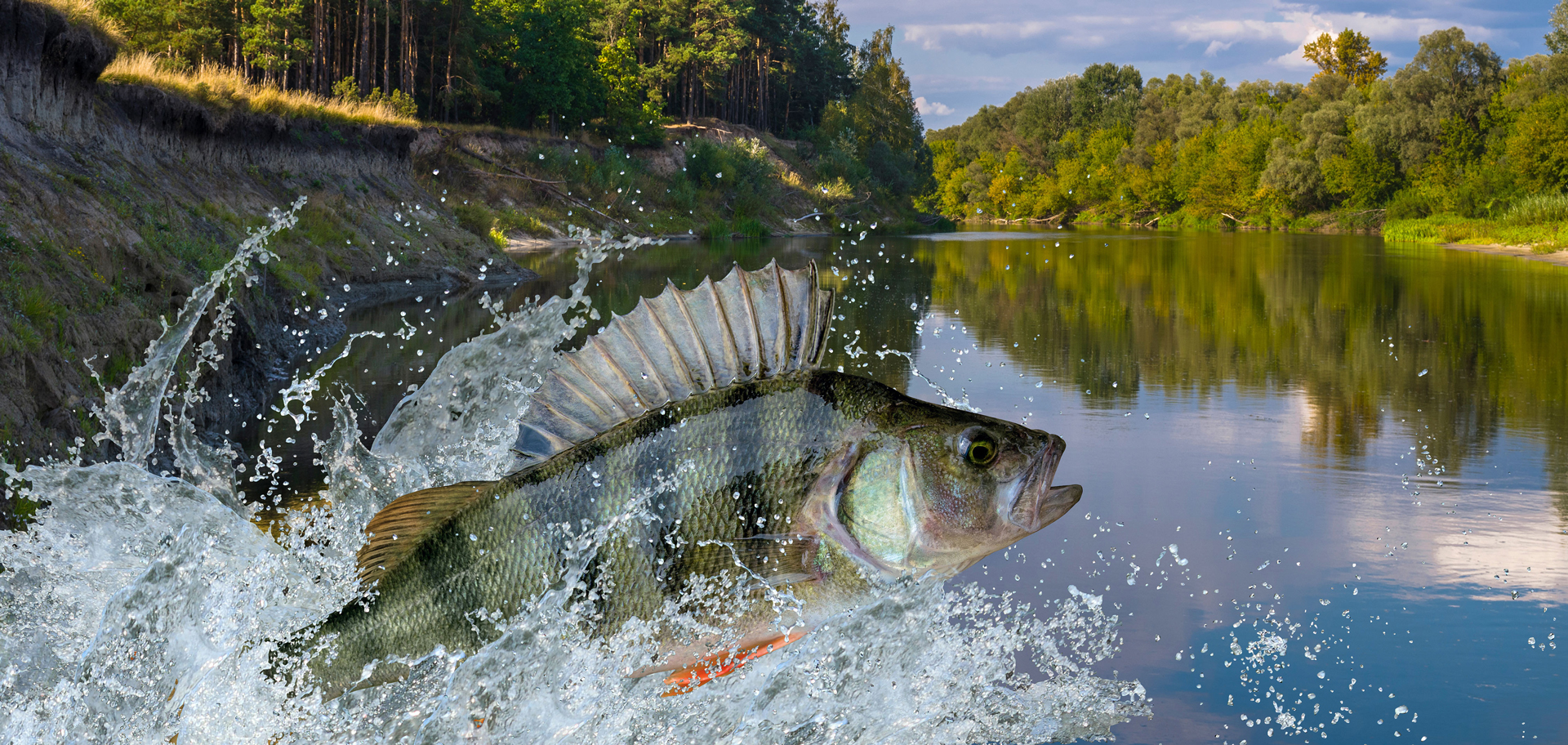
Rivers are heavily contaminated by PFAS. Recent studies show that they are present in more than 90% of tested U.S. waterways, with high concentrations downstream from biosolids application areas, industrial sites and wastewater treatment plants. These pollutants bioaccumulate in aquatic life.
The new technique, outlined in the journal Advanced Materials in September 2025, is built around a layered, double hydroxide (LDH) material made from aluminum and copper. As the team explored these compounds further, they found that a specific version containing nitrate could adsorb PFAS with unusually high performance: more than 1,000 times better than other materials. It also worked incredibly fast, removing large amounts of PFAS within minutes, about 100 times quicker than commercial carbon filters. The researchers say these impressive results come from the material’s internal design. Its ordered, copper-aluminum layers, along with small charge imbalances, create a highly favorable surface where PFAS molecules can attach swiftly and strongly.
To see how well the system could perform outside the lab, the team tested the LDH material in river water, tap water and wastewater. Across all three, it remained highly effective. It also performed well in both static tests and continuous-flow setups, pointing to possible uses in municipal water treatment systems and industrial cleanups.
But capturing PFAS is only half the battle, since the chemicals still need to be destroyed safely. So, the Rice University team developed a process to thermally decompose PFAS after they are captured on the LDH material. When the PFAS-loaded material was heated with calcium carbonate, the researchers removed more than half of the trapped PFAS without releasing toxic by-products. The same step also regenerated the LDH, making it possible to use the material again.

It’s estimated that at least 45% of the U.S. tap water supply contains one or more types of PFAS. While public water systems are monitored, contamination is widespread, often originating from consumer products, firefighting foams and industrial sites.
Early testing showed the material could go through at least six complete cycles of capture, destruction and renewal. That makes it the first known eco-friendly, sustainable system for PFAS removal that combines rapid cleanup with repeated reuse.
The transition to clean energy: offsetting emissions on wind farms within two years
The environmental efficiency of onshore wind farms and their important role in the energy transition was just underscored in a new study from New Zealand. After operating for less than two years, a wind farm can offset the carbon emissions generated across its entire 30-year lifespan, when compared to thermal power plants. Notably, the manufacturing of wind turbines is the primary contributor to their carbon and energy footprints, highlighting a critical area for targeted environmental mitigation strategies.
That’s according to a peer-reviewed study published in the Journal of the Royal Society of New Zealand in May 2024—which also shows that within six months, a turbine can generate all the energy consumed across its life cycle. The research used data from the onshore Harapaki Wind Farm in Hawke’s Bay, New Zealand; however, the authors of the paper explain that their findings would be replicated across most, if not all, wind farms internationally.
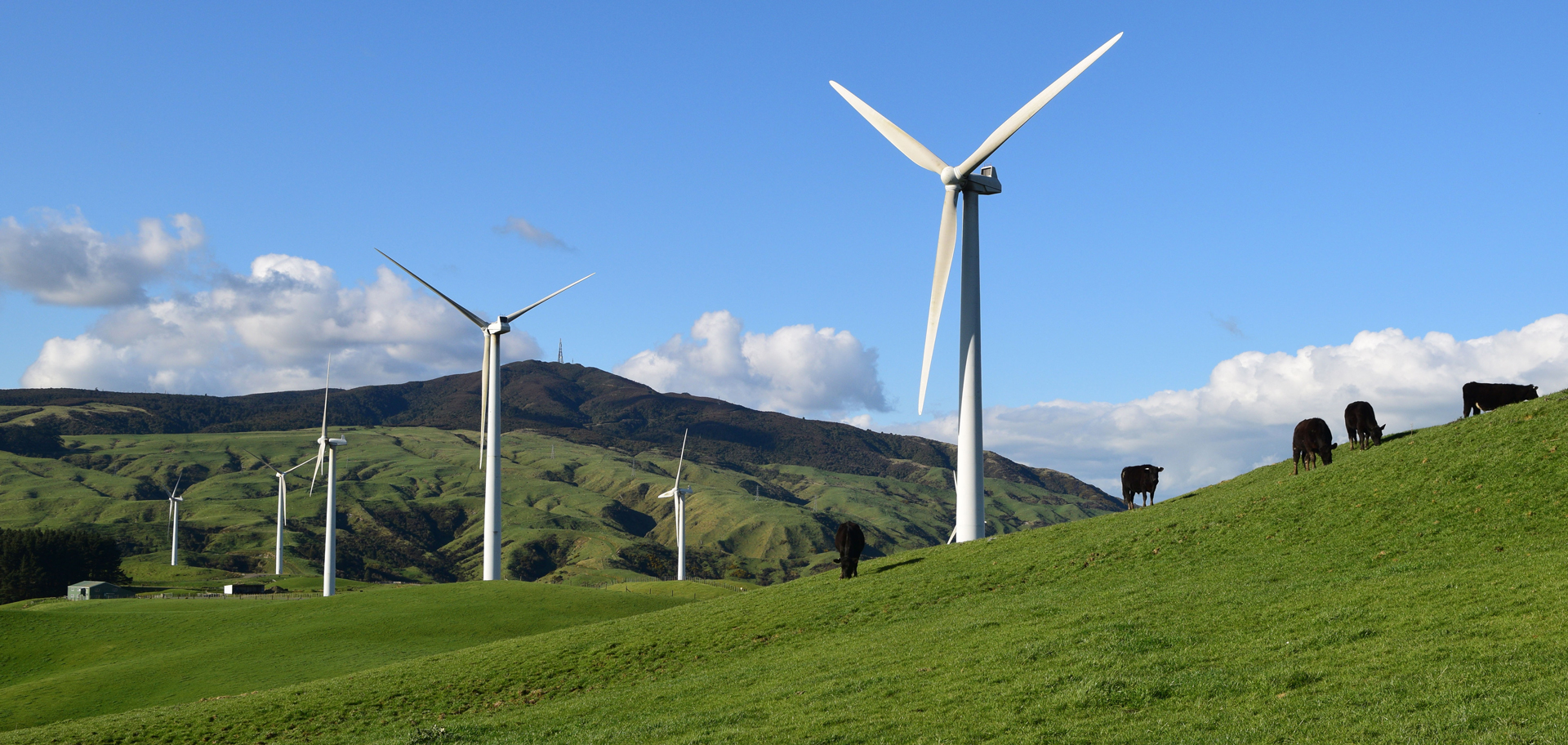
A New Zealand study shows that after spinning for less than two years, a wind farm can offset the carbon emissions generated across its entire 30-year lifespan.
The study reviewed current literature on wind farms, as well as using real construction data to take into account everything from the manufacturing of individual turbine parts, to transporting them into place, to decommissioning the entire wind farm at Harapaki—which comprises 41 turbines. The results indicate that this particular farm will leave a carbon footprint of 10.8 gCO2eq/kWh (grams of carbon dioxide equivalent per kilowatt-hour), which equates to a greenhouse gas payback time of 1.5 to 1.7 years for avoided combined cycle gas turbines, and an energy payback time of 0.4 to 0.5 years.
While these results emphasize how onshore wind plants are aligned with the principles of sustainable development, making the manufacturing process more eco-friendly still needs to be explored. Along with that, the environmental impacts of the installation and transportation phases are important, too. Together they account for nearly 10% of the overall emissions. Therefore, it’s crucial that we continue to implement improvements aimed at limiting negative environmental impacts while maximizing positive contributions throughout the supply chain of onshore wind plants.
The expert team recommends developing a recycling process for end-of-life blades. Currently, blades are disposed of in landfills due to commercial feasibility, but by recycling the blades—either mechanically or chemically—the emissions could drop from the current 10.8 gCO2eq to a potential 9.7.

To address the carbon outlay involved in developing wind farms, creating a recycling process for end-of-life blades is recommended. Currently, blades are disposed of in landfills, but by recycling the blades—either chemically or mechanically—the carbon emissions could drop.
A sustainable future: living in a golden age of species discovery
Roughly three centuries ago, Swedish naturalist Carl Linnaeus set out to catalog and name every living organism he could find. He is now widely regarded as the founder of modern taxonomy after introducing binomial nomenclature and formally describing more than 10,000 species of animals and plants. Scientists have continued that mission ever since, steadily expanding humanity’s understanding of Earth’s biodiversity.
A new study led by researchers at The University of Arizona and published in the journal Science Advances in December 2025 shows that the pace of discovery is accelerating. Today, scientists are identifying more than 16,000 new species each year, the highest rate ever recorded. The researchers say this trend is not slowing—in fact, new species are being found at a faster rate than ever before—and they suggest that groups such as amphibians, arachnids, fish, fungi and plants are far more diverse than previously believed.
To reach their conclusions, the researchers examined the taxonomic records of roughly 2 million species from across all major forms of life. Looking at the most recent period with comprehensive data, between 2015 and 2020, they found that scientists documented an average of more than 16,000 new species per year. These discoveries included more than 10,000 animals (dominated by arthropods and insects), about 2,500 plants and roughly 2,000 fungi. This rate of new species discovery far outpaces the rate of species extinctions, which is calculated to be about 10 per year.

Binomial nomenclature is the formal, two-part scientific naming system for species. It consists of a capitalized genus name and a lowercase species epithet, both italicized, providing a unique, universal name for every organism (such as “Panthera leo” for a lion). It eliminates ambiguity caused by common names.
Scientists also used long-term trends in discovery rates to estimate how many species may exist overall. Their projections suggest there could be as many as 115,000 fish species and 41,000 amphibian species, compared with about 42,000 fish and 9,000 amphibians currently described. The researchers also think that the total number of plant species could exceed half a million; right now, we know of about 2.5 million.
The University of Arizona team expects the discovery rate to keep rising. For instance, scientists have formally identified around 1.1 million insect species, but many researchers estimate the real number is closer to 6 million—or even 20 million. Most new species are identified by visible traits, but advances in molecular techniques are making it possible to detect species that look similar on the surface but are different genetically. This approach is especially promising for uncovering previously unrecognized bacteria and fungi.
Discovering new species is important because these species can’t be protected until they’re scientifically described. New discoveries also play a role in improving human health and technology. Many natural products come from living organisms, including GLP-1 receptor agonists, popular weight-loss drugs inspired by a hormone found in Gila monsters. Compounds from snake and spider venoms, along with substances produced by plants and fungi, are being studied for their potential to treat cancer, pain and other conditions.

Geckos have inspired the creation of advanced, dry and reusable adhesives that mimic the millions of microscopic hairs on their feet that grip surfaces without residue. These materials, including NASA’s “gecko grippers,” are used for biodegradable medical bandages, climbing robots, space applications and underwater glues.
Beyond medicine, nature often inspires innovations. Some species have physical traits that serve as models for new materials and technologies, such as surfaces designed to mimic the super-clinging feet that allow geckos to scale vertical walls. We’re still just scratching the surface of what these species can do for humanity, state the scientists.
Looking ahead, the researchers plan to chart where new species are most frequently found to pinpoint regions rich in undiscovered life. They are also examining who is making these discoveries to see whether the field has shifted from being dominated by European scientists to researchers documenting species in their own home countries. Even though Linnaeus’ quest to identify species began 300 years ago, 15% of all known species have been discovered in just the past 20 years. So much remains unknown, and each new discovery brings us closer to understanding and protecting the incredible biodiversity of life on our planet, conclude the scientists.
Discovering new species contributes to a more sustainable future by enhancing biodiversity knowledge, driving conservation efforts and identifying potential environmental solutions. Documenting species is the essential first step in protecting them from extinction, aiding in ecosystem management and revealing new, resilient biological resources to help fight climate change.

Environmental progress does not happen in silence. It happens when people show up. It’s built through everyday actions—from communities protecting ecosystems to innovators advancing solutions for some of our most persistent environmental challenges.
Our power, our planet: showing up
According to the Earth Day 2026 website, progress does not happen in silence. It happens when people show up. Environmental progress is built through everyday action—from communities protecting ecosystems to innovators advancing solutions. Clean air, climate resilience and safe water aren’t optional—they’re essential.
We can take great comfort and pride in the fact that environmental progress is real, resilient and ongoing despite policy uncertainty. Community problem-solving, education and innovation remain durable. Local systems—cities, schools and Tribal nations—continue implementing solutions that conserve resources, strengthen energy reliability and reduce risk because they’re grounded in economic sense and public safety.
For Earth Day 2026, let’s mobilize at scale. Every one of our actions counts. Every one of our voices matters.
Here’s to finding your true places and natural habitats,
Candy