

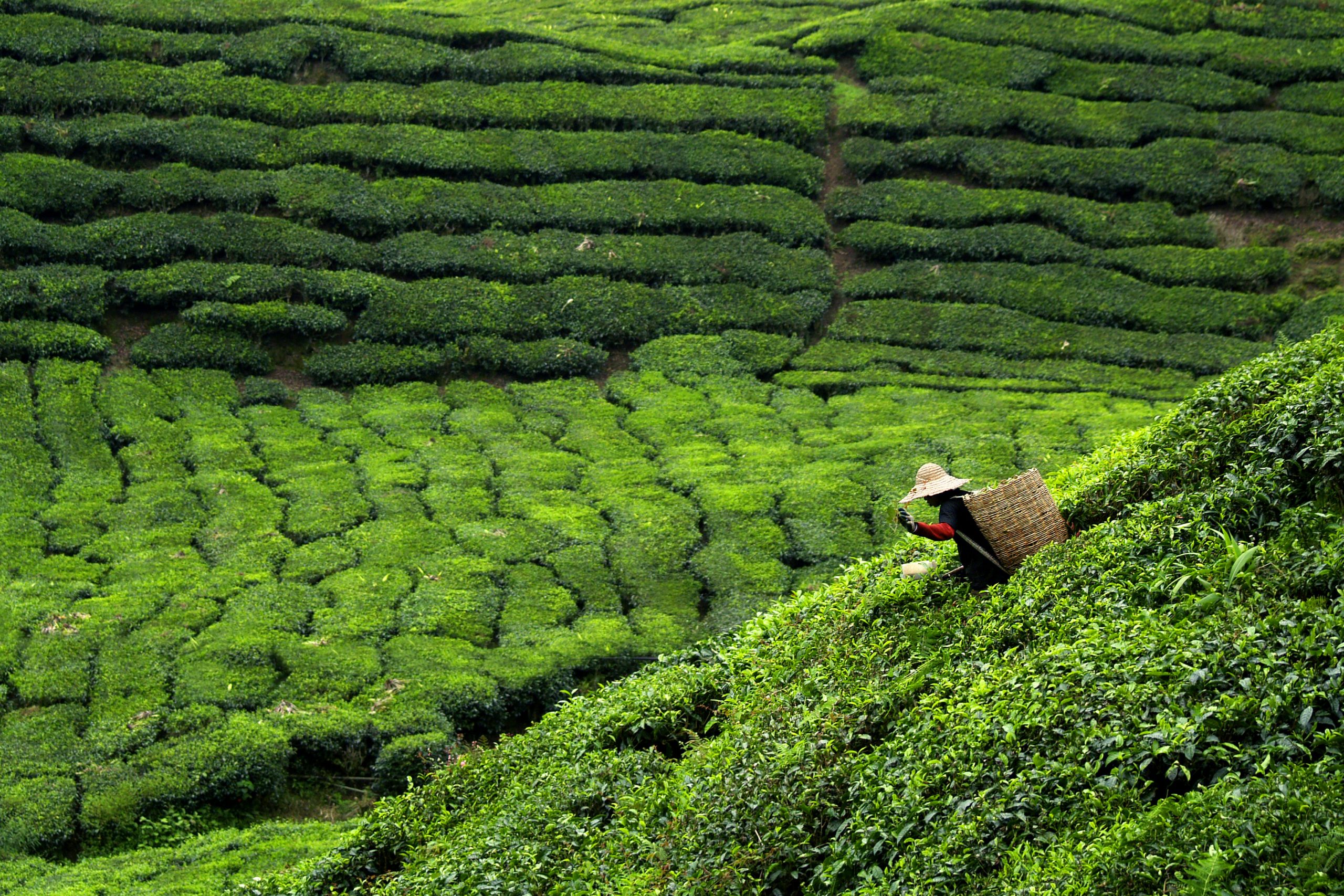
“Looking deeply into your tea, you see that you are drinking fragrant plants that are the gift of Mother Earth. You see the labor of the tea pickers; you see the luscious tea fields and plantations in Sri Lanka, China, and Vietnam. You know that you are drinking a cloud; you are drinking the rain. The tea contains the whole universe.”
—Thich Nhat Hanh, How to Eat, Parallax Press, 2014
In Hue, Vietnam, the day begins before sunrise. Monks awaken for meditation at Tu Hieu Temple, a 19th-century pagoda set among pine trees on the edge of the city. Incense rises from the altar. Beyond the temple walls, the former imperial capital rests along the Perfume River, its palaces, pagodas and garden houses carrying centuries of history.
Inside Tu Hieu, time is marked by the rhythm of monastic practice:
—Meditation practice morning, noon and night
—Chanting sessions throughout the day
—Walking meditation on the temple grounds
—Daily work approached as a meditative practice
—Study of Buddhist scriptures and Dharma teachings
Thich Nhat Hanh recalled that during his own novice years at Tu Hieu, daily life included manual labor, from tending cows and carrying water to pounding rice, all approached as practice in presence.
That tradition remains part of Hue’s spiritual life today. On our Vietnam Cultural Journey, guests spend time over tea with a monk who studied under Zen Master Thich Nhat Hanh, discussing Buddhist philosophy and contemporary spiritual life in Hue.
What Role Does Buddhism Play in Vietnamese Daily Life?
Historians differ on when and how Buddhism came to Vietnam; some trace its arrival through China around the 1st or 2nd centuries AD, while others argue Buddhist teachings reached the region through the Indian subcontinent even earlier.
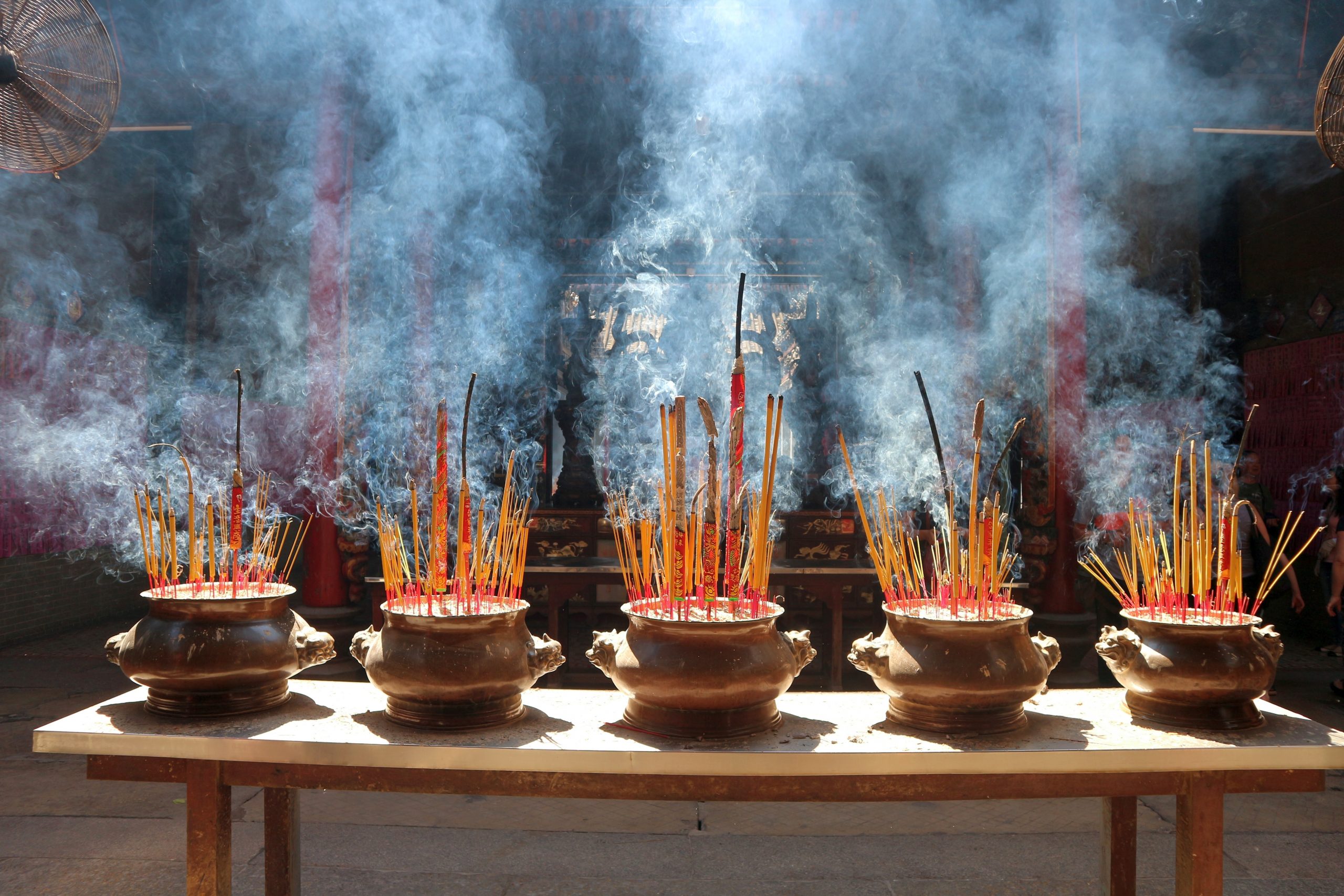
Either way, modern Buddhism threads through Vietnamese life both formally and in the everyday: in incense at household shrines, pagodas that anchor communities and observances tied to the lunar calendar. Tea features prominently in many of these settings.
A 2024 Pew Research Center study of East Asia’s religious landscape found that 38% of Vietnamese adults identify as Buddhist. Vietnam’s government reports a substantially lower share of formally registered Buddhists, a difference that reflects the challenge of measuring religious identity in a country where practices may extend beyond formal institutional affiliation.
Many Vietnamese households incorporate Buddhist customs through ancestral altars, temple visits and seasonal festivals even when family members do not formally identify with a religious institution.
What Is the Role of Tea in Vietnamese Culture?
Tea plays both an important cultural and economic role in Vietnam. A long, narrow country stretching more than 1,000 miles along the eastern edge of the Indochinese Peninsula, Vietnam borders China to the north and Laos and Cambodia to the west.
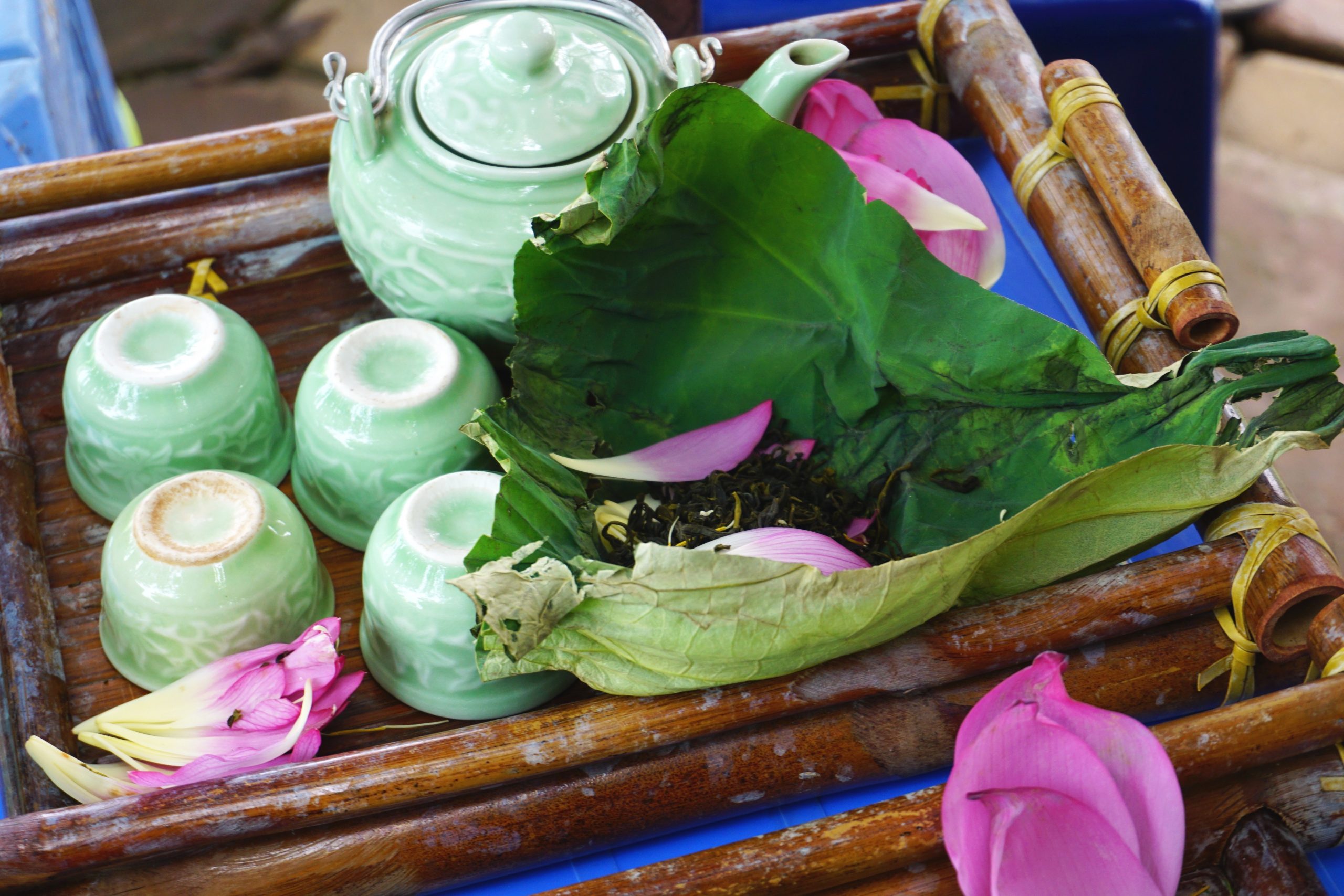
Vietnam’s mountainous terrain and tropical monsoon climate create favorable conditions for tea cultivation. Tea has grown here for centuries, with wild tea plants occurring naturally in northern highland regions long before the development of modern commercial production.
Today, Vietnam is among the world’s major tea producers and exporters. But statistics tell only part of the story.
In Vietnam, tea, like Buddhism, is woven into daily life. A fresh pot signals welcome. Serving tea to elders at a wedding conveys respect. Placing tea on an ancestral altar is an act of devotion.
What Are the Links Between Zen Buddhism and Tea in Vietnam?
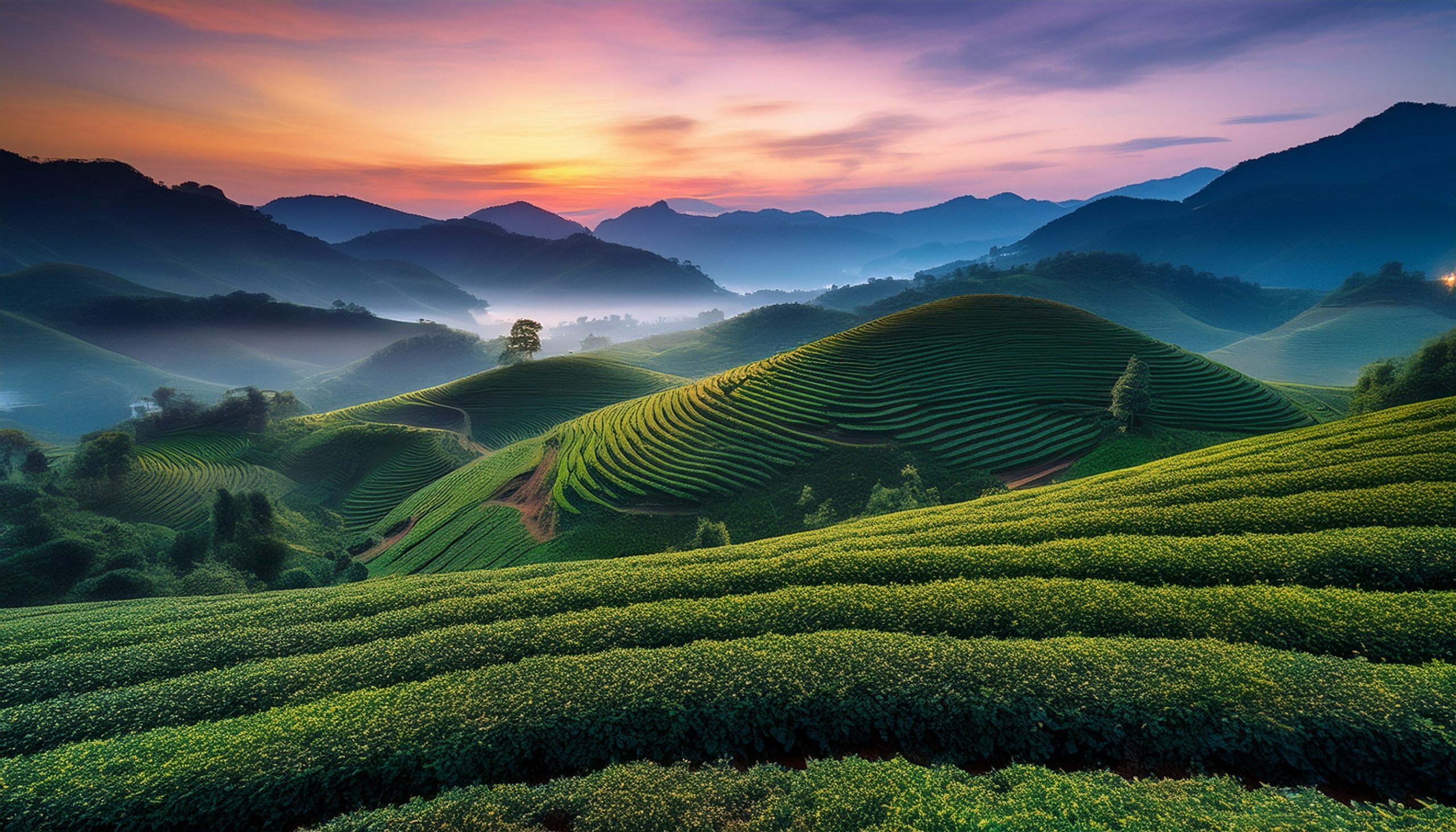
Tea and Buddhist contemplation have been linked across Asia for centuries. In Buddhist monasteries, tea helped monks remain alert through long periods of meditation while also becoming part of a ritual centered on attention and simplicity.
In Vietnam, that connection finds expression in thiền trà, or tea meditation, a practice that treats the deliberate preparation and sharing of tea as an exercise in mindfulness.
Rooted in Zen practice, tea meditation treats each step as an opportunity for full attention:
—Tea preparation is part of the practice. Boiling the water, warming the cup and measuring the leaves are performed deliberately rather than hurried through.
—All the senses are engaged. The sound of boiling water, the fragrance rising from the pot and the warmth of the cup become objects of attention.
—Nothing is rushed. Sips are taken slowly, and silence may become part of the experience.
—The practice continues today. Tea remains part of monastic and mindfulness traditions in Vietnam and in communities influenced by Thich Nhat Hanh’s teachings.
As he wrote: “The tea contains the whole universe.”
Who Was Vietnamese Zen Buddhist Monk Thich Nhat Hanh?
Few figures have done more to introduce Vietnamese Zen Buddhism and mindfulness practice to a global audience than Thich Nhat Hanh, affectionately known as Thay.
Born in Hue, he entered Tu Hieu Temple as a novice at age 16. His teachings emphasized mindfulness—the practice of bringing full awareness to ordinary actions, from walking and breathing to washing dishes and drinking tea.
He became widely associated with the modern mindfulness movement and with the concept of “engaged Buddhism,” which connects spiritual practice with compassionate action in the world. Dr. Martin Luther King Jr., who nominated him for the Nobel Peace Prize in 1967, described him as “an Apostle of peace and nonviolence.”
Thich Nhat Hanh founded the Order of Interbeing and later established Plum Village in France, which became the center of an international network of Buddhist practice communities. He also published extensively on meditation, mindfulness, peace and everyday life.
After decades living abroad, he returned to Vietnam in 2018 and spent his final years at Tu Hieu Temple. He died there in January 2022 at age 95.
“The Buddhist knowledge and wisdom I learned from Tu Hieu is now spreading all over the world,” he wrote to his disciples. “I believe it’s time for me to get back to my roots.”
Experience Hue’s Living Spiritual and Artistic Heritage
That lineage continues in Hue today. Monks and practitioners who studied within Thich Nhat Hanh’s tradition carry forward a form of Buddhism shaped by Vietnamese history and culture, one that treats contemplation as a way of engaging more fully with everyday life.
On Nat Hab’s Vietnam itinerary, guests experience several facets of Hue’s living cultural heritage. The day begins at Dong Ba Market, the city’s oldest and largest market, before a guided tour of the Imperial Citadel, former seat of the Nguyen Dynasty. After a private lunch in an ancient garden, guests spend time over tea with a monk who studied under Zen Master Thich Nhat Hanh, discussing Buddhist philosophy and contemporary spiritual life in Hue. The afternoon continues at Thien Mu Pagoda, the seven-story temple that has become one of Hue’s defining landmarks. Pasted text
That evening, guests gather at Ben Xuan Garden House along the Perfume River for a private dinner and cultural experience hosted by the owners. Storytelling, live chamber music and traditional folk songs offer another window into the artistic traditions of the former imperial capital. Pasted text
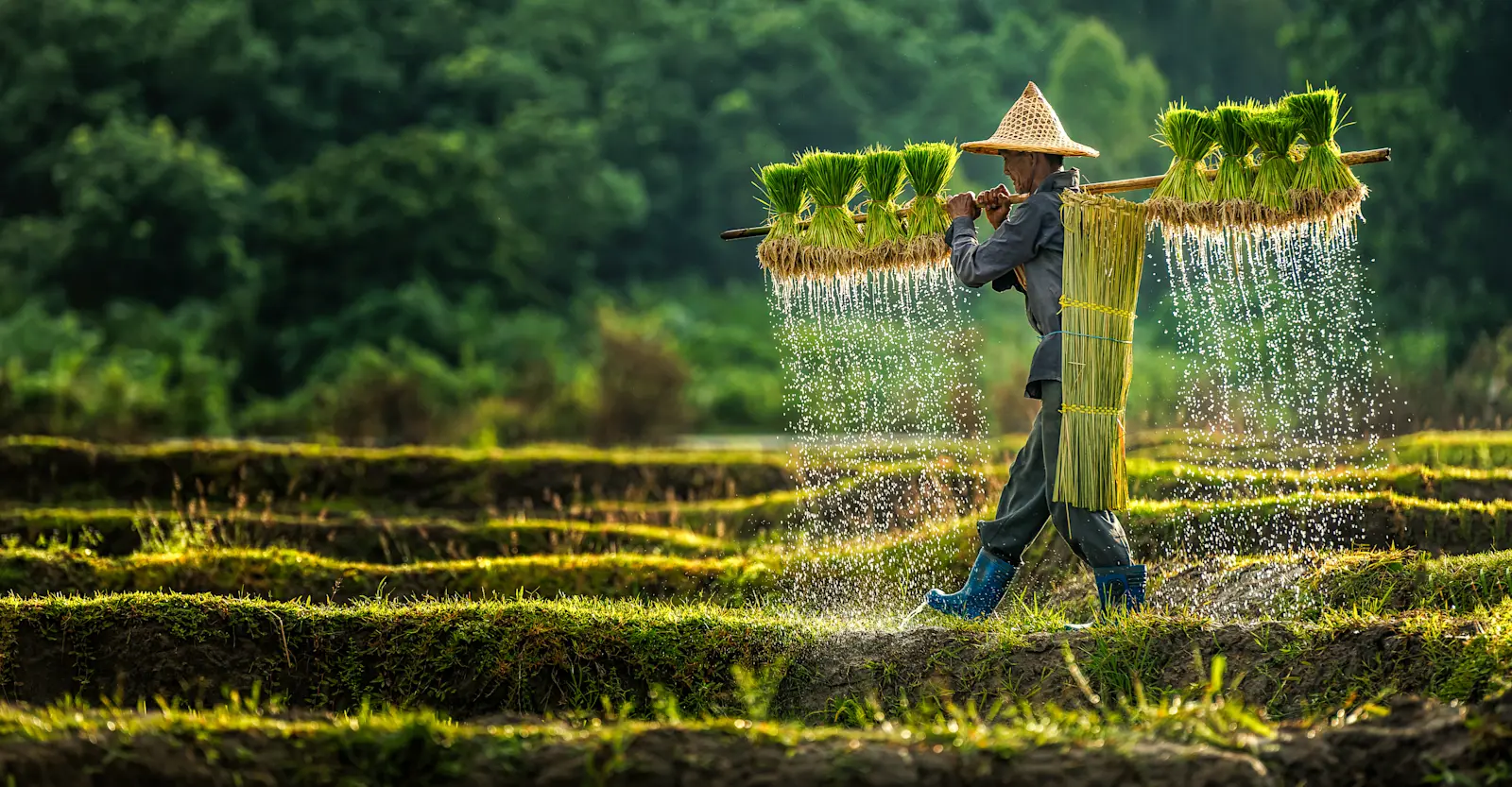
The previous day offers another hands-on connection to Vietnamese tradition, as guests visit a workshop in Hue to see how the country’s familiar conical hats are made and try weaving palm fronds and bamboo themselves.
Experience Fast-Growing Vietnam’s Ancient Buddhist Roots
Vietnam’s Buddhist traditions remain visible in pagodas, family altars and practices carried forward across generations. At the same time, contemporary Vietnam is changing quickly, making encounters with these living traditions particularly meaningful.
A cup of tea, an unhurried conversation with a monk or the quiet of a pagoda offers a personal way to encounter a spiritual tradition that has shaped Vietnamese culture for centuries.
Nat Hab’s Cultural Journeys weave travelers into the history and daily life of local communities. Nature and culture have always been closely linked, shaped by the places where people live and the traditions they carry forward. In Hue, sharing tea with a monk offers one intimate window into that connection.