


A “haiku” is a traditional Japanese, three-line poem containing 17 syllables in a five-seven-five pattern that focuses on nature, fleeting moments and deep emotions. It uses objective imagery and juxtaposition rather than metaphor, often creating a sense of wonder.
This year, International Haiku Poetry Day is on April 17. Traditionally, haiku is a Japanese poetic form that takes the natural world and the seasons as its primary subject matter. It acts as a concise form of environmental literature, emphasizing direct observation, sensory details and an appreciation for the transient beauty of the natural world.
It’s only appropriate, then, that we intersect creativeness with nature this week. One crossroads is in old poems from India. They are now revealing a surprising truth about the land. Scientists found that descriptions of open grasslands and thorny trees in texts written as far back as the 1200s closely match today’s savannas in western India. This confirms that these landscapes are ancient and natural—not ruined forests. The discovery could reshape how conservation and tree-planting efforts are planned.
Another junction of creativity and nature is found in a bonobo named Kanzi. He surprised scientists by successfully playing along in pretend tea parties, tracking imaginary juice and grapes as if they were real. He consistently pointed to the correct locations of pretend items, while still choosing real food when given the option. The results suggest that imagination may be far older—and more widespread in the animal kingdom—than scientists once believed.
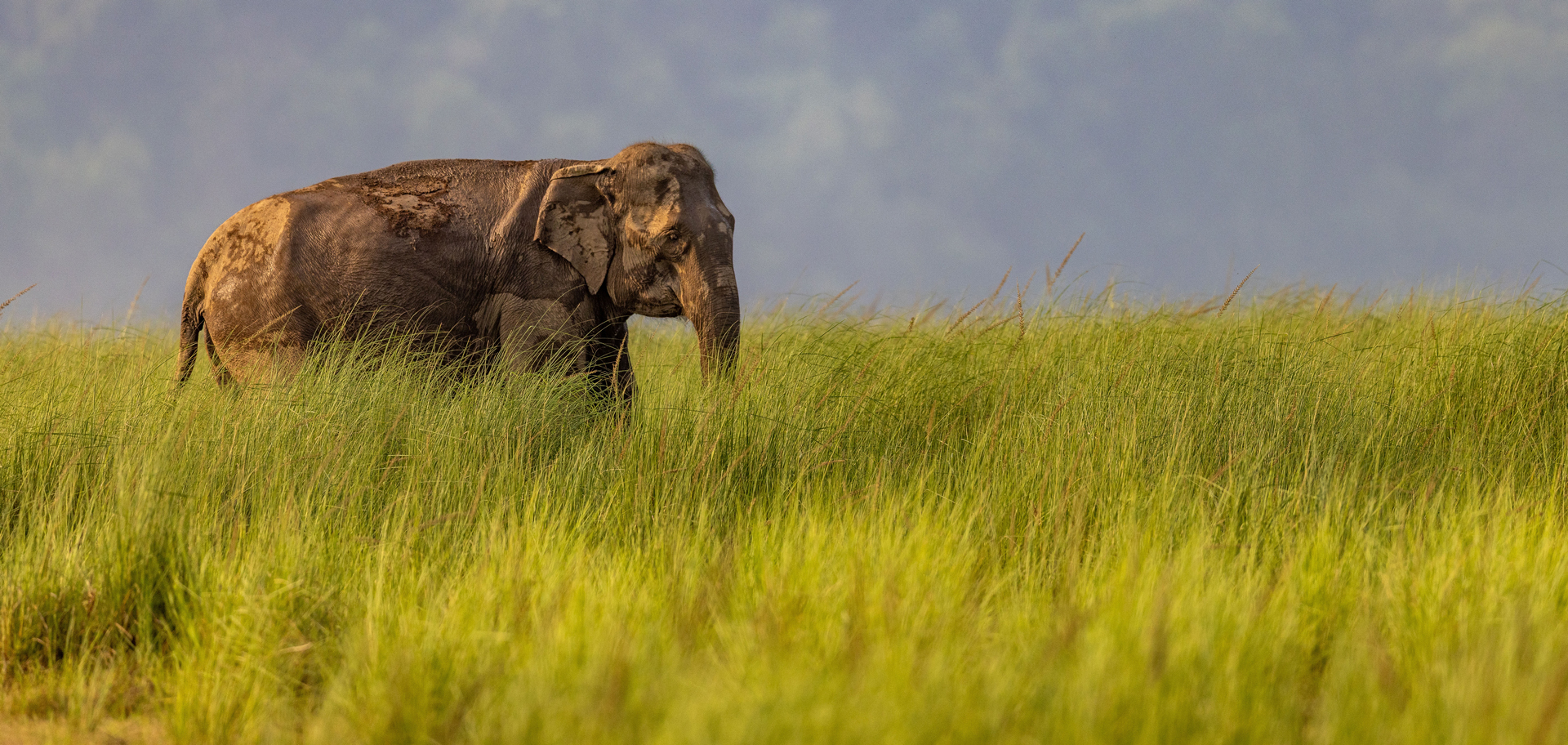
Centuries-old poems, sacred stories and songs from western India are helping scientists solve a modern ecological mystery. Descriptions of open grasslands in texts written as far back as the 1200s closely match the savannas found there today.
Speaking of imaginations, in the human world, “sleeping on a problem” might be a pretty powerful move. Neuroscientists have shown that dreams can be nudged in specific directions—and those dream tweaks may boost creativity.
750-year-old Indian poems recast the history of grasslands
Grasslands and savannas cover nearly 10% of India and more than one-third of Earth’s land surface. For decades, many scientists and policymakers assumed these open areas were once forests that had been cleared or degraded by human activity. That belief has shaped conservation strategies, including large-scale tree planting. But new research suggests a different story. Evidence from historical literature indicates that tropical grasslands are not ruined forests at all but long-standing ecosystems in their own right. This distinction matters when deciding where reforestation efforts should be focused.
In a study published in the British Ecological Society journal People and Nature in November 2025, researchers from Michigan State University and the Indian Institute of Science Education and Research in Pune examined references to plants in historical narratives set in western India. Their goal was to reconstruct what kinds of vegetation existed there in the past. Surprisingly, they found that the foliage from hundreds of years ago closely matched what is around today and greatly contrasted with the romantic view that people typically hold about how the landscape once looked.

The state of Maharashtra is in the western and central part of India. It has a coastline stretching 447 miles along the Arabian Sea and is naturally fortified by the Sahyadri and Satpuda mountain ranges.
The research team began reviewing folk songs, myths and poems written or performed in Marathi, a language spoken by millions in central and western India; some dating back to the 13th century. Much of this material is not stored in modern databases, making it an untapped source of ecological information. In the oldest known writing in Marathi, a 13th-century religious leader named Chakradhar points to an acacia tree as a symbol of death and rebirth. While his words were meant to convey spiritual meaning, they have taken on new significance centuries later: writings like these can help explain the long history of India’s landscapes.
Many of the works are set in Maharashtra, where roughly 14,473 square miles—about two thirds the size of Lake Michigan—are now open grasslands. Ancient poems, songs and stories may hold clues to how vast grasslands and savannas formed and endured across the region. The researchers identified references to 44 wild plant species in ancient texts, nearly two-thirds of which are typical of savanna ecosystems. One example appears in the epic poem Adi Parva, dated to the 16th century. The text describes cow herders drawn to the “empty” and “thorny” Nira River Valley because of its rich grass. Another account describes a turatti tree, known to scientists as Capparis divaricata, growing from the grave of a 15th-century poet-saint at the pilgrimage site of Pandharpur.
The acacia tree mentioned by Chakradhar appears repeatedly. The team found eight references to this thorny species, known as Vachellia leucophloea, which has feathery leaves, pale-yellow bark and white flowers. It’s still an iconic tree in the region.
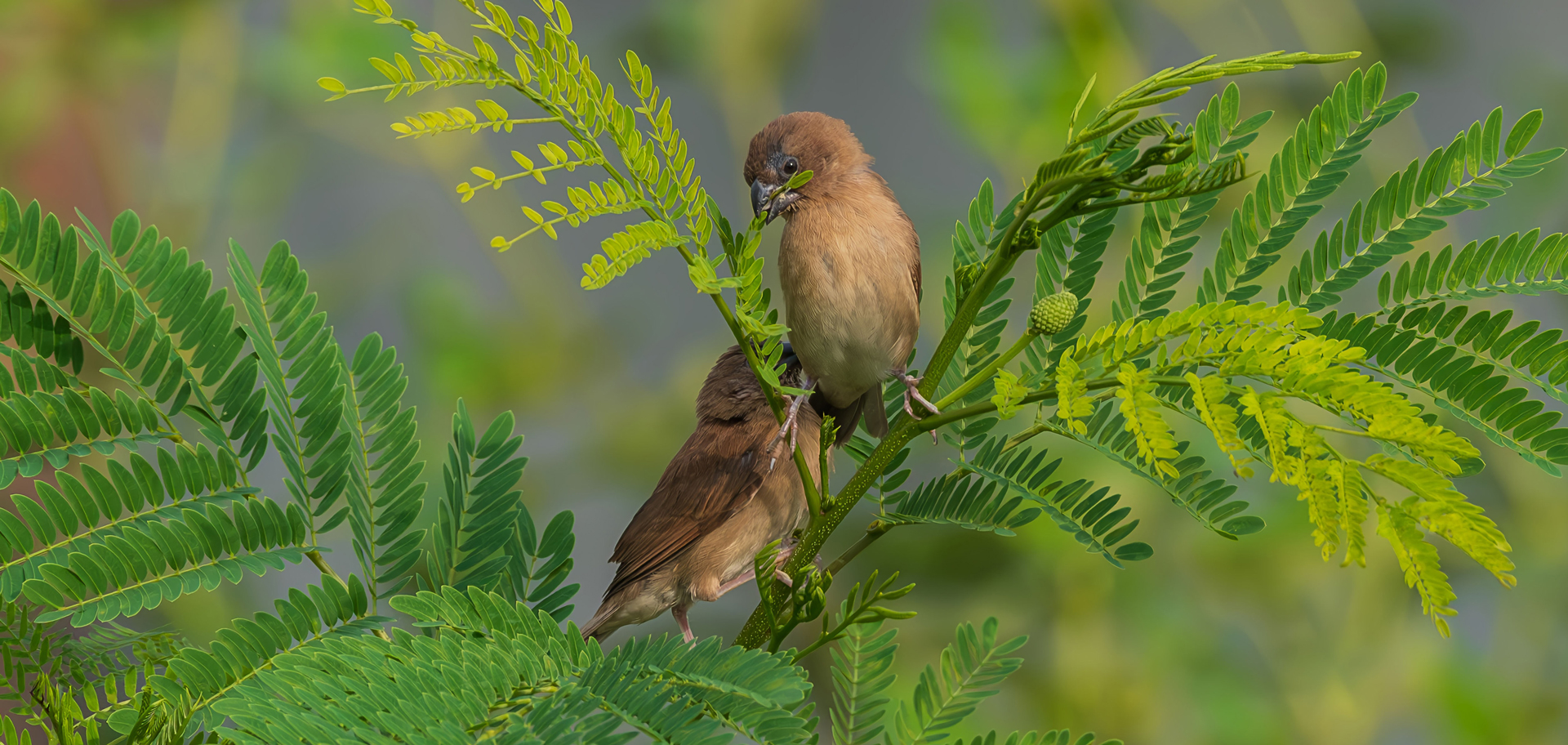
In ancient writings set in Maharashtra, India, researchers identified references to 44 wild plant species, nearly two-thirds of which are typical of savanna ecosystems. Acacia trees are one of them.
Together, these historical accounts mean that India’s savannas have existed for at least 750 years. They were already established long before widespread deforestation during British rule. Other scientific evidence points to an even deeper history. Fossil pollen and remains of grass-eating animals such as hippos indicate that savanna plants dominated the region tens of thousands of years ago, rather than dense forests.
Unfortunately, in both public perception and official policy, savannas in India and elsewhere have often been labeled “wastelands.” They are commonly viewed as damaged forests and targeted for tree-planting projects aimed at capturing carbon dioxide and slowing climate change. But preserving grasslands and savannas is important for many reasons. In India alone, these ecosystems support more than 200 plant species found nowhere else on Earth. Many were only recently identified by scientists and face growing threats from development and farming. A lot of savanna biodiversity is also sacred, which means it has cultural value in addition to ecological worth.
Savannas also help store carbon by absorbing carbon dioxide that would otherwise remain in the atmosphere. Across Africa, Asia, Australia and South America, they provide grazing land for hundreds of millions of cattle, sheep and other livestock. About 20% of the world’s population depends on grasslands and savannas for a livelihood. Researchers warn that these benefits could be lost if climate solutions involve planting trees in places where forests never existed.
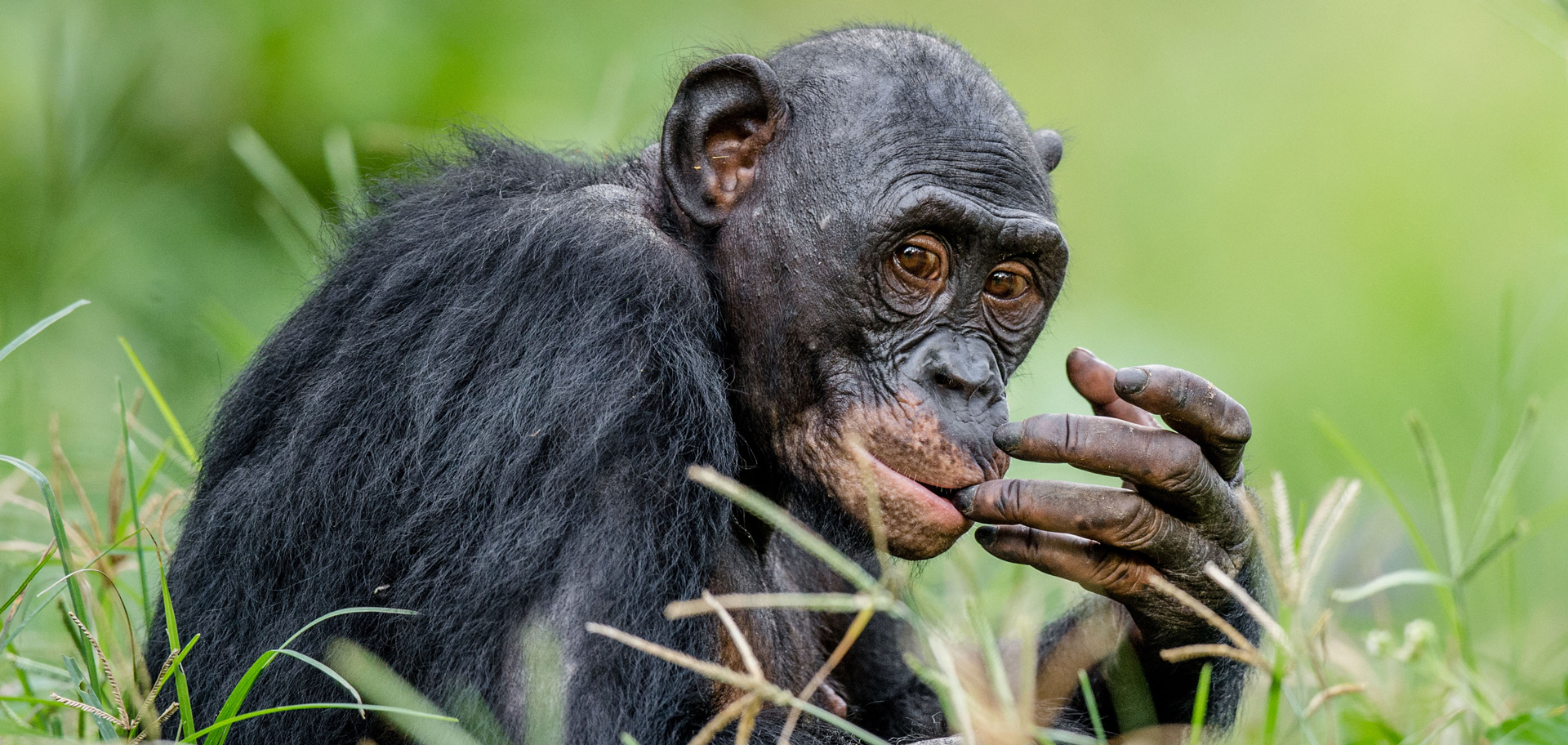
Native only to the Democratic Republic of the Congo, bonobos (“Pan paniscus”) are endangered great apes that share 98.7% of their DNA with humans. They are known for their matriarchal, peaceful and highly social structures.
Pretend tea parties rewrite what we know about imagination
Human children typically begin engaging in pretend activities, such as tea parties, by around age two. Even younger infants show early signs of understanding make-believe. At just 15-months-old, babies often react with surprise when someone pretends to empty a cup and then acts as if they are drinking from it.
Despite these well-documented behaviors in children, no controlled experiments had previously tested whether nonhuman animals could understand or track pretend situations. This gap existed even though there have been many anecdotal observations in both captive and wild settings. For example, in nature, young female chimpanzees have been seen carrying sticks and treating them like infants. In captivity, at least one chimpanzee appeared to drag imaginary blocks across the floor after playing with real wooden ones.
Recently, researchers from Maryland’s Johns Hopkins University and the University of St. Andrews in Scotland set out to examine pretend play under controlled conditions. Across three, carefully designed experiments, a single bonobo interacted with imaginary juice and pretend grapes in a consistent and repeatable way.

In a set of playful experiments modeled after children’s tea parties, researchers have shown for the first time that apes can use imagination and take part in pretend play, conceiving of things that are not there. Imagination may not be exclusive to humans, after all.
The experiments were designed to mimic children’s tea parties; and the participant was Kanzi, a 43-year-old bonobo living at Ape Initiative in Iowa. Kanzi had previously been reported to show signs of pretend behavior and could respond to spoken questions by pointing. During each test, Kanzi sat across a table from an experimenter. The table was arranged with empty cups and pitchers or with bowls and jars, all set up to resemble a playful social activity.
In the first experiment, two, empty, transparent cups sat beside an empty, transparent pitcher. The experimenter pretended to pour juice into both cups, then acted out dumping the juice from one cup, shaking it to show it was empty. The experimenter then asked Kanzi, “Where’s the juice?” Most of the time, Kanzi pointed to the cup that was meant to still contain the pretend juice. He continued to do so even when the experimenter moved the cups around.
To rule out the possibility that Kanzi believed real juice was hidden inside the cup, the researchers ran a second test. This time, one cup contained real juice and the other contained pretend juice. When asked what he wanted, Kanzi almost always pointed to the real juice.
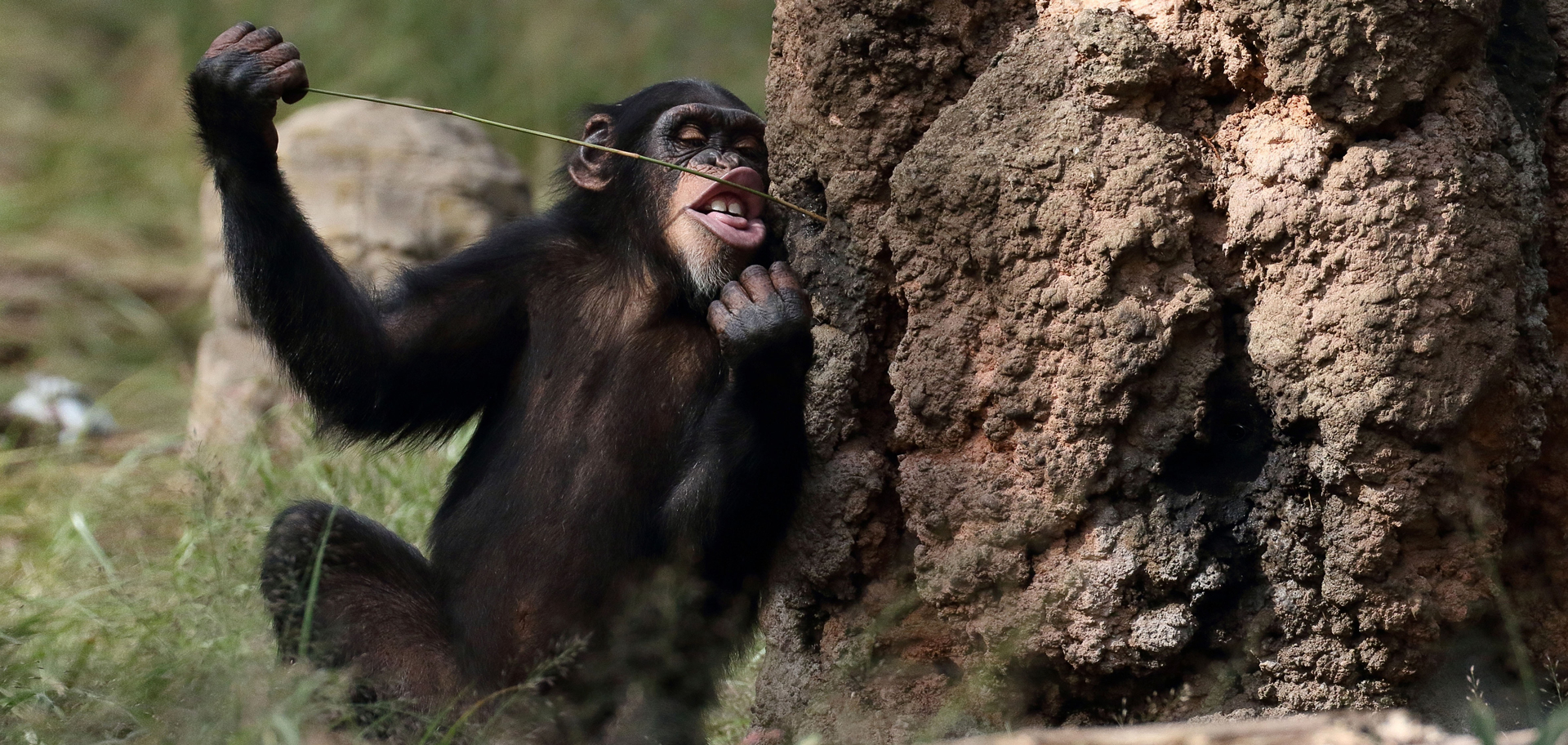
Just like Jane Goodall’s discovery that chimps make tools (as this one is) and how that led to a change in the definition of what it means to be human, learning that bonobos have imaginations invites us to reconsider the robust mental lives that exist out there among other creatures.
A third experiment followed the same logic but used grapes instead. The experimenter pretended to eat a grape from an empty container and then placed it into one of two jars. After pretending to empty one jar, the experimenter asked, “Where’s the grape?” Once again, Kanzi indicated the jar holding the pretend object. Kanzi did not respond correctly every time, but his answers were reliably accurate.
The study’s findings, published in the journal Science in February 2026, push back against traditional ideas about animal intelligence and suggest that some animals may think more flexibly than previously assumed. Kanzi’s ability to understand pretend objects implies that this mental skill may have deep evolutionary roots, possibly stretching back 6 to 9 million years to a shared ancestor of humans and modern apes.
The researchers conclude that like Jane Goodall’s discovery that chimps make tools and how that led to a change in the definition of what it means to be human, these results, too, invite us to reconsider what makes us special and what mental life is out there among other creatures. Kanzi, in his mind, could conceive of things that are not there and was able to generate an idea of a pretend object. At the same time, he knew it was not real. Imagination has long been seen as a critical element of humanness, so the idea that it may not be exclusive to our species is transformative.
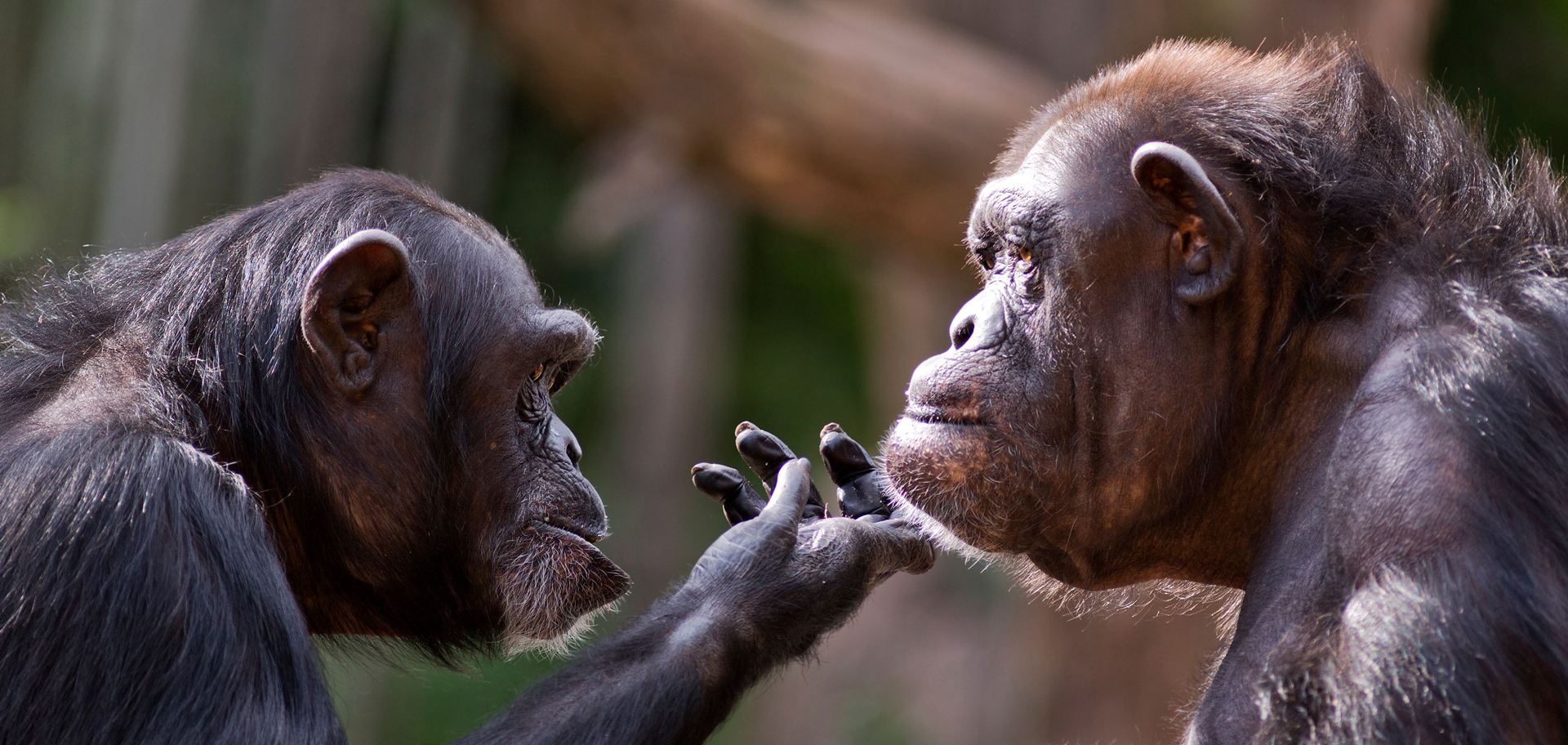
Bonobos use complex facial expressions, gestures and vocalizations to communicate. Some have even learned to “talk” with humans using keyboards featuring hundreds of symbols, demonstrating their understanding of our spoken words and their advanced mental abilities.
Future work may explore whether other apes, or even other animals, can engage in pretend play or track imaginary objects. The Johns Hopkins University and University of St. Andrews team is also interested in testing related mental abilities, such as thinking about the future or understanding what others might be thinking.
Planting ideas in dreams revs up creativity
Most people have heard the advice to “sleep on it” when faced with a tough decision. New research shows that this guidance may be grounded in science. While many people report breakthrough ideas emerging from dreams, researchers have struggled to test this phenomenon because dreams are difficult to control in a lab setting. But a new study from neuroscientists at Northwestern University in Illinois demonstrates that it is possible to influence what people dream about. The findings support the idea that REM sleep, the rapid eye movement stage of sleep when vivid and sometimes lucid dreams occur, may be especially helpful for creative problem-solving.
The study included 20 participants who had prior experience with lucid dreaming, meaning they sometimes realized they were dreaming while still asleep. In the lab, each person attempted to solve a series of brainteasers, with three minutes allotted per puzzle. Each puzzle was paired with its own distinctive soundtrack. Most puzzles remained unsolved due to their difficulty.

To “sleep on it” means delaying a final decision (an important one, usually) until the next day to allow for more time to think it over. It implies waiting overnight to clear one’s mind, ensuring a more considered choice rather than an immediate or impulsive one.
Participants then spent the night in the lab while researchers recorded their brain activity and other physiological signals using polysomnography. During REM sleep, scientists replayed the soundtracks linked to half of the unsolved puzzles to selectively reactivate those memories. Some participants used prearranged signals, such as specific in-and-out sniffing patterns, to indicate that they heard the sounds and were actively working on the puzzles within their dreams.
The next morning, participants described their dreams. Seventy-five percent reported dreams that included elements or ideas related to the unsolved puzzles. Puzzles that appeared in dreams were solved at a much higher rate (42%) than those that did not turn up in dreams (17%).
In 12 out of 20 participants, dreams referred more often to the puzzles associated with sound cues than to those that weren’t. These same participants were more likely to solve the reactivated puzzles after waking, improving their success rate from 20% to 40%—which was significant.

Scientists found a way to gently steer dreams—and it may spark creative breakthroughs. By playing subtle sound cues during REM sleep, people were prompted to dream about unsolved brainteasers they had struggled with earlier. One person cued with a “trees puzzle” dreamed of walking through a forest.
Even so, the results, published in the journal Neuroscience of Consciousness in February 2026, do not prove that dreaming directly causes better solutions. Other factors, such as heightened curiosity about certain puzzles, could have influenced both dreaming and performance. Still, successfully guiding dream content marks an important advance in understanding how sleep may support creative thinking.
Haiku poems reconnect us to nature
Haiku poems deeply intersect with nature-writing by focusing on the natural world, often describing a single, fleeting moment, such as a bird in flight, a blossoming flower or changing weather. Many traditional haikus include a kigo, or a “season word,” which grounds the poem in a specific time of year, linking the poem to the cyclical rhythms of the Earth. Writing and reading haiku is often used as a tool to connect with the environment, acting as a form of ecotherapy, a meditative practice that encourages slowing down and observing your surroundings. And by utilizing a five-seven-five syllable structure (in English), haiku encourages brevity and precision, allowing for a poignant, sensory experience without unnecessary elaboration.
Creativity is linked to nature in other ways. In India, centuries-old stories are providing a rare glimpse into the natural past. In the wildlife sector, we’re finding out that we share some roots of imagination with great apes, making us question assumptions about other animals—such as that they are just living robotic lifestyles constrained to the present. Compelled by findings to the contrary, we should care more for these creatures with rich and beautiful minds and ensure that they continue to exist. And one day, perhaps, we’ll be able to use sleep engineering to help solve many of the world’s problems that require creative solutions.

Haiku poems highlight a deep connection to the natural world, fostering a sense of being a part of nature rather than being separate from it.
This year, let’s use International Haiku Poetry Day as a reminder that creativity and nature always go hand in hand.
Here’s to finding your true places and natural habitats,
Candy