

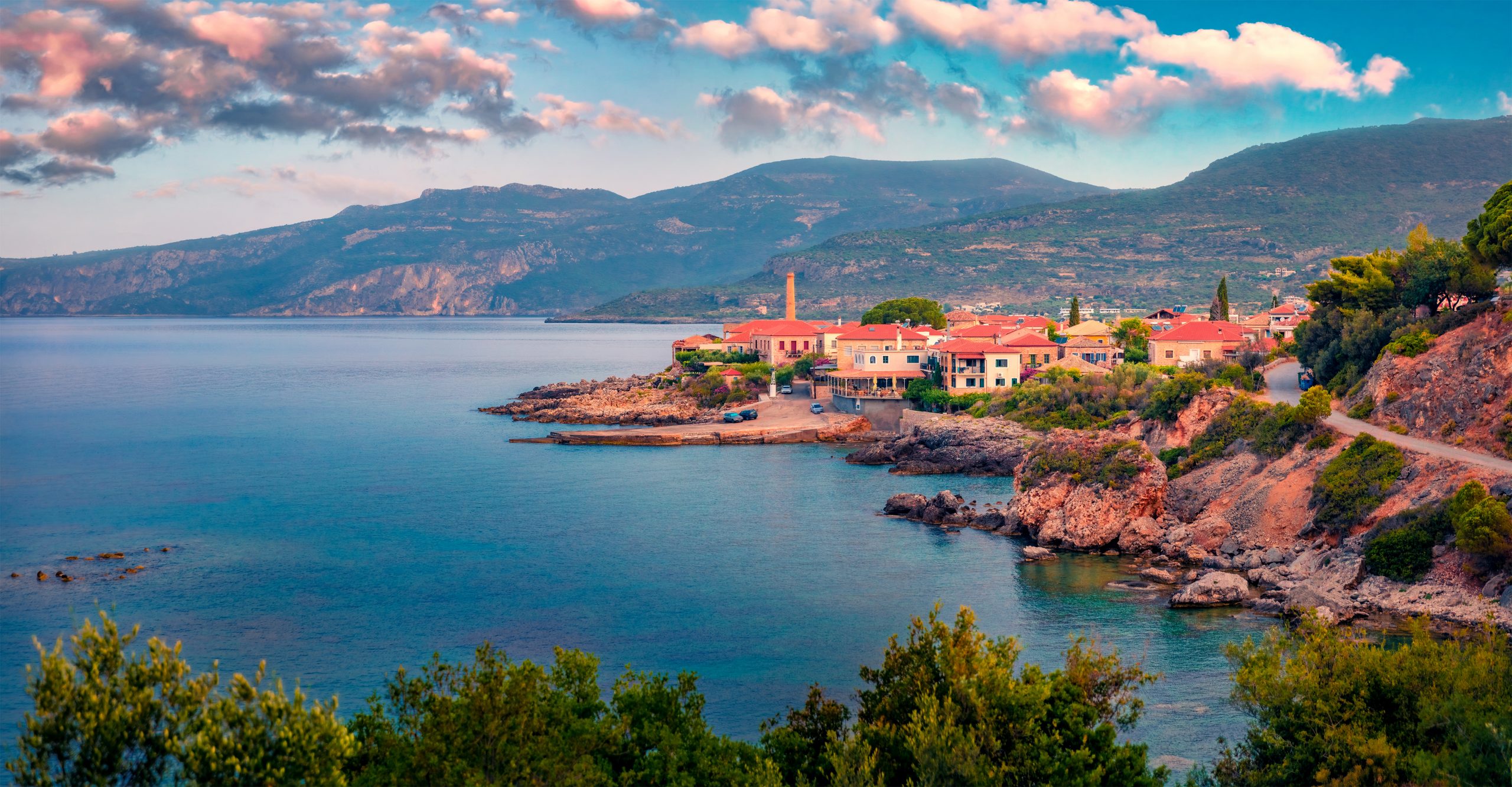
The Peloponnese is a compact peninsula connected to the Greek mainland by an isthmus barely 4 miles wide. Its history, though, stretches 5,000 years from Bronze Age settlements to the first capital of the modern Greek nation-state.
On Nat Hab’s A Greek Odyssey, discover the Peloponnese peninsula, where:
—One of ancient Greece’s four great Panhellenic athletic festivals was held
—The first capital of modern Greece was declared
—Clans successfully resisted the Ottoman Empire for nearly four centuries
—The mountain communities that helped drive the struggle for Greek independence keep their traditional culture alive.
It’s an outsized story for a small peninsula!
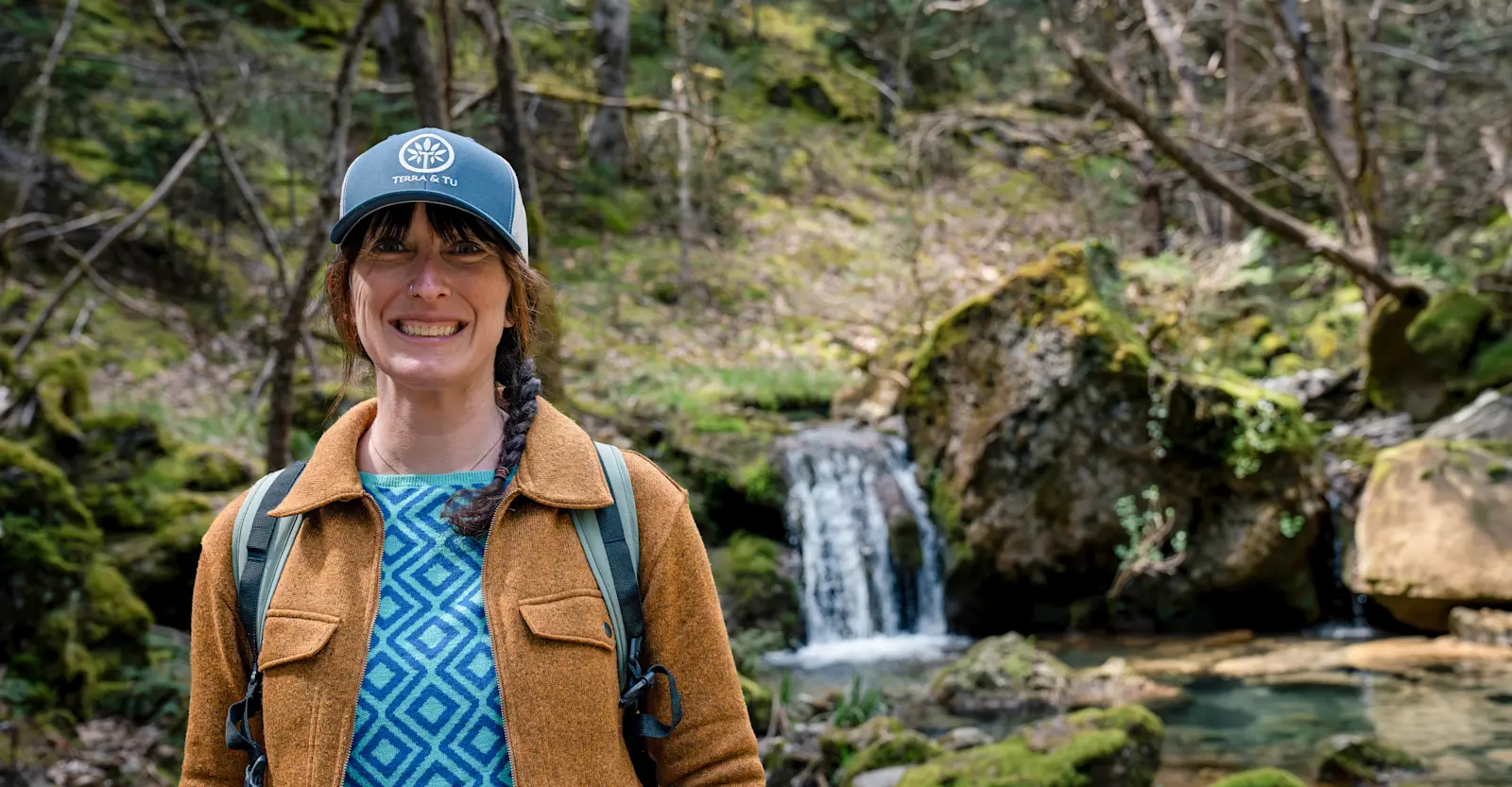
Arcadia, Greece © Nat Hab Staff Dana Cama
What Happened at Nemea During the Panhellenic Games?
Ancient Greece organized its most important athletic events around four great Panhellenic festivals. Each was held at a different sanctuary in a rotating cycle:
—The Olympic Games at Olympia,
—The Pythian Games at Delphi,
—The Isthmian Games near Corinth and
—The Nemean Games at Nemea, in the northeastern Peloponnese.
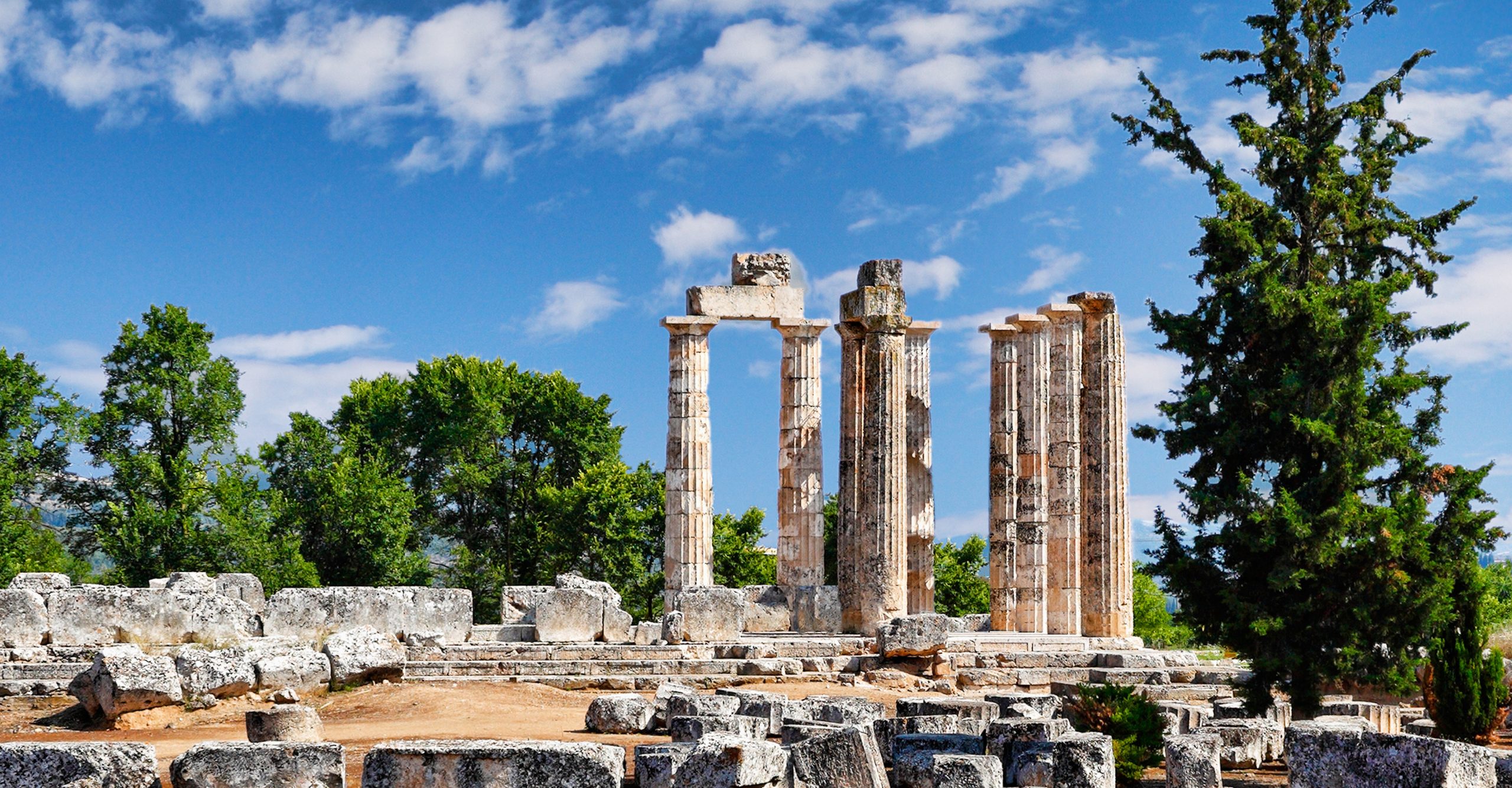
The Temple of Zeus, Nemea, Greece
Founded around 573 BC and open to all Greeks, the Nemean Games occurred every two years in the off-years of the Olympic cycle.
At Nemea, athletes competed in foot races, boxing, wrestling, discus, javelin and other contests in honor of Zeus. Like the Olympic Games, the Nemean Games weren’t just sporting events. They were religious festivals, too. Victors received a crown of wild celery, the same plant used to garland graves, linking athletic glory to mortality.
Today, guests can walk the length of Nemea’s stadium and place their feet at the original carved stone starting blocks—the same ones competitors used more than 2,300 years ago.
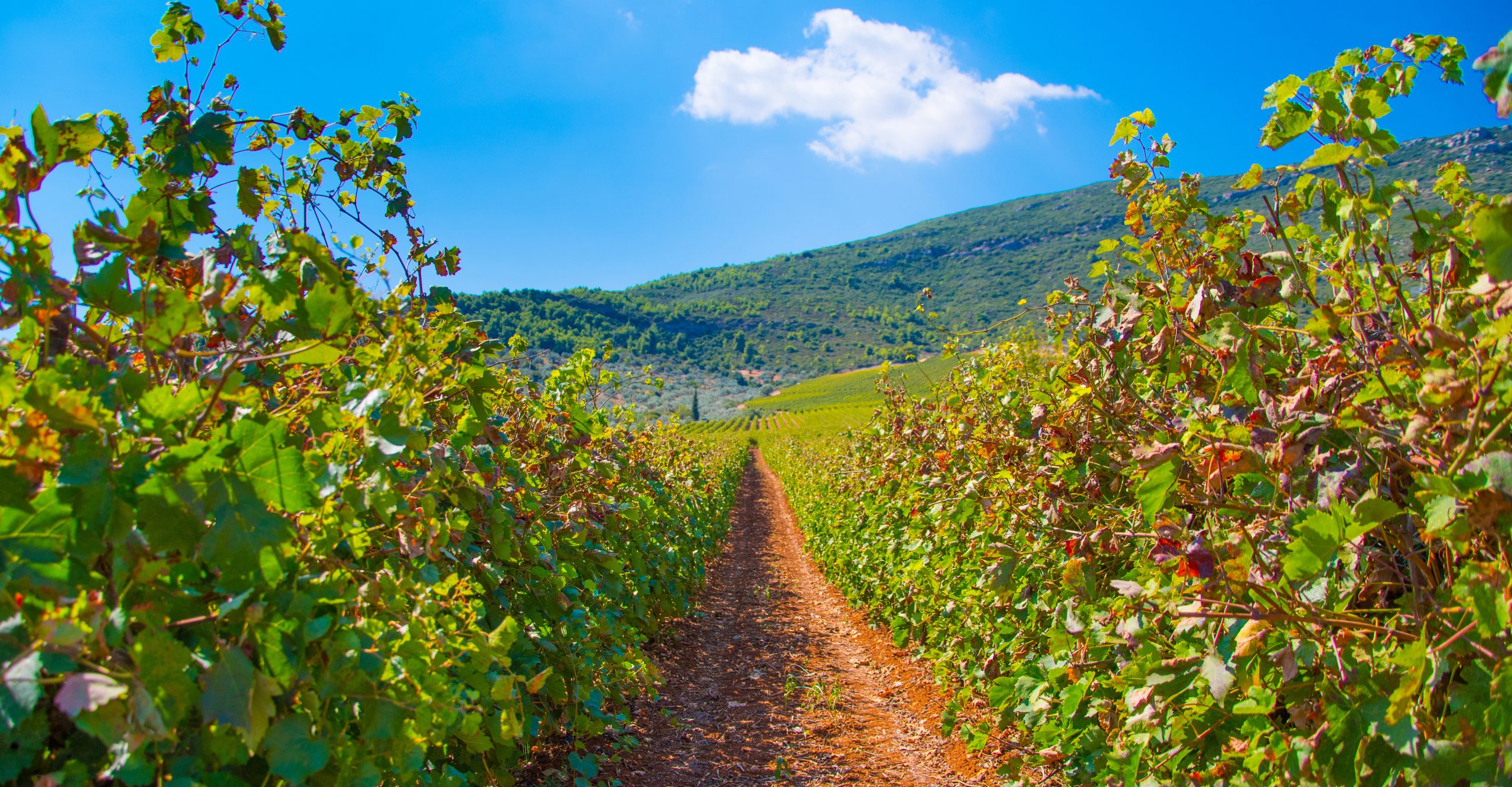
Nemea, Peloponnese, Greece
Around the valley, the Agiorgitiko grape, named for St. George, still grows in the red soil. The ancient games and the modern wine region share the same valley and, in a real sense, the same long story.
Just as wine was shared at the games, on A Greek Odyssey, guests walk the Nemea archaeological site with a local guide. Then, they visit a family vineyard for a cellar tour, paired wine tasting and hands-on cooking session, preparing traditional regional dishes alongside local hosts before sitting down to share the meal. From ancient to contemporary, ruin to table, echoes throughout the Peloponnese.
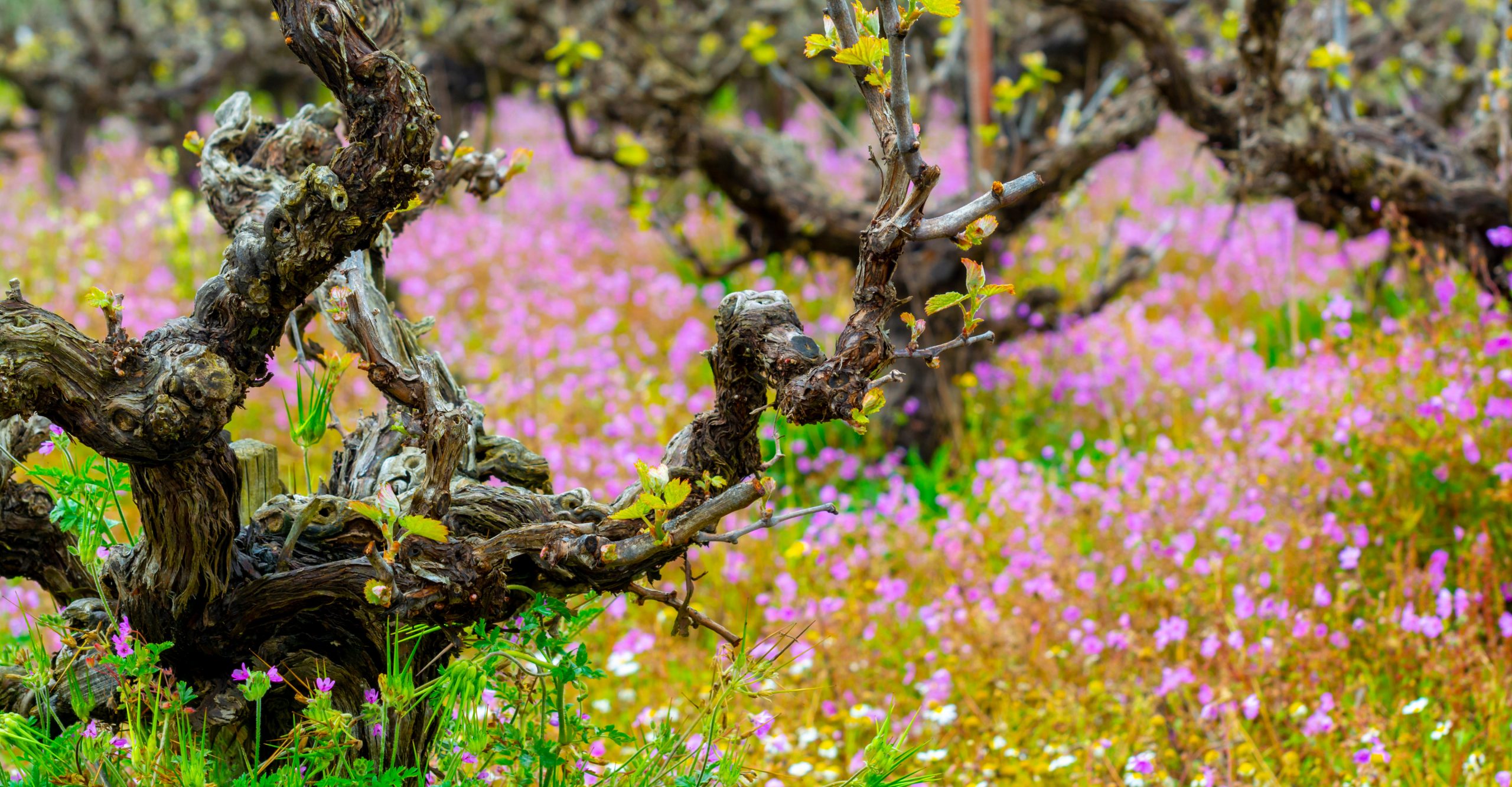
Old Grape vine trunks and spring blossoms, Nemea, Greece
Why Was Nafplio Greece’s First Capital After Independence?
The heart of the war for Greek independence was the Peloponnese. Nafplio, a seafront town on the eastern Peloponnese, served as the first official capital of the modern Greek state (after a provisional period in Aegina) from 1828 to 1834, when Ioannis Kapodistrias, independent Greece’s first governor, made it the center of the new nation. He died on its stones in 1831, outside the Church of St. Spyridon in the old quarter, and the capital moved to Athens under King Otto three years later.
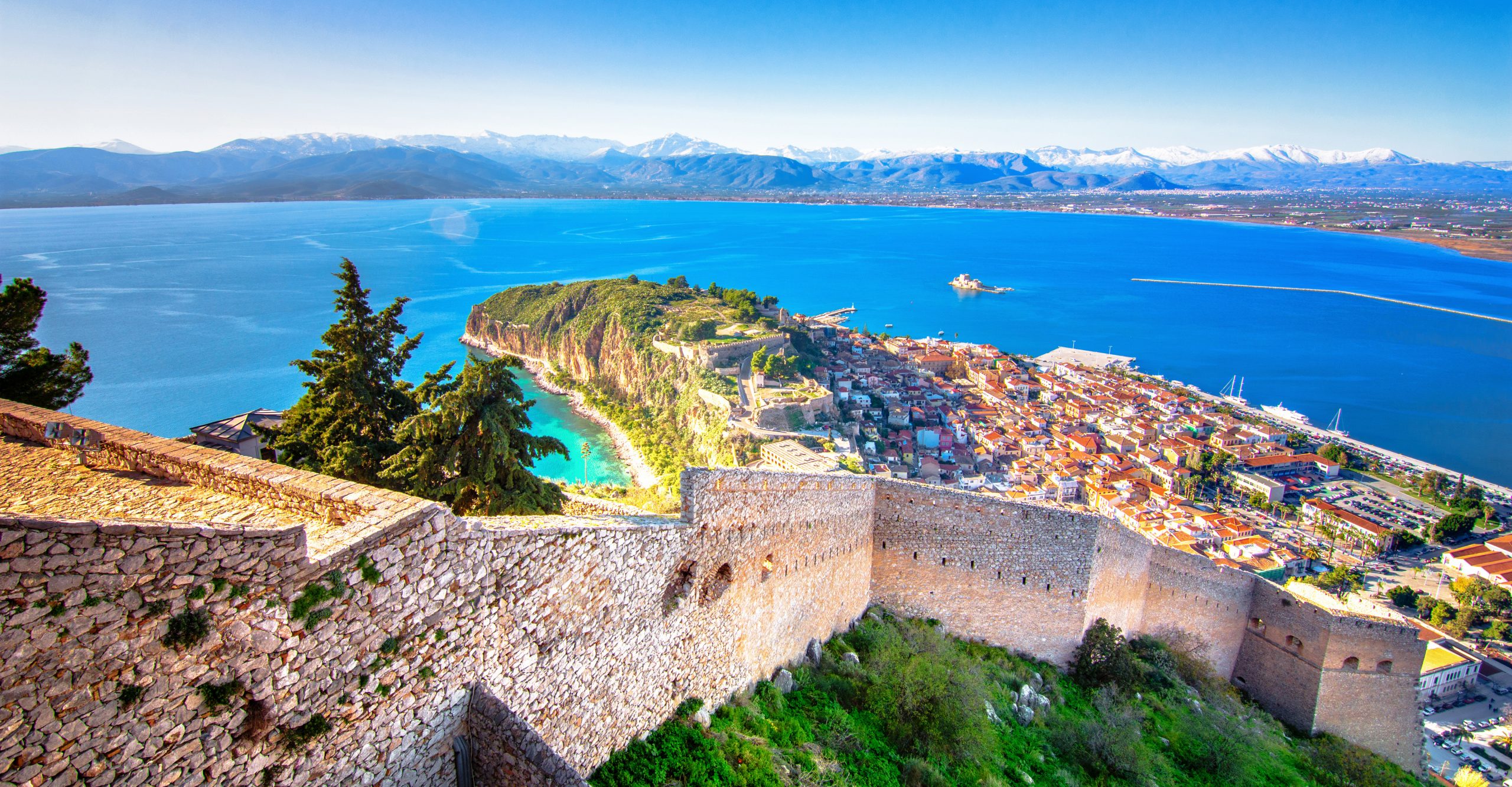
Nafplion, Greece
Nafplio kept its architecture. Venetian fortifications still define the landscape. The massive Palamidi fortress rises above the old town, and the island castle of Bourtzi guards the harbor entrance. Neoclassical facades line the seafront, wrought-iron balconies overhang narrow stone lanes, and plane trees shade quiet squares. Walking Nafplio’s old quarter with a local guide is to move through layers of Venetian, Ottoman and modern Greek history with each block.
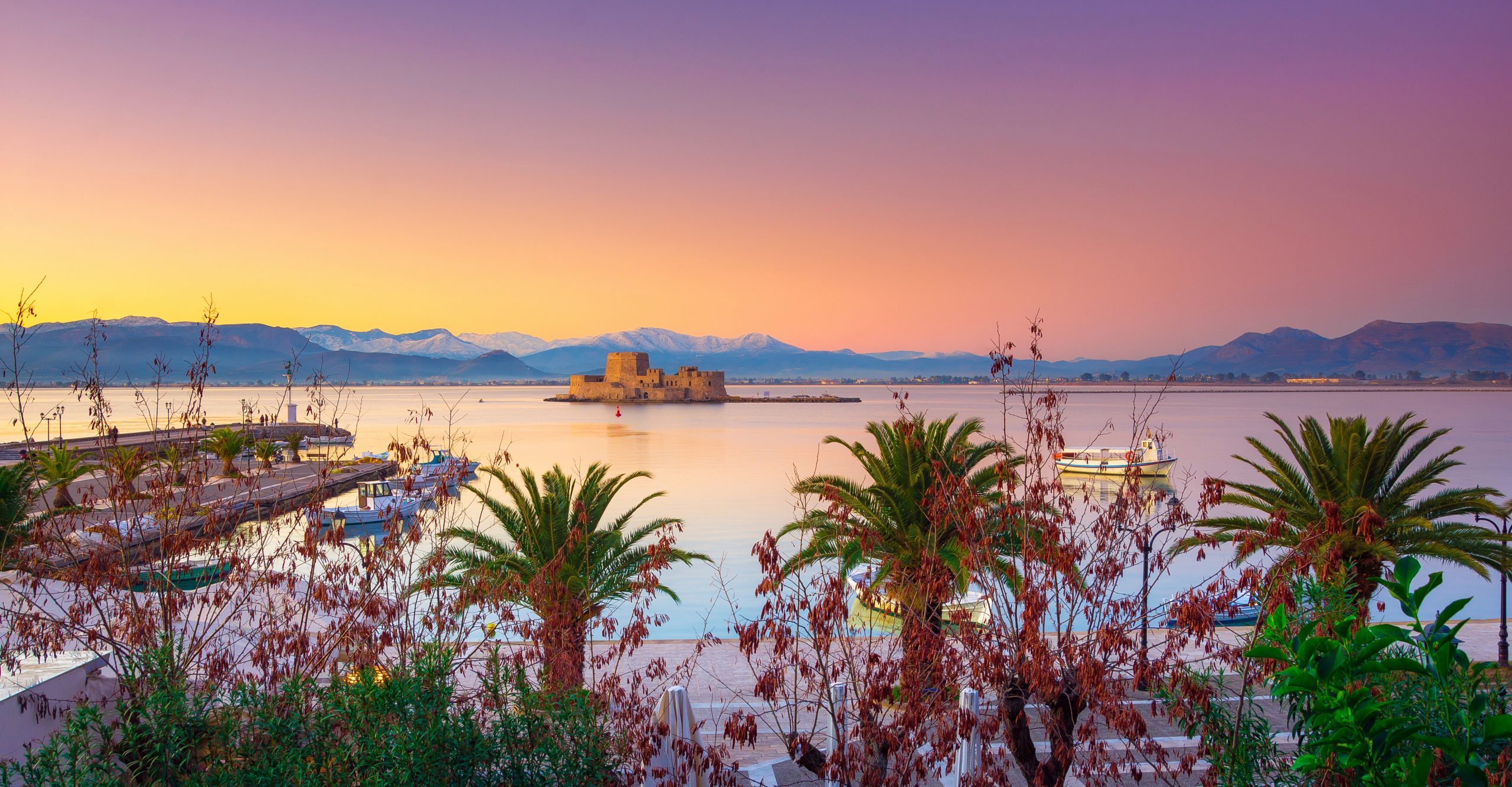
Nafplion, Greece
Visit a fifth-generation family distillery where traditional Greek spirits are made from recipes more than a century old. The techniques, timing, and sensory judgment involved in traditional spirit production are passed down batch by batch, generation to generation. Tasting what that continuity produces, alongside the family who holds it, is something no museum can replicate.
What Makes the Mani Peninsula Unlike Any Other Part of Greece?
The Mani, the central part of the Peloponnese’s three southern fingers, maintained unusual autonomy under Ottoman pressure in ways the rest of Greece could not. When the Ottomans consolidated control over most of the Peloponnese in the mid-15th century, Mani’s combination of rugged terrain, scarce food supplies and fiercely organized clans made subjugation costly to pursue. Mani was never fully conquered.
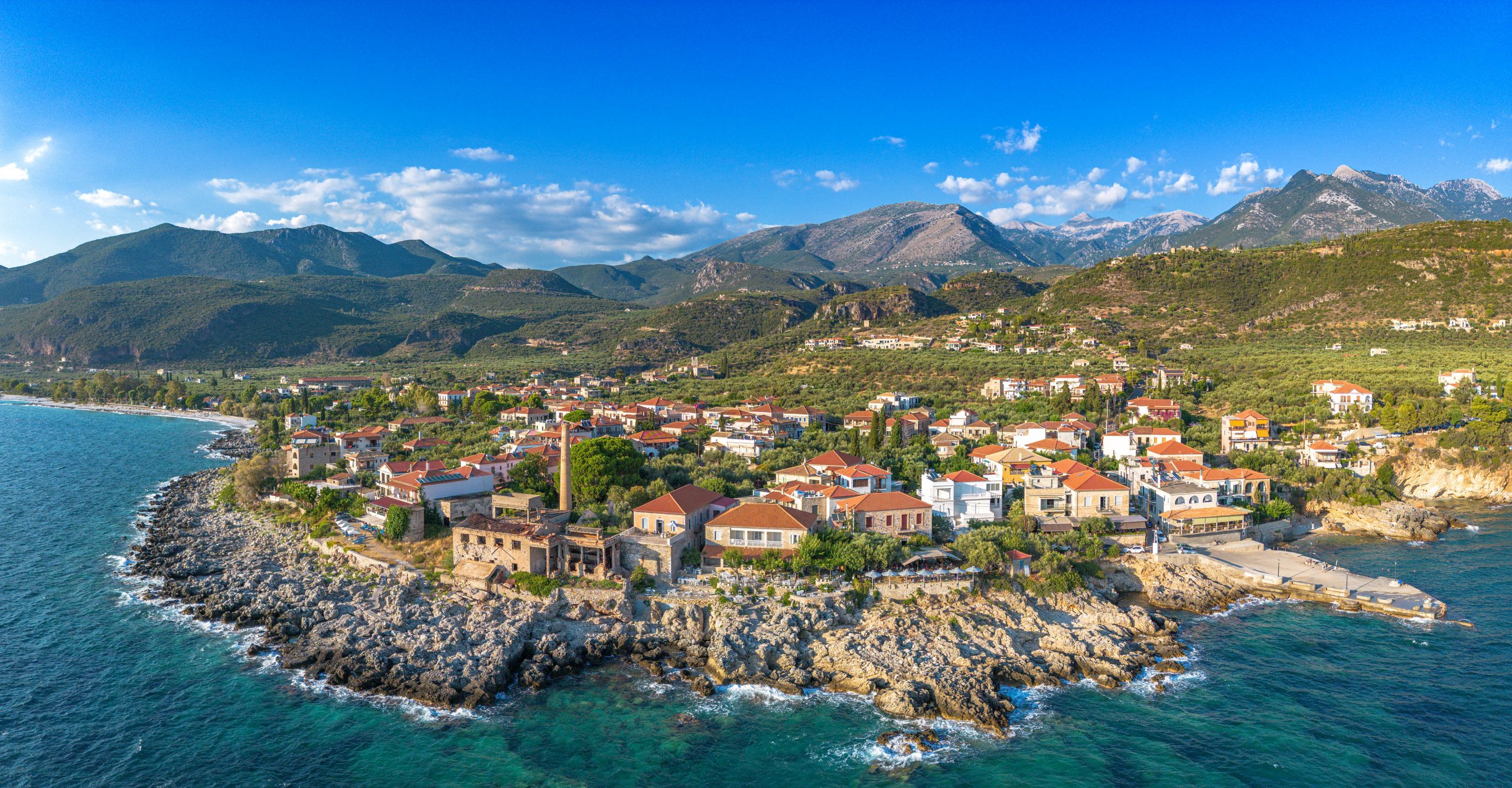
Kardamyli, Mani, Greece
Mani’s tower houses reflect this history. Built of pale stone and rising five or six stories above cliff-edged coastlines and terraced hills, the towers were weapons of clan warfare designed to hold the high ground against rivals and resist siege long enough to outlast an attacking family.
Walking the lanes of Areopoli, where Maniots declared war against Ottoman rule on March 17, 1821, tower shadows fall on cobblestones, providing a sense of Mani’s long history.
Guests on our cultural adventure spend two days in Mani, with guided village walks, a coastal hike and a private catamaran cruise along the shoreline.
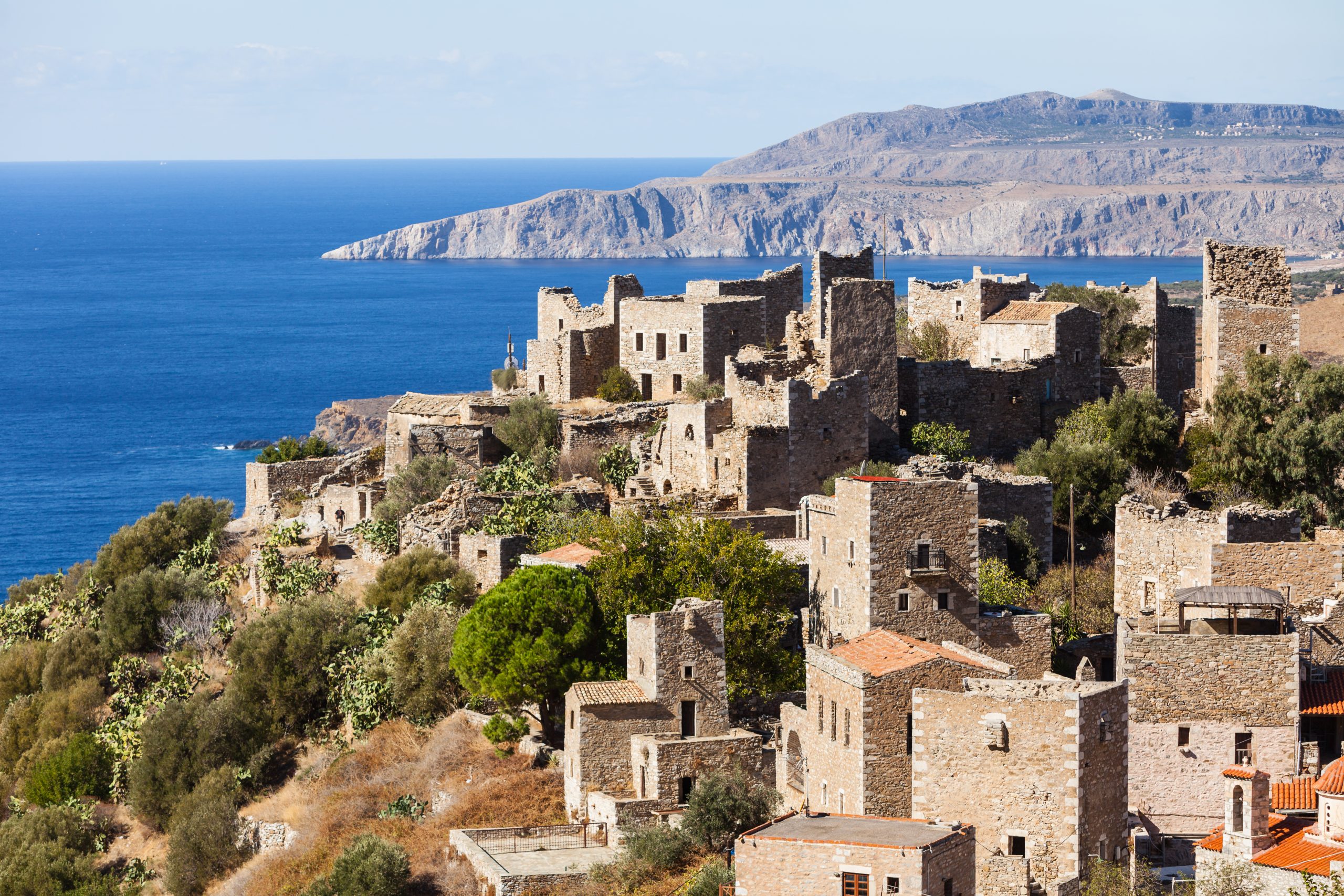
Old tower houses, Vathia, Mani Peninsula
How Do Traditional Crafts and Cuisine Survive in Arcadia’s Mountain Villages?
The Greek War of Independence was fought across the Peloponnese, in large part by mountain communities who used the terrain as both refuge and resource. In Arcadia, a densely forested inland region of the peninsula. That history is still legible in the landscape and ways of life.
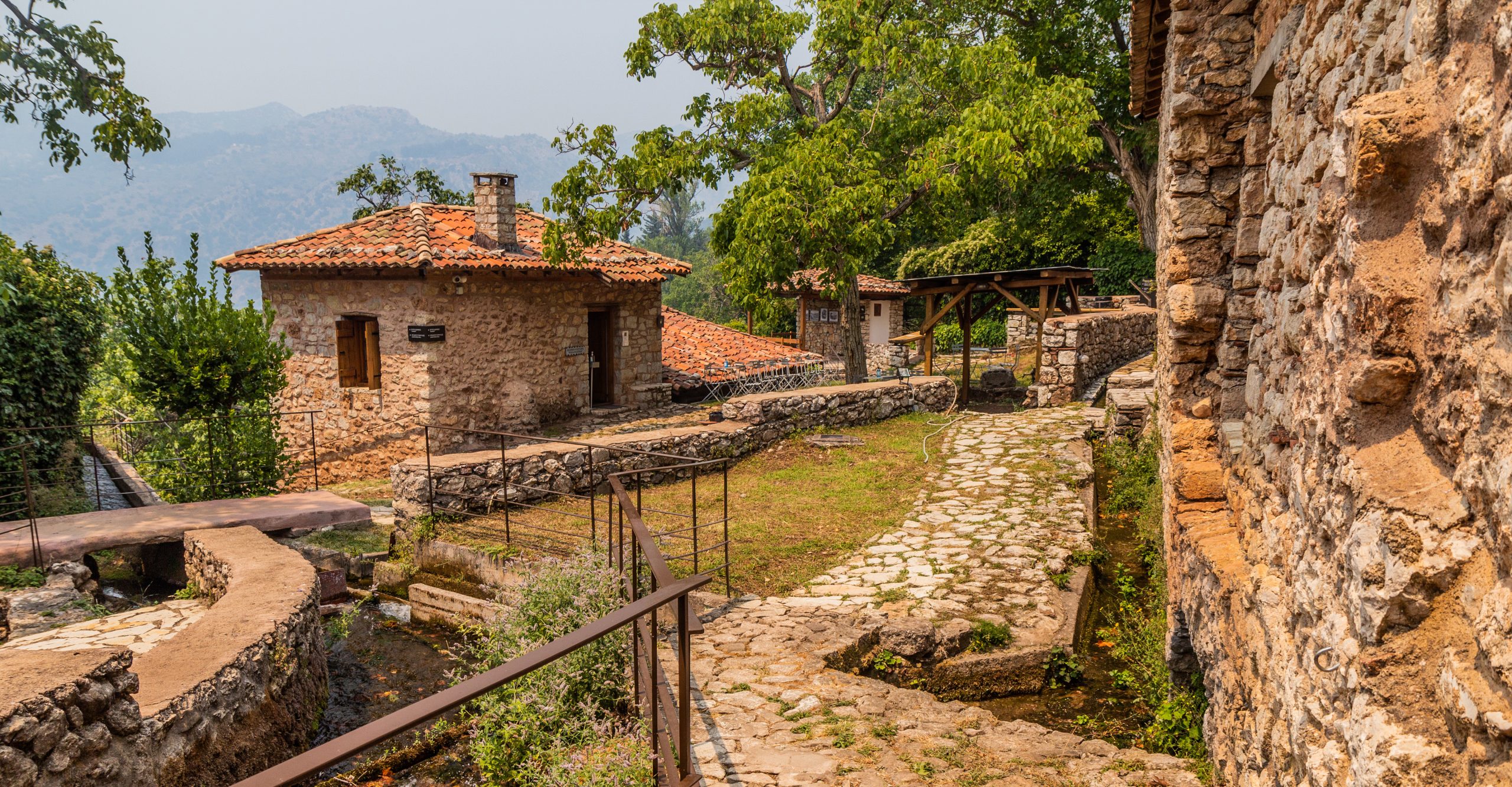
Open-Air Water Power Museum, Dimitsana
—The water mills of Dimitsana, powered by the Lousios River, were converted to gunpowder production during the struggle for independence. The Open-Air Water Power Museum in Dimitsana preserves those mills today.
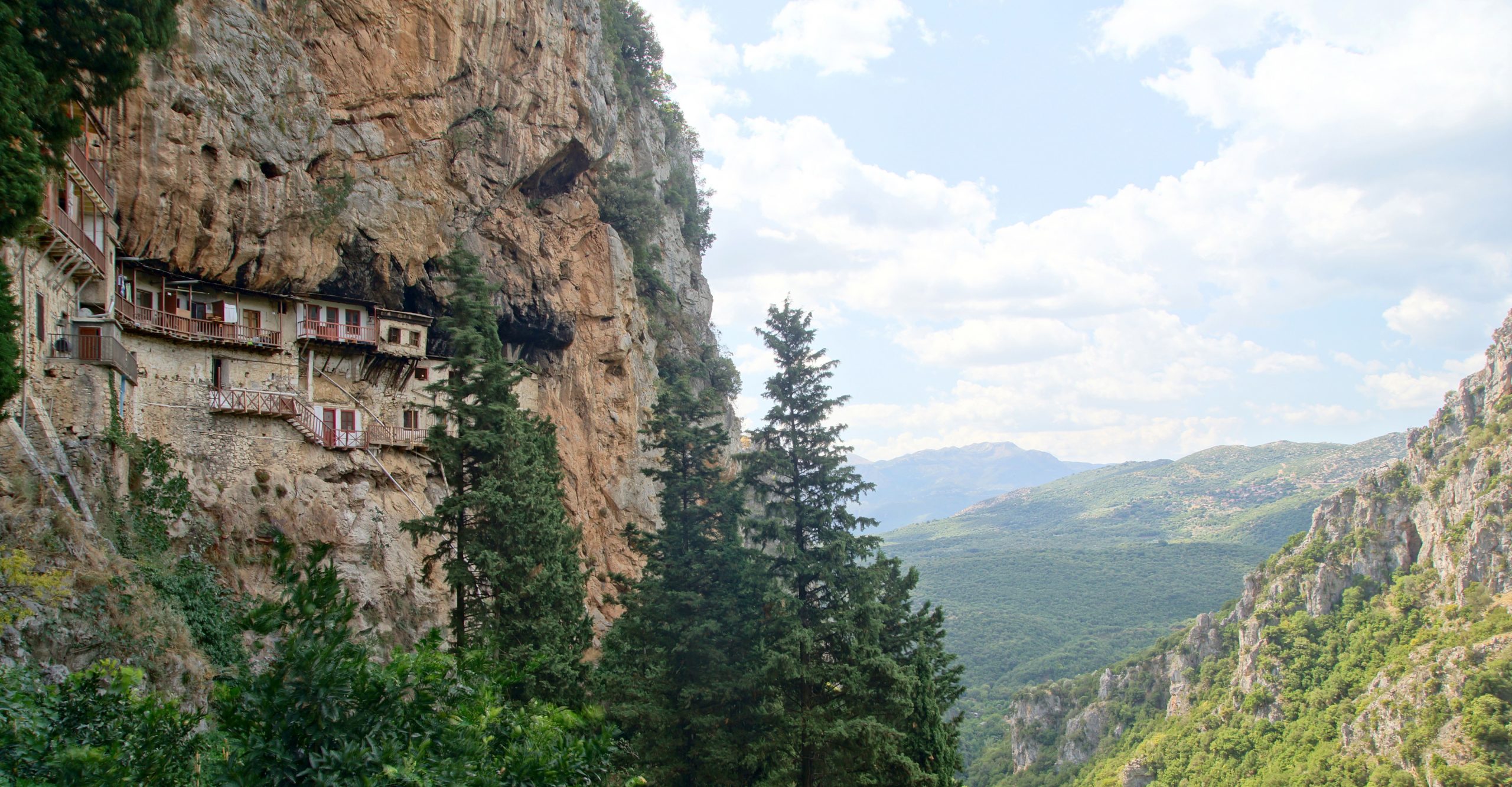
Moni Agiou Ioanni Prodromou (Monastery of St. John the Baptist)
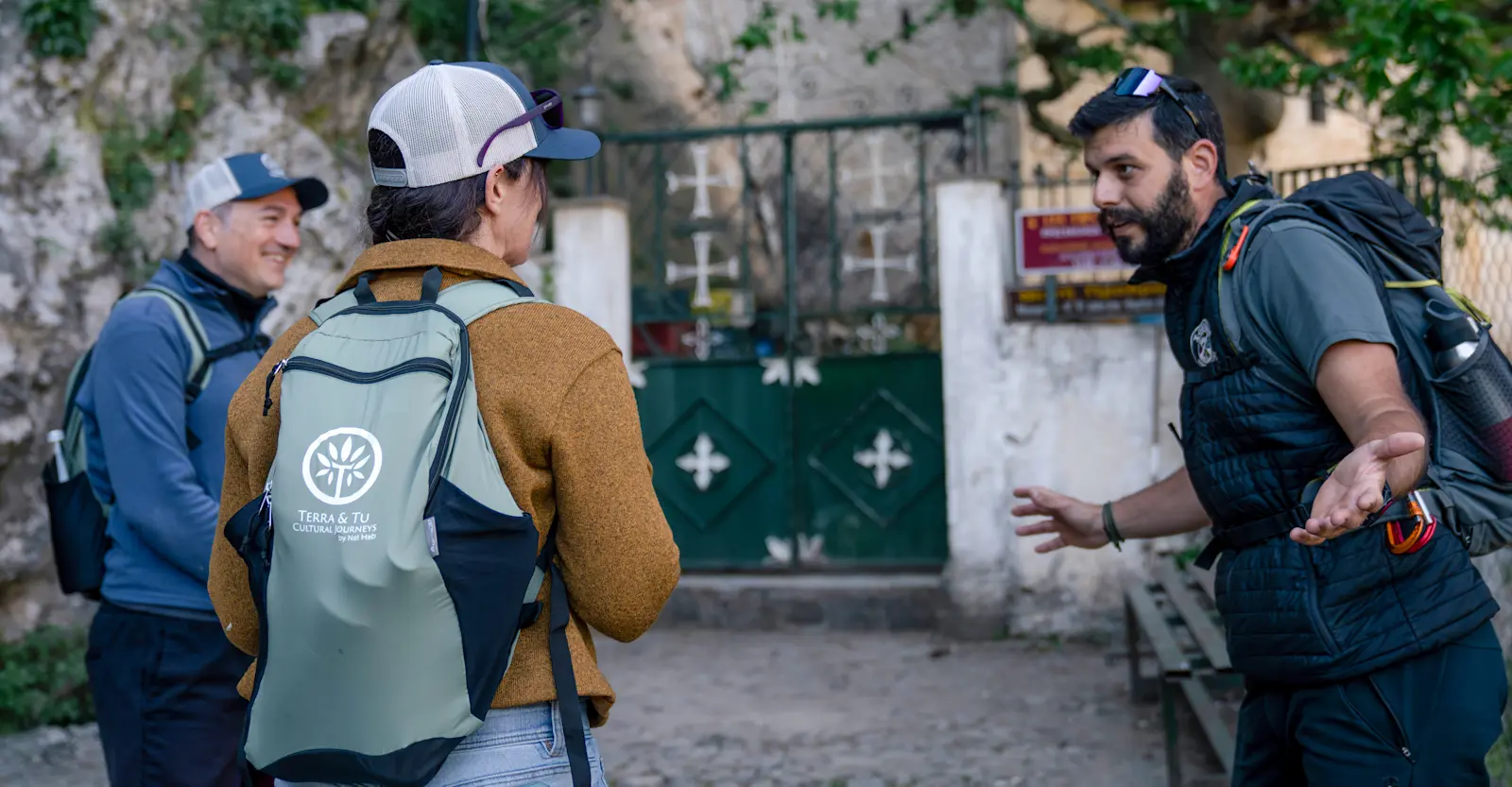
—The cliffside monastery of Moni Prodromou, built directly into the rock face above the gorge, served as a refuge during the war for independence. Travelers on our Peloponnese itinerary reach it by a forested hike and share coffee with members of the monastic community. These conversations link geography, resistance and daily life across the centuries.
—Silversmithing in Stemnitsa, above the Lousios Gorge, has been passed down for generations, supplying ecclesiastical metalwork throughout the country.
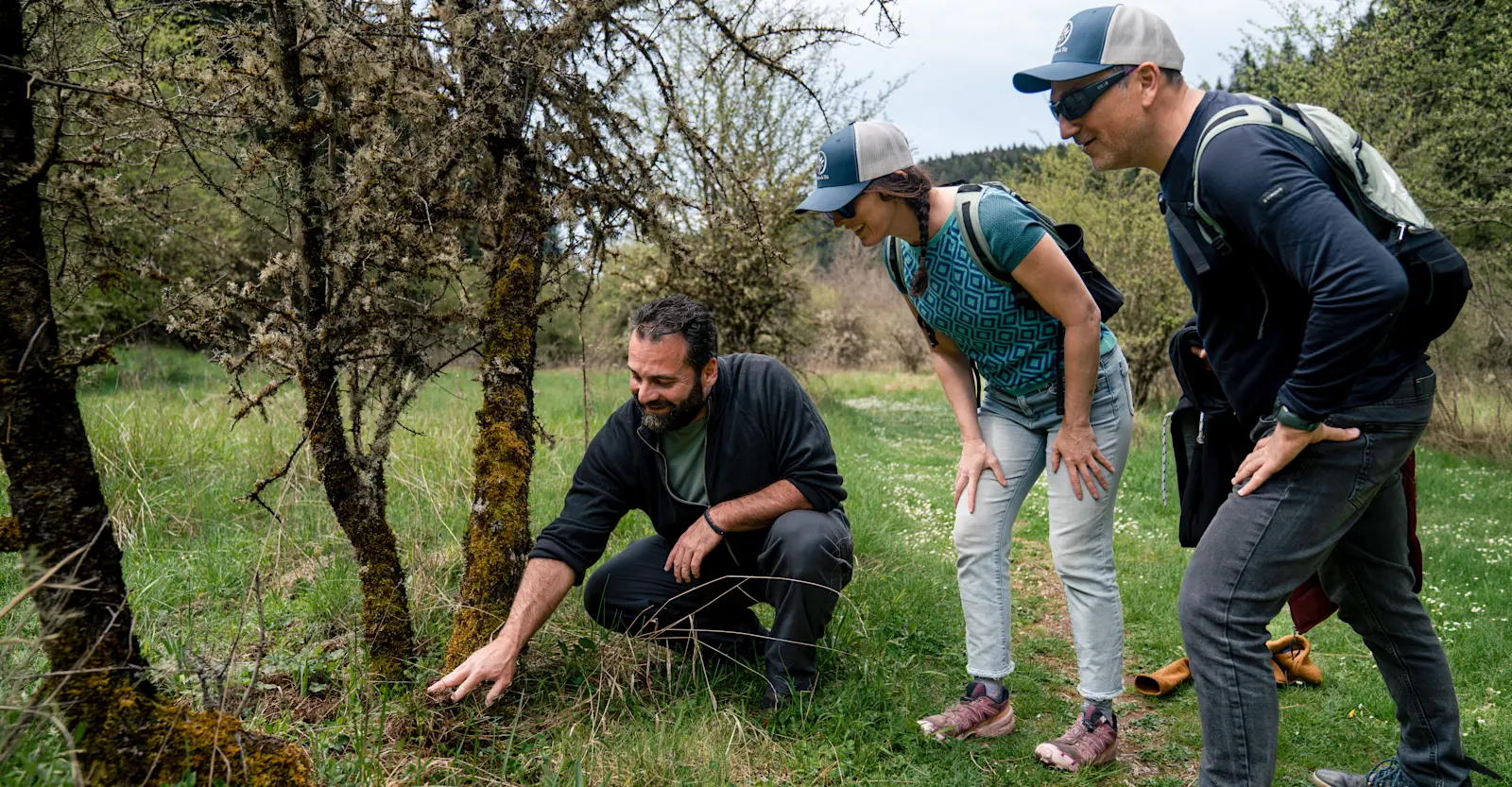
Truffle hunting experience, Arcadia, Greece © Nat Hab Staff Dana Cama
—In Arcadia’s oak forests, a morning truffle hunt with a trained dog produces what becomes an outdoor lunch cooked and eaten in the field.
—At En Dimitsani, a small stone guesthouse in Dimitsana, the owner prepares dinner from regional ingredients each evening.
© Nat Hab Staff Dana Cama
About Nat Hab’s Cultural Journeys
As long as humans have lived on the land, nature and culture have been intertwined, mutually dependent upon and shaping each other. Nat Hab Cultural Journeys are built on that connection, exploring the rich relationship between people and place.
Our Peloponnese Greek itinerary features small-group, immersive travel with an Expedition Leader who provides the interpretive thread connecting the ancient stadium in Nemea to a cliffside monastery in Arcadia, combining history with contemporary life. Local expert guides lead each major site visit. Accommodations, including a restored neoclassical residence in Athens, a stone hotel above the Mani coastline and the family-run En Dimitsani in Dimitsana, are chosen for their connection to the region.
Greece is a place people have shaped and been shaped by for 5,000 years. This cultural journey follows that story from its beginning to the communities still living it.