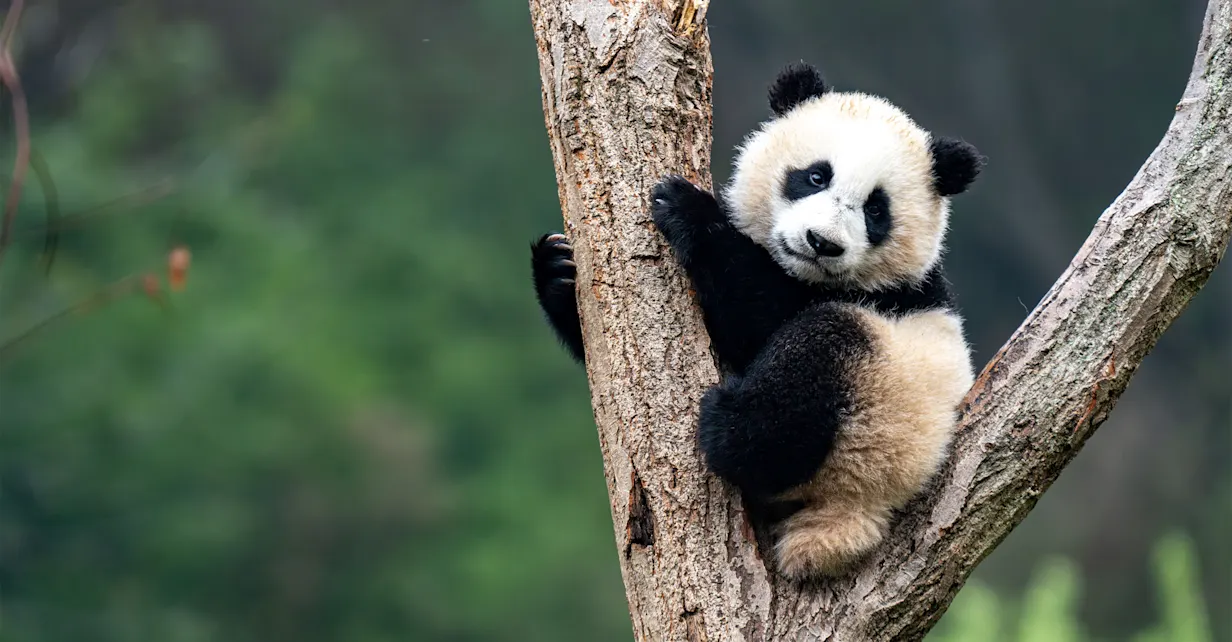
For the first time travelers when they travel to China, you have stepped out of your comfort zone. But once you step out of your comfort zone, it means you're fully open for some new experiences and explorations. It’s such a diverse country. Some of the animals, the mammals you might never heard the name before. You will get to see the most breathtaking scenery on this planet. it's a life-changing experience. Oh my God. You guys saw that? It just flew over the range. I think we would probably still have a chance to see it back there. It's a white-eared pheasant. When I started my career in the Ecotourism industry, and I got to see a golden pheasant in the field. That’s the first time I realized there's so many stunning animals sharing this planet with us. Through the thick branches. Oh! It's eating. It's a gift. Birding is a big thing to me. And I just know I have that passion to protect those animals. So tourism to me is like an opportunity for education and connection. It’s just a significant thing to protect nature in China. Tai Shan was the first to ever survive panda in the US, so later when you explore pay attention to the sign you might encounter famous pandas. Already looking for trouble. He's gonna mess around with the other one. Even though they're twins, they're so different. The giant panda, it's a significant animal in our culture. Over 90% of its diet is feeding on bamboo. The life history of bamboo, all these bamboo species they have a very strange life span. They kind of bloom at the same time and die at the same time. So in late 1970s, what happened is is all these bamboo they all bloomed and all died. So pandas there suffered from food shortage. A lot of them actually starved to death. That's when, the Panda Conservation really started. I never get tired of watching them, they’re such a peaceful animal. Once you see it, you will definitely fall in love with them. To watch the behavior looking at those cubs interacting with the mom, that's just incredible. They play an important role in public education. Panda is such a unique animal, which it makes the conservation very difficult. If you want a healthy wild panda population, you need to allow them to communicate or travel freely through the habitat. One of the biggest problems they're facing is habitat fragmentation, because the city expansion and human activities. What our government is trying to do and is trying hard to promote is the Giant Panda National Park, which focuses on connecting all the wild panda habitat back together and then reduced the human activities inside that habitat. During the past 30 years, we have seen some good changes, and that means a lot for this trip. Ecotourism really has a heavy impact in local conservation. When we bring people to this habitat, we provide opportunity for people, to know how important the animals and the habitats are. If we don't understand it, if we don't know it, we wouldn't care about it. If we don't care about it, how can we want to protect it. Giant Panda is known as the umbrella species. If we protect the panda and the habitat, a lot of other species get protected at the same time. The chance is very slim to see a panda in the wild. But I definitely know there is a panda waiting for me out there. Yet I don't know when I'm going to see it, but I am going to see it. You know, it's my dream. But I won't get upset if I don't see one. Nature has its own way. Being in the habitat, you see lush bamboos it’s already an amazing, cool experience. When I get to be in the nature, I can completely be myself and whoever I want to be. I like that feeling. There it is. Red panda... Crossed in the picture. Bringing my clients to this area, it's helping them to get that kind of experience. You can take them to the habitat and get those interactions with wildlife, with the local people, then they can part of it. They can help to protect it. It means a lot for me to build up those connections: the connections between me and the nature and between me and the different people. The more we know each other, the less separation and misunderstanding we have. And getting to know each other better means something bigger. There are so many wildlife and creatures, beings, sharing the same habitat. And you're so small. Being small and knowing you're capable for a lot of things, it’s a great thing.