

Itinerary
Please note: This is our 2027 itinerary. If you are interested in booking limited remaining space on our 2026 departures, that itinerary is one day longer, with an additional night on the Kulala Wilderness Reserve. Contact an Adventure Specialist to learn more.
Itinerary
Day 1: Arrive in Windhoek before your desert wildlife adventure
Take in Windhoek’s blend of colonial and contemporary architecture during your transfer
Join your Expedition Leader for a welcome dinner and preview of the safari ahead
Our Namibia wildlife safari begins on arrival in Windhoek. Namibia's capital is a modern, walkable city with an eclectic urban skyline featuring both contemporary and colonial architecture, from German castles and cathedral spires to glass skyscrapers. There's time to relax this afternoon at our boutique hotel in a tranquil neighborhood before a welcome dinner with our Expedition Leader.

Days 2 to 3: Stand among some of the world’s tallest dunes in the Namib Desert
Fly into the private 90,000-acre Kulala Wilderness Reserve
Explore Sossusvlei at dawn beneath towering dunes
Look for oryxes, ostriches and springboks crossing the desert sands
Fly by light aircraft to Little Kulala, a luxurious retreat inside the private 90,000-acre Kulala Wilderness Reserve on the edge of Namibia’s great sand sea. The word namib in the Nama language means “vast,” an apt name for this ancient arid expanse—the world’s oldest desert. Early morning game drives take us into Sossusvlei, a salt and clay pan surrounded by shape-shifting sand dunes. Framed by intense blue skies, the world’s tallest dunes glow deep carnelian at dawn, changing minute by minute as the sun climbs, to rose, burnt orange and ochre. Inside are diamonds, tucked into the sand mountains by currents, waves and wind. Remarkably, these dunes are home to a host of desert species, including oryx, ostrich, springbok, spotted and brown hyena, aardwolf and bat-eared fox. The rare dune lark’s entire habitat is confined to this area. Discover the desert’s subtle magic on short walks and safari drives. From Little Kulala’s profoundly secluded vantage point, experience some of Africa’s most arresting vistas, including vermilion sunsets and unparalleled stargazing.

Days 4 to 5: Track endangered black rhinos on foot in remote Damaraland
Search for free-roaming black rhinos with Save the Rhino Trust experts
Look for desert-adapted elephants and Hartmann’s mountain zebras on 4x4 wildlife drives
Stay at a remote camp surrounded by ancient riverbeds and granite mountains
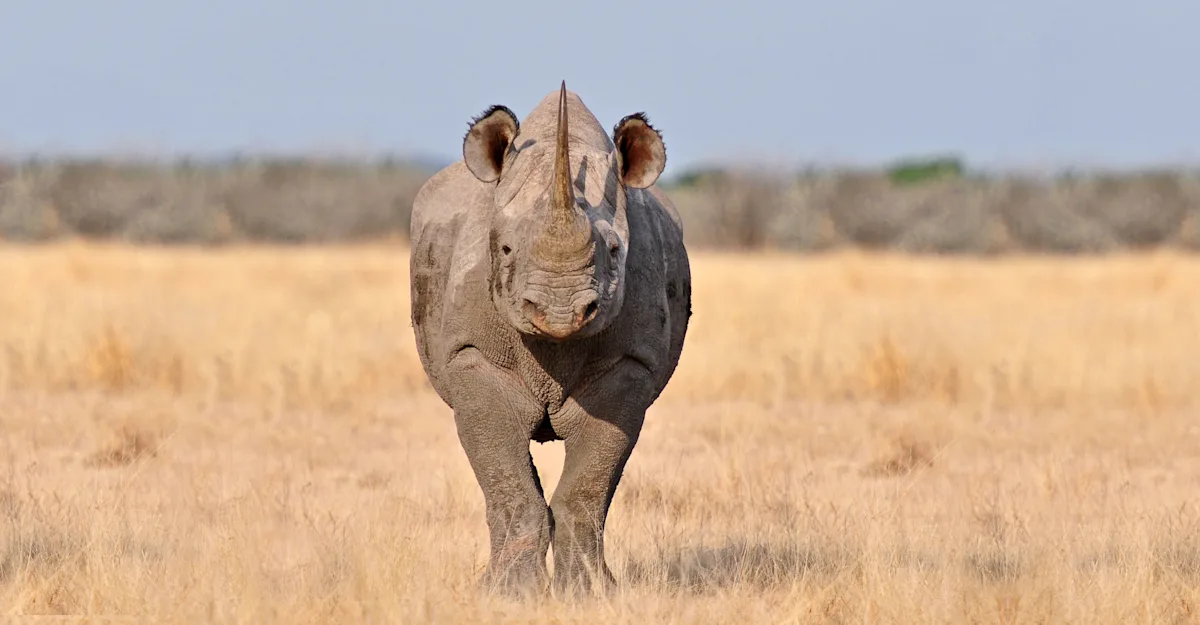
Fly north to the private million-acre Palmwag Concession. Our destination, Desert Rhino Camp, lies at the heart of this vast reserve in Damaraland, one of Africa's last great wildernesses. Few safari locales offer the level of isolation found here. The raw landscape is defined by ancient riverbeds, open plains, stacked granite rocks and deep gorges. Within these stark environs, freshwater springs support healthy numbers of wildlife, including Africa's largest population of free-roaming black rhinos. We'll track this endangered icon in the company of rhinoceros experts from Save the Rhino Trust. To search for rhinos on foot is a rare and exhilarating experience. Taking care to stay downwind, silent and hiding behind scrub bushes, we hold our breath in anticipation of spying this ancient desert dweller. On 4x4 drives, look also for desert-adapted elephant, endemic Hartmann’s mountain zebra, giraffe, oryx, springbok, greater kudu and possibly even predators. Birds are abundant, with a number of southern African endemics.

Days 6 to 8: Watch wildlife gather at Etosha’s famed waterholes
Look for elephants, lions and rhinos across Etosha National Park
Explore Ongava on guided walks and night drives unavailable inside the park
Retreat each evening to a secluded camp bordering Etosha
Today we fly to the Ongava Game Reserve bordering Etosha National Park. Within this private concession, wildlife thrives while visitors are few. Our focus is the Etosha Salt Pan, the remnant of a huge lake that existed here 2 million years ago. Bare and dry today, the depression offers Namibia’s best wildlife viewing, with elephant, black and white rhinoceros, lion, leopard, cheetah, giraffe, zebra, wildebeest, hartebeest, springbok, oryx, kudu and the diminutive dik-dik drawn to the many life-sustaining waterholes. Birdlife is prolific, and we may see ostrich and raptors. From camp, take guided walks (safety permitting) and night drives on the reserve, traveling into the adjacent national park by day, then retreating to solitude each evening.

Day 9: Fly across Namibia’s desert landscapes before departing
Travel from Ongava to Windhoek by light aircraft
Connect with homeward flights
Our Namibia safari concludes as we fly from Ongava back to Windhoek for onward travels.


