

Know Before You Go
Frequently Asked Questions About Costa Rica
Click on a question below to open the answer.
When is the best time of year to visit Costa Rica?
Costa Rica offers gorgeous landscapes and enthralling wildlife year-round, so there is no best time to visit. However, it is important to consider various seasonal changes when deciding when to travel. Departures during the dry season months of December through April bring slightly warmer temperatures and drier weather, but because of the warmer climate, there may be more travelers throughout the country. Green season departures are in June, July and August, and though precipitation is likely during this time, the rains bring an abundance of wildlife. June, July and August are months of new birth and wildlife transition, as well as peak season for green sea turtles and humpback whales.
What is the weather like in Costa Rica?
The annual average temperature of Costa Rica is always above 75°F. The cool, dry season lasts from mid-December through April, and the warm, wet season occurs from mid-April to late November. The mountainous areas we’ll visit experience cooler temperatures, while the coasts are warmer. It is particularly chilly in December and January due to rain and humidity. Though it rains significantly more during the wet season, there is a year-round possibility of precipitation in Costa Rica, so come prepared with good rain gear. The dry season may experience less-frequent, lighter rain showers. Temperatures can also fluctuate greatly from day to night, so packing layers is advised.
What is Costa Rica's green season?
Costa Rica’s green season lasts from mid-April to late November and is wetter than the dry season. Rain during the green season is always possible, especially on the coast and even in the highlands. During these months, the rain is rarely severe enough to spoil the adventure and wildlife is particularly abundant.
Does it rain every day during the green season?
Though rain is likely during the green season, some days may only experience light showers or possibly no rain at all.
Is Costa Rica affected by hurricanes?
The country is located between 8 and 11 degrees north of the equator, which is below the path of most hurricanes. Costa Rica is generally not included in the “Hurricane Belt” of other Caribbean islands, so it is most often not affected by hurricanes.
What wildlife are we likely to see in Costa Rica?
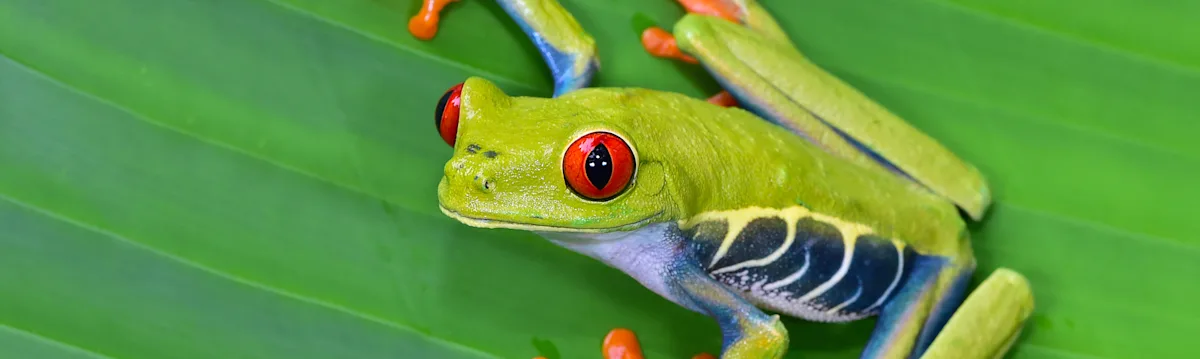
Costa Rica is one of the best places to see an abundance of typical rainforest and cloud forest animal life. You may see howler monkeys, white-faced capuchins, spider monkeys, squirrel monkeys, sloths, jaguars (although rare), tapirs, agoutis, anteaters, kinkajous, tayras, bats, quetzals, black-mandibled toucans, sea turtles, crocodiles, tree frogs and much more.
Will we see sea turtles in Costa Rica?
Our Sea Turtles & Wildlife of Northern Costa Rica trip is the best trip to see sea turtles. Our trip dates are chosen specifically to place the group in Nosara, near Ostional Beach, at an optimal time to witness an arribada. This event—when olive ridley turtles come onto the shore to lay their eggs—happens a few times between June and November along the coast of the Nicoya Peninsula. It usually occurs at night, but it can also happen at dawn, although it’s rare. One arribada can last from 1-4 days. During this season, you will likely find at least one turtle every night laying its eggs, if not several or many. A few times during the season—historically at the start of the last quarter moon when the night is darkest before the new moon—an arribada takes place with thousands of turtles coming onto the shore to lay their eggs at the same time. The events usually lasts 2-4 days. Over the years, as climate change accelerates and human impacts on the environment grow, the arribada has become less predictable. However, our trip dates are specifically chosen to be in this prime location close to the appropriate moon cycle to increase our chances of catching the phenomenon.
While the odds of our group being at this location when an arribada occurs are rather random, the chance of seeing at least one turtle laying its eggs is high, given that we are there for three nights. The chance to see baby turtles hatch is also quite high, with two early-morning beach outings. We are also staying in an area where we can access two different beaches (Ostional Beach and Punta Islita Beach) where the arribada occurs, thus increasing our chances. The best time to see hatchlings is usually late August/early September, as arribadas will almost certainly occur in June and July, and hatchlings emerge roughly 40-55 days afterward.
While there is NEVER a guarantee to see turtles laying eggs or baby turtles hatching, we deliberately schedule our trips to maximize our chances of seeing them.
On our Costa Rica Wilderness Explorer trip, we visit a community sea turtle hatchery. During a talk by a local biologist running this grassroots conservation program, learn firsthand the critical value of controlled hatcheries that are helping to increase endangered sea turtle populations worldwide. For groups visiting during turtle-hatching season from November to January, we may have the opportunity for a pre-dawn visit to the beach to see baby olive ridley turtles emerging from their nests and being released to the sea.
Is Costa Rica a good destination for bird watching?
While our trips are not explicitly designed for birders, Costa Rica is one of the top birdwatching destinations in the world. About 10% of the world’s total number of recorded bird species are found within the country. There are approximately 850 bird species in Costa Rica, some of which include toucans, scarlet macaws, frigate birds, Pacific parakeets, hummingbirds and blue-crowned motmots. Though wildlife sightings are never guaranteed, it is likely you’ll also encounter resplendent quetzals. These iridescent-green birds live in rainforests with dense vegetation and cloud cover. They are fairly tricky to spot, so keep your eyes open when we visit the cloud forest.
How will we get around Costa Rica during the trip?
We’ll explore Costa Rica by plane, small buses, boat and on foot. For longer distances, we’ll be taking chartered flights and driving in spacious and comfortable Toyota Coasters, but we’ll also go on private boat cruises and various nature walks.
What clothing should I pack for Costa Rica?
We recommend packing layers so you can be prepared for a wide variety of temperatures and climates. Bring short- and long-sleeved shirts, long pants, a rain jacket, sun protection and sturdy walking shoes. If you're traveling during the green season, adequate lightweight, waterproof rain gear is essential. For further details of what to bring, peruse this helpful packing list and check out Nat Hab’s online Gear Store, opens in new tab for some of the key items recommended for your adventure.
What are the lodges and hotels like on your Costa Rica trips?
Our accommodations on the tour are spacious, comfortable and conveniently located in close proximity to wildlife. We stay at a combination of contemporary, luxurious hotels and jungle lodges immersed in the lush rainforest near national parks and reserves. All of our accommodations provide various amenities and room for relaxing while placing guests in the heart of Costa Rica’s natural wonders.
What is the food like in Costa Rica? Will we have the chance to try traditional Costa Rican cuisine?
Costa Rican cuisine is fairly simple and mild, with a heavy reliance on beans, rice, fruits and vegetables. Potato and corn dishes, pork, beef, plantains, gallo pinto, tamales and a wide array of tropical fruits and vegetables are available. We will have many opportunities to try traditional Costa Rican food. Special dietary needs can easily be accommodated.
What currency is used in Costa Rica? Can I exchange money while I'm there?
The official currency of Costa Rica is the colon, but U.S. dollars are widely accepted throughout the country, so you will likely not need to exchange money. We recommend you have enough cash on hand for souvenir purchases, gratuities and incidentals. Most larger shops and restaurants accept credit cards and Visa and Mastercard are most widely accepted.
Will there be cell phone reception or Internet connection in Costa Rica?
Internet access will be available at almost all of our accommodations in the lounge/main areas, but cell service will be limited or nonexistent through most of the country. We encourage guests to unplug during the adventure to enjoy an immersive experience in nature.
Is Costa Rica a good destination for children and families?
Costa Rica is a terrific destination for visitors of all ages, and children will love the wide array of adventure activities and wildlife to discover. Our Expedition Leaders are known for their excellent rapport with kids and for their humor, relatability and genuine love of children. Your kids will leave Costa Rica with lifelong memories of not only the beauty of the country, but also of special moments with our guides. Please inquire with an Adventure Specialist about the minimum age requirement for your particular Costa Rica tour. If you’re looking for a safari designed specifically for families, consider our Family Adventures.
Can Nat Hab take our family or group on a private version of this Costa Rica adventure?
Yes! We will happily craft your dream itinerary. Please call our office at 800-543-8917 for details on group size and pricing.
What is the best way to get to Costa Rica to meet the group?
Guests are responsible for arranging round-trip airfare from their home city to Costa Rica. We recommend using the Natural Habitat Adventures’ Travel Desk, as they are intimately familiar with the special requirements of each trip and can arrange the most efficient travel. However, you are also free to book your own travel arrangements. Make sure to arrive on or before day one of the itinerary. Please check the Getting There & Getting Home information on the Dates, Prices & Info page for info on required arrival and departure times for this adventure.
Can Nat Hab help book me a hotel if I want to arrive early?
Nat Hab is happy to reserve a hotel room for you at our group accommodation before your Costa Rica tour begins, but please note that pre-nights are subject to availability at the time of booking. Please speak with our Travel Desk if you’re interested in booking extra nights.