

Know Before You Go
Frequently Asked Questions About Australia
Click on a question below to open the answer.
What is the best time to travel to Australia?
Australia is a great destination to travel to year-round, and when to visit depends largely on the regions you plan to explore and the experiences you're seeking. For those traveling to southern Australia, the summer months (December to February), spring (September to November), and autumn (March to May) are all lovely times to visit.
In northern Australia, the dry season from May to October is the ideal time to visit. During this period, you can expect pleasant temperatures, lower humidity and minimal rainfall. This makes it perfect for exploring natural wonders like Purnululu National Park, Western Australia’s Buccaneer Archipelago or Kakadu National Park.
What is the weather like in Australia?
Australia's climate is diverse and varies greatly across its vast expanse. In the tropical north, there are two main seasons: the wet season (November to April) and the dry season (May to October). The wet season is characterized by high humidity and heavy rainfall. In contrast, the dry season offers warm, sunny days with cooler nights, making it more favorable for travel.
The temperate south experiences four distinct seasons: summer (December to February), autumn (March to May), winter (June to August) and spring (September to November).
In the Outback and desert regions, the climate is arid with extreme temperatures. Daytime temperatures can be very hot, especially during the summer months, while nighttime temperatures can drop significantly, even reaching freezing levels in winter.
Coastal areas generally enjoy milder climates with ocean breezes, but weather conditions can vary from warm and humid in the northeast to cooler and drier in the southwest.
What type of wildlife will we see in Australia?
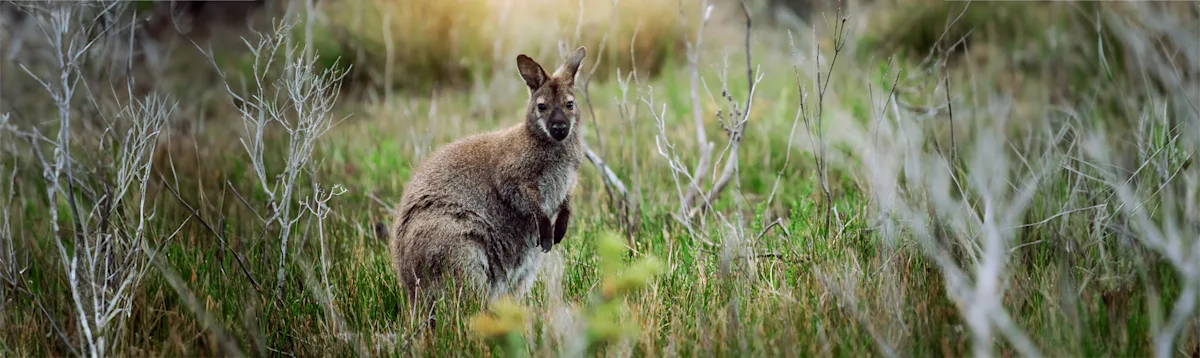
In southern Australia, you may see platypuses, echidnas, common brushtail possums, wombats, Tasmanian devils, quolls, fur seals, potoroos, bandicoots, kangaroos, wallabies, pademelons, koalas, emus, cockatoos and honeyeaters.
In northern Australia’s Outback, you might spot wallabies, wallaroos, dingos and saltwater crocodiles.
If your itinerary includes northern Australia’s Great Barrier Reef and Daintree Rainforest, you’ll see abundant marine life, including sea turtles, and scout for cassowaries and the rare Lumholtz’s tree kangaroo.
What clothing should I pack for the weather in Australia?
Check out Nat Hab’s online Gear Store, opens in new tab for some of the key items recommended for your adventure.
It's advisable to bring layered clothing to adapt to the varying temperatures and conditions. Include short-sleeved and long-sleeved shirts made from lightweight and breathable fabrics. A fleece is useful for cooler evenings or higher altitude and a waterproof jacket is essential. Consider bringing zip-off pants that offer the flexibility of switching between shorts and long pants. Pack sturdy hiking boots or shoes that are well broken in to prevent blisters. Given the intensity of the Australian sun, sun protection is crucial. Bring a wide-brimmed hat to shield your face and neck, sunglasses with UV protection, and a high SPF, water-resistant sunscreen. If you plan on enjoying aquatic activities, pack swimwear such as a bathing suit and consider wearing a rash guard or swim shirt for added sun protection while swimming.
Tips Based on Region and Season
In temperate regions such as Victoria and Tasmania, light clothing and sun protection are essential during the summer months. For winter visits, ensure you have warm layers and waterproof outerwear to stay comfortable in cooler temperatures and possible rain.
For the Outback and desert areas, layers are important year-round due to the wide temperature ranges. Sun protection remains critical, and during winter nights, it's wise to pack thermal wear as temperatures can drop significantly.
When visiting tropical areas like North Queensland or the Northern Territory during the wet season, pack lightweight, quick-drying clothing and waterproof gear to handle the high humidity and frequent rains. In the dry season, comfortable hiking attire is suitable, but remember that evenings can be cooler, so include a light jacket.
What are the meals like in Australia?
Australian cuisine reflects the country's diverse history and culture, blending Indigenous ingredients with influences from British colonization and waves of immigration. Dishes from Asian, Mediterranean, and Middle Eastern cuisines are widely enjoyed, and fusion foods combining different culinary traditions are common. From traditional bush foods to modern culinary creations, these typical Australian foods offer a taste of the nation's rich culinary landscape. Guests will be treated to seasonal, farm-to-table fare. Meals may include fresh seafood, Australian barbeque, vegetarian halloumi burgers, tropical fruit and pavlova for dessert. Special dietary needs can generally be accommodated if given advanced notice.
What currency is used in Australia?
The currency used in Australia is the Australian Dollar (AUD). Click here, opens in new tab to check the current exchange rate for USD to AUD.
Will there be Internet connection or cell phone service on this trip?
Internet access is typically available at our accommodations, but it may be slow and unreliable in remote areas, and cell service may be spotty. We encourage guests to unplug during the adventure to enjoy an immersive experience in nature.
Is an Australian adventure appropriate for children?
Australia is a fantastic destination for families with both teenage and younger children. Please inquire with an Adventure Specialist about the minimum age requirement for your specific Australia tour. Nat Hab asks any families bringing children to ensure their children behave in a respectful manner that does not disrupt other guests or the wildlife. If you’re looking for a trip designed specifically for families, consider our Family Adventures.
Can Nat Hab take our family or a group on a private Australia adventure?
Yes! We reserve some dates for private groups of families and friends, so please call our office at 800-543-8917 for details on group size and pricing.
What is the best way to get to Australia to meet the group?
Guests are responsible for booking round-trip flights from their home city to Australia. We recommend that you use Natural Habitat Adventures’ Travel Desk, as our Air Travel Specialists are intimately familiar with the requirements of our trips and can arrange the most efficient and cost-effective travel. Please check the Getting There & Getting Home section on the Dates, Prices & Info page for details on your adventure's required arrival and departure times.
Can Nat Hab help me book a hotel in Australia if I want to arrive early?
Nat Hab is happy to reserve a hotel room for you at our group accommodation before your Australia tour begins, but please note that pre-nights are subject to availability at the time of booking. Please speak with our Travel Desk if you’re interested in booking extra nights.