Good Nature Travel Blog

  • Nature & Wildlife

    Nine Nature-Inspired Fixes for Environmental Needs

    Oct 10, 2023 · Candice Gaukel Andrews

    I’ve always been drawn to what we call “earth colors”—soft browns, olive greens, muted oranges, dusty pinks and corn-husk yellows. Colors have been on my mind because I recently moved to the Pacific Northwest into an older home that needs paint and some new carpeting.
  • Conservation

    Plants Could Solve the Microplastics Problem

    Sep 5, 2023 · Candice Gaukel Andrews

    Plastics are the most prevalent type of marine debris found in the Great Lakes and in the oceans. Plastic pollution pieces come in all shapes and sizes, but those that are less than 0.2 inches (or five millimeters) in length—about the size of a sesame seed—are called “microplastics.”

  • Conservation

    New Galapagos Coral Reef Discovered

    May 23, 2023 · Candice Gaukel Andrews

    Deep beneath the waters of the Galapagos Marine Reserve (GMR) and atop a submerged volcano, an ancient coral reef was just discovered by an international group of scientists. It’s the first to be documented inside the protected area since it was established in 1998.

  • News & More

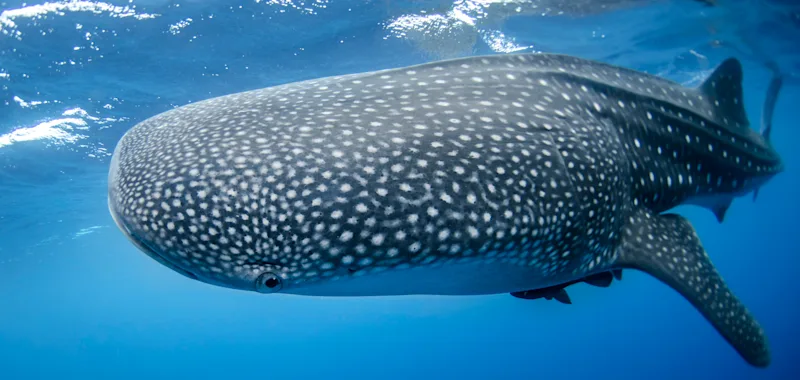
    Whale Sharks Top Kodiak Bears for World’s Largest Omnivore

    Oct 11, 2022 · Candice Gaukel Andrews

    Whale sharks are the biggest fish and shark in the world. Adults can weigh 41,000 pounds and average about 40 feet long, but they may grow as large as 65 feet. According to World Wildlife Fund (WWF), these gentle giants roam all the planet’s tropical oceans, generally alone.

  • News & More

    A New Whale Species Is Found Living in the Gulf of Mexico

    Sep 28, 2021 · Candice Gaukel Andrews

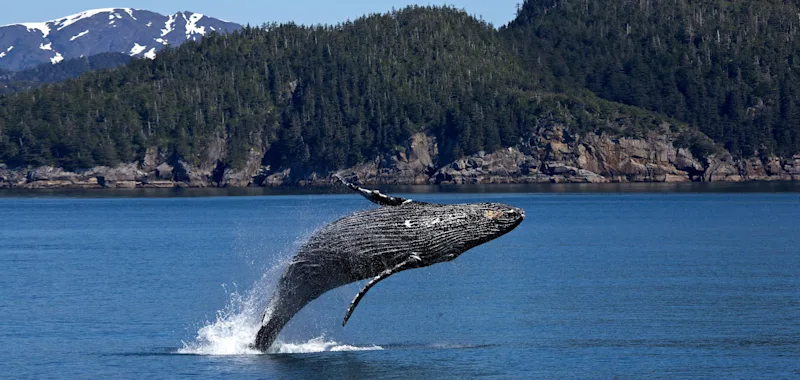
    Whales are fascinating beings. After living on the land for a while, their ancestors chose to go back to the sea; they have their own, complicated cultures; they help us and our planet by sequestering carbon dioxide; and they seem to have forgiven us for the many horrific crimes that we’ve committed against them.

  • Latin America

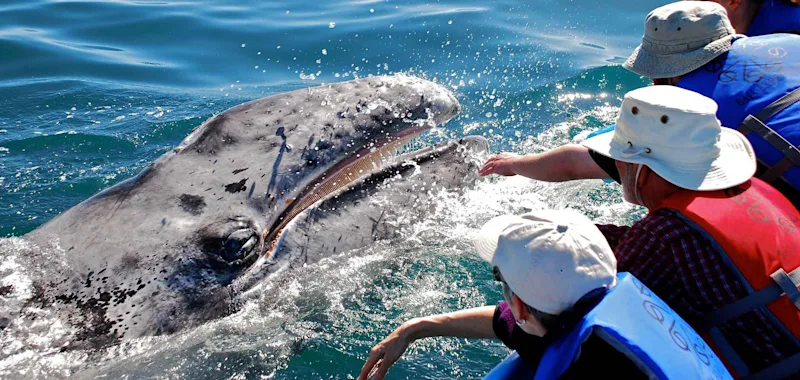
    Post-Pandemic, Learning to Trust Again from a Gray Whale

    Jun 1, 2021 · Candice Gaukel Andrews

    The longest recorded migration by a mammal was made by a gray whale. In 2015, a female made a journey of nearly 14,000 miles from Russia to Mexico and back. (Zebras hold the longest linear—endpoint to endpoint—land mammal migration at 300 miles round trip.)

  • Conservation

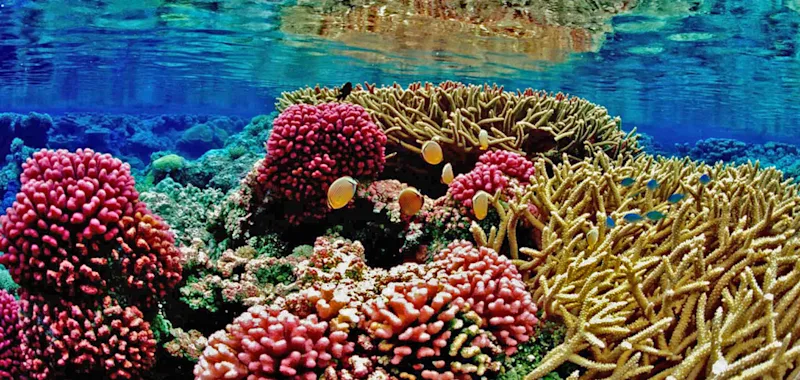
    Hope for Coral Reefs in Crisis

    Aug 11, 2020 · Candice Gaukel Andrews

    For almost 24 million years, say scientists, coral reefs have functioned relatively unchanged. That is, until the 1980s. Starting in that decade, tropical coral reef coverage around the world has declined by about 30 to 50 percent.

  • Conservation

    Plastics and PCBs: Ocean Pollutants Causing Big Problems

    Aug 27, 2019 · Candice Gaukel Andrews

    More than eight million tons of plastic debris end up in our oceans every year. Present in nearly every oceanic layer, plastic garbage today accounts for nearly 80 percent of all waste found in our oceans.

  • Asia & The Pacific

    This Summer, Make Sure Your Sunscreen Protects Coral Reefs

    Jul 23, 2019 · Candice Gaukel Andrews

    Ah, summer. Time to enjoy the long days of sunlight with outdoor picnics, paddling, and swims in lakes and pools. In this second season of the year, we take in lots of fresh air—and apply lots of sunscreen.

  • Conservation

    More than Travel Guides, Maps Tell Nature’s Stories

    Jan 8, 2019 · Candice Gaukel Andrews

    Maps are far more than sets of instructions on how to get from Point A to Point B. They tell stories. And whether they’re digital or paper maps, the tales they spin range from absurd to fun on one end of the spectrum and from informative to sobering and shocking on the other.

  • Conservation

    Plastic Straws Sent Packing from Scotland and Seattle

    Mar 20, 2018 · Candice Gaukel Andrews

    There’s a famous, one-word line in the 1967 movie The Graduate, when a well-meaning man advises a young college student, played by actor Dustin Hoffman, to think about the direction of his future. “Plastics,” the man says. It seems as though that future is here. Today, our culture is subsumed by the ubiquity of plastics.