

While it’s not a terribly short list of people who have toured the United Nations in Nairobi, I like to think I’m on the shorter list of those who have fallen asleep while doing so. The first thing we did, stepping off the plane, jet-lagged and sweating buckets, was cross what I dubbed “The UN Courtyard of Every Flag Imaginable.” We were ushered past all the flags, hanging limp and lifeless without a breath of wind to stir them, into a boardroom to listen to a droning PowerPoint presentation. The classmate seated behind me poked me once or twice, then gave up on trying to save me from my failed first impression.
I dozed off in a room of my peers who, though equally tired, all retained various levels of greater consciousness than me. We were a cohort of 26 students from four universities, spanning subjects of study from medicine, public health, anthropology, sociology, political science, gender studies, biology and ecology. For most of these people, who would go on to become lifelong friends, the speaker’s breakdown of UN policies here in Kenya was a fascinating topic. While I can retrospectively appreciate the broad perspective this introduction gave us to the country, the bureaucratic welcome did not reconcile the miles I’d traveled with the otherness I had set out in search of. It wouldn’t be until we entered the Great Rift Valley that I felt myself arrive in Kenya.
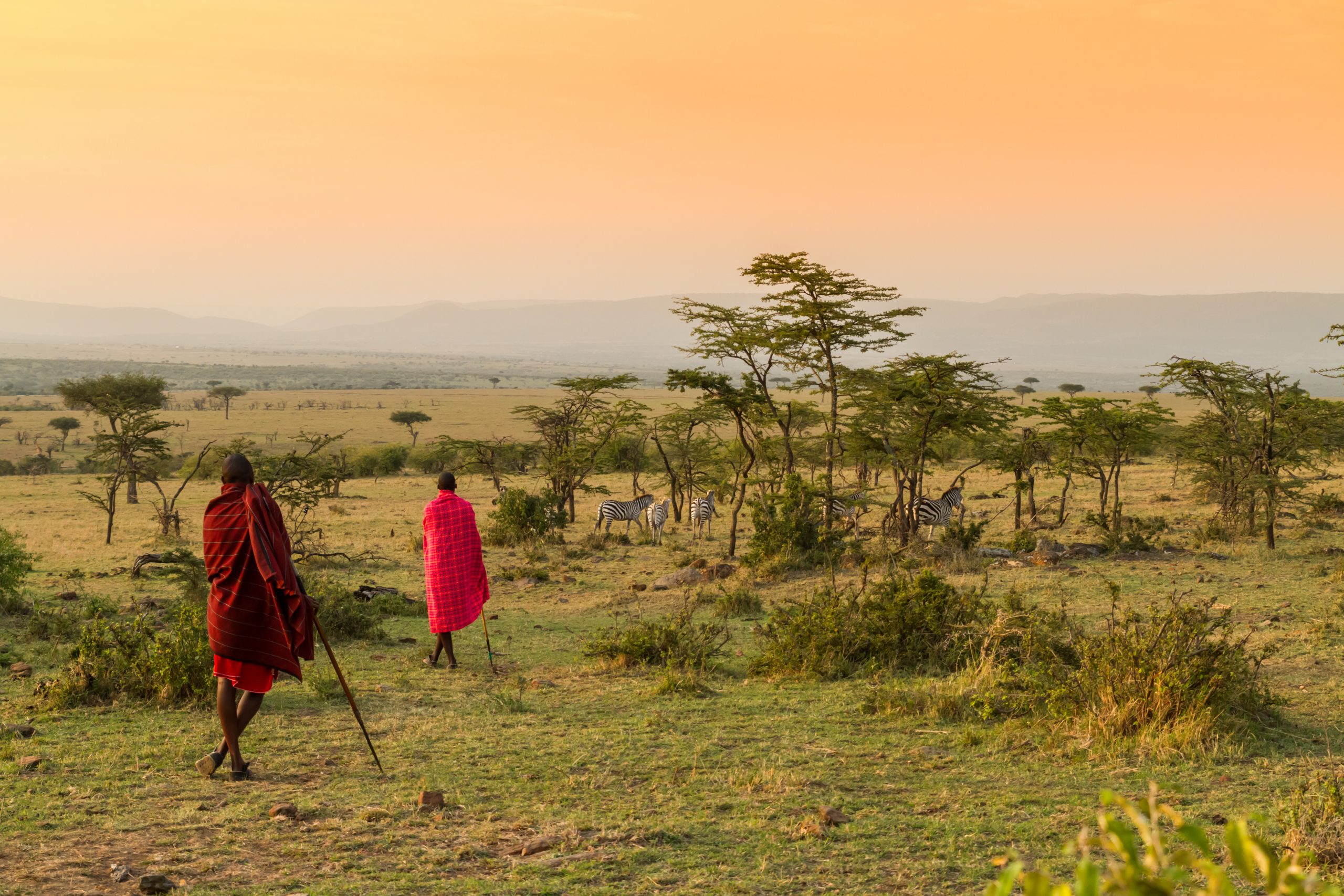
Driving away from Nairobi, there were no road-crossing signs for wildlife, but if there were, they would be for zebras and giraffes, not mule deer. Wandering off the side of the road to pee in the bushes, we had to worry about thickets of acacia thorns, not the thin thorns of a rosebush. The only structures interrupting the horizon were the innumerable red termite mounds. After days on the road, the iron oxides in the dust streaked our hands and faces with muted tones the color of dried blood that matched the mounds. I grew up in an ecological zone classified as semi-arid. Drought and dry were words I thought I understood, but this landscape redefined what survival in the absence of water meant.
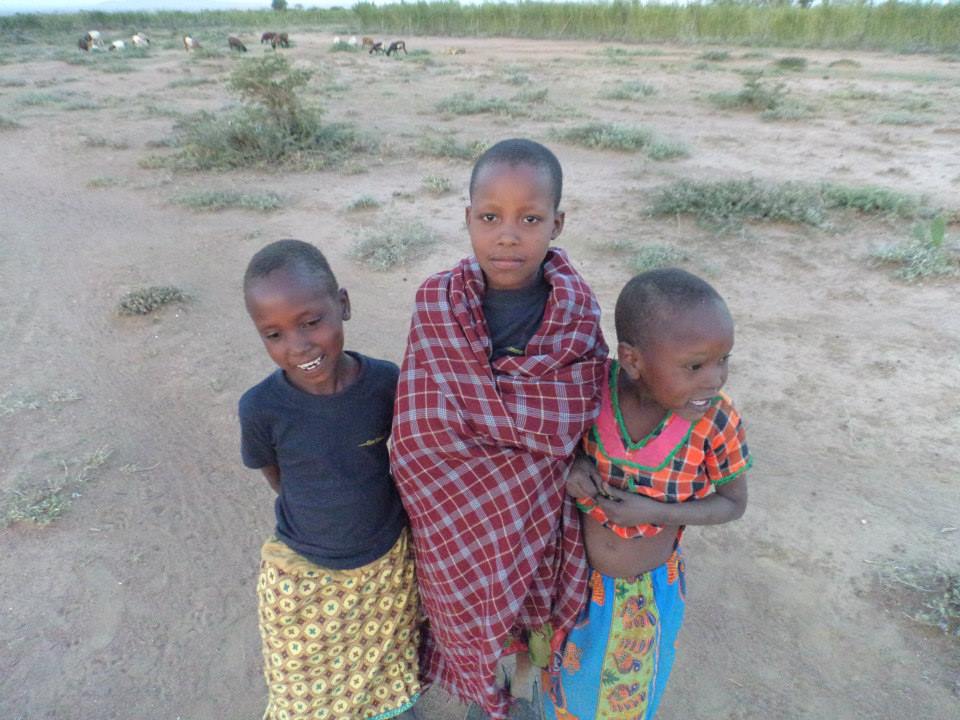
Children from the local community, 2014 © Kristina Disney
Water was too precious to wash with, so we “cleaned” our hands with sanitizer. The act of it really only disinfected the accumulated layers of sweat and dust caked onto our skin. Given the scarcity of water at the remote camp we were staying in, we started a competition to see who could go the longest without showering. I think I made it 24 days, but I wasn’t the one who claimed the title of showerless champion.
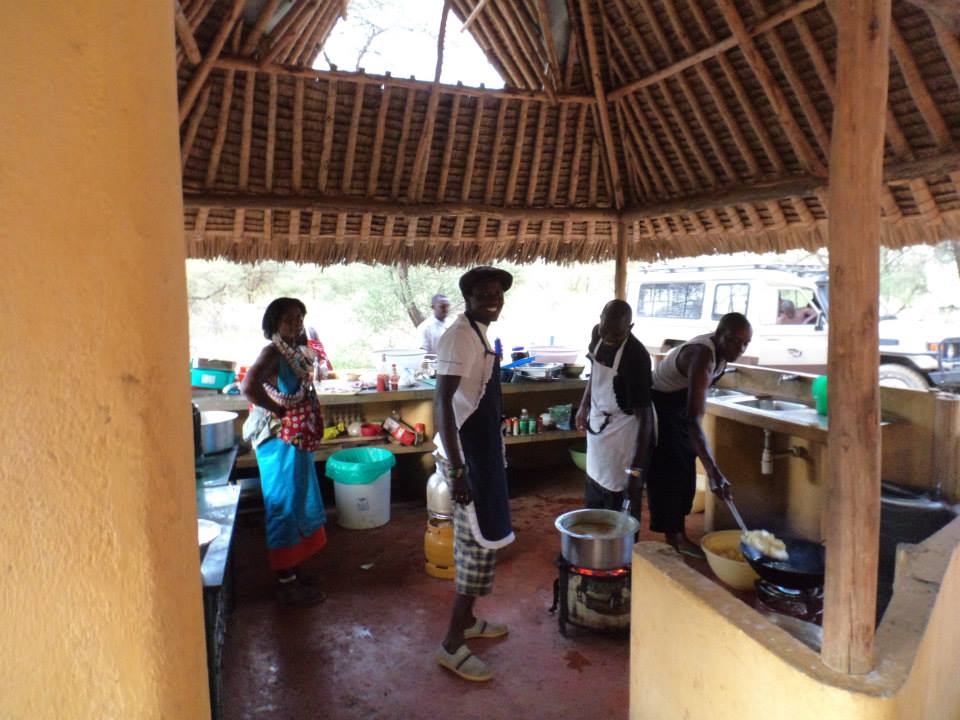
Community kitchen, 2014 © Kristina Disney
During the day, we learned about how different ideologies and eras of conservation had swayed the stewardship of this landscape. The age-old debate—whether humans are part of nature or exist outside of it—was being played out before our eyes in adjacent management areas. Acknowledging the deep bias that I believe humans are part of nature, not above or beyond it, I wish I could say that a clear winner had prevailed. However, in the snapshot in time when I witnessed their implementation, neither seemed to find balance. I reflected on how the imbalance seemed an unavoidable outcome, not because of humanity’s incompatibility in the natural world but because power imbalances among our own species rig any approach against our counterparts in nature.
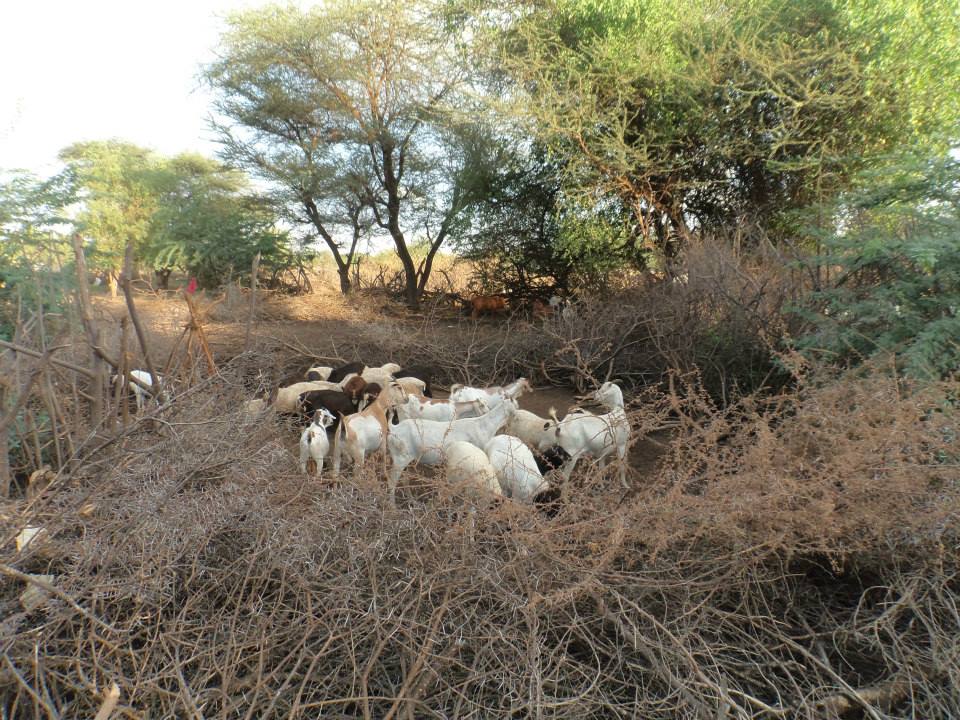
Livestock, 2014 © Kristina Disney
Looking back at my journal, it feels like a big thought for 21-year-old me to have had. But I also remember that the purpose of the traveling circus our professors called a field school was to create a melting pot of “young minds.” We all looked at issues around us through different lenses, and as cheesy as it sounds, we did enrich our own understanding of the world by seeing it through one another’s eyes. The most valuable lesson from my time in Kenya was that none of my new experiences happened in isolation. While I explained to the future doctors and politicians in our class the aspects of soil compaction and cattle fertility cycles that I found interesting, they discussed the logistics of clinical care in remote regions and projected the societal impacts of gender inequality in household labor. We seamlessly wove ourselves into each other’s narrative of place, so much so that I can’t think of any of them without thinking of Kenya, and my own thoughts of Kenya all trace their roots back to one of them.
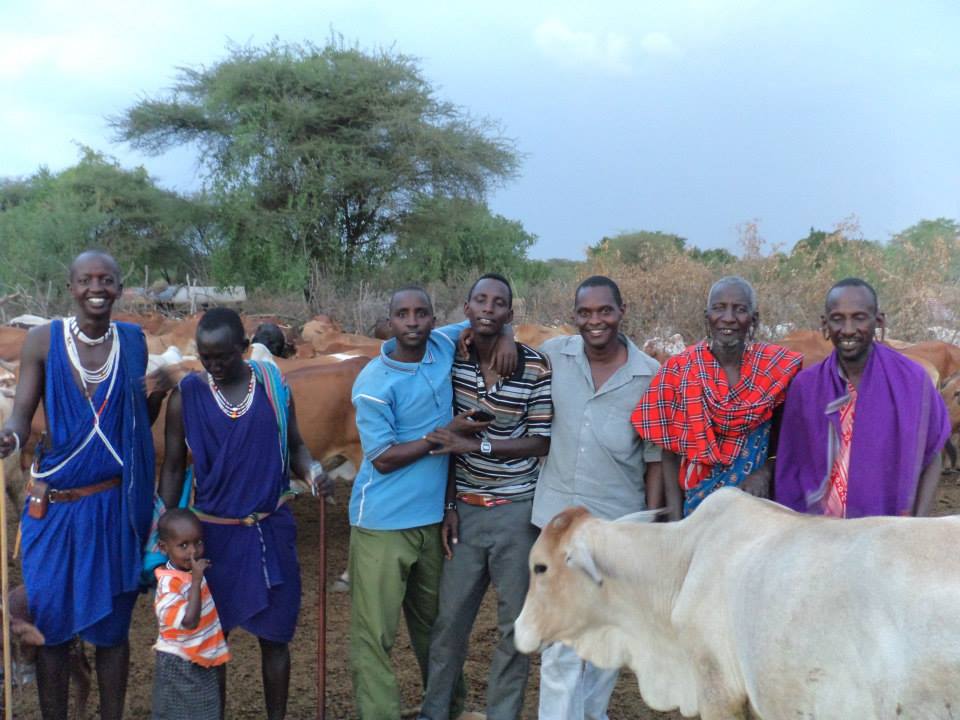
Local community members and cattle, 2014 © Kristina Disney
The gift of a cohort, of a group of people to share new experiences with and to challenge yourself and the world with, can have moments of heaviness, too. Too much time spent embroiled in emotions that are not your own can overwhelm a person. When we were at camp, I created moments of decompression at night. After supper and the late-night lectures, I would leave the mess tent, shake out my shoes for any scorpions that might have crawled inside to conserve heat, and wander to the edge of camp to search the skies.
I spent my first few evenings disoriented because I couldn’t find the North Star. Finally, one night sitting around the fire with one of the quieter camp guards, I realized Orion was directly overhead. Had I been at home, Orion would have been to the south of me, but here all my points of reference were off. Once I found Orion, I was able to mentally map my way through the constellations in the northern hemisphere. I was so excited when something I’d only read in books clicked in my head. The angle between the North Star and the horizon is the latitude you find yourself at in the world. I was used to finding it around a 50° angle, but here, just north of the equator, it barely hovered over the horizon.
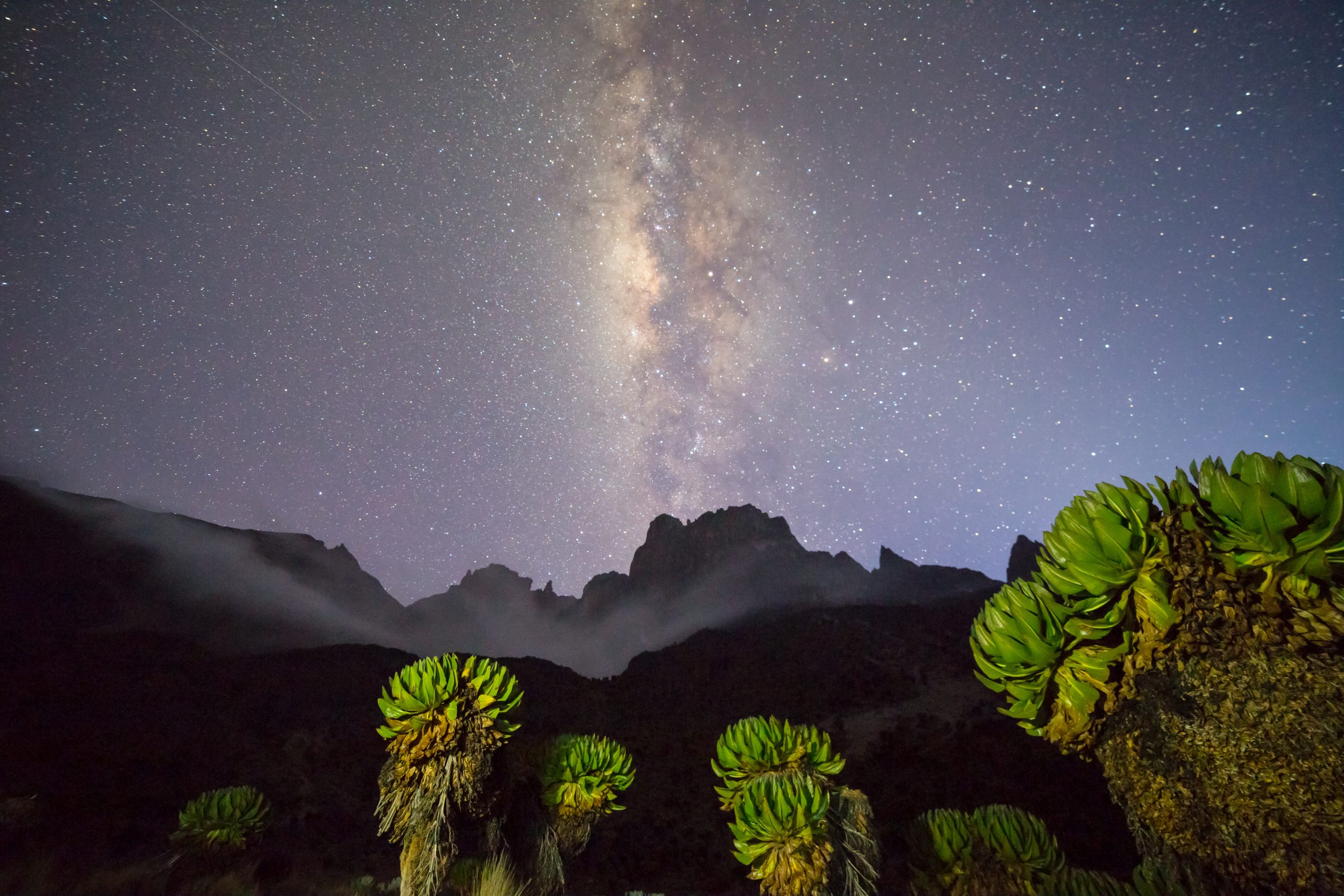
Milky Way, Mount Kenya
The guard was unfazed about “my discovery,” but when I pointed out Orion, he shared that in his tribe, those stars told the story of a man and his three wives (Orion’s Belt), with each wife representing a different virtue. When he finished his story, I was humbled. With the omnipresent legacy of Greek mythology steeped into Western culture, I had never taken the time to think about how other cultures might share the same stars but not the same stories.
The stars had always felt universal, and I was shocked and disappointed in myself for never having questioned something that seemed so obvious once stated. Of course, people saw the stars differently! Even as I thought about my own ignorance, I realized it hadn’t always existed. As a little kid, before I knew the names of the stars, I would make up my own constellations and stories to go with them. I’d forgotten how I saw the world before education trained me to process and format my thoughts the way others had before me. I looked back up at the night sky and made myself ignore the patterns I recognized in Orion, Taurus, Gemini and Perseus. I made myself draw new lines between stars and imagine new heroines and heroes to look up to. That night, I saw the sky as a crowded vault housing humanity’s stories, both old and new, with each star within intersecting constellations remaining blissfully unaware of its duplicated value, treasured by countless people for countless reasons.
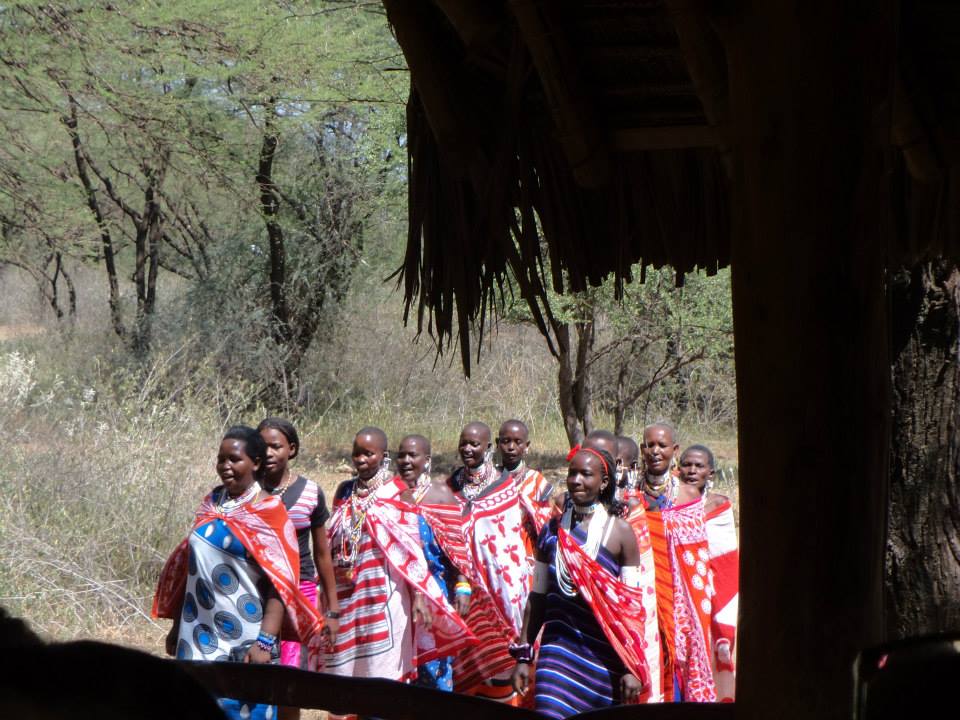
Women in traditional clothing, 2014 © Kristina Disney
I sat by the crackling fire alone with my thoughts while the guard shift changed. My days and nights traveling through Kenya were not so different. Both alone and in the group, I was forced to look beyond my known world. I had left home restless, chasing the proverbial horizon like in a paperback Western. However, the adventures read in books cannot convey the discomfort that comes with travel. I don’t mean the reduced showers, bugs that bite or thorns that prick. I mean, when your experiences take you apart and reweave you back together, and not all the pieces fit into who you have become. You are left holding the bag that contains who you thought you wanted to be and who you thought you were. The discomfort that comes with travel stems from change, acceptance and even grief. The more I travel, the more I feel the adventure is about learning from others to discover what I need to learn about myself.
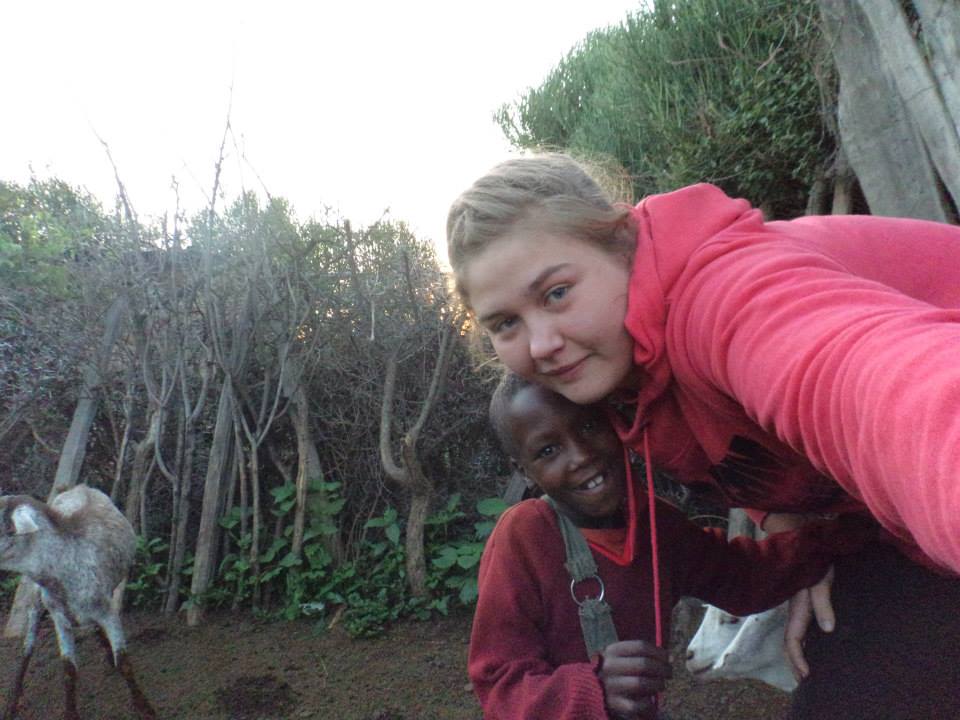
Selfie, 2014 © Kristina Disney
It’s been over 10 years since I wandered through Kenya with all of my friends, and when we meet up, we laugh about who we have become. They tease me for working as a guide so I can keep living the life we had during field school, and I tease them that I will fall asleep if they start telling me about what they now do at the UN. When I ask them how we got here, they don’t know if that trip course-corrected who we became or just unearthed who we always were.
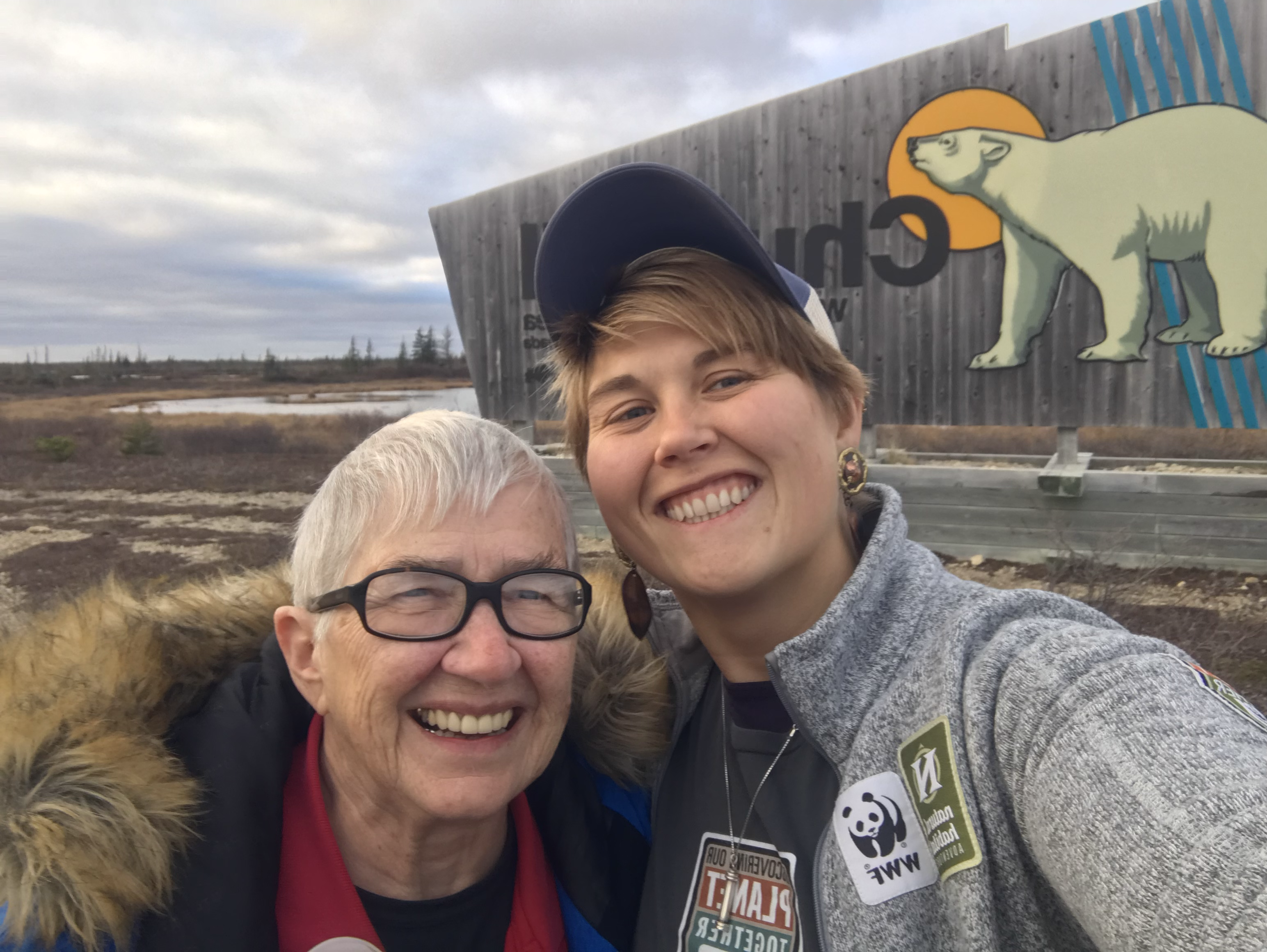
Nat Hab Expedition Leader Kristina Disney takes a selfie with one of her guests on a polar bear adventure in Churchill, Manitoba. © Kristina Disney