


My usual way of getting to know a new city is wandering aimlessly on foot. But on my first visit to Porto, I decided to try something totally different to get my bearings.
Sprawling along both sides of the Douro River as it pours into the Atlantic in northern Portugal, the city owes its history, culture and very existence to a long, complex and very rewarding relationship with water. So what better way to discover Porto than a boat trip, in my case, a river cruise on a motor yacht.
Departing from Vila Nova de Gaia on the south bank, we headed upstream in the direction of the legendary Douro wine country, passing beneath all six of the city’s famous bridges and past a flotilla of rabelos — traditional wooden boats.
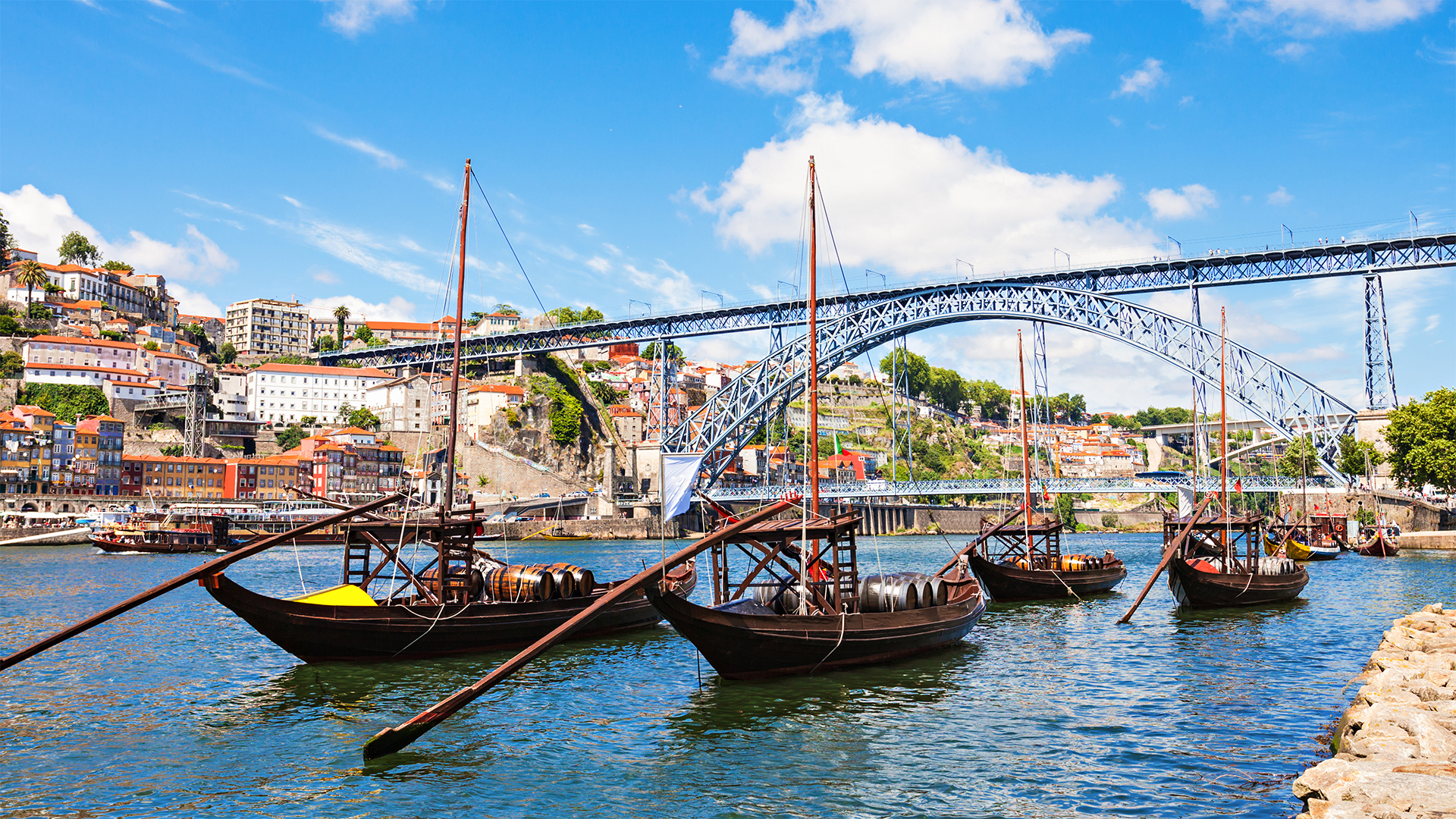
Rabelos, Porto, Portugal
“Now they are mostly used for entertaining or tourist excursions,” cruise guide Patricia Carvalho explains. “But for hundreds of years, rabelos were used to transport barrels of port wine from the vineyards of the Douro Valley to the wine caves and cellars in the city. It took them only six days to come down the river. But then they would have to go back up again, right? There were no engines; there was no automatic system. So they would have to go up being pulled by ropes using donkeys, horses, oxen and men. It took them six weeks!”
The first vineyards appear on the eastern outskirts of Porto, rows arrayed along terraces carved into steep slopes rising high above the river. Much like the Napa Valley, the Douro is blessed with microclimates that range from relatively mild and moist close to the coast to hot and dry much farther inland.
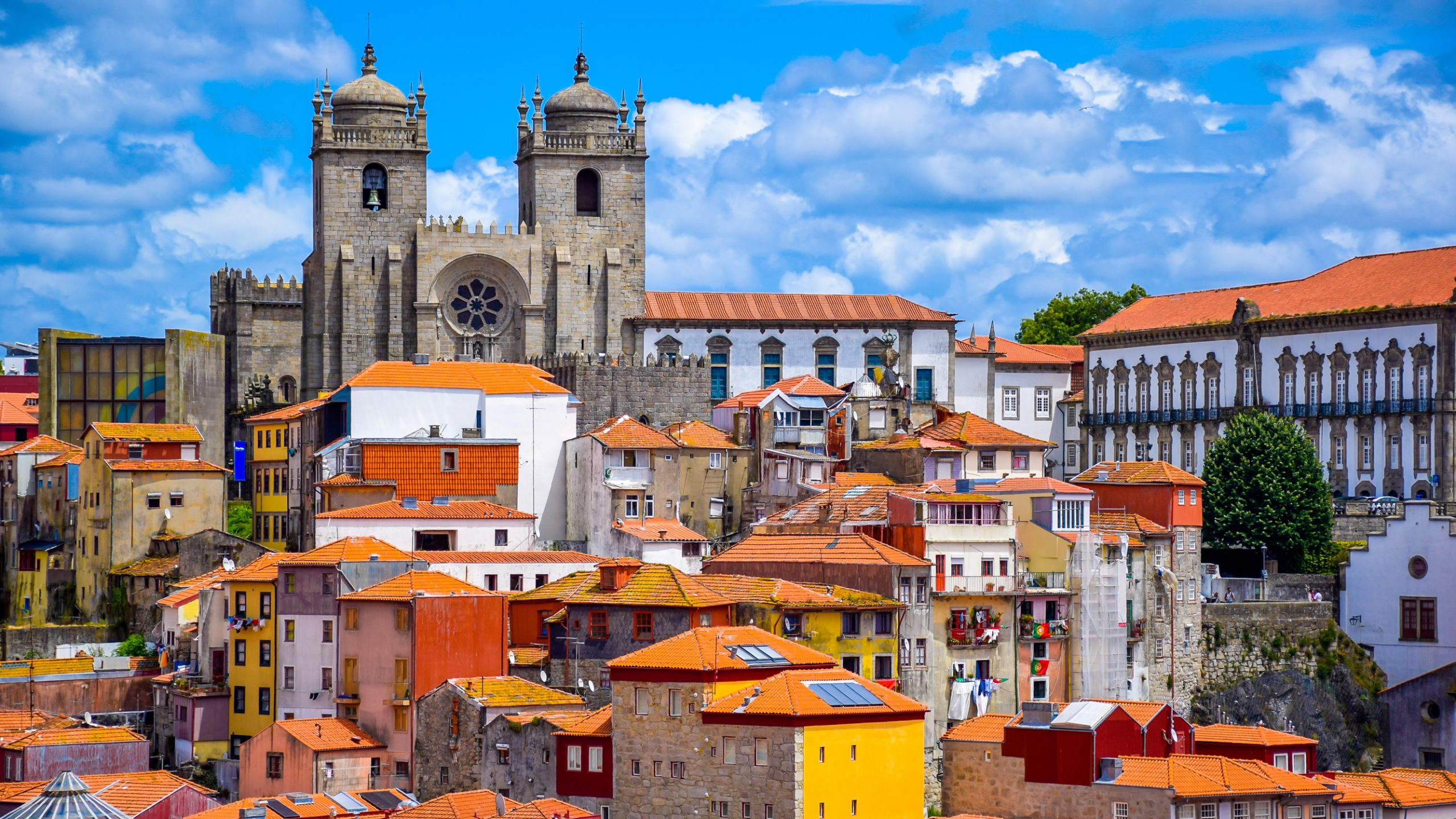
Although the valley had produced fine wines since Roman times, it wasn’t until the middle of the 18th century that port wine gained popularity far beyond the Douro. Blame it on British drinkers and their growing thirst for fortified wine, a trend that prompted English and Scottish merchants to relocate to Porto in hopes of cornering the market. They eventually intermarried with local wine-making families. That’s why so many port lodges and caverns that cling to the hills of south bank Vila Nova de Gaia — Taylor, Graham, Cockburn, Symington, Sandeman — bear Anglo-Saxon names.
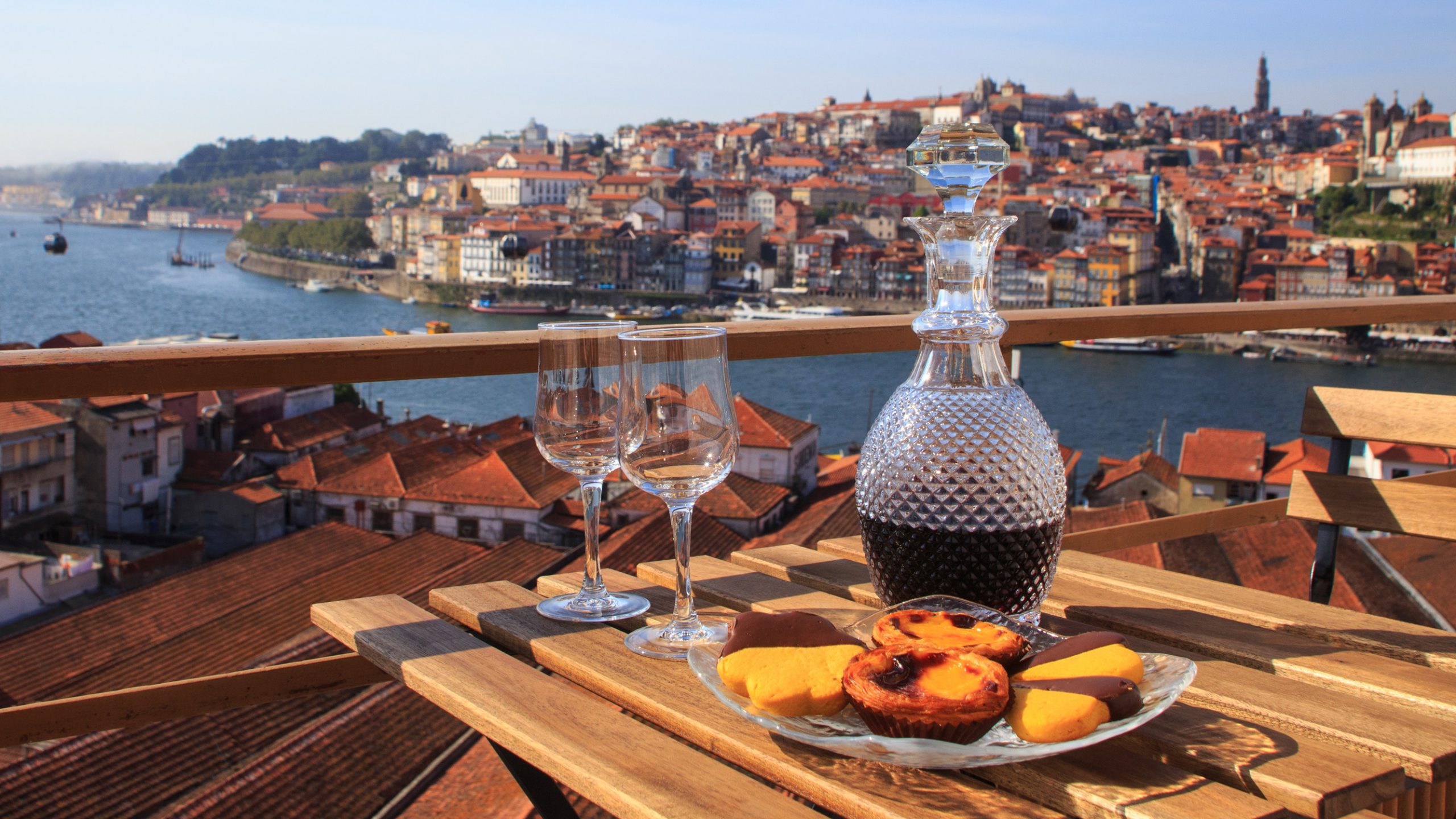
It might have been a weekday morning, but that didn’t prevent Patricia from breaking out a bottle of port as we cruised back into the city center beneath all those majestic bridges.
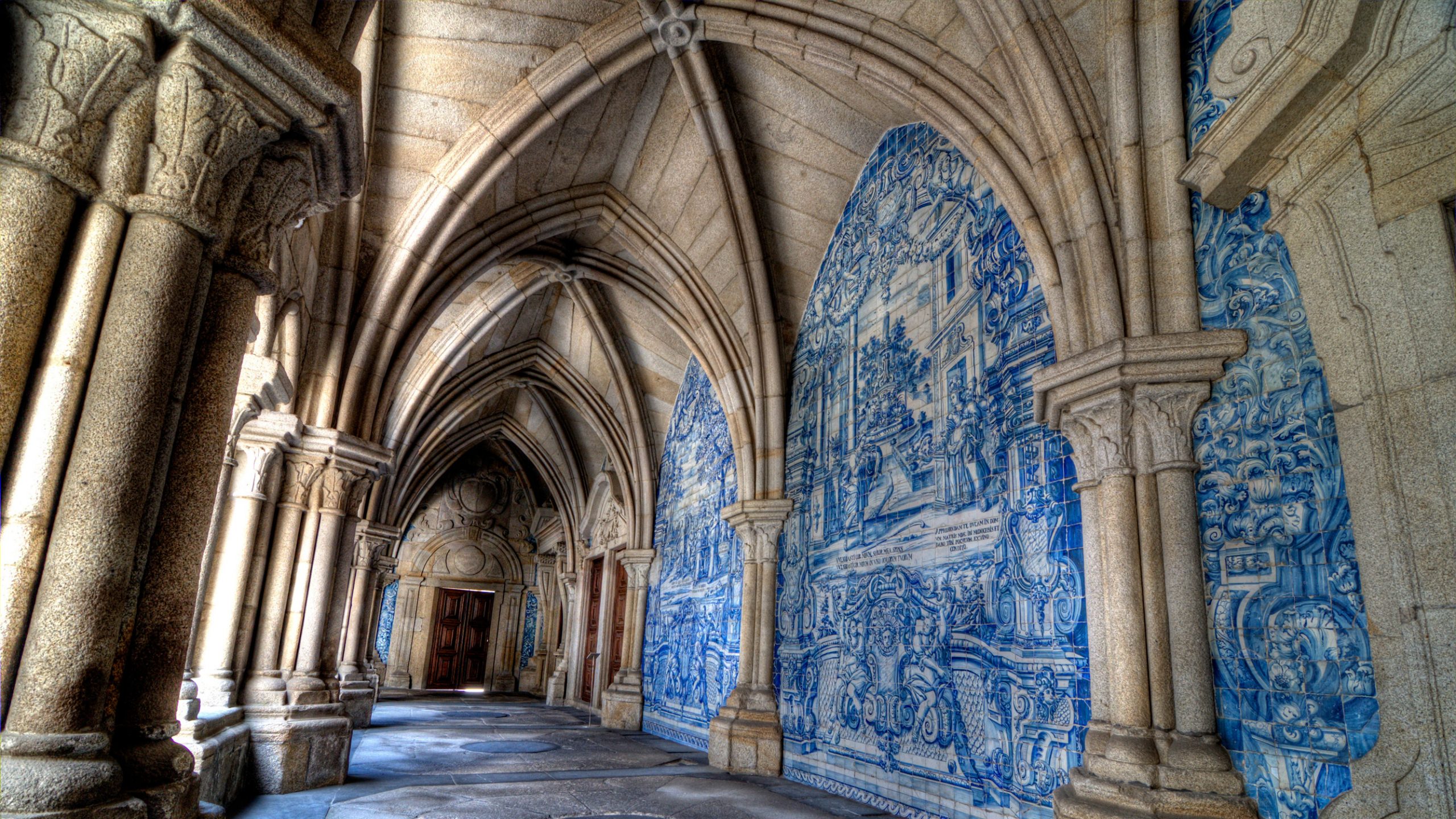
The cloister walls of Sé do Porto
Porto’s other iconic experience is exploring the old town on foot, a meander along the cobblestone lanes, across palm-shaded plazas and up incredibly steep stairways that connect landmarks in the historic center.
There are plenty of churches, of course. Like the Sé do Porto, an imposing hilltop cathedral that took nearly six centuries to construct and an ever-evolving architectural style that ranges from Romanesque and Gothic to Baroque. And the Igreja dos Clérigos, an 18th-century masterpiece crowned by a tower with bird’s-eye views looking out across the city.
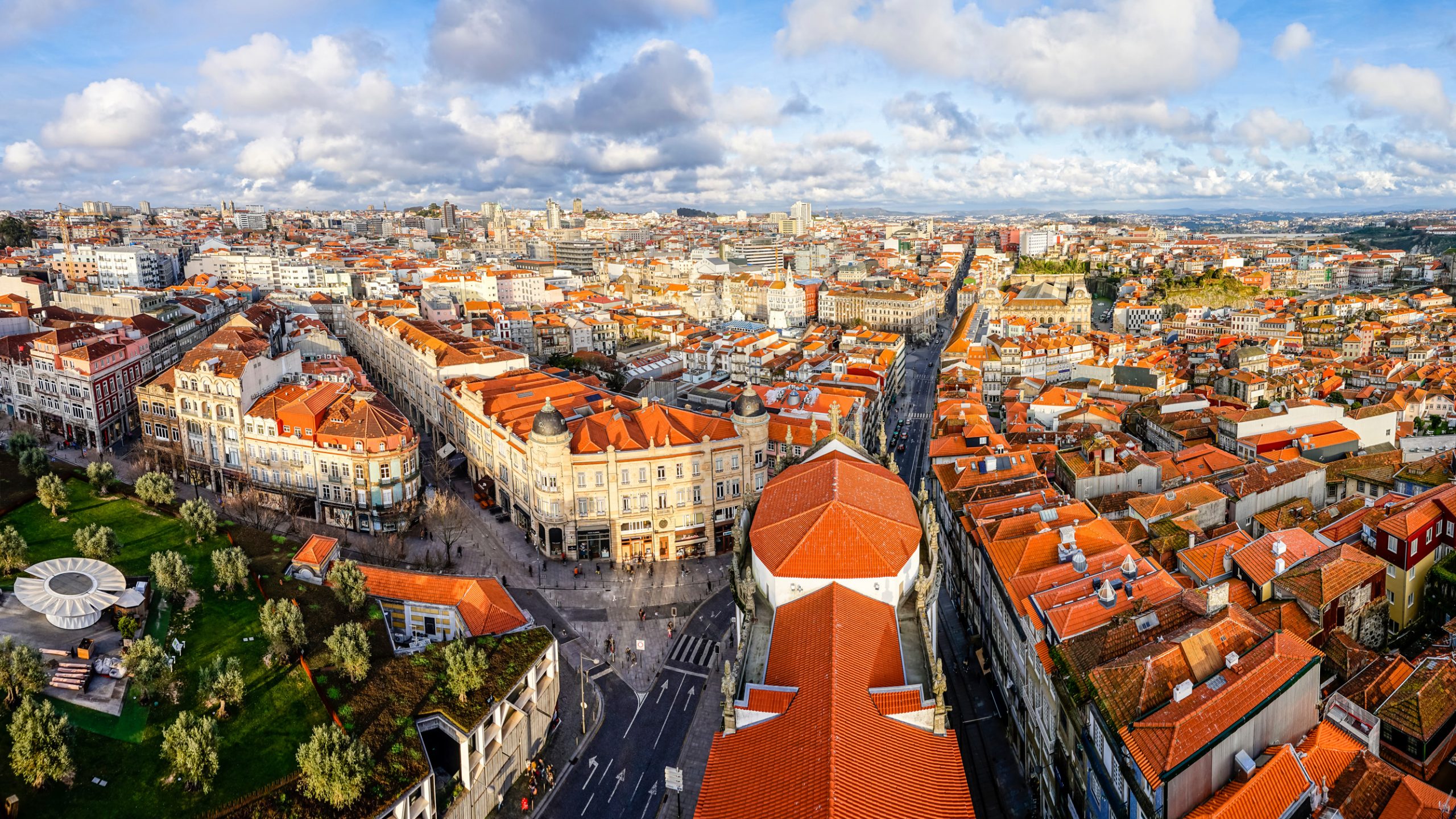
Yet in terms of sheer extravagance, nothing tops the Palácio da Bolsa. The vast, over-the-top structure was built by the city’s leading 19th-century merchants as a place where they could meet and greet trade delegations, while simultaneously flaunting their fabulous wealth. Many of the rooms wouldn’t look out of place in a palace, especially the Arab Room with its sumptuous Moorish Revival décor.
From the Palácio da Bolsa, a zigzag stairway called the Escadas da Vitoria leads upwards to the city’s most famous structure — the Livraria Lello. Often hailed as the “World’s Most Beautiful Bookstore,” the building blends Art Nouveau and Neo-Gothic design into a harmonious whole that attracts self-snapping influencers from around the globe.
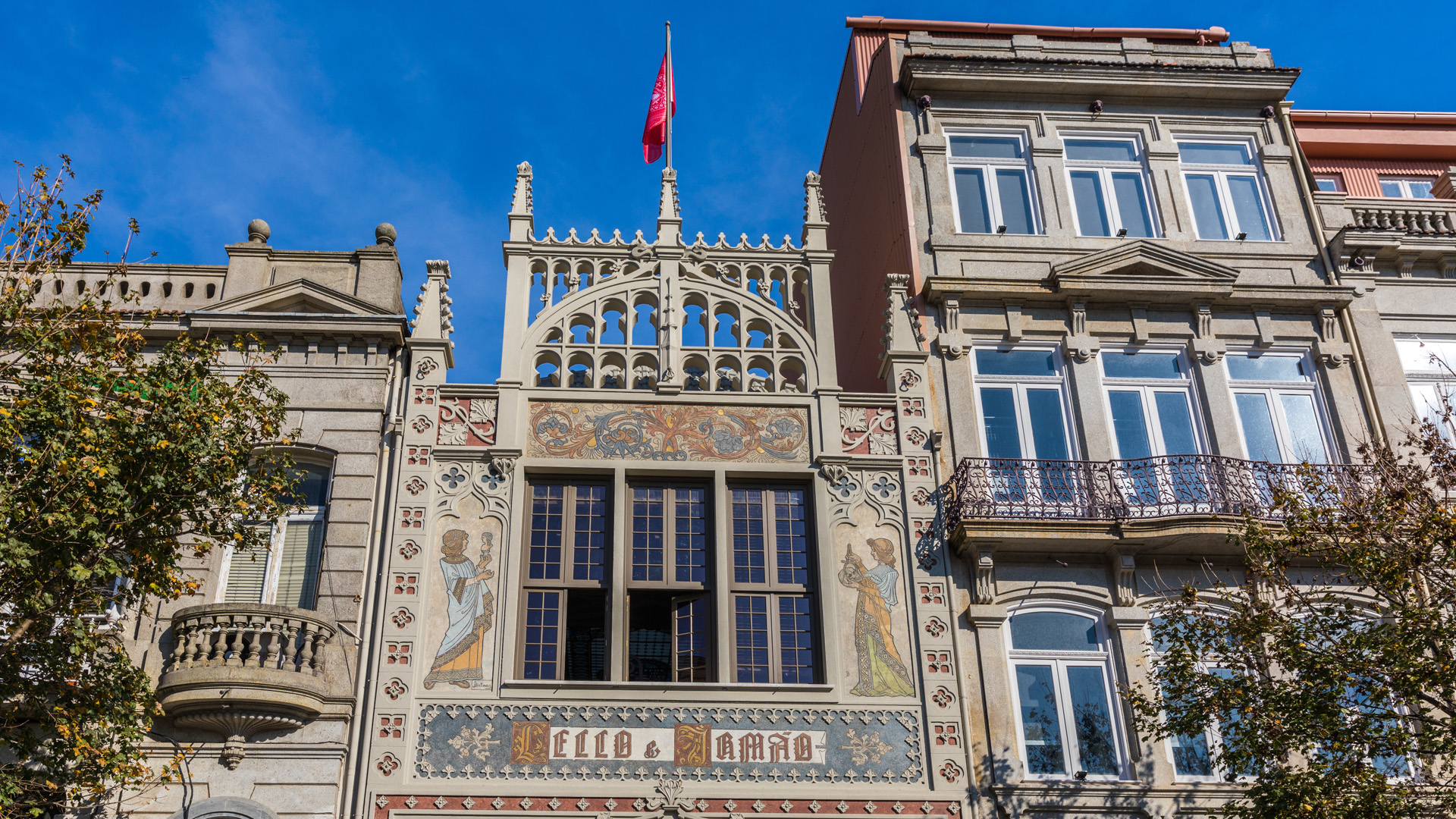
Livraria Lello
Even though it doesn’t appear in the book and movie series, Livraria Lello is also called the “Harry Potter Library” because the bookstore and other places in Porto are thought to have influenced author J.K. Rowling during her years in Porto working as an English teacher. Whether that’s true or not, she did start writing the first Harry Potter book while living in Porto.
Nowadays, the store is so popular that you need to make a reservation and wait in a Disney-like line out front to gain entry. You can dodge the crowd by joining a Platinum Tour, which includes access to a normally off-limits basement area packed with first editions of many famous novels, special illustrated editions of the Harry Potter series, and the book collections of famous people that were either donated to the bookstore or purchased at auction.
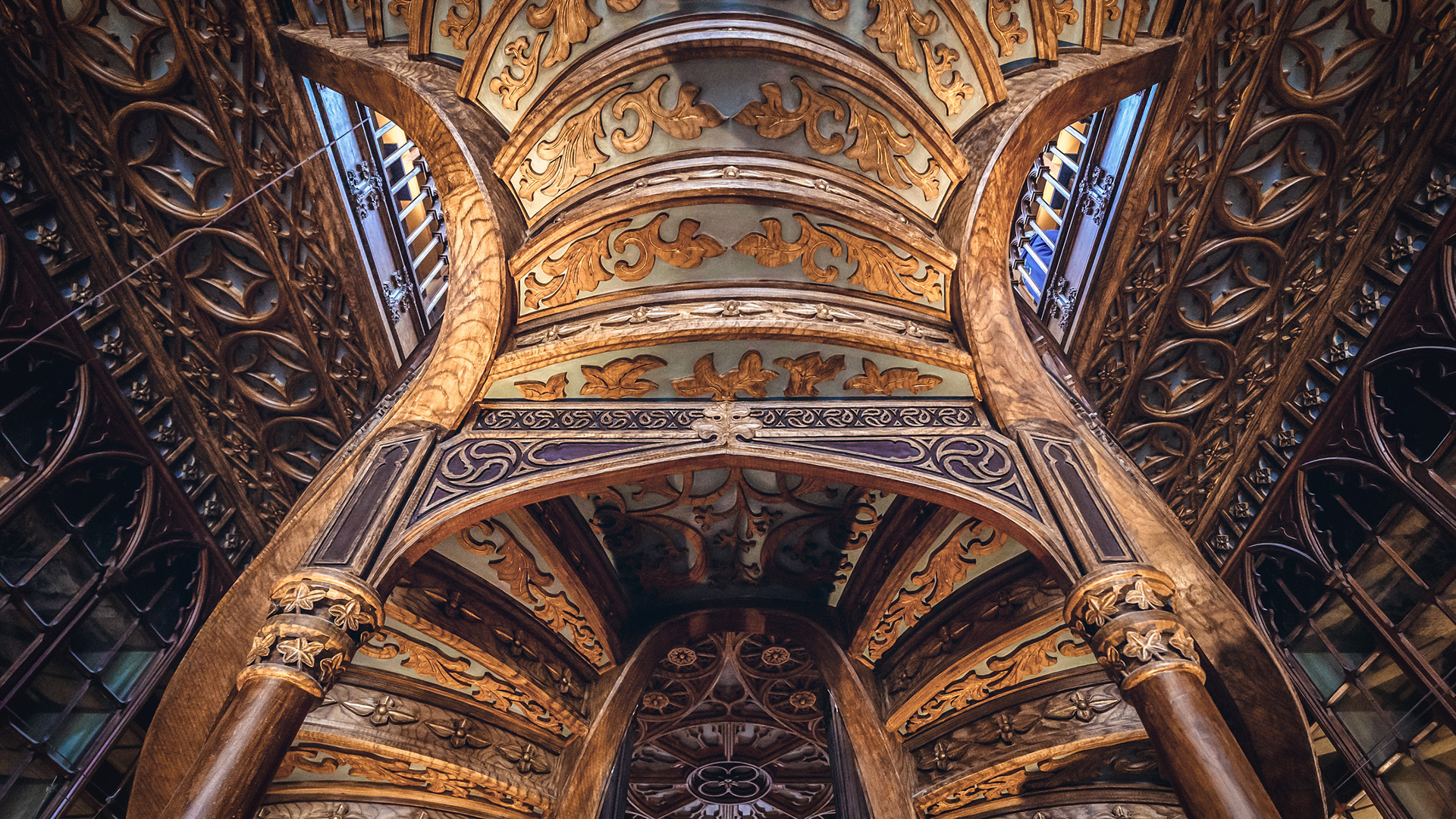
Interior of Livraria Lello
While author-signed first editions of Moby Dick and Lolita are super cool, the basement treasure that really blew my mind was Amy Winehouse’s personal book collection. Purchased at auction several years ago by Livraria Lello.
“You’ll see an eclectic choice of themes,” says bookstore manager Sergio Souza, pointing out various books. They run an incredibly wide gamut from romance, professional wrestling and graphic novels to literary legends like Nabokov, Bukowski and Salinger and autobiographies by author celebrities who also struggled with addiction.
Winehouse scribbled notes in some of the books, including lyrics to songs that never got recorded because of her untimely death in 2011. And there’s a script from The Little Shop of Horrors. “It was a play that Amy did at theater school at 12 years [of age]. It’s signed by her with a phrase that can define her life: ‘I love drama.’
“Amy was a really heavy reader, but she was kind of ashamed to show how smart she really was,” Souza continues. “She didn’t mind having Jackie Collins romances spread through her apartment. But if it was Dostoevsky, she kept it hidden on the side.”

One of the great things about Porto is the fact that it’s relatively small. The city itself is incredibly compact, a warren of ancient lanes and plazas with about a quarter of a million inhabitants. On the other hand, the urban hinterland seems to sprawl forever, an array of suburbs, satellite cities and bucolic villages that are easy to reach once you’ve ticked off all those bucket list sights in the old town. They’re also a gateway into the modern side of Porto that tends to take a back seat to all that old stuff.
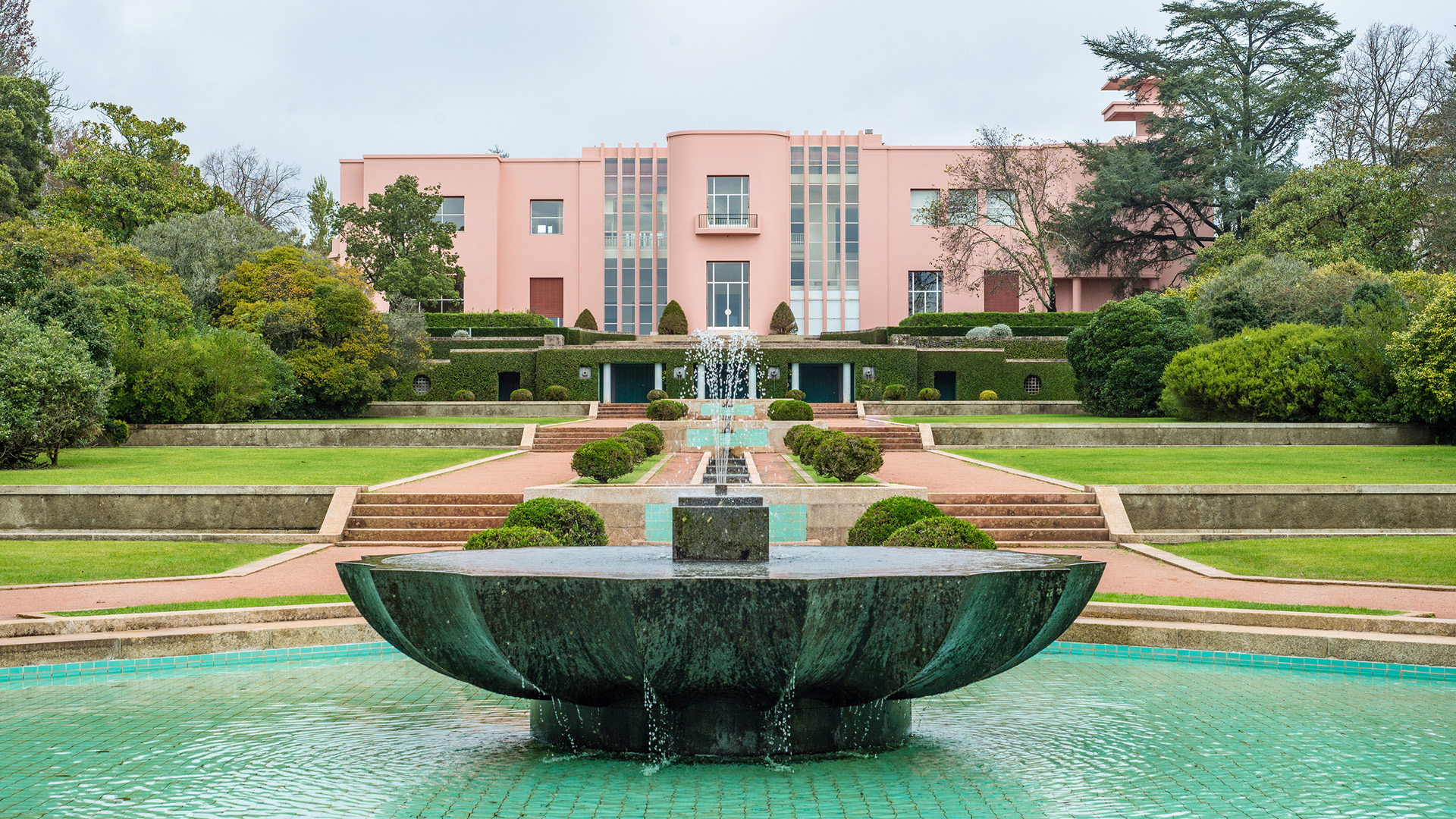
Serralves
Just a 15-minute drive from the historic center is Serralves, the former estate of an aristocratic Portuguese family that transformed into a multi-sensory indoor/outdoor experience after it passed into the hands of the government in 1987.
There are numerous ways to discover the 44-acre compound. My own Serralves adventure started with the offbeat painting, sculpture and photography of the estate’s contemporary art museum, displayed inside a dramatic Modernist structure created by renowned Portuguese architect Álvaro Siza Vieira.
Map in hand, I wandered the estate grounds on forested trails that took me to formal gardens and fountains, giant outdoor art installations, and even a small farm with barnyard animals. Questing for a higher vantage point, I walked an elevated wooden boardwalk through a canopy of giant trees. But the high point, for me at least, is the pink mansion, a national monument that’s considered the finest example of Art Deco architecture in all of Portugal. Long ago vacated by its aristocratic residents, the elegant structure is now home to whimsical, often puzzling and sometimes shocking modern works of art (like an original duct-taped banana by Maurizio Cattelan).
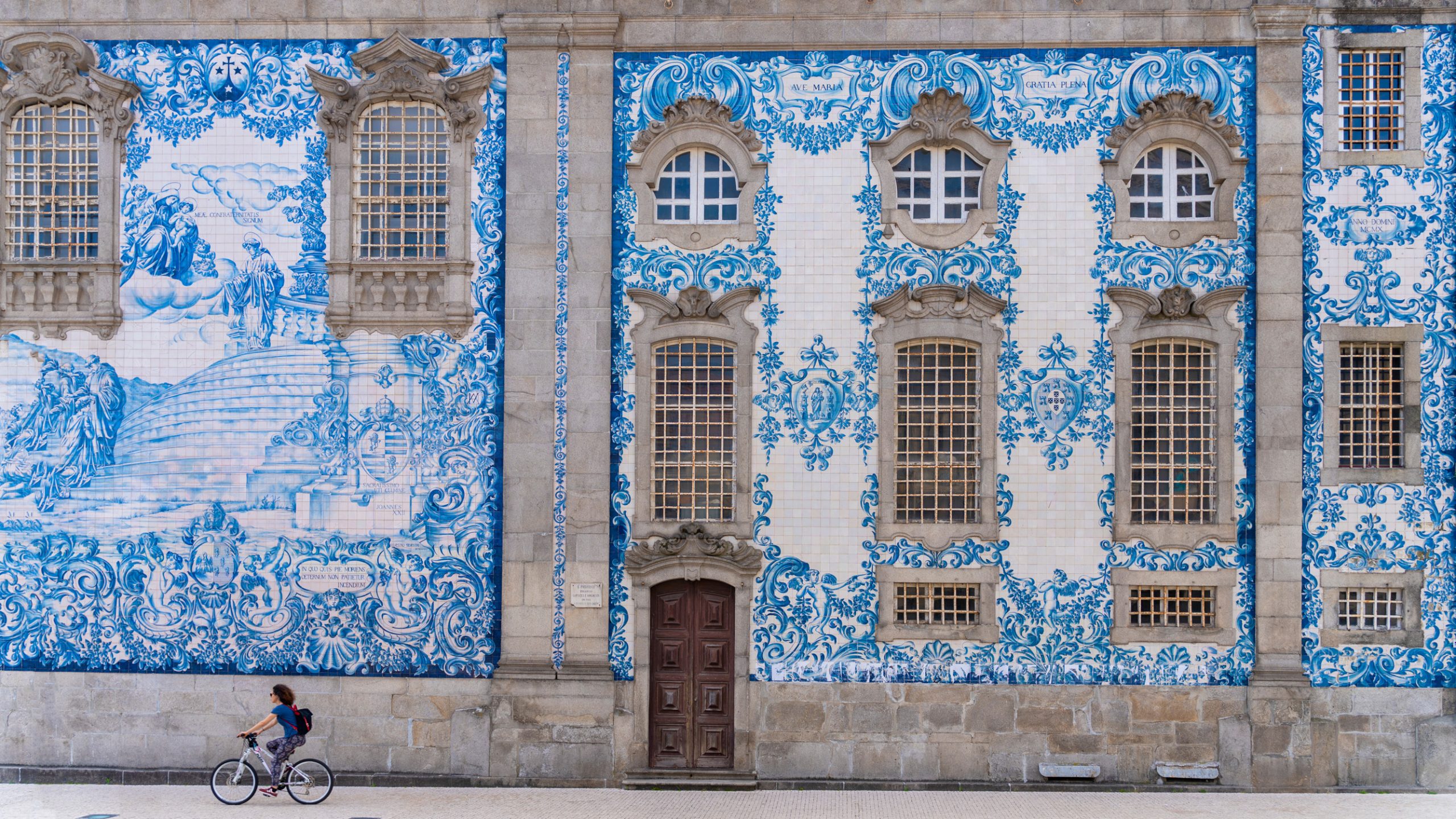
Igreja do Carmo (Carmo Church) is decorated with hand-painted tiles from the 19th century.
Besides its celebrated riverfront, Porto also boasts a long Atlantic coast, which I cruised on an almost full-day e-bike tour with guide Johan Muhlen. Reaching the coast was an adventure in urban cycling that started with a slow (and very careful) descent of cobblestone streets leading down to the waterfront.
Rather than weaving our way through pedestrians on the crowded riverside path, we pedaled down the middle of the tracks that carry Porto’s historic electric trams along the Douro. Pausing beneath the soaring Ponte da Arrábida, Johan explained that when the bridge was completed in the early 1960s, it was the world’s longest concrete arch span. So long in fact, that authorities were initially worried about its structural integrity.
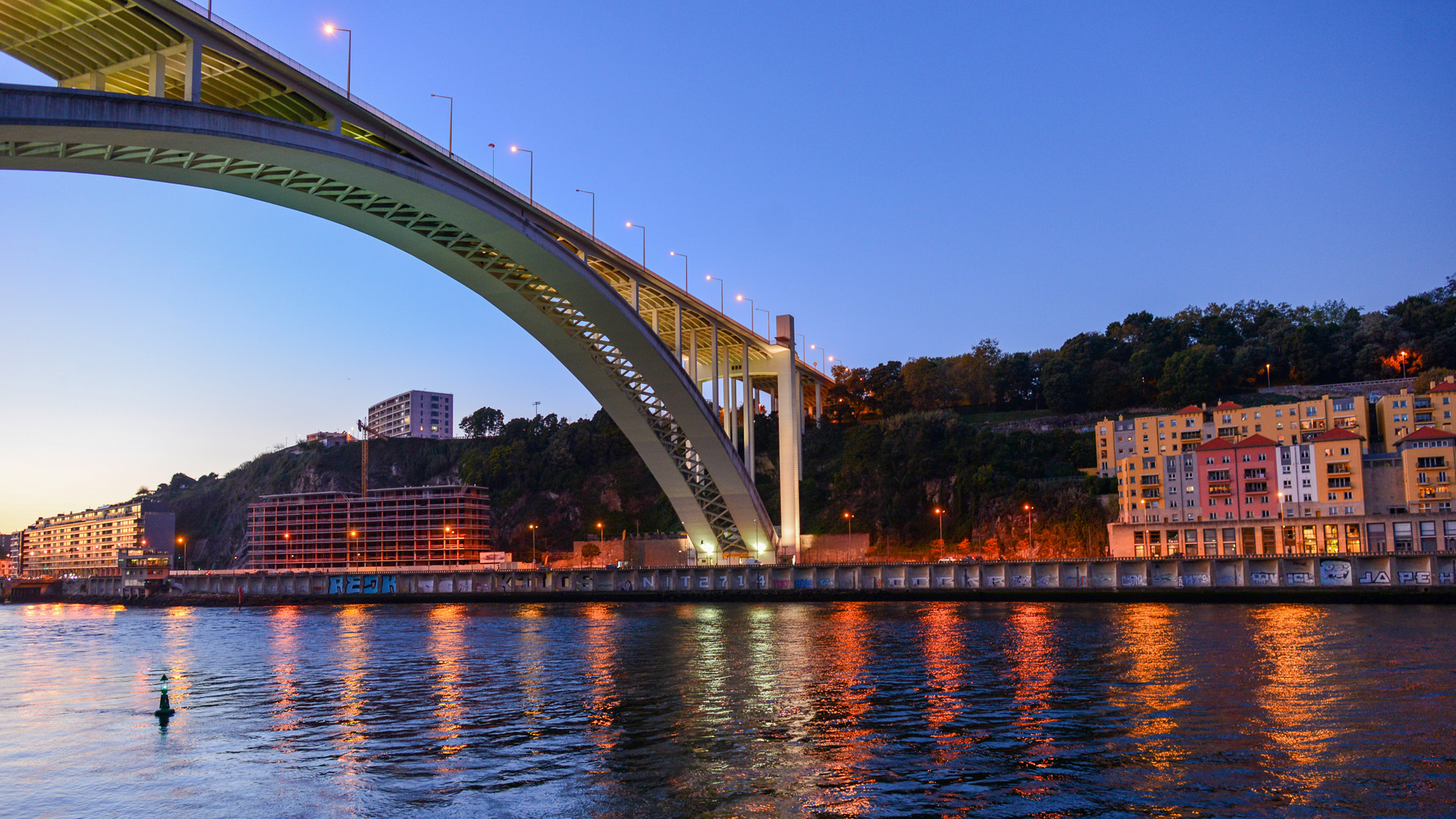
Ponte da Arrábida
“It took a bit of convincing,” Johan explained. “There are stories about leading elephants across the top to make sure it would stand up. I don’t know if that’s true or not. But I do know that the military drove tanks and other heavy vehicles on the bridge to test its strength before they opened the bridge to the public.”
Passing the historic lighthouses and old forts that guard the spot where the Douro empties into the Atlantic, we swung north onto the Senda Litoral, a hiking and biking trail that runs up the north coast all the way to the Spanish border. We found ourselves sharing the path with trekkers outfitted with hiking boots, backpacks and walking sticks, because the scenic oceanfront trail is also the first leg of Portugal’s version of the Camino de Santiago pilgrimage route.
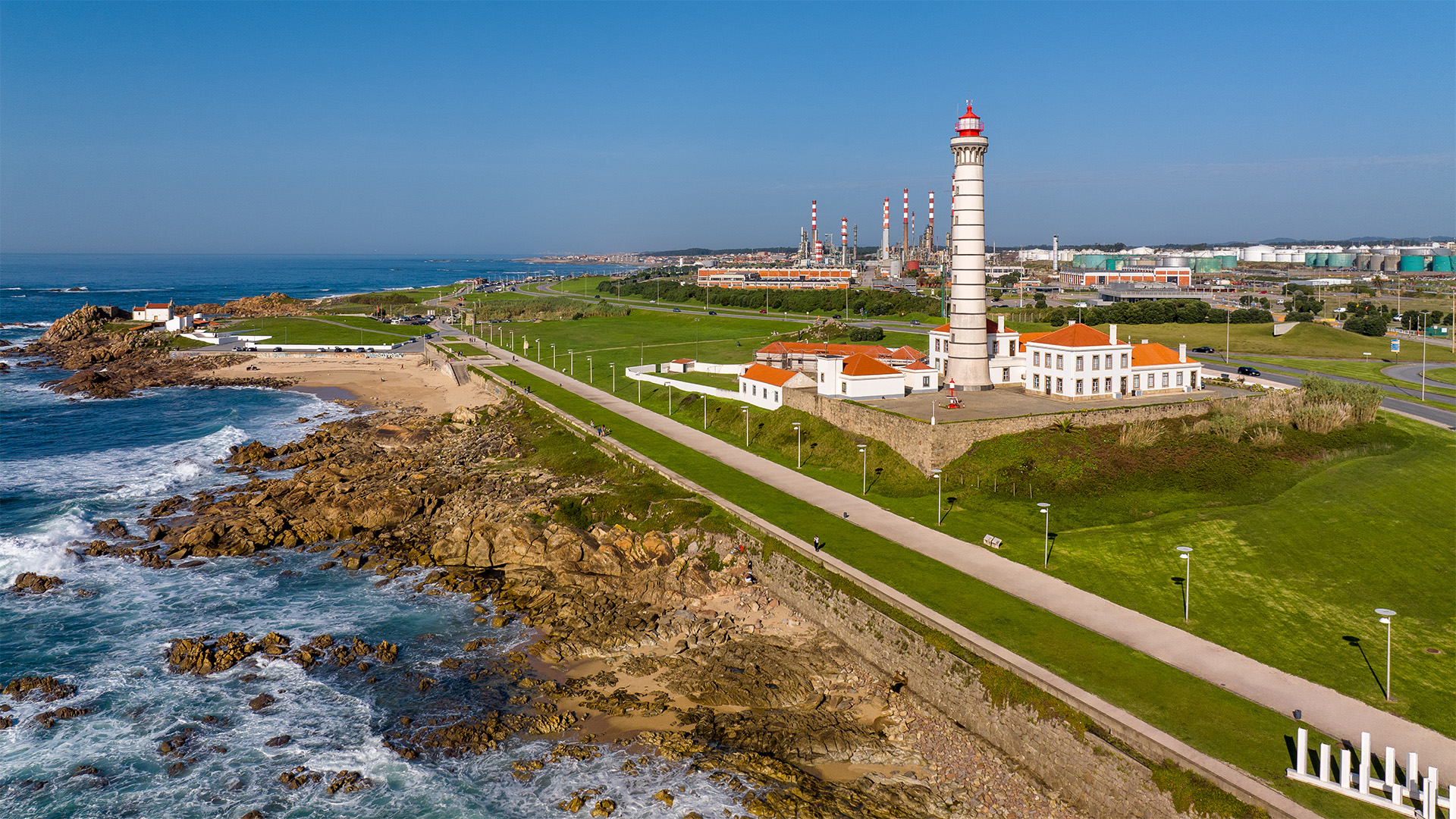
Matosinhos
Weaving our way through the container port and past the cruise ship terminal, our final destination was the Piscina das Marés — “Pool of the Tides.” A remarkable saltwater swimming pool complex beside the ocean in Matosinhos.
It may seem crazy to build a manmade pool along a shoreline blessed with gorgeous beaches. But this was like nothing you’ve ever seen before, a fusion of modern concrete, old wooden ship beams, rock formations and small pockets of wave-splashed sand that blends perfectly into the natural surroundings. If that sounds the least bit familiar, it’s because the complex was designed by Álvaro Siza Vieira of Serralves museum fame.
One of the attendants told me Piscina das Marés swarms with local families during the summer holiday season. However, the autumn school term had started just a few days before, and we had the place almost to ourselves. Rewarding ourselves for completing the two-hour cycle from the city center, everyone grabbed a cold beer from the snack bar, settled into lounge chairs arrayed around the pool, and treated ourselves to an occasional dip.
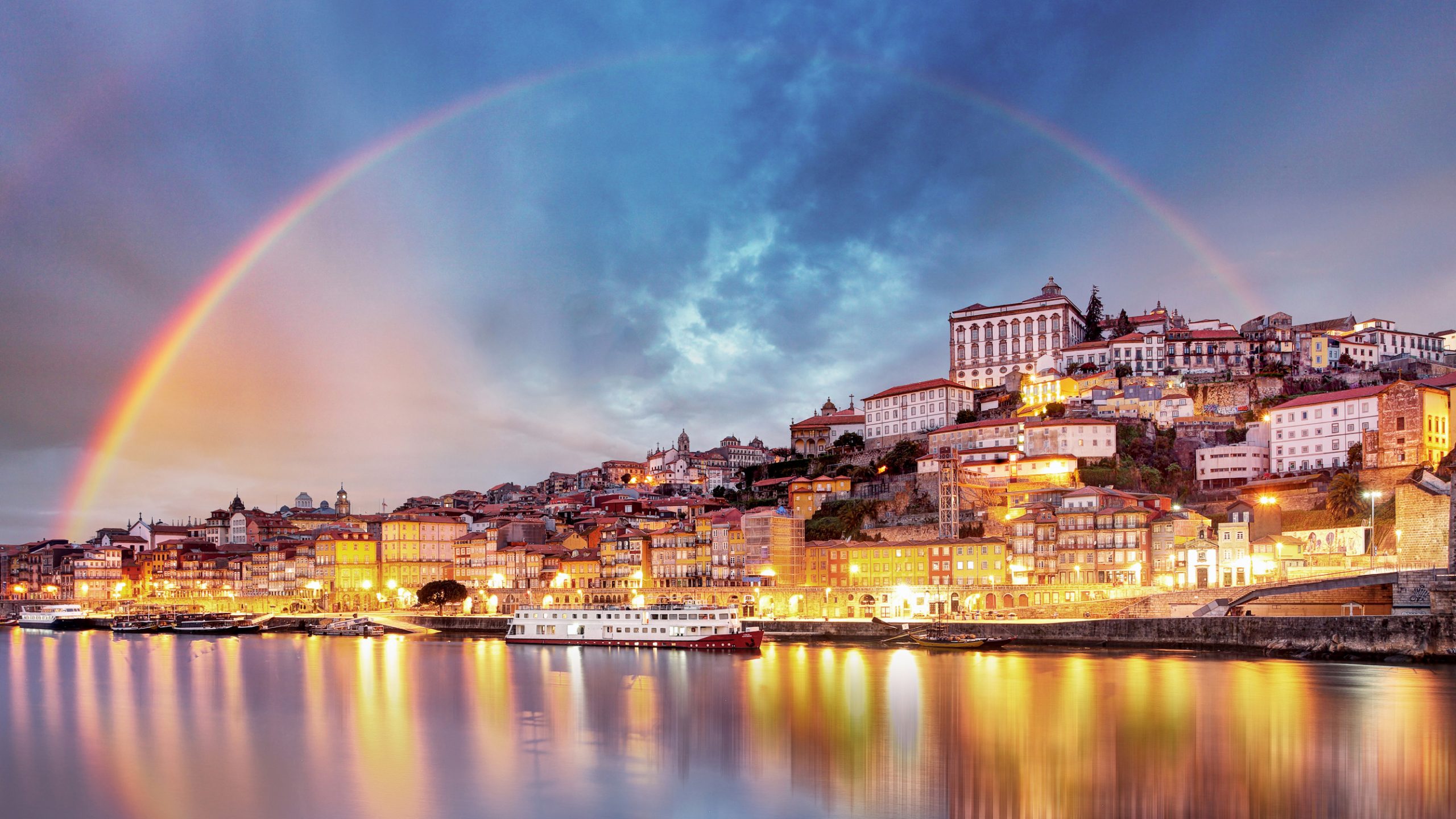
Porto, Portugal
We stayed way longer than planned. But that’s Porto as a whole. Flying out the next day, I found myself thinking my stay wasn’t nearly long enough, and there was so much more I never got around to. Which means there’s bound to be a second visit to my new favorite European city.
That’s also what makes Porto such a fitting launch point for a deeper Portugal journey—one that trades city strolls for river valleys, mountain trails and village life.
Portugal: The Douro & Mountain Villages is a 9-day journey that begins in Porto with time to explore the city’s UNESCO-listed historic center, including the Ribeira District and the famed azulejo-clad São Bento Station. From there, ride a local train into the upper Douro for private river cruises, visits with family-run quintas for wine and olive oil tastings and an in-depth look at the Côa Valley’s UNESCO-protected Paleolithic rock art, with time to relax at Casa do Rio and an optional guided kayak outing on the river. The second half shifts to the high country of Serra da Estrela Natural Park for walks on the Mondego River boardwalks, village-based bread and cheese experiences, a stop in medieval Trancoso and Linhares’ castle, plus a burel wool workshop in Manteigas, ending with optional hiking, spa time and a farewell dinner with views over glacial valleys.

Douro Valley