

Watch Belonging in the Wild: Yellowstone’s Bison Story, featuring Nat Hab Expedition Leader Sophie Mazowita, then keep reading for fellow Expedition Leader Kristina Disney’s personal story of bison and childhood.
I cannot tell you how many times someone has cracked the same joke at my home’s expense, the one where your dog runs away, and you watch it go for three days because it is such an open landscape. The joke is so old and weathered that being the recipient feels like driving past a derelict billboard with words so faded they no longer elicit a response. Unfortunately, within the heart of the joke, there lies a slight contempt for the land that raised me. The open expanse of a grassland is not so well respected by the general populace as the imposingly rugged terrain of a mountain range or even the equally flat but ever-changing blues that come up from the ocean deep.
Too many folks pass through this biome without building a relationship with the land. They remember the prairie only as an eternal, dull taupe blanket on the Earth, to be recalled later in stories as one monotonous color regardless of its patchwork of wildflowers. This narrative is the underbelly of their stale jokes and has always disappointed me. In their search for what wasn’t there, they blindly failed to see what was. Our land is not empty; instead, our sky is full to the brim with uncountable stars, with hues unpaintable by brushes and with arcs of rainbows so large you must crane your neck to take them in.
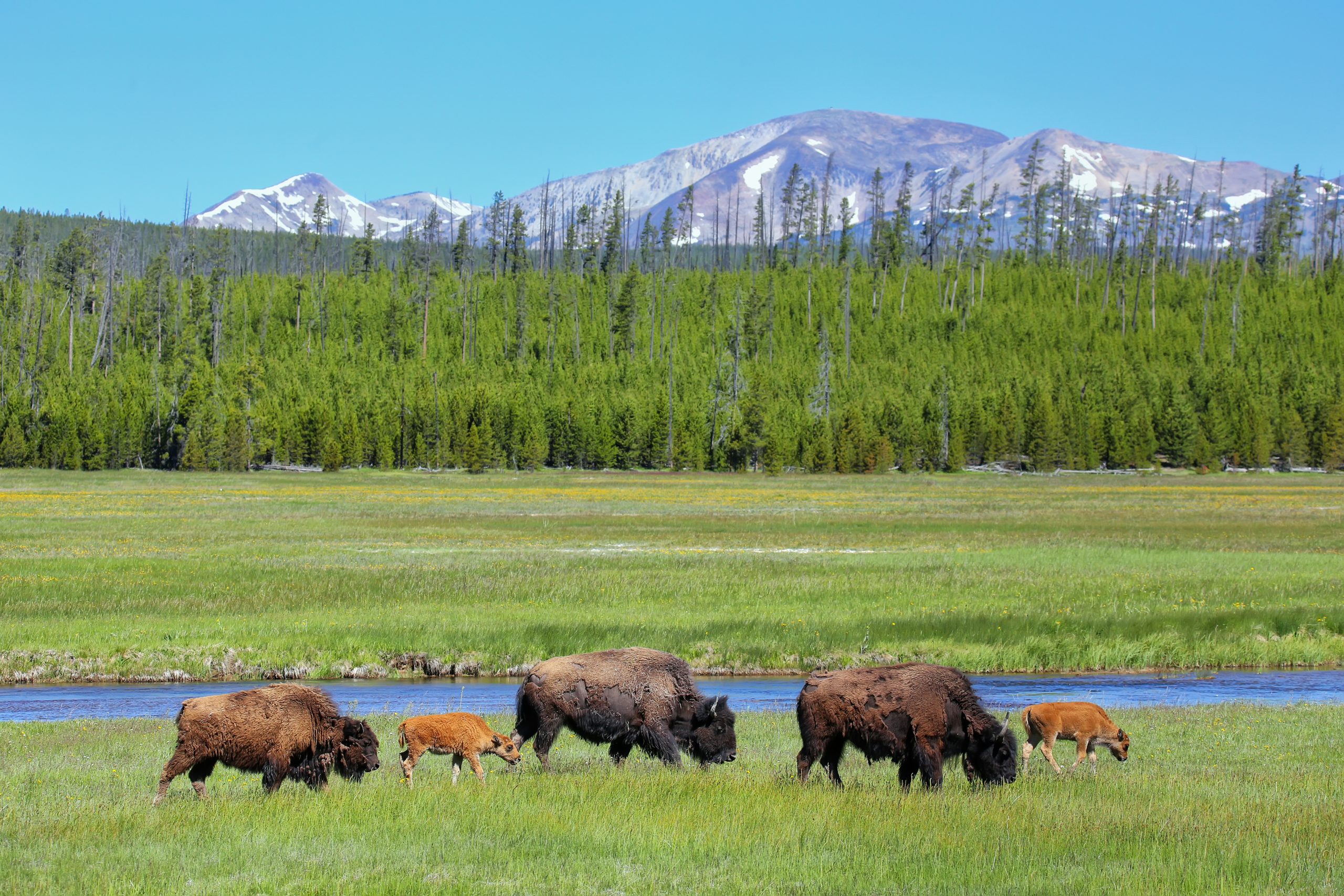
Bison with calves grazing in Yellowstone National Park, Wyoming.
Here, the land bows to the skies; it knows to let the wind and its travelers pass through unhampered. It doesn’t grasp at your hand or drag on your boots. It doesn’t confine sunsets to crevasses or corral clouds against mountaintops. Here, the sky is free to remake itself anew as it pleases, not as the land demands. I wish people could see that as a gift rather than as a forlorn abyss. I also hope that lovers of mountain peaks and crashing waves can appreciate something about the land of grass that their land does not possess—memory. The ocean will wash away your footprints in the next rising wave, and the mighty minerals holding up mountain peaks would never conceive of letting your tracks weather their slopes, but the prairie is impressionable. It remembers everyone who has come and everyone who has gone. This was the lesson I learned in a buffalo wallow when I was 6 years old.
We don’t call them buffalo anymore. We started calling them bison once the biologists realized they were not relatives of the buffalo found in Africa or Asia, but names tend to stick even if they are wrong. Where I call home was once their home, and today it still has some of the most extensive tracts of intact native prairie grasslands in North America. These lands were not at first intentionally set aside to protect such a fragile ecosystem, but rather were places where the soil was too poor and the weather too harsh for pioneers to make a go of it. They realized it was better left unplowed and to graze with whatever livestock could survive the winters.
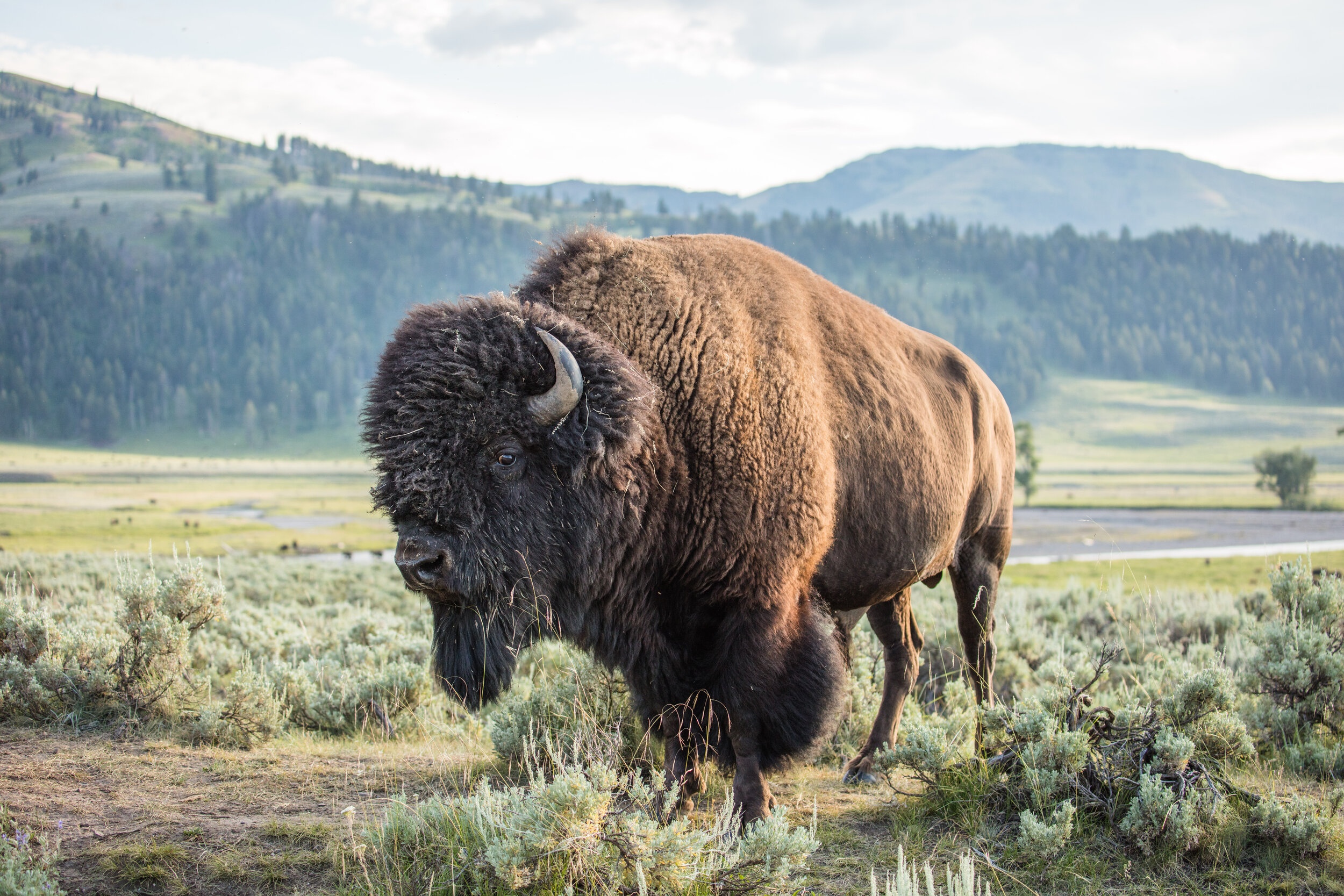
Bison in Lamar Valley, Yellowstone © Jessica Morgan
To a 6-year-old, the historical relevance of North American colonization lay in the fact that it left her family with a pasture filled with native plants that she could wander through with her two dogs, Jack and Charlie, while her parents and siblings worked. Spring meant snowmelt. The ground would thaw, and the three of us could search the native pasture for the first crocuses to bloom, as well as chase the occasional gopher down its hole.
Our hills are subtle and shy. You know when you look at them that if anything breaks their smooth lines, then “something happened.” That something could be the braided path taken by the cows on their daily route to the water trough. It could be the dry, cracking mounds of clay from old forgotten gopher holes, or the tire tracks found on the set course we stick to when checking the cows. We are taught very young to tread lightly in the native pasture because the grass and the peat below are both extremely sensitive. If you take a shovel and stomp it in even half a blade down, you’re into rocks and gravel. The grassroots and the moss interwoven above them rarely go more than 4–6″ deep. That’s how fine the line is between life and death in the prairies: it’s that small layer of healthy grassroots below that supports all the life we see in the ecosystem above. When we drive across it, the peat and root structures are compressed, become compromised and then die off. A single summer of traveling the same route can expose bare ground that then takes decades to be recolonized by plants. To do the least amount of damage, the unwritten rule is that if you are big and heavy or must go somewhere often, you take the same path. If you are only going somewhere once, or you are relatively small and light, you may travel where you like.
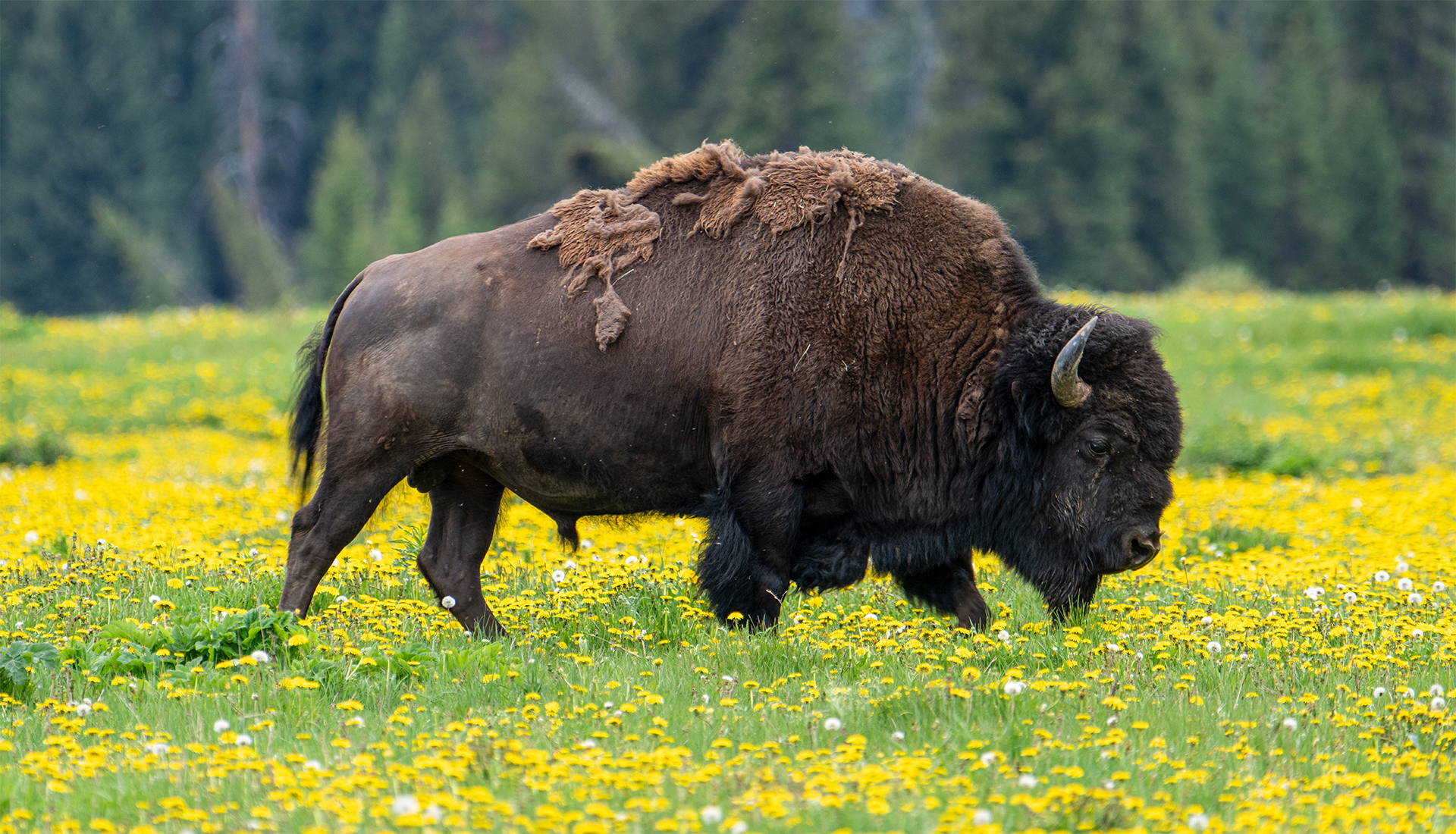
© Nat Hab Expedition Leader Jim Beissel
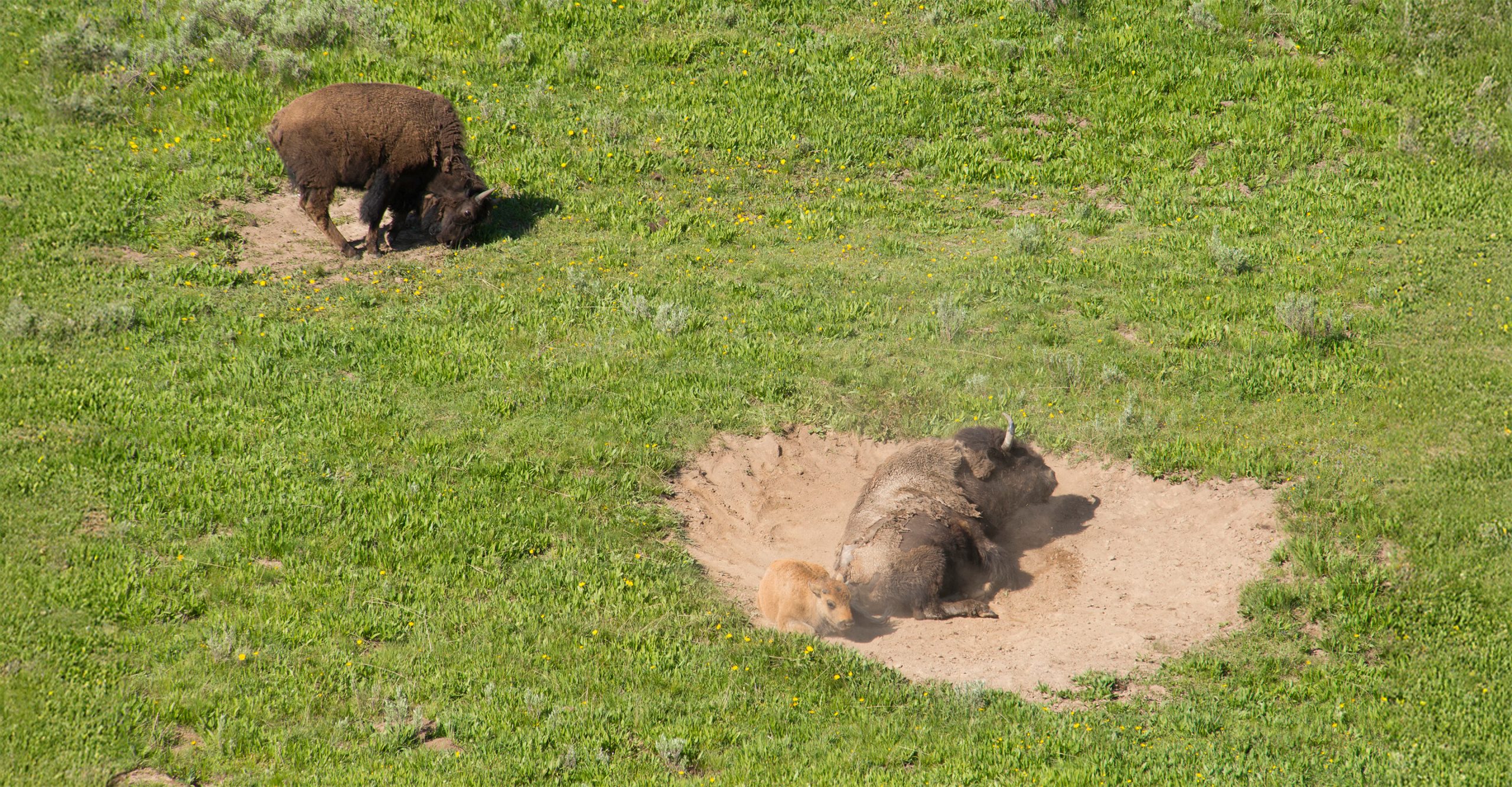
Crocus-hunting with the dogs, I noticed the hillside looked like someone had taken an ice cream scoop to it. That is, if the scooper was about 10′ wide and could take a 2–3′ bite out of a hill. I lay down in the depression and completely disappeared from sight. This spooked the dogs, and they came trailing back to find out where I’d gone. The peat I was lying on was established and thick, so I knew whenever this was dug, it was older than when Mom and Dad bought the farm.
When I eventually gave up on flowers and gophers and walked back to the house, I asked Mom about the hole I had seen. She called it a buffalo wallow. She said that a long time ago, before my grandparents and their parents came here, buffalo were living here. They were like cows, but bigger and meaner, and they had horns and really tough hides. The First Nations used to follow them across the prairies and had built their lives and communities around these herds. She said she would take me to Grandma and Grandpa’s another time and show me the old tipi rings in their native pasture.
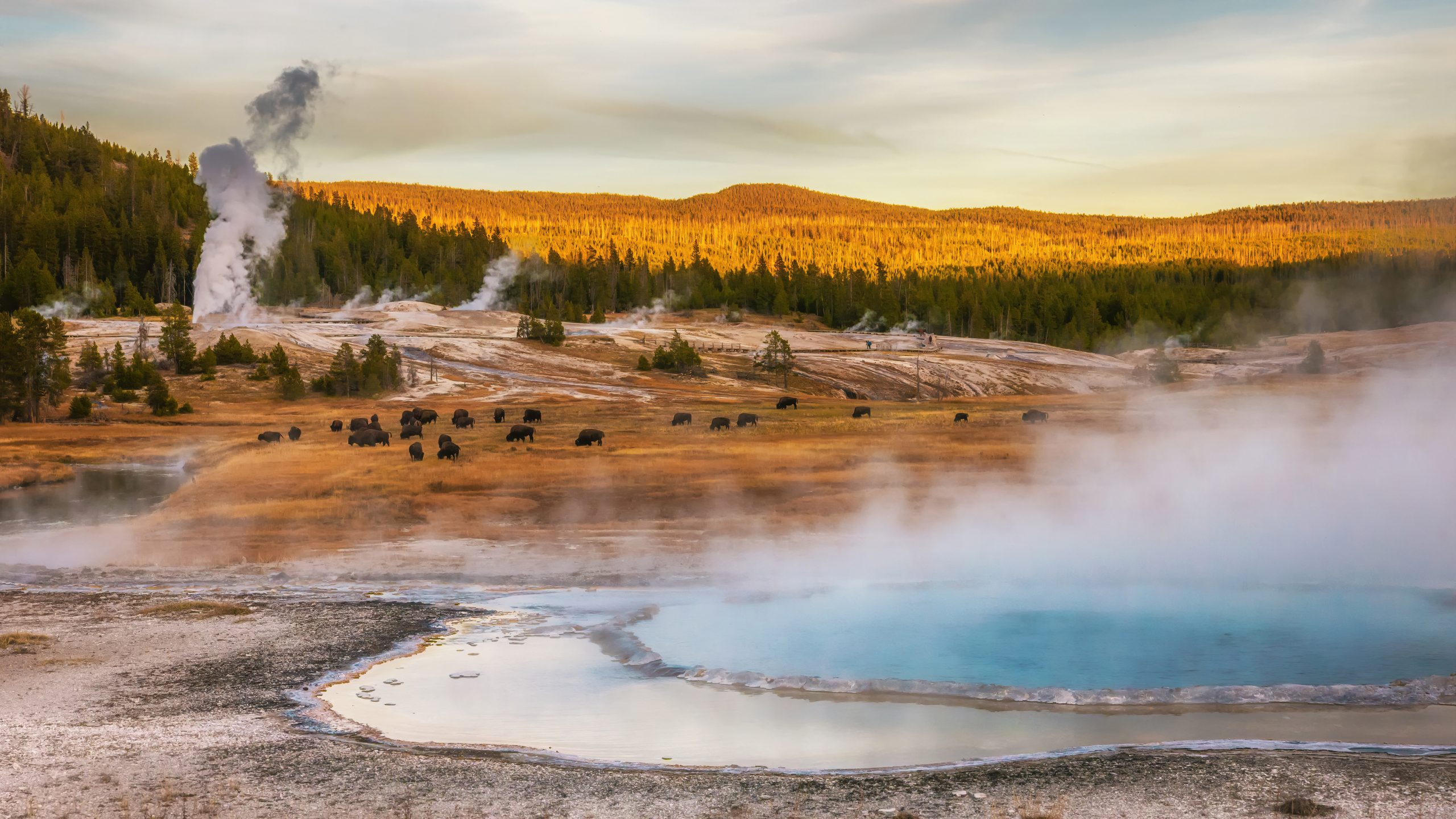
Bison among the geysers and hot springs of Yellowstone National Park
The hole was made and reused by many buffalo. She said just like our cows, the flies would get too bothersome, and so they would paw the ground until they broke through the peat. Then they would throw dirt into the air by kicking back with their hooves. Alternatively, once the bank was exposed, they would roll and cover themselves in as much dirt as possible to create a thick enough layer that the flies couldn’t bite through it.
This was an acceptable explanation to my 6-year-old self. Even though it painted a picture of an animal I had never seen, it contained enough of the world as I knew it that I could imagine the buffalo. At some point later, I remember going to a restaurant that had a taxidermy of one on the wall, and my mom pointed it out. I got to touch its hair. Not much longer after that, I got to see one alive for the first time. To me, it seemed to have a disproportionately large head and shoulders compared to the back legs, but it had the same sweet, glossy eyes as our cows did.
There will never be a day when bison freely roam the prairies again, for the true vastness of the prairies is gone. The small pockets of native prairie grasslands that remain are not just precious seed banks that hold the key to sustaining ecosystems; they are also our memory bank. They are a living story that carries the past into the future. Today, some of these native grasslands are stewarded privately. Some you can wander through as national parks. When you go there, and you look out across the plains, there are a few things that I would ask of you.
Build a relationship with this place. Lie on the ground on your belly like a certain 6-year-old and feel the prickly stem of the sagebrush as you try to count the shades of red and green in the peat moss. Go for a walk, but tread lightly. If you go where many others are traveling, then stick to the path and save the roots you cannot see. They are precious. If you’re going where few have gone, then find your own path and hunt for crocuses if it’s springtime. If you see the grasses shimmer across the hillside and bend to the will of the wind, that’s a cue to also bow your head and take a moment to share in some of that humility. This land will remember your footsteps and tell your story long after you are gone. Please show some respect while you’re here.
By Nat Hab Expedition Leader Kristina Disney
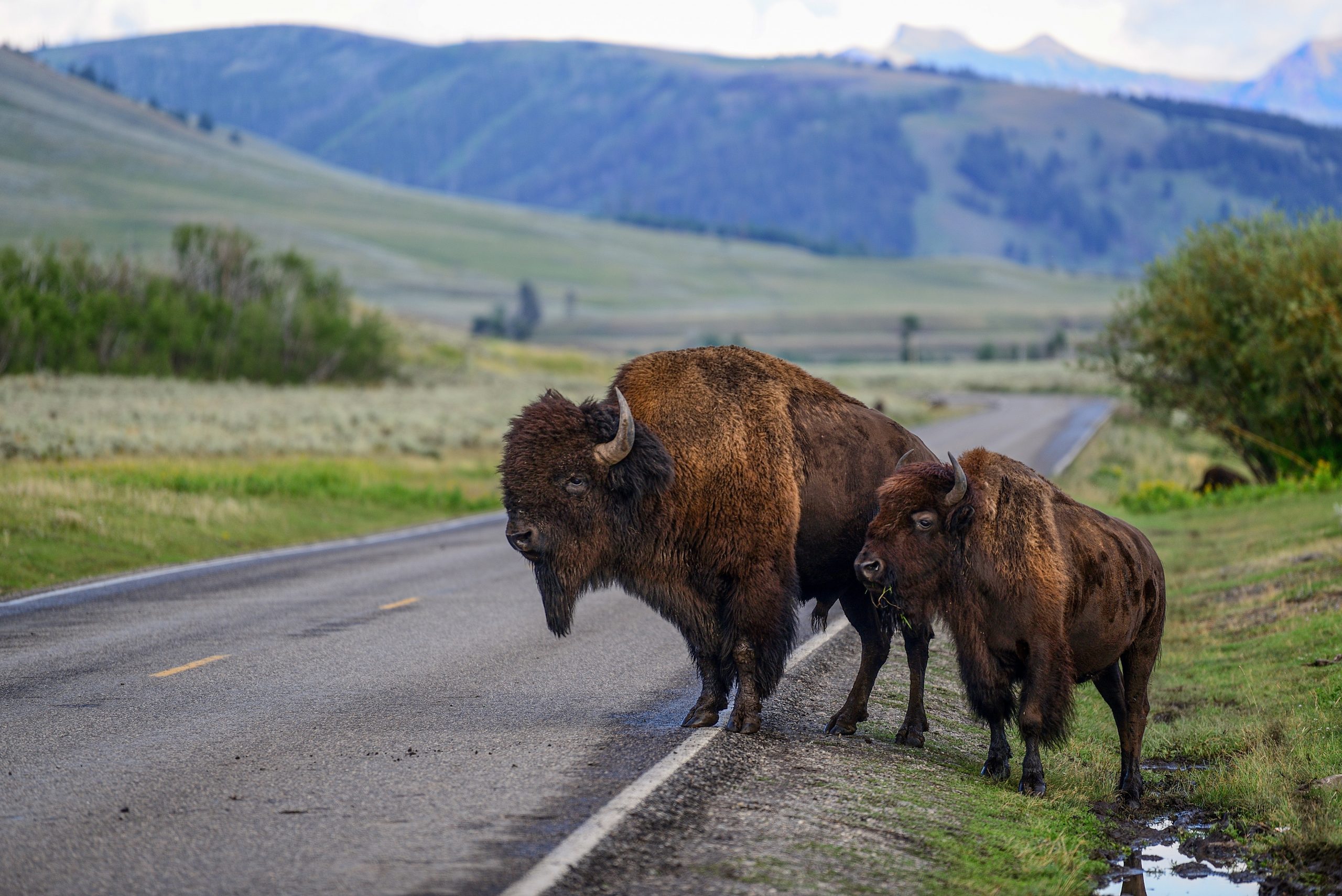
© Jorn Vangoidtsenhoven