


The concept of Father Time traces back to the Greek personification of chronological time, Chronos, who was later conflated with the Titan Cronus (who devoured his children to hold back the future).
We’ve just about reached the 2025 finish line. Father Time—that elderly, bearded man with an hourglass in one hand and a scythe in the other—will once again make his appearance on December 31 as the symbol of aging, the unstoppable passage of time and the inevitable end of things.
Some nonhuman animals, however, seem to defy Father Time by employing some clever aging hacks. For example, scientists recently discovered that jewel wasp larvae that undergo a developmental “pause” live longer and age more slowly at the molecular level by nearly 30%. This slowdown is tied to biological pathways that are similar to ours, hinting at possible applications for human aging.
Another animal that’s challenging our old assumptions and offering some new insights into the science of aging is flamingos. A decades-long study in France reveals that resident flamingos, which stay put, enjoy early-life advantages but pay later with accelerated aging; while migratory flamingos endure early hardships yet age more slowly. This surprising finding demonstrates a link between movement and longevity.
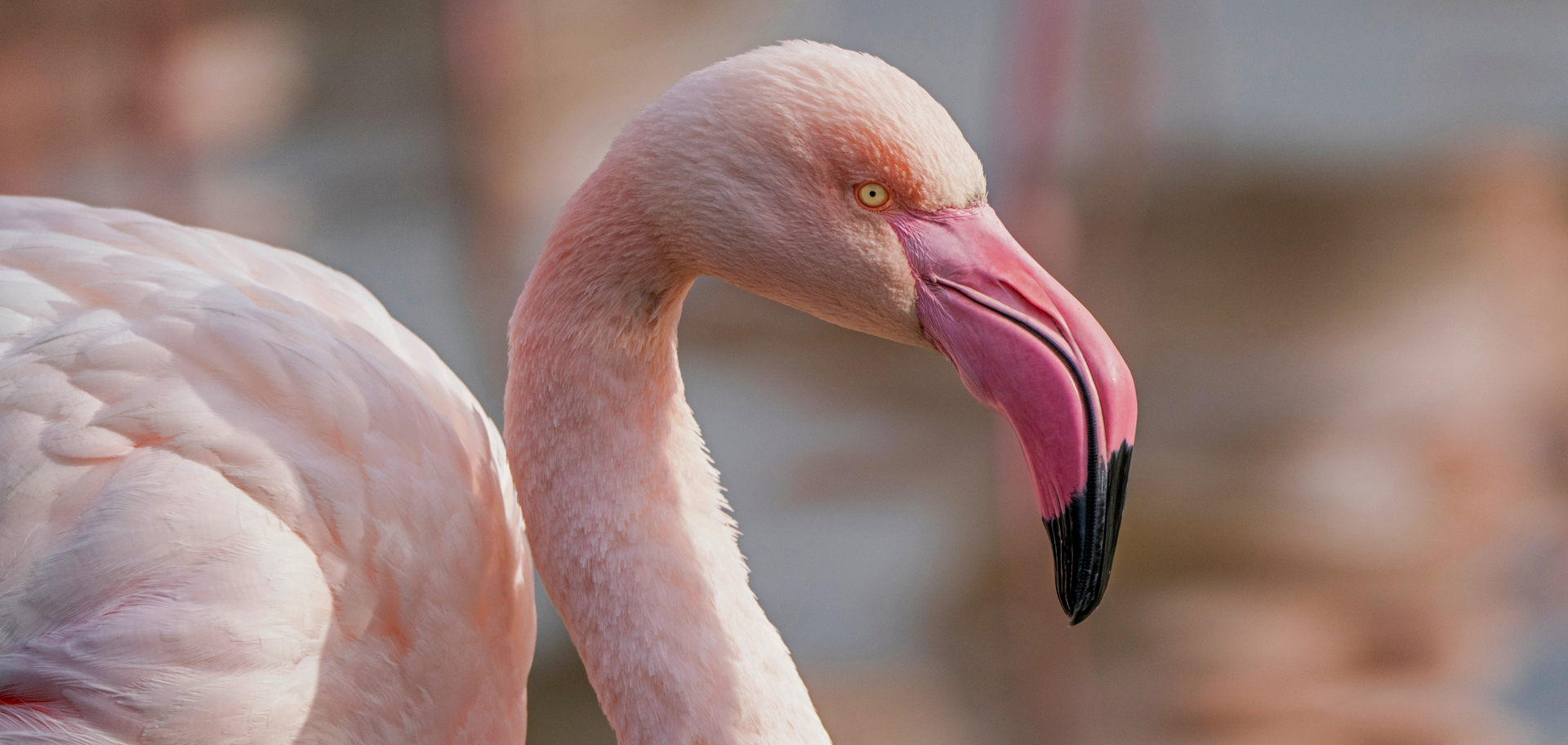
Camargue flamingos are the greater flamingos of the Rhone Delta region in France, which is the only nesting site for this species in that country. While most of these flamingos migrate south for the winter, a population of about 5,000 to 6,000 remains in the Camargue year-round.
Mammals, too, are in on nature’s cheat code for longevity. Small tweaks in one of the proteins in naked mole-rats make them better at fixing DNA damage, helping the animals resist aging and providing a glimpse into how evolution fine-tunes biology to fight time itself.
Jewel wasp larvae: slowing their biological clocks
Aging isn’t just about counting birthdays; it’s also a biological process that leaves molecular fingerprints on our DNA. One of the most accurate markers of this process is the epigenetic clock, which tracks chemical changes in DNA, known as methylation, that accumulate with age. But what happens if we alter the course of development itself?
To find out, a research team at England’s University of Leicester turned to Nasonia vitripennis, also known as the jewel wasp. This tiny insect, famous for its distinctive metallic colors, is becoming a powerful model for aging research because, unlike many other invertebrates, it has a functioning DNA methylation system—like humans have—and a short lifespan that makes it ideal to study.
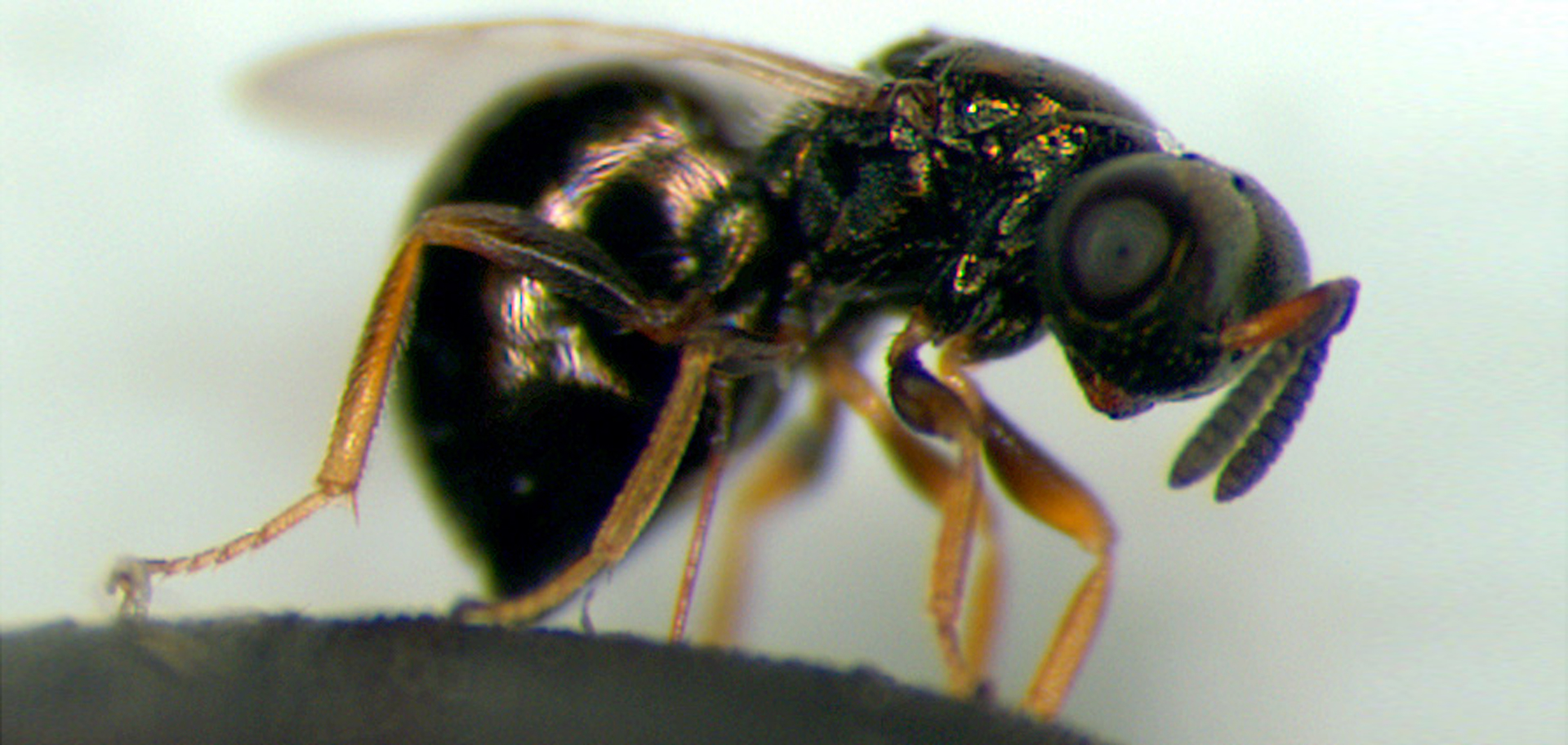
By pausing their development as larvae before emerging into adulthood, jewel wasps—“Nasonia vitripennis”—can extend their lives and slow their biological aging, revealing clues that could one day help us delay aging in humans.
The scientists exposed jewel wasp mothers to cold and darkness, triggering a hibernation-like state in their babies called diapause. This natural “pause button” extended the offsprings’ adult lifespans by more than a third. Even more remarkably, the wasps that had gone through diapause aged 29% more slowly at the molecular level than their counterparts. Their epigenetic clocks ticked more leisurely, offering the first direct evidence that the pace of biological aging can be developmentally tuned in an invertebrate. The University of Leicester researchers say it’s as if the wasps who took a break early in life came back with extra time in the bank, and it shows that aging isn’t set in stone. It can be slowed by the environment, even before adulthood begins.
While some animals can slow aging in dormant states, this study is the first to show that the benefits can persist after development resumes. What’s more, the molecular slowdown wasn’t just a random effect; it was linked to changes in key biological pathways that are conserved (meaning that they are constant) across species, including those involved in insulin- and nutrient-sensing. These same pathways are being targeted for antiaging procedures in humans.
What makes this study, which was published in the journal Proceedings of the National Academy of Science (PNAS) in July 2025, pioneering and surprising is that it demonstrates a long-lasting, environmentally triggered slowdown of aging in a system that’s both simple and relevant to human biology, opening up new avenues for research—not just into the biology of wasps, but into the broader question of whether we might one day design interventions to slow aging at its molecular roots. It also offers compelling evidence that early life events can leave lasting marks not just on health, but on the pace of biological aging itself.
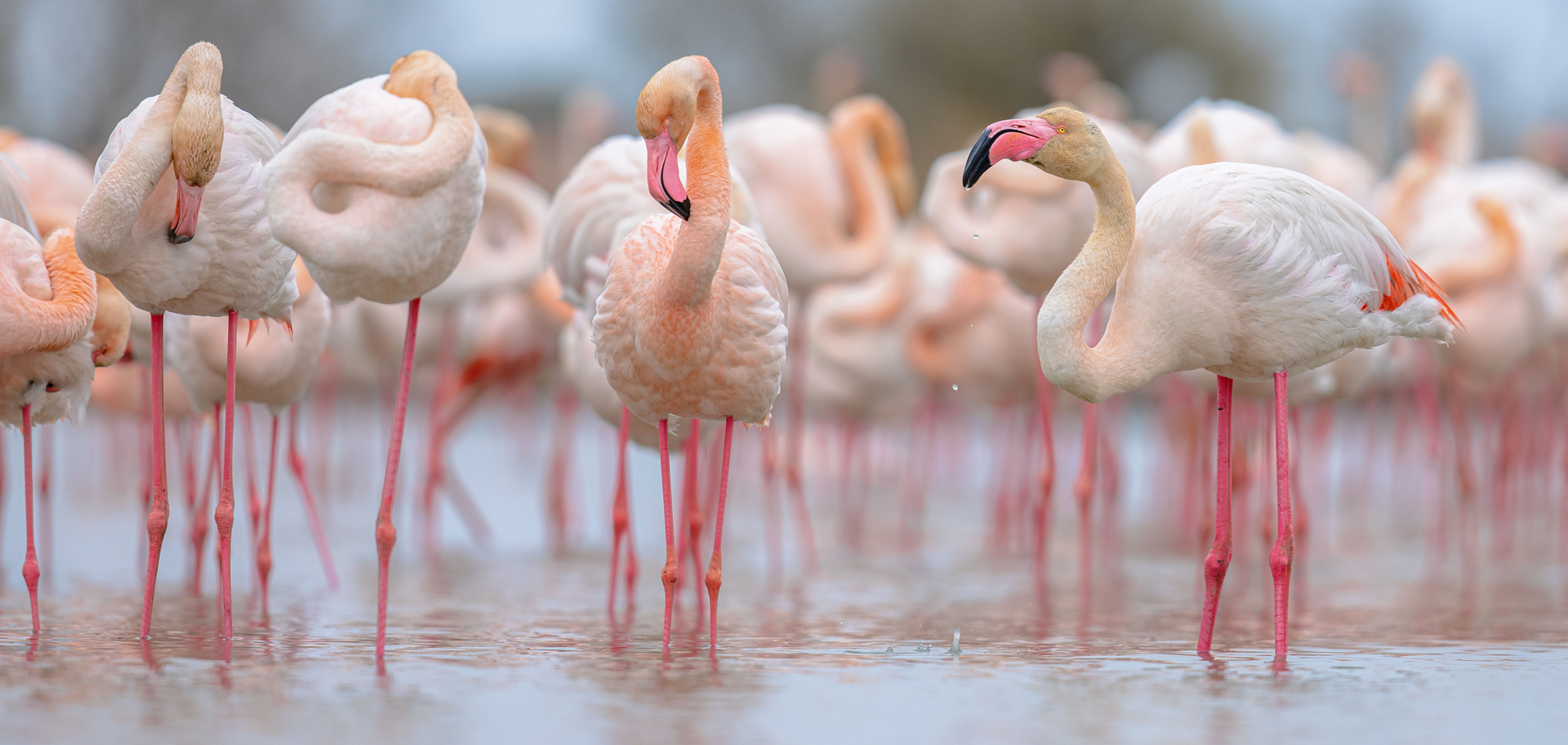
With their long lifespans (some live to be more than 50 years old) and behavioral diversity, flamingos are more than just an iconic animal of the French Camargue. They also provide an ideal model for understanding aging in animals.
Flamingos: revealing their secrets for staying young
Jewel wasps are showing us that in the future, aging may not be as inevitable as we currently think it is. What we do know for sure now, though, is that while most living beings age, some do so more slowly than others. Why?
This fascinating question has caused some scientists at Frances’s Tour du Valat Research Institute to suggest that migration might influence the way we age. They turned their attention to the pink flamingo (Phoenicopterus roseus), a graceful migratory bird that is emblematic of the nation’s Camargue region. Some pink flamingos remain in the Camargue for their entire lives (called “residents”), while others travel every year along the shores of the Mediterranean (the “migrants”). Now, thanks to the institute’s flamingo tagging-and-tracking program that has a more-than-40-year history, a surprising phenomenon has come to light: migratory flamingos age more slowly than resident flamingos.
At the beginning of their adult life, resident flamingos fare better. Well established in the lagoons of the French Mediterranean Coast during the winter, they survive and reproduce more than the migrants. But there’s a cost: as they age, the residents decline more rapidly. With 40% greater aging, their ability to reproduce decreases and the risk of death increases faster than among migratory flamingos. On the flip side, migratory flamingos—those that leave to spend the winter in Italy, North Africa or Spain—pay a high price for their seasonal journeys early in life (higher mortality and lower reproduction rates), but they seem to compensate for this by slower aging at an advanced age. Thus, the onset of the aging process occurs earlier in residents (20.4 years, on average) than in migrants (21.9 years).

Birds do not all age in the same way. Flamingos that migrate age more slowly than those that stay home, according to a 40-year study in the Camargue. While residents thrive early in life, they face faster decline later; unlike migrants, who trade early hardships for long-term vitality.
This study, published in the journal PNAS in August 2025, shows that seasonal migration—a behavior exhibited by billions of animals—can influence the rate of aging. In flamingos, deciding not to migrate offers advantages early in life that are associated with an accelerated process of getting older. This is probably linked to a compromise between performance when young and health in old age, state the Tour du Valat Research Institute scientists. Residents live intensely at first but pay for this pace later. Migrants, on the other hand, seem to age more slowly.
This breakthrough is part of an exciting, new field of research: senescence, or biological aging. Understanding the causes of changes in the rate of aging is a problem that has obsessed philosophers and researchers since ancient times. It was once thought that these variations occurred mainly between species. But accumulating evidence is showing that, within the same species, individuals often do not age at the same rate due to behavioral, environmental and genetic variations. By studying how certain animals are born, reproduce and die, we may be able to unlock aging’s secrets.
Naked mole-rats: outsmarting the aging process
Despite their wrinkled, almost alien appearance, naked mole-rats (Heterocephalus glaber) are extraordinary among rodents, living up to 40 years, or about 10 times longer than most animals their size. Surprisingly, their genetic blueprint is closer to humans than to mice, making them an important species for studying how organisms maintain health over long lifespans. One crucial element of longevity is the ability to preserve genome stability. Yet how naked mole-rats manage to keep their DNA so resilient has remained largely unclear.
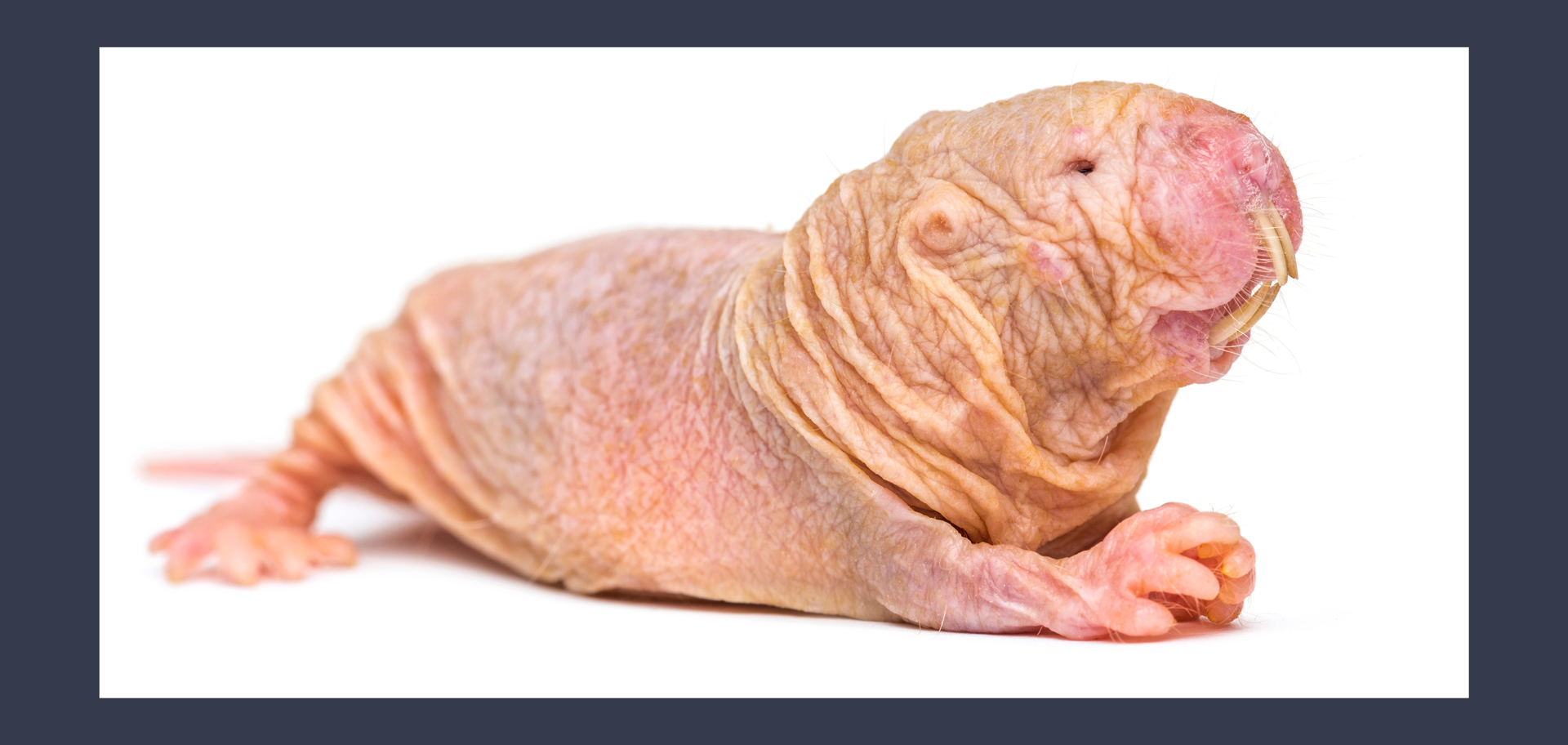
Naked mole-rats—who, some say, look like tiny walruses or bratwurst with teeth—are more closely related to chinchillas, guinea pigs and porcupines than they are to moles or rats. They have pink, wrinkly skin and slender, ratlike tails; and they are the only mole-rats that have practically no hair.
A key process involved in maintaining DNA integrity is homologous recombination (HR), a pathway that repairs genetic breaks. When this process fails, it can accelerate aging and increase the risk of cancer. In humans and mice, the DNA-sensing enzyme cGAS (cyclic guanosine monophosphate–adenosine monophosphate synthase) is known to interfere with HR repair, which can lead to genome instability and a shorter lifespan.
To understand whether naked mole-rats have found a way around this limitation, researchers from Central South University in Changsha, China; the Chinese Academy of Sciences in Wuhan, China; and Fudan University and Tongji University in Shanghai, China, examined how the rodents’ version of cGAS behaves. It was discovered that four amino acid substitutions in naked mole-rats’ cGAS reduce the protein’s tagging for degradation, allowing it to remain active longer and accumulate after DNA damage. This stability enables the enzyme to interact more effectively with important DNA repair proteins, strengthening the HR repair process.
When the researchers removed cGAS from naked mole-rat cells, the amount of DNA damage sharply increased, confirming the enzyme’s protective role. Even more strikingly, fruit flies genetically engineered to carry the same four, naked mole-rat-specific mutations in cGAS lived longer than fruit flies with the normal version of the enzyme.

Naked mole-rats have unique superpowers, including cancer resistance, tolerance to low oxygen and extreme longevity, making them fascinating subjects for aging and disease research. They thrive in harsh, underground worlds, truly setting them apart in the animal kingdom.
These findings, published in the journal Science in October 2025, describe an unexpected role for naked mole-rat cGAS in the nucleus that influences longevity and suggest that just a few, precise, molecular tweaks may help explain why naked mole-rats live so long. The mutations appear to turn cGAS from a potential inhibitor into a powerful ally of DNA repair, offering the animals a natural mechanism to combat the effects of aging.
Father Time: leaving just before a handful of hope arrives
Some common sayings about Father Time are that he always wins and that he is undefeated, meaning that he is a force that cannot be beaten and that no one can escape the inevitable effects of aging.
I don’t know about you, but when the clock strikes 12 o’clock midnight on December 31, I won’t be able to help but think that I am another calendar year older. Baby New Year, however, always arrives at the very next moment; and this time, perhaps, he’ll have a fistful of innovative and novel antiaging hacks, all inspired by nature.
Here’s to finding your true places and natural habitats,
Candy