

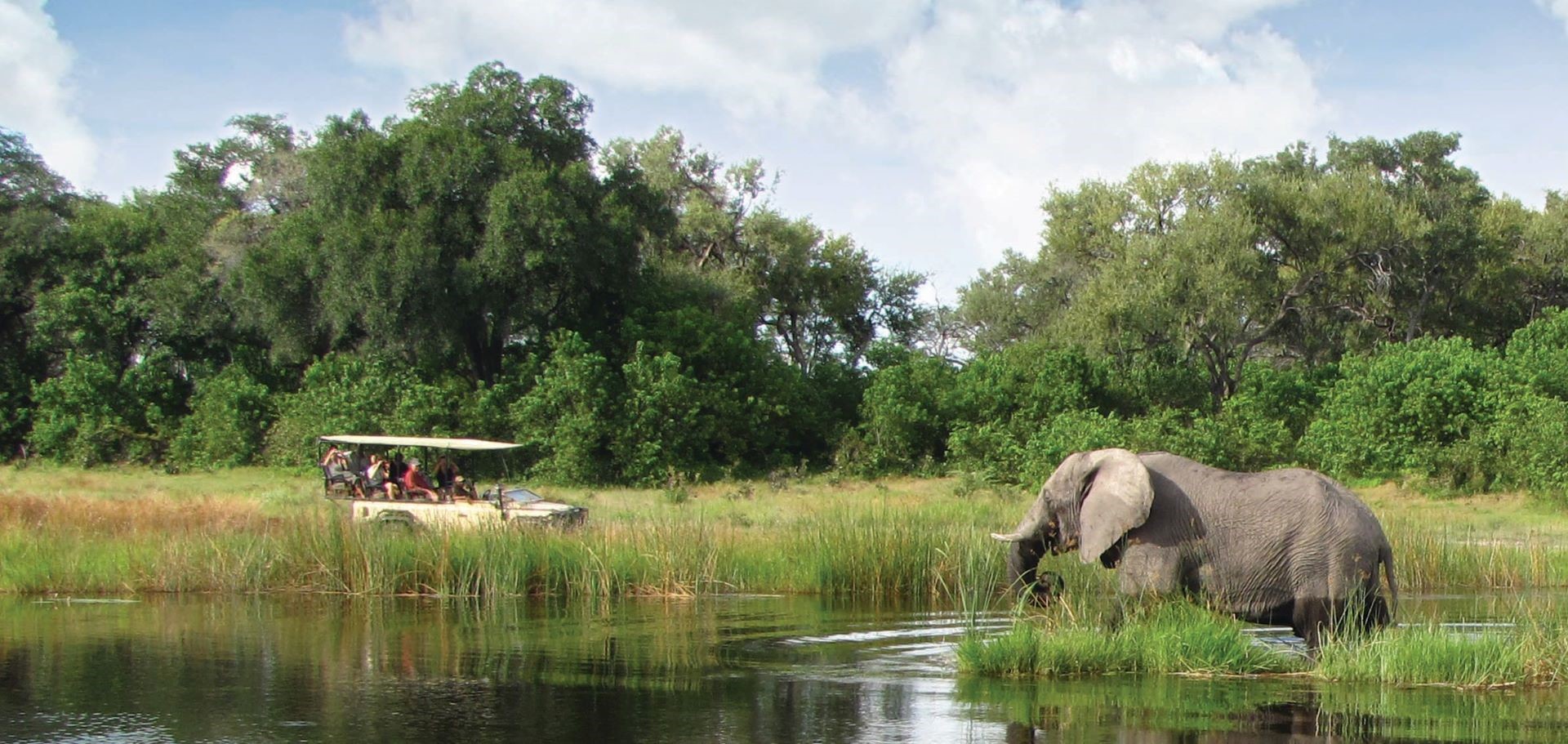
Every well-loved travel destination has a sweet spot—a window when weather, wildlife and timing align to create a season that rewards those who make the journey. In Botswana, that window is the green season, a time of renewal, movement and heightened wildlife activity that offers one of the most compelling safari experiences in Africa.
The green season in Botswana runs from late October through March. Seasonal rains transform arid landscapes into grasslands, refill ancient waterways and draw animals away from dry-season concentrations. Wildlife disperses across the ecosystem, migrates toward southern salt pans and gives birth in remarkable numbers. Rather than revolving around a checklist of sightings, a green season safari emphasizes ecological rhythms, conservation context and a deeper connection to place.
Modern safaris in Botswana reflect the romance of early exploration while serving a more urgent purpose: education, conservation and reconnection with the natural world. The country supports the world’s largest elephant population, hosts Africa’s longest zebra migration and protects the largest inland water system on Earth—the Okavango Delta.
Botswana is also part of the Kavango Zambezi Transfrontier Conservation Area, a 109-million-acre network spanning Angola, Botswana, Namibia, Zambia and Zimbabwe. Working alongside World Wildlife Fund, African Wildlife Foundation, Elephants Without Borders and the Giraffe Conservation Foundation, member nations collaborate on conservation initiatives that protect wildlife while supporting the people who live within the region.

© Deborah Doyle
Nat Hab Expedition Leader Richard Avilino knows Botswana’s landscapes intimately. Raised in Maun, the gateway to the Okavango Delta and the Kalahari Desert, he has guided across Chobe National Park, the Okavango Delta and the Kalahari since 1998. Before earning his guiding credentials and a certificate in birding, Richard managed a safari camp in the bush. His passion lies in sharing Africa’s ecological complexity and quiet power.
During a recent break in the bush, Richard shared his top six reasons to experience a Botswana safari during the green season.
1. Wildlife activity peaks as animals give birth and migrate
Botswana is home to approximately 2.3 million people and more than 130,000 elephants—roughly one elephant for every 18 people. Over 600 bird species live here alongside crocodiles, vervet monkeys, baboons and giraffes. The Okavango Delta alone supports nearly 15% of Africa’s giraffe population.
Many mammals give birth during the green season, making daily safari drives rich with scenes of mothers and young. Lions, elephants, giraffes and zebras tend to newborns amid abundant food sources. Other frequently seen species include bushbuck, hippo, impala, kudu, wildebeest and buffalo.

© David Luck
Predator activity increases as well. Lions, cheetahs, leopards, hyenas and African wild dogs hunt across newly accessible terrain.
Early in the season, more than 20,000 zebras migrate from northern Botswana across the central Kalahari Desert—an area roughly the size of Jamaica—toward Makgadikgadi Pans National Park. When rains flood the salt flats, hundreds of thousands of flamingos arrive, creating one of southern Africa’s most dramatic wildlife spectacles.
2. Green season safari camps offer privacy, space and immersion
Botswana’s reputation as one of Africa’s most carefully managed safari destinations is well earned. Government policy prioritizes low-impact tourism, limiting camp density and protecting vast tracts of wilderness. In some private concessions, as few as five beds are permitted across tens of thousands of acres.
During the green season, fewer travelers visit Botswana. Seasonal rains, delta flooding and summer heat deter many visitors. For those who understand the rhythm of the land, this quieter period often delivers the most rewarding experience.
The Kalahari Desert surrounds the Okavango Delta, creating striking contrasts between wetland and sand. The Central Kalahari Game Reserve, Africa’s second-largest protected area and larger than Switzerland, supports gemsbok, springbok and hartebeest.
Richard’s favorite green season camp is Kalahari Plains Camp.
“The landscape shifts from sand dunes to ancient riverbeds. Acacia islands provide resting places for cheetahs and black-maned Kalahari lions. Predators wait patiently as oryx and springbok cross open plains carved from the dunes.”

Kalahari Plains Camp
3. Seasonal rains unlock new ways to explore the Okavango Delta
October rains send floodwaters from Angola through Namibia and into Botswana’s 6,000 square miles of Okavango wetlands. As water levels rise, new routes open for exploration by mokoro, traditional dugout canoes guided by local polers born in the delta.
Mokoro excursions reveal intimate details of delta life, from tiny frogs and waterbirds to crocodiles and hippos. Hippos play a vital ecological role, clearing channels between lagoons and waterways as they move through dense vegetation.

Mokoro © Don Martinson
The delta also shelters endangered species including white rhino, southern ground-hornbill, cheetah and African savanna elephant. With fewer visitors and expanded habitat, wildlife ranges more freely, creating opportunities for unexpected sightings by vehicle and boat.
4. New vegetation brings animals together in dynamic groupings
As fresh growth spreads across Botswana, herbivores gather to feed, creating layered wildlife scenes. Baobabs, palms, papyrus, water lilies, elephant grass and Zambezi teak forests shape the landscape.
Giraffes feed almost exclusively on acacia leaves, consuming more than 60 pounds per day. Zebras graze on tall grasses, often alongside wildebeest that prefer shorter growth.
Hippos emerge at night to feed on short grasses near riverbeds, relying entirely on land plants.

© David Luck
Elephants consume more than 300 pounds of vegetation daily, feeding for up to 16 hours. In Chobe National Park, their diet includes water lilies and seasonal fruits alongside grasses, shrubs and tree leaves.
5. Birdlife and wildflowers define the green season
The green season marks peak birding in Botswana as migratory species arrive from the Northern Hemisphere. Cranes, egrets, storks and herons gather ahead of rising floodwaters in the Okavango Delta.
Up to 50,000 flamingos converge on the Makgadikgadi salt pans when rains arrive. In Chobe National Park, more than 350 of Botswana’s 600 bird species are visible during summer months.

White-fronted bee-eaters. © Brad Josephs
African fish eagles, red-necked falcons, kites, cuckoos and kingfishers fill the skies, while bee-eaters add flashes of color during early morning outings.
Wildflower season follows closely, with blooms appearing from mid-August through mid-September. The Kalahari erupts in yellow, white, crimson and blue, while Savuti Marsh transforms from dry grassland into fertile wetland, drawing elephants after the rains.
6. Green season delivers exceptional photography conditions
Photographers favor the green season for both creative and practical reasons. Rain settles dust, protecting camera equipment, while fresh vegetation, dramatic skies and abundant wildlife elevate every frame.
Nat Hab offers dedicated Botswana photography expeditions throughout the year, including green season departures. Small group sizes allow flexibility in the field, with expert photographer guides providing hands-on support. Special outings at sunset and dusk maximize light and atmosphere.
Some itineraries include helicopter flights over the Okavango Delta for aerial photography. Victoria Falls is featured on all regional trips, spanning more than a mile and plunging 350 feet into the Zambezi River below. Changing water levels and light conditions ensure that no two views are the same—a fitting reflection of what defines a Botswana green season safari.

Victoria Falls. © David Luck