

End-of-Year Predictions for the Natural World

In 1550, French astrologer and physician Nostradamus, opens in new tab wrote his first almanac combining astrological data, folklore and predictions for the coming year. Since then, forecasting the future has spanned across fields and methods such as astrology, casting objects (such as bones or dice), early calculating machines and computer models.
So, as we draw close to the end of another year and in keeping with the tradition, let’s look at some recent forecasts regarding the natural world, such as the atmosphere, the climate and wildlife. For example, scientists are predicting that African great apes—who are already being exposed to climate change impacts, opens in new tab—will experience extreme events such as flooding, heat waves and wildfires more frequently in the next 30 years.
For decades, researchers have been predicting catastrophic warming. Today, there are ever more predictions and warnings. Now, a new tool that can evaluate the plausibility of various climate model simulations and shows that we should be taking these prognostications seriously. Even reaching net zero, opens in new tab by mid-century won’t reverse the trend, and some regions will continue to see worsening heat waves for a thousand years.
[Nostradamus Combo_Clement Bardot_Wikimedia Commons fin_Web.jpg] CENTER
NASA scientists are saying that the rapidly intensifying 2026 El Nino, opens in new tab could surpass the historic 1997–98 event,, opens in new tab which triggered devastating weather extremes around the world. Satellite data reveal striking similarities between the two, raising the possibility of major rainfall and flooding this winter, although the exact impacts remain uncertain.
In the atmosphere, as the ozone layer, opens in new tab recovers, it’s also intensifying global warming. Researchers predict that by 2050, ozone will rank just behind carbon dioxide as a driver of heating, offsetting many of the benefits from banning chlorofluorocarbons (CFCs)., opens in new tab
And, just to demonstrate how accurate some end-of-year predictions can turn out to be, let’s visit a study that reveals sea-level rise has unfolded almost exactly as predicted by 1990s climate models, with one key underestimation: melting ice sheets. Researchers now stress the importance of refining local projections as seas continue to rise faster than before.
[Gorilla_Roger de la Harpe_AdobeStock fin_Web.jpg] CENTER
Prediction: in the next 30 years, African great apes will see frequent extreme climate events
To better understand how African great apes will be affected by climate change, researchers from Haramaya University in Ethiopia investigated the past and projected future climates for 363 sites across Africa. They looked at the rainfalls and temperatures at each site between 1981 and 2010. Then, using two climate change scenarios, they projected how frequently apes would be exposed to climate change impacts in the near future (2021–2050) and the long term (2071–2099). They estimated the likelihood of extreme events that could impact apes directly or indirectly, such as crop failures, droughts, flooding and wildfires.
The researchers found that between 2007 and 2016, almost half of the sites had experienced higher than average temperatures, and eastern chimpanzees, opens in new tab (Pan troglodytes schweinfurthii) experienced the most extreme temperatures. Under both climate scenarios, temperatures were projected to increase at all sites, and almost all sites will be affected by frequent wildfires and crop failures in the near future. Under a premise where mitigations limit warming to 3.6 degrees Fahrenheit above preindustrial levels, 84% of sites were exposed to frequent heat waves and 78% of sites to infrequent flooding in the next 30 years. Under an alternative scenario where global temperatures rise 5.4 degrees Fahrenheit, the number of affected sites and the frequency of events was higher.
This study, published in the journal PLOS Climate, opens in new tab in February 2024, is the first to show that African apes are already experiencing the effects of climate change and that extreme events are likely to become more frequent in the near future. The study’s authors conclude that conservation action plans should aim to increase the resilience of ape populations to climate change.
[Eastern Chimpanzee_Kristin Mosher/Danita Delimont_AdobeStock fin_Web.jpg] CENTER Prediction: catastrophically warm scenarios are more plausible than we thought
And what will that future with more extreme climate events be like? Scientists around the world are currently pondering that question, putting together models of the Earth’s system and large observational datasets in the hopes of understanding—and predicting over the next 100 years—the planet’s climate. But which models are the most plausible and reflect the future of Earth’s climate the best?
In an attempt to evaluate the plausibility of a given model, scientists from Switzerland’s Federal Technology Institute of Lausanne (EPFL) developed a rating system and classified climate model outputs generated by the global climate community. Since the mid-1800s, scientists have been systematically observing the planet, measuring meteorological variables such as atmospheric pressure, humidity, precipitation, temperature, wind, and the ice and ocean status on Earth. Especially over the last few decades, with observational networks and the deployment of satellites, the collected data has grown into a vast amount, and using this information to predict every aspect of the climate’s future is a daunting task. So, the EPFL researchers developed a tool called “netCS” to cluster climate model outputs using machine learning, synthesizing their behavior by region and comparing the outcome with existing data. With the help of netCS, scientists can then determine which climate simulations best reproduce observations in the most meaningful way and rank them accordingly.
The EPFL scientists found that roughly a third of the climate models are not doing a good job at reproducing existing sea-surface temperature data, a third of them are robust and are not particularly sensitive to carbon emissions, opens in new tab and the other third are also robust but predict a particularly hot future for the planet due to high sensitivity to carbon emissions. The carbon sensitive models—the ones that predict much stronger heating than the most probable Intergovernmental Panel on Climate Change (IPCC) assessment reports, opens in new tab—are plausible and should be taken seriously, state the authors in their article published in the journal Nature Communications, opens in new tab in August 2024. In other words, the current measures to reduce carbon emissions, which are based on lower carbon sensitivity estimates, may not be enough to curb a catastrophically hot future.
[Carbon Emissions_Fahroni_AdobeStock fin_Web.jpg] CENTER Prediction: heat waves will intensify for 1,000 years even after net zero
Dangerously hot and prolonged heat waves will increasingly become the norm if progress toward net zero carbon emissions continues to stall, predict scientists at Australia’s ARC Center of Excellence for the Weather of the 21st Century, opens in new tab and the Commonwealth Scientific and Industrial Research Organization., opens in new tab Using large-scale simulations on supercomputers, the team examined how heat waves could evolve over the next 1,000 years once global emissions finally reach net zero. The later the world reaches net zero, they say, the more severe these extreme heat events will become.
To explore potential futures, the researchers selected a range of net zero dates between 2030 and 2060. They then calculated how heat wave behavior changes for every five-year delay in achieving that goal. The results were consistent across all scenarios. The later net zero occurs, the more often extreme and historically rare heat waves appear. That’s particularly problematic for countries near the equator, which are generally more vulnerable, and where a heat wave event that breaks current historical records can be expected at least once every year or more if net zero is delayed until 2050 or later.
The analysis, published in the journal Environmental Research: Climate, opens in new tab in November 2025, shows that delayed emission cuts lead to heat waves that grow hotter, last longer and strike more frequently. Warming in the Southern Ocean could continue to intensify heat waves for centuries even after net zero is reached. And across the full range of 1,000-year simulations, most regions showed no sign of returning toward preindustrial heat wave conditions. Instead, heat waves remained elevated for at least a millennium. In some cases, when net zero occurred in 2050 or later, heat waves became even more severe over time. Still, say the researchers, it is vitally important we make rapid progress to permanent net zero. Reaching global net zero by 2040 at the latest will be important to minimize the severity of heat waves.
[Galapagos_expatphotos_AdobeStock fin_Web.jpg] CENTER
Prediction: this year’s monster El Nino will be even bigger than the legendary 1997 event
El Nino is a recurring climate phenomenon that typically develops every two to seven years, when ocean temperatures rise above normal across parts of the equatorial Pacific. These changes can disrupt atmospheric circulation and alter weather patterns far beyond the Pacific Ocean.
Two of the most powerful recent El Nino events occurred in 1997–98 and 2015–16. Both had widespread consequences, including destructive fires in the Amazon and Indonesia, severe crop failures and drought in southern Africa, and intense rainfall and coastal flooding in Southern California. Now, the 2026 El Nino is emerging as another major event, with satellite data suggesting it could rival those historic episodes.
The development of El Nino depends on a complex interaction between atmospheric winds and ocean temperatures. Under normal conditions, steady trade winds push warm surface water toward the western Pacific Ocean. This causes warm water to accumulate in the west, where the ocean surface sits slightly higher than it does farther east. When the trade winds weaken, some of that warm water begins moving eastward across the Pacific. The shift can weaken the winds even further or occasionally cause them to reverse direction. This allows additional warm water to spread east, reinforcing the process and raising ocean temperatures and sea levels across the central and eastern Pacific.
[Amazon Fire_Bruno Kelly/Amazonia Real_2020_Wikimedia Commons fin_Web.jpg] CENTER
Although the underlying process is similar each time, no two El Nino events develop in exactly the same way. Their behaviors depend partly on where the warmest water accumulates and how the atmosphere responds to the changing ocean conditions. To understand how the current El Nino compares with earlier events, NASA scientists are examining decades of satellite measurements of ocean-surface height. This technique, called “satellite altimetry,” measures subtle changes in the elevation of the ocean surface. Because seawater expands as it becomes warmer, unusually high sea levels in the central and eastern equatorial Pacific can reveal where heat is accumulating during El Nino.
One major advantage of these observations is their remarkable consistency. Successive satellite missions have followed nearly identical paths, with overlapping periods of operation that allow scientists to compare measurements across decades. The 2026 El Nino intensified much more abruptly than the powerful 1997–98 event. Despite that difference in timing, NASA’s satellite measurements from October reveal striking similarities in how the two events developed. In both cases, the Pacific displays a pronounced difference in sea level (low in the west and high in the east). The observations also show elevated, unusually warm water stretching eastward along the equator until it reaches the coast of South America.
These similarities suggest that the 2026 event could produce weather effects resembling those experienced during the 1997–98 El Nino. That earlier episode brought substantial rainfall to California and other parts of the southern United States, raising the possibility of comparable conditions during the coming winter. However, the powerful 2015–16 El Nino demonstrates why similarities in overall strength do not necessarily translate into identical weather impacts.
[Monarch_JHVEPhoto_AdobeStock fin_Web.jpg] CENTER
For that comparison, NASA scientists also examined ocean-surface height measurements from October 12, 2015, recorded by the Jason-2 satellite., opens in new tab The data was placed alongside observations from approximately the same time of year in 1997 and 2026. Although the 2015 event also featured exceptionally warm water and elevated sea levels along the equator, that warm water did not extend toward the South American coast as strongly as it did during the other two events. The resulting rainfall patterns were different, as well. During the winter of 2015–16, much of the precipitation associated with El Nino was concentrated over Central America and the southeastern United States, while Mexico experienced significant flooding.
The latest observations have prompted scientists to closely monitor how the 2026 El Nino progresses and what it could mean for weather conditions in the months ahead. In its October 8, 2026, outlook, the National Oceanic and Atmospheric Administration predicted an 83% chance that strong to very strong El Nino conditions would occur during the first three months of 2027. That forecast points to the potential for a particularly significant climate event, but it does not establish exactly where the most severe effects will occur.
El Nino can influence weather across much of the planet by changing the movement of heat and moisture through the atmosphere. However, those effects become increasingly difficult to predict farther from the tropical Pacific, where other atmospheric processes can alter or weaken the expected patterns. As a result, even the strong resemblance between the 2026 and 1997 events cannot guarantee that the coming winter will unfold in the same way. But it is the best guess at the moment,, opens in new tab state the scientists.
[Sunscreen_Chanakon_AdobeStock fin_Web.jpg] CENTER
Prediction: ozone recovery could trigger more global warming
The planet’s ozone layer shields the Earth from dangerous ultraviolet (UV) radiation that can harm animals, people and plants. A thinner ozone layer lets more harmful UV-B radiation, opens in new tab reach Earth’s surface, raising the risks for cataracts, skin cancer and weakened immune systems in people, while harming crops, plants and marine organisms.
In 1987, the Montreal Protocol, opens in new tab mandated a phasing out of ozone-destroying CFCs (human-made organic compounds made up of carbon, fluorine and chlorine) and hydrochlorofluorocarbons, opens in new tab (HCFCs), human-made chemical compounds made of hydrogen, chlorine, fluorine and carbon. While this has helped the ozone layer to recover, when combined with increased air pollution, the impact of ozone could warm the planet 40% more than predicted. That’s because air pollution from factories, power plants and vehicles also creates ozone near the ground, causing health problems and warming the planet.
A study led by England’s University of Reading researchers that was published in the journal Atmospheric Chemistry and Physics, opens in new tab in August 2025 found that from 2015 to 2050, ozone is expected to cause 0.27 watts per square meter of extra warming. This figure—which measures how much extra energy gets trapped per square meter of the Earth’s surface—would make ozone the second largest contributor to future warming by 2050 after carbon dioxide.
[CFC_remotevfx_AdobeStock fin_Web.jpg] CENTER
The scientists used computer models that followed a scenario with low implementation of air pollution controls, but with CFCs and HCFCs being phased out. The findings revealed that stopping CFC and HCFC production provides less of a climate benefit than previously predicted. As the ozone layer heals, it creates more warming that cancels out most of the climate benefits from removing CFCs and HCFCs. Countries that reduce air pollution will limit some ozone formation near the ground. However, the ozone layer will continue repairing itself for decades regardless of air quality policies, creating unavoidable warming. This research, caution the scientists, shows that climate policies need updating to account for ozone’s larger warming effect.
Prediction: 1990s sea-level forecasts were shockingly accurate
Global sea-level change has now been measured by satellites for more than 30 years, and now researchers from Louisiana’s Tulane University say they’re amazed at how good climate projections from the mid-1990s were, especially when you think about how crude the models were back then compared to what is available now.
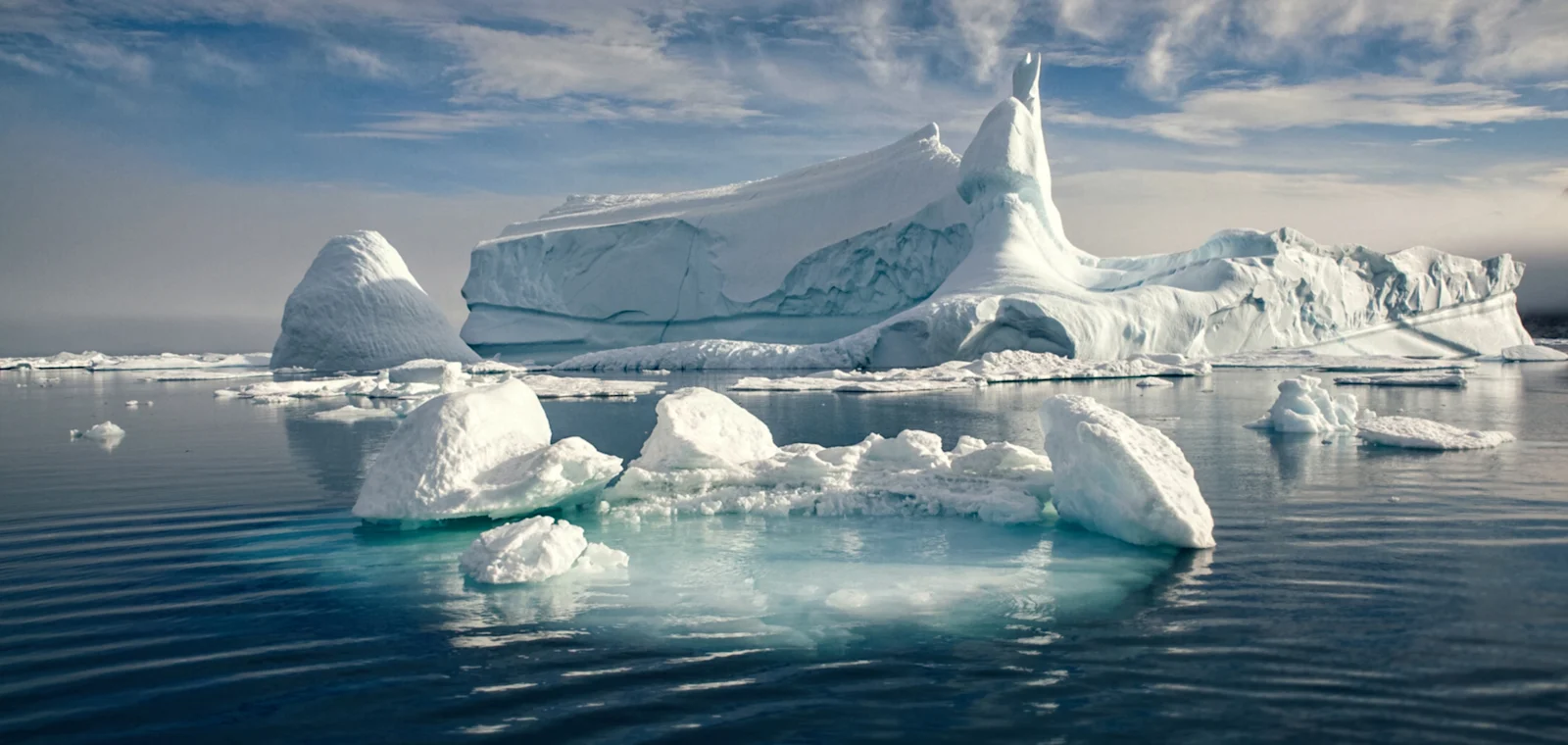
A new era of monitoring global sea-level change took off when satellites were launched in the early 1990s to measure the height of the ocean surface. This showed that the rate of global sea-level rise since that time has averaged about one eighth of an inch per year. In 1996, the Intergovernmental Panel on Climate Change published an assessment report soon after the satellite-based sea-level measurements had started. It projected that the most likely amount of global sea-level rise over the next 30 years would be almost three inches, remarkably close to the 3.5 inches that has occurred. But it also underestimated the role of melting ice sheets by more than about one inch. At the time, little was known about the role of warming ocean waters and how that could destabilize marine sectors of the Antarctic Ice Sheet from below. Ice flow from the Greenland Ice Sheet into the ocean has also been faster than foreseen. Low-lying coastal regions in the United States would be particularly affected if such a collapse occurs in Antarctica.
[Polar_Lars Johansson_AdobeStock fin_Web.jpg] CENTER
So, while it’s encouraging to see the quality of those early projections, state the Tulane University scientists in a report published in the journal Earth’s Future, opens in new tab in August 2025, today’s challenge is to translate global information into predictions tailored to the specific needs of stakeholders in places like south Louisiana. Sea levels don’t rise uniformly; they vary widely. And only more recently has it become possible to detect that the rate of global sea-level rise is accelerating. In October 2024, NASA researchers demonstrated that it has doubled during this 30-year period.
Predictions: if correct
One scientist from Switzerland’s Federal Technology Institute of Lausanne mentioned that sometimes he felt that climate scientists are a bit like Cassandra of Greek mythology. She was granted the power of prophecy but was cursed so that no one would listen to her.
Today, our planet is literally burning. Year after year, temperatures worldwide break records with all of the consequences that such a pattern brings. But inertia or lack of action is not a plan. Rather than be discouraged, we must let the facts motivate us. We have to collectively wake up and truly tackle climate change, because if the predictions are right—and they certainly seem to be—it may be accelerating much more than what we thought.
Here’s to finding your true places and natural habitats,
Candy