
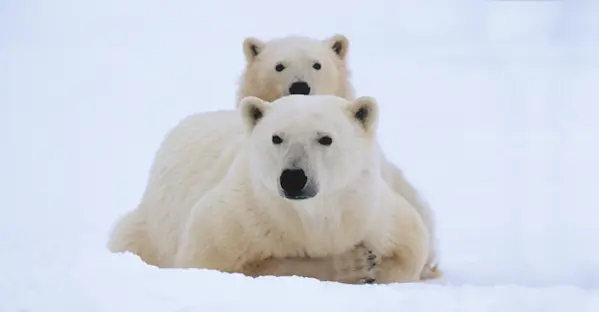









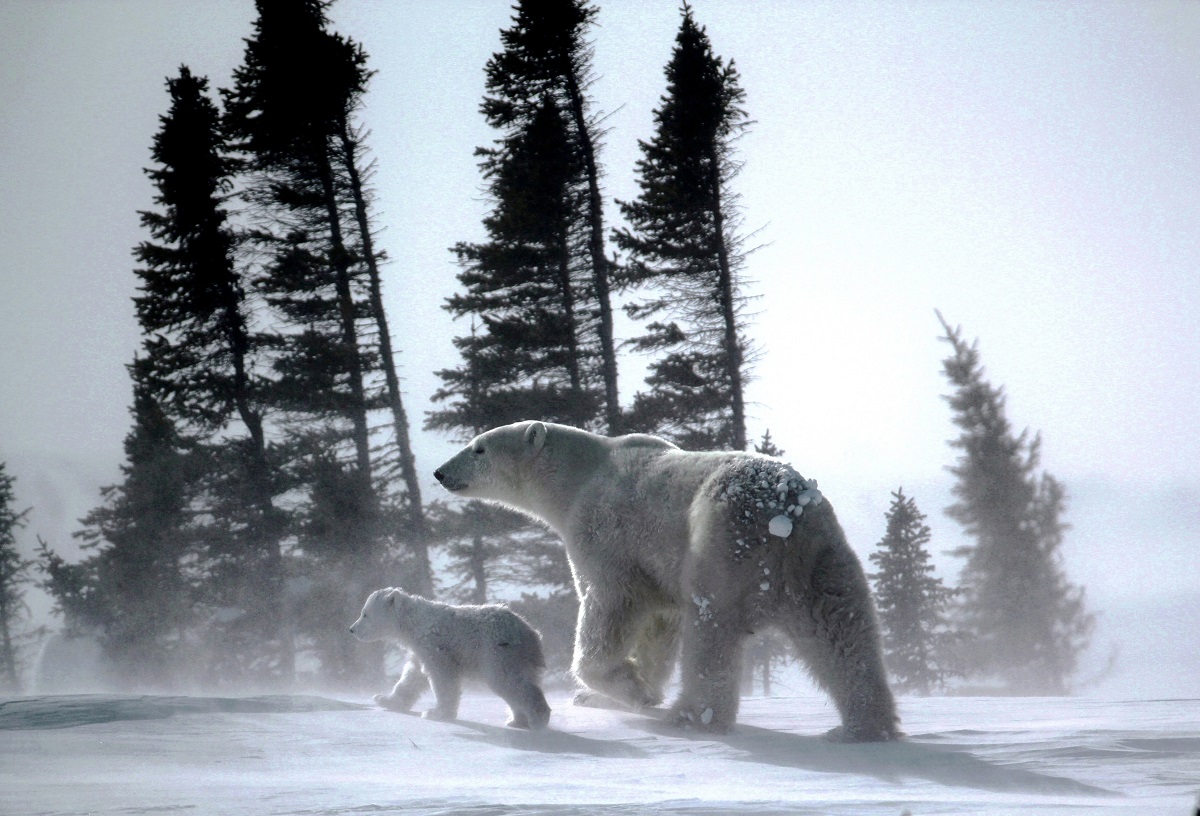
The Arctic is home to a wide array of winter wildlife. The hides of Arctic foxes and snowshoe hares blend into glittering frost as snowy owls swoop overhead, feathers aglow in the light of a silvery moon. A great white bear asleep on the tundra may appear as nothing more than a snowbank until a black nose pokes out from underneath a coat of thick fur. Sniffing the air, the animal appraises its surroundings, its sharp senses alert. Icicles glimmer from willows as the bear rises, making its way toward the vast expanse of ice. Its every careful movement draws the onlooker further in.
© Julia Martin
Perhaps no creature sparks as much fascination as the polar bear. This majestic animal is almost mythical in perception, inspiring stories and legends across the globe and evoking great curiosity. One question we may ask has a surprising answer.
In the eyes of the onlooker, the polar bear is covered in a blanket of white. However, the hairs in its heavy coat are actually transparent and arranged in two layers. The coarse outer layer is made of long tapered guard hairs, while the dense undercoat consists of shorter insulating hairs. This double-layered coat prevents heat from escaping and is extremely effective—adult males can easily become overheated when they run. It’s no small wonder, as a polar bear’s midwinter coat has an average of 10,000 hairs per square inch!
© Linda Mechler
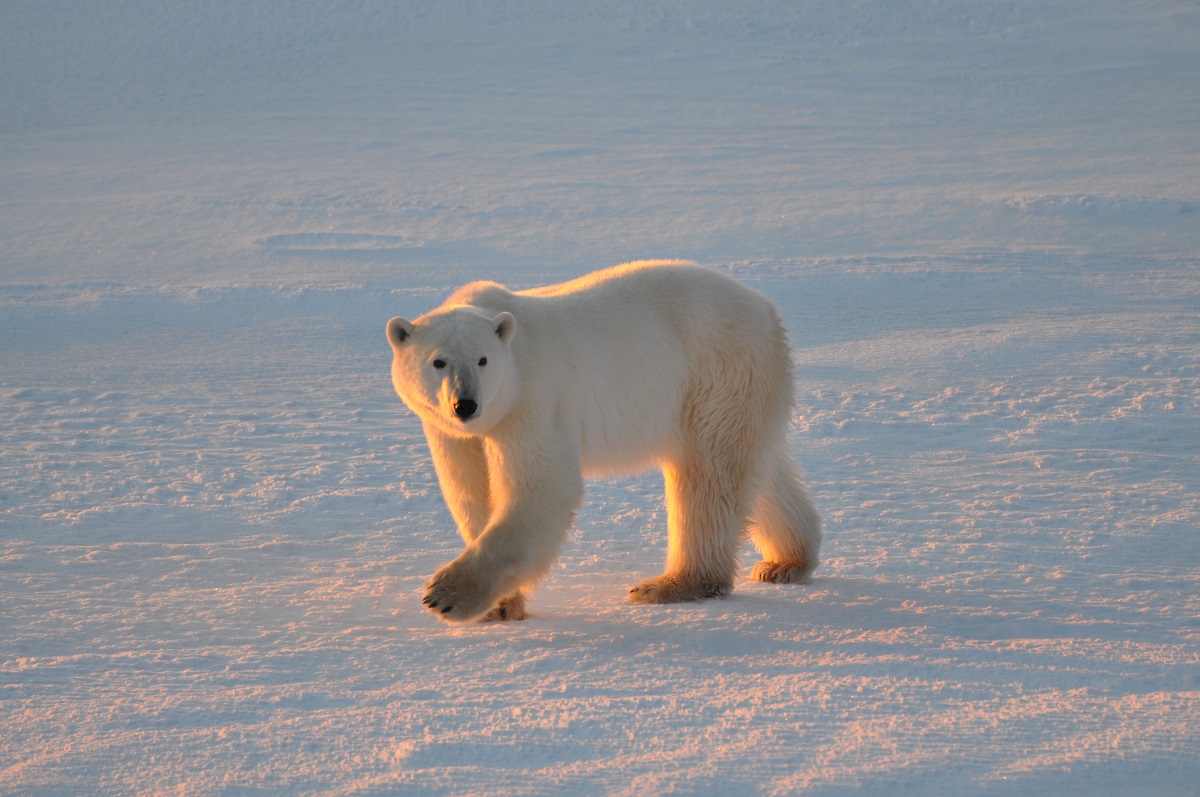
So why does polar bear fur appear white when the hairs have no pigment? It’s a matter of optics. The clear guard hairs have a hollow core that scatters and reflects light, making the coat appear white. As light enters the hollow hair, it bounces around inside, enhancing this effect. Polar bears appear whitest in direct sunlight, as brighter light increases the reflective quality of their coat. These regal creatures also appear whiter after they have shed and replaced their fur, which occurs from late spring to summer. Before molting, they often appear buttery yellow due to oil buildup in their fur from a winter of feasting on seals.
Beneath the fur is black skin, which absorbs heat from the sun, and a layer of fat up to 4.5 inches thick that keeps the bears warm in icy waters. After a swim, polar bears can easily shake off excess water due to the slick oils in their coats.
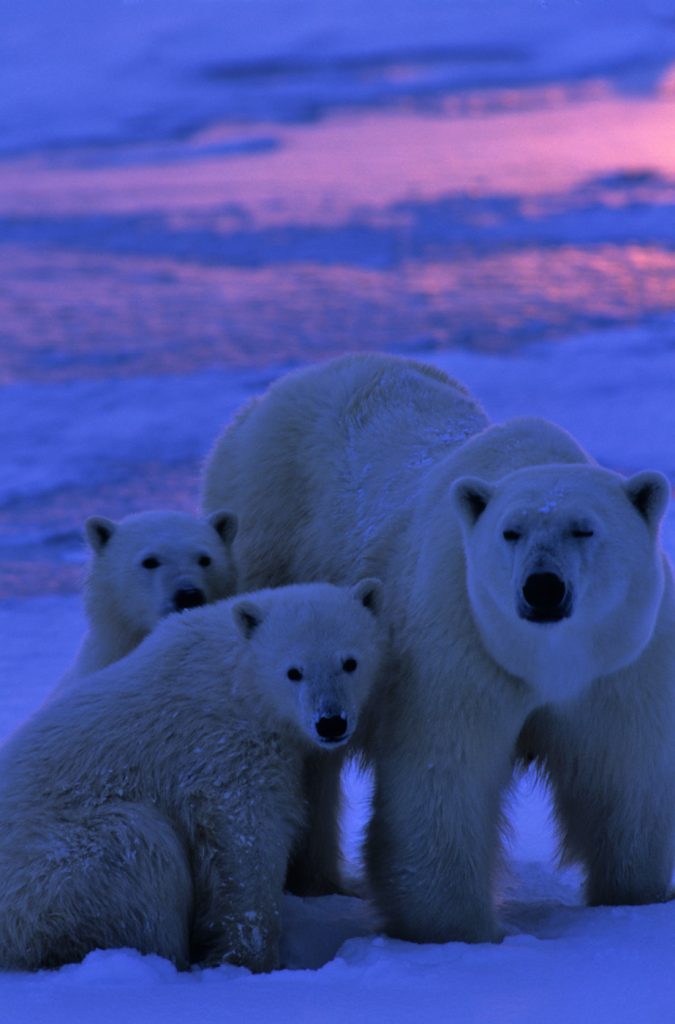
Wet fur is a poor insulator, so polar bears must rely on their fat stores to stay warm while swimming. Mother bears are reluctant to take young cubs into the water when they first emerge from their den in spring, as the babies do not have the fat reserves necessary to withstand the cold. © Mike Bruscia
The polar bear’s insulating coat is just one of the physical characteristics that make it perfectly suited for life in the Arctic. Every attribute, from its ears and paws to its tail, is adapted to survive subzero temperatures. Journey to the frozen realm of the polar bear with Nat Hab on Canada’s Premier Polar Bear Adventure.
© Emily Goodheart