

Itinerary
Itinerary
Day 1: Begin your Australia adventure in Sydney
Check in to a hotel in The Rocks, Sydney’s oldest colonial quarter
Join your Expedition Leader and fellow travelers for a welcome dinner overlooking Sydney Harbor
Arrive in Sydney, cosmopolitan capital of New South Wales, and site of the first European fleet landing in 1788, when ships carrying convicts arrived from England. Transfer to our hotel in the heart of The Rocks, a district steeped in ancient Aboriginal history. After displacing the Gadigal First Nations people, British colonists established Australia’s first town on this rocky point, creating the colony of New South Wales. This evening, join your Expedition Leader for your welcome dinner overlooking Sydney Harbor.

Day 2: Native wildlife and Aboriginal bush foods
Ride the ferry across Sydney Harbor from Circular Quay to Manly
Walk a private trail through North Head Sanctuary, watching for echidnas and bandicoots
Learn how the Gadigal people use native bush plants on an Aboriginal bush tucker tour
With your Expedition Leader, walk over to Circular Quay this morning to board the ferry across Sydney Harbor to Manly. Here, we join an expert local guide for a private walk at North Head Sanctuary, an Australian Wildlife Conservancy property that is an urban reserve of extraordinary biodiversity. Hidden on top of North Head in this oceanside suburb, the important scrub heath vegetation is a remnant of native bushland and the site of important biodiversity restoration programs, including the replanting of three locally extinct species. Numerous walking trails lace the scrubland that is home to echidna, bandicoot, rainbow lorikeet, and lizards, plus a host of birds including the wattlebird, wagtail, fairywren and raven.
After lunch in Manly, ferry back to Sydney and continue to the Botanic Gardens of Sydney. On an Aboriginal bush tucker tour, hear from our Indigenous guide about native bush plants, how they were traditionally used by the Gadigal people, and how they have been adapted to modern palates. On this site, First Nations people lived off the land for centuries before European settlement, and we learn about their initial contact with those aboard the 11 boats that arrived from England in 1788. The rest of the afternoon is at leisure before dinner at a restaurant in the historic Rocks district.
Day 3: Encounter sacred Uluru at sunset
Watch sunset transform Uluru above the desert grasslands
Walk to Mutijulu Waterhole to learn Anangu Creation stories, or Tjukurpa
Dine on bush tucker atop a dune beneath some of Earth’s darkest skies
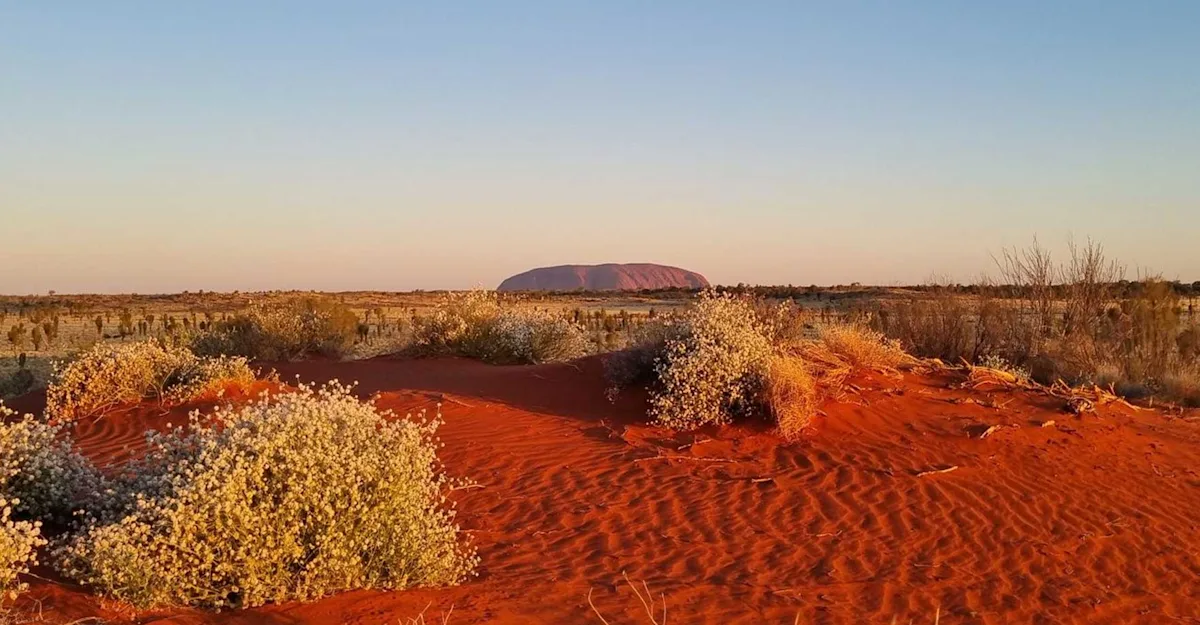
Depart to meet our morning flight from Sydney to Ayers Rock Airport, then continue to our hotel. This afternoon, we have our first encounter with Uluru, the legendary red sandstone monolith that rises in striking solitude 1,142 feet above the flat grasslands where we find an abundance of springs, waterholes, rock caves and ancient paintings. Uluru, a UNESCO World Heritage Site, is sacred to the Anangu, the Aboriginal people of central Australia who are the original inhabitants of this region, with a presence established for more than 60,000 years. European explorers first arrived here in 1872. A year later, a surveyor observed Uluru and named it Ayers Rock in honor of the Chief Secretary of South Australia, Sir Henry Ayers. In 1993, Australia adopted a dual naming policy to recognize both the traditional Aboriginal name and the English name of landmarks, and Uluru/Ayers Rock became the first official dual-named feature in the Northern Territory.
On a guided walk to Mutijulu Waterhole, learn about Tjukurpa through traditional Creation stories, then drive around the base of Uluru before stopping at a sunset vantage point for striking photos. This evening, a special "Sounds of Silence" dinner awaits atop a secluded dune with panoramic views of Uluru. The experience features an outdoor meal of classic bush tucker dishes and premium Australian wines, a digeridoo performance, and a guided tour of the night sky including distinctive constellations of the southern hemisphere. Here in Australia's remote Red Center, we stargaze under some of the darkest skies on Earth!

Day 4: Discover the world’s oldest living desert culture
Walk the Mala trail past Anangu rock art below the walls of Kantju Gorge
Accompany an Uluru family to Patji, their homeland just outside the park
Experience another Uluru sunset up close with sundowners and canapes
This morning, stroll the northwest side of Uluru during the Mala Walk among the sheer vertical walls and profound peacefulness of Kantju Gorge. Observe many examples of Anangu rock art along the path, then spend time after our walk at the Uluru-Kata Tjuta Cultural Center to learn more about the ancient Indigenous culture that has been at home here since time immemorial.
After lunch, accompany a traditional Uluru family member to their homeland, called Patji, and spend intimate time learning about the oldest living culture in the world on this unique and exclusive experience. Patji is located just outside Uluru–Kata Tjuta National Park. Explore this extraordinary environment on a 4x4 outing with our Aboriginal guide, stopping to hear personal stories from our Uluru family hosts, including how they survived in this desert environment before the advent of tourism and how the Uluru inhabitants fought for land rights to their Aboriginal domain. Continue to a private sand dune for a panorama over the great expanse of desert overlooking Uluru and the jumble of rock formations that comprise neighboring Kata Tjuta.
Day 5: Board The Ghan for an overnight journey across the Outback
Watch sunrise turn the great domes of Kata Tjuta vermilion and rust
Fly by private charter over Uluru to Alice Springs
Settle into your sleeper cabin, then enjoy Australian wines and dinner as The Ghan begins its northbound journey through the Outback
Drive across the desert landscape early this morning to reach the mighty rock formation of Kata Tjuta, also known as the Olgas. With a local guide, we walk we to the best vantage point on the massive domes that comprise this mystical place, watching the sun's golden glow turn the rocks vermillion and rust. After an Outback picnic breakfast, follow our guide into Walpa Gorge, named for the wind (walpa) that whistles between the massive conglomerate rock walls and rounded hulks of Kata Tjuta, the result of eons of weathering. Learn how the forces of nature have shaped these dramatic formations over millions of years, as well as the cultural significance of this sacred ceremonial site.
At midday, board our private chartered flight from Ayers Rock Airport to Alice Springs, with a spectacular view of Uluru from the air. “Alice” is a remote town in the middle of Australia, located halfway between Darwin and Adelaide. It’s called the gateway to the Red Center, the arid interior desert known for its rusty sandstone geological features. On arrival, tour Alice Springs Desert Park; learn how Aboriginal people source food and medicines in the desert, spot endangered desert mammals and other native wildlife in the Nocturnal House, visit the remarkable Desert Rivers Aviary and enjoy reserved seating at a free-flying bird show.
This evening, embark on one of the world’s great railway adventures: board The Ghan, Australia’s historic train that inaugurated service in 1929, for the journey across the Outback. The Ghan was named for the pioneering cameleers who blazed a permanent trail into the Red Center of Australia more than 150 years ago; its full route from Adelaide in the south to Darwin in the north spans 1,850 miles. We travel nearly half of it on our northbound journey to Katherine, enjoying luxury accommodations in a comfortable sleeper cabin, Aussie beers and wines in the Outback Explorer Lounge, and fine meals in the Queen Adelaide Dining Room, whose art deco atmosphere harks back to the train’s original ambience.

Day 6: Enter Australia’s tropical Top End
Watch the Outback emerge in the morning light from aboard The Ghan
Cool off beside the paperbark-fringed pool of Edith Falls in Nitmiluk
Watch for hooded parrots on the drive north to Kakadu
Wake early for breakfast aboard The Ghan, enjoying your first daylight views from the train before arriving in Katherine, where we disembark. Entering Nitmiluk National Park, we stop at Edith Falls, spending time beside its paperbark- and pandanus-fringed natural pool (a popular swimming spot) and exploring the area on optional short walks.
This afternoon, drive north from Katherine to Jabiru in Australia’s “Top End,” with lunch en route and a stop to look for hooded parrots. Entering Kakadu National Park, we find the tropical side of the remote Australian Outback, home to one of the world’s largest saltwater crocodile populations. On the coastal floodplains of Australia’s most northerly reaches, the Greater Kakadu region contains stunning biodiversity, including 68 mammal species, more than 120 reptile, 26 frog and 300 tidal and freshwater fish species, some 2,000 plant species, more than 10,000 insect species, and one-third of all Australian bird species, including an annual migration of over 100,000 magpie geese. Kakadu’s giant crocodiles are the world’s largest living reptiles, thriving for nearly 200 million years. They live in floodplains, billabongs, gorges and coastal waters, and we expect to see plenty of them.

Day 7: Explore one of the world’s finest Aboriginal rock art sites
See Ubirr’s ancient rock art, including X-ray paintings and a thylacine
Climb the sandstone lookout for views across the Nadab floodplains and Arnhem Land
Set out on a night walk in search of brushtail possums and bandicoots
This morning, discover the wonders of Ubirr on the Kakadu side of the river, where ancient Aboriginal people camped beneath its cool rocky shelters and used plants and animals from the nearby floodplain for food, tools and medicine. Ubirr’s rock art galleries are some of the most renowned in the world, with fine examples of X-ray painting as well as contact art from the time when Indigenous people first encountered Europeans. Much of it features fish, turtles, goanna and other important food sources. One image shows a thylacine, or Tasmanian tiger, which became extinct on the mainland more than 2,000 years ago. An optional hike to the top of Ubirr Rock offers magnificent views across Kakadu, Arnhem Land and the Nadab floodplains. Ubirr is one of the few places where it is possible to view the diminutive and shy eastern short-eared rock-wallaby. Special bird sightings include the blue-winged kookaburra, pheasant coucal and peaceful dove, among many others. Learn how the Kakadu Escarpment was formed millions of years ago as we scout for native species including the white bellied sea-eagle and sulphur-crested cockatoo. Return to our hotel for time to relax this afternoon, followed by dinner and a night walk in hopes of a glimpse of northern brush tail possum and northern brown bandicoot.
Day 8: Cruise one of Kakadu’s richest wildlife wetlands
Cruise the private Yellow Water Billabong for crocodiles, brolgas and kingfishers
Meet Kakadu’s traditional owners at Warradjan Cultural Center
See the Lightning Man among the powerful Aboriginal paintings at Nourlangie
Head out early this morning for a cruise on the Yellow Water Billabong. Exploring this serene wetland, we look for saltwater crocodiles and prolific birdlife—about one-third of Australia’s bird species are found in Kakadu National Park, with at least 100 right here, including brolga, cockatoo, kingfisher, and red-winged parrot. Other sightings might include the agile wallaby and Gilbert’s dragon lizard. Then tour the Warradjan Aboriginal Cultural Center, an interactive museum, art exhibit and gathering place to meet the traditional owners of these lands.
After lunch, look for agile wallabies as we head to the Nourlangie region, offering views over the magnificent Arnhem Land escarpment and its unique wildlife. Here, ancient sandstone ranges rise from the floodplains in a powerful landscape that evokes the Aboriginal Creation time. We visit the Nourlangie rock art site, which contains some of the most powerful Aboriginal paintings in Australia, including a depiction of the Lightning Man, who creates thunder by banging stone axes together. Birds here may include emerald doves and sandstone shrike-thrush, and with luck, we might spy an endemic black wallaroo. Keep an eye out, too, for water buffalo. At the end of the day, look for wildlife around Lake Jabiru as the sun sets. The wetlands are a haven for waterbirds, including brolga crane, glossy ibis, magpie goose, black-necked stork (jabiru), egrets, herons and more. We often see huge flocks of little corellas coming in to roost, and many species of finches.
Day 9: Fly into the ancient East Kimberley
Watch for dingoes on the drive out of Kakadu toward Darwin
Receive a traditional welcome and water blessing at Waringarri Aboriginal Arts
Fly over the beehive domes of the Bungle Bungles by private charter
As we begin our drive to Darwin, scout for dingoes along the way, which we may see throughout Kakadu. At the Darwin airport, catch a commercial flight to Kununurra, followed by lunch in town and a visit to Waringarri Aboriginal Arts—the first wholly Indigenous-owned art center in Western Australia. We are greeted with a traditional welcome and water blessing, followed by a guided gallery tour that offers rich insights into Miriwoong culture, from how the artists paint with natural ochre to the importance of Creation stories.
We then board our private chartered flight to survey the surreal landscape of the Bungle Bungles from the air. One of the planet’s most fascinating geological landmarks, the beehive-shaped cones are formed from ancient sandstone laid down in a shallow sea, their striking orange and gray bands created by iron oxides and mineral-cemented layers, rising nearly a thousand feet above the savanna.
Once we land at the airstrip in Purnululu, it’s a short drive to our lodge, our base for exploring the East Kimberley region of Western Australia, one of the most ancient and untouched corners of the country. The wild and remote Kimberley is known for its stunning coastal and interior scenery, comprising a massive central plateau of dissected sandstone ranges and an extensive limestone range formed from an ancient barrier reef. Gather for sundowners before dinner.

Day 10: Walk among World Heritage domes on Gija and Jaru Country
Follow a local guide among striped sandstone domes to Cathedral Gorge
Explore the narrow sandstone walls and hidden palms of Echidna Chasm
Trace the stars across some of the blackest night skies on the planet
Our focus today is World Heritage-listed Purnululu National Park, which lies within Gija and Jaru Country. This area is of enormous significance to these Indigenous custodians, and we learn about their intimate connection to this astounding landscape. Join a local guide for a walking tour through the sandstone domes, viewing their dramatic stripes at eye level. Our hike takes us to Cathedral Gorge, a huge natural amphitheater where shrubs dangle from the vertical walls. Among the rock towers, observe the creek beds, gaps and crevices, evidence of wet-season waterfalls, and ponder how nature’s forces have sculpted and scoured this setting over millions of years. Along the way, learn about traditional bush medicine as we observe native plants used in human healthcare for millennia. Look for some of Purnululu’s 130 bird species, as well as rare and unique animals including the nailtail wallaby and short-eared rock wallaby. We stop for a picnic lunch in the gorge, awed by the amazing natural acoustics.
For those who wish, a more challenging hike to Echidna Chasm is offered this afternoon, or opt to soak up the beautiful surroundings at camp and relax back at the lodge until it’s time for sundowners again. Once darkness descends, trace the stars’ movements across some of blackest night skies on the planet.
Day 11: Fly from the Bungle Bungles to the coast at Broome
Circle the beehive domes one last time on the private charter flight out
Check in to a beachfront hotel on Roebuck Bay at the edge of Broome
Enjoy Cable Beach sundowners and a didgeridoo performance as the sun sets over the Indian Ocean
On our private chartered flight back to Kununurra, there’s one more thrilling opportunity to observe the wondrous geography of the Bungle Bungles from up high. After lunch on landing, board our afternoon flight to Broome on the northwest Australia coast, where it’s just a short drive to our beachfront hotel on Roebuck Bay. Situated at the edge of town yet surrounded by peaceful nature, including lush garden greenery and palm trees, our hotel offers the ideal location for experiencing Broome and its marine environs. Relax by the bay or explore the sights and shops of Broome on your own before we head to famous Cable Beach for sundowners.

Day 12: Search Roebuck Bay for Australia’s rare snubfin dolphins
Cruise aboard a 50-foot catamaran in search of rare snubfin dolphins
Look for dugongs, sea turtles and manta rays among the bay’s marine life
Pass the red rock cliffs of Gantheaume Point above the Indian Ocean
Search for one of Australia’s rarest dolphins—the snubfin—on an eco-cruise aboard a 50-foot catamaran. This charming, round-headed cetacean is native to Australia’s north coast and was identified as a distinct new species in 2005. With almost no beak, these dolphins have a sweet, cartoonish face, similar to the beluga whale. Threatened by fishing net casualties and coastal development affecting the shallow waters and brackish estuaries they favor, the snubfin dolphin has become a focus of conservation concern. The creation of several marine parks in northern Australia is having a positive impact on efforts to preserve their declining numbers. We also look for more common bottlenose dolphins, dugongs, sea turtles and manta rays among the rich marine life of Roebuck Bay. Enjoy morning tea and lunch on board as we learn about the bay’s diverse ecosystem. Our cruise concludes with a scenic run along the dramatic coastline of Reddell Beach to Gantheaume Point, a striking headland of red rock cliffs rising above the turquoise Indian Ocean. This rugged stretch of coast also lies along the seasonal migration route of humpback whales, which may spot if we are lucky.
Day 13: Fly over Horizontal Falls and the Kimberley coast
Survey Horizontal Falls, where 30-foot tides force the sea through two narrow gorges
Land at Cygnet Bay to tour Australia’s oldest family-owned pearl farm
Taste damper with a Bardi Jawi guide while learning about Indigenous traditions
Another day of private flightseeing is in store as we follow the stunning Kimberley coastline, a jumble of crenellated sandstone indented with rugged gorges and waterfalls pouring off the plateau into turquoise bays. From up high, survey the thousands of islands that comprise the Buccaneer Archipelago. Crossing the ancient Kimbolton Ranges and King Sound, we reach Horizontal Falls, an unusual feature that David Attenborough called “one of the greatest natural wonders of the world.” In the turquoise waters of Talbot Bay, the fast-moving tidal current squeezes through two narrow gorges of the McLarty Range, pushing the water into rapid-like formations which rush through the twin gaps at a forceful rate, producing waterfalls turned on their side. The powerful tides in the Kimberley can fluctuate more than 30 feet, and the direction of the flow reverses so the water moves two different ways each day.
As our flight continues, get an exhilarating vantage over Cape Leveque, where red sandstone cliffs meet white sand and clear aqua seas, then land at Cygnet Bay to visit Australia's oldest family-owned pearl farm. Although Aboriginal peoples along the northern coast harvested and traded pearl shell more than 20,000 years ago, in the late 1800s and early 1900s, pearling was a key industry across northern Australia, and Broome became the pearling capital of the world. Australia supplied most of the world’s demand for pearl shell—called “mother of pearl,” the illustrious lining of the oyster shell—which was exported to Europe and the United States. As manufacturers turned to plastic as an inexpensive alternative to mother-of-pearl in the 1950s, the market for pearl shell collapsed, and today Australia’s pearling industry is based on cultivation. Broome remains an important center in the production of South Sea pearls.
Lunch awaits, along with a cultural experience with our local Bardi Jawi tour guide. Through rich stories and demonstrations, they share lore about the seasons, hunting methods and various types of shelters. We’ll hear a traditional song and get to taste damper—Australia's classic rustic bread—and fresh seafood. Our return flight to Broome is just as spectacular as we fly over Pender Bay, Beagle Bay, Carnot Bay, James Price Point, Willie Creek and Cable Beach. This evening, gather for a farewell dinner at a nearby seaside hotel.
Day 14: Depart Broome after your Australian Outback adventure
Connect with homeward flights from Broome
Our grand Australia Outback journey concludes this morning. Transfer to the airport to meet your departing flight.