



2027 Itinerary
Itinerary
Day 1: Arrive in Reykjavik before your Nordic journey
Explore Iceland’s compact, walkable capital on your own
Join your Expedition Leader for a welcome dinner and preview of the adventure ahead
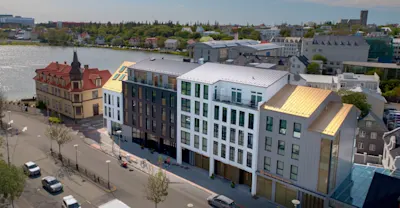
Arrive at Keflavik International Airport where you are met and transferred to our hotel in Reykjavik, about a 45-minute drive. If you arrive early, you may store your bags at our conveniently located hotel while you explore this compact, walkable city on your own. This evening, join our Expedition Leader for a welcome dinner with an orientation to all the adventures that lie ahead in this geological wonderland.
Day 2: Enter Iceland’s colorful volcanic Highlands by 4x4
Explore the remote Fjallabak Nature Reserve
Learn how volcanoes, glaciers and rivers formed this rugged landscape
See Myrdalsjokull Glacier, which conceals the active Katla volcano
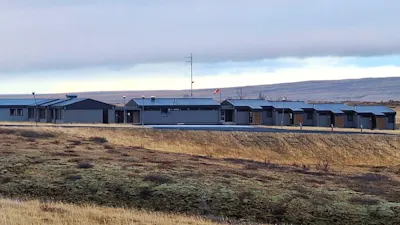
The rugged landscape we encounter today is a living showcase of the colossal natural forces that have created Iceland over tens of millions of years. Our knowledge of its dynamic geology is enhanced as we learn about the eruptions and lava flows, rift systems, faults and glacial floods that show the power of fire and ice. It's all on display as we head into the remote highlands of central Iceland for a full day of exploring the backcountry by 4x4. Moving inland from the lush coast, witness a rapid change in vegetation as we enter the mountains. Here in the southern sector of Fjallabak Nature Reserve, we find a striking landscape of rugged peaks in an array of shapes, forms and colors, the rock palette tinted by rhyolite and obsidian. A blanket of green alpine moss and lichen adds a bright accent, while black sand expanses lend contrast, filling the gaps between jagged ridges, volcanic summits and dramatic canyons. At times, the setting is evocative of a moonscape, stark and breathtaking. The region is laced with braided riverbeds, which we cross multiple times. A view of Myrdalsjokull Glacier—one of Iceland’s largest, which conceals Katla, one of its most active volcanoes—is a highlight. While Fjallabak is a popular hiking destination, we’re still mostly alone here, rarely encountering other people or vehicles.
Day 3: Discover waterfalls and rhyolite peaks in Iceland’s Central Highlands
Travel deep into the Highlands by 4x4
See Ofaerufoss and the waterfalls of Sigoldugljufur, the Valley of Tears
Hike among the colorful rhyolite mountains of Landmannalaugar
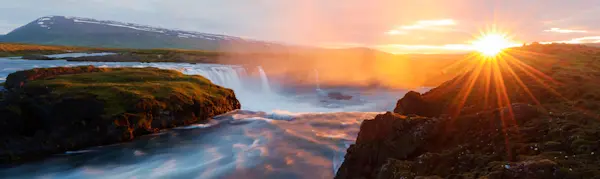
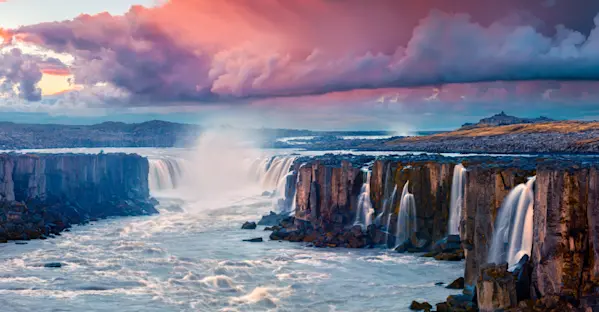
Few visitors to Iceland get beyond the well-trodden routes along the coast, but we explore more of its high inner recesses in our custom 4x4 vehicle today, starting with Sigoldugljufur, a dramatic canyon also known as the Valley of Tears for the number of waterfalls that pour from its walls. Reachable only via primitive roads, this rarely visited feature is famous for its otherworldly feel, a fantasy landscape of rock walls, turquoise water and bright green vegetation. Continue to Landmannalaugur, one of Iceland's most distinctive areas for geology and natural beauty. Accessible only by 4-wheel-drive, this vast region lies next to the jet-black Laugahraun lava field, a massive expanse of cooled magma that originally formed in an eruption in 1477. On foot, we explore this evocative landscape comprised of windswept rhyolite mountains, a silica-rich rock that appears in a spectrum of colors including shades of red, pink, green, blue and yellow. The region also abounds in natural geothermal baths.
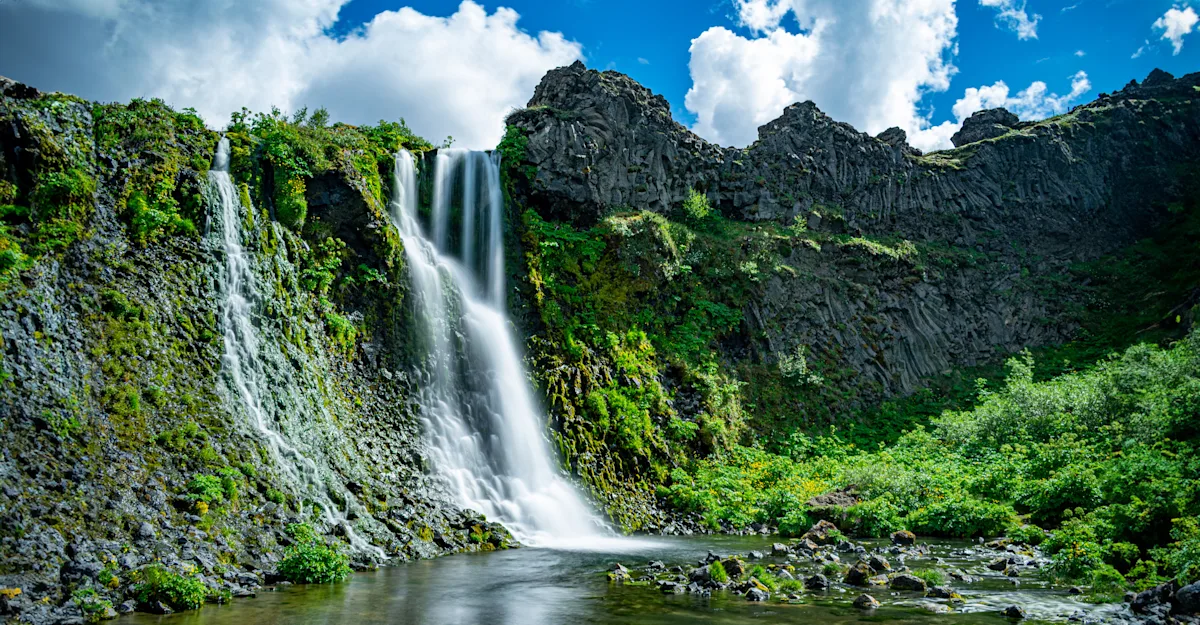
After a picnic lunch, make a short hike to Ofaerufoss waterfall. The only way to see this dramatic two-tiered cascade is on foot, where walkers are rewarded with a view of the 130-foot-high falls as it drops down a stark basalt face covered in thick green moss. The waterfall pours into the Edlgja Chasm, a broad volcanic canyon formed after huge fissure eruptions in the Myrdalsjokull region in the 10th century. The vivid colors of the vegetation on the canyon walls make this landmark even more spectacular.
Day 4: Hike a moss-lined canyon and explore the Laki crater row
Follow the rim of winding Fjadrargljufur Canyon
Travel by 4x4 along the remote 15-mile chain of Laki craters
Visit Skaftarhreppur and Fagrifoss waterfalls
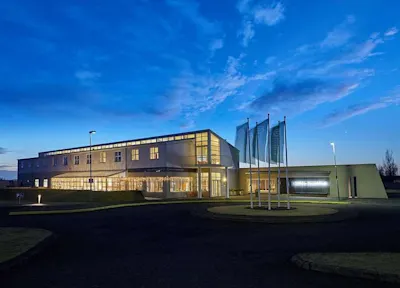
Our day begins with an early hike at Fjadrargljufur Canyon, a narrow, serpentine gorge hemmed in by 300-foot-high vertical walls covered in green moss. As we walk along the rim, look down into its shadowy depths where the silver Fjadra River winds below. Returning to the Highlands, another exciting 4x4 adventure unfolds as we follow a rugged mountain track across several rivers to reach the Laki Crater system atop a vast plateau. While this 15-mile line of craters is one of Iceland’s most impressive geological features. And because it’s not easy to reach, it is rarely visited. The series of craters, fissures and lava formations emerged when the Skaftareldar volcano erupted in a massive explosion 1783. Tens of thousands of livestock were killed, and more than 10,000 people died—about 25% of Iceland’s population at that time. We spend several hours in this dynamic terrain, hiking through the austere landscape, peering into craters from dramatic overlooks, and stopping at two spectacular waterfalls, Skaftarhreppur and Fagrifoss. On a clear day, we can Vatnajokull Glacier. Continue to Kirkjubaejarklaustur to spend the night.
Please note: If weather conditions are unfavorable on this day, the Laki Crater tour will be replaced with a visit to Skaftafell Nature Reserve, another of Iceland’s most spectacular protected areas. A scenic walk reveals a striking landscape formed by volcanic forces, glaciers and winding rivers, with dramatic mountain views, unique geological features and raw natural beauty.
Day 5: Walk among waterfalls, puffins and black-sand shores
Visit Dyrholaey’s rock arch and Atlantic puffin colony
Walk the black-sand beach beneath the Reynisdrangar sea stacks
Stand beneath Skogafoss and Kvernufoss before returning to Reykjavik
Making our way back to Reykjavik, we follow Iceland’s South Coast, known for its volcanic black sand beaches and countless waterfalls. Dyrholaey Peninsula, famous for its massive rock arch eroded from the cape, is one of Iceland’s best places to view Atlantic puffins, with a large migratory colony found here. Other seabirds abound, including eider ducks. We’ll have a chance to walk on the famous black sand beach Reynisdrangar Rocks, a trio of columnar basalt sea stacks. Legend holds that they were formed after two trolls were out fishing in a three-masted ship. When the trolls did not return to their cave before sunrise, they and their vessel turned into needles of stone, since trolls cannot tolerate daylight. Other highlights include the thundering waterfalls of Skogafoss and Kvernufoss, where the force of nature is utterly palpable. Late this afternoon we return to Reykjavik, where we have dinner and spend the night prior to our departure for Greenland tomorrow.
Day 6: Journey from Iceland’s volcanic terrain to Greenland’s Arctic coast
Explore the Raufarholshellir lava tunnel
Walk among steaming vents at the Seltun geothermal area
Fly to Greenland and continue to colorful Tasiilaq
It's time to fly to Greenland today! But more of Iceland's volcanic dynamism is on display before we depart late this afternoon. First is a private tour of the Raufarholshellir Lava Tunnel to witness the inner workings of an ancient volcanic eruption that happened 5,200 years ago. Inside the lava tube—one of the longest in Iceland at 4,500 feet—learn the origins of the vibrant colors and intriguing rock formations. Then we head down the Reykjanes Peninsula to explore Seltun, one of Iceland’s most important high-temperature geothermal areas. Lying on the fissure zone of the Mid-Atlantic Ridge separating the Eurasian and North American tectonic plates, this seething landscape is pocked with boiling mudpots and hissing fumaroles belching steam. Following the boardwalk through the animated landscape where mineral deposits have created colorful sediments, we smell the pungent odor of sulphur in the air. The Reykjanes Peninsula is one of Iceland’s most active volcanic areas, with seven separate eruptions occurring in 2024 alone.
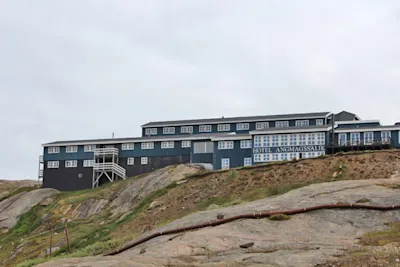
Continue to Keflavik, returning to Iceland's international airport where we board our flight to Kulusuk, Greenland. As we approach, get a preview of the magnificent scenery to come, with icebergs drifting below and perhaps a chance to spot a whale from the air, if you've got a window seat. From Kulusuk, make a scenic transfer by helicopter or boat to Ammassalik Island, landing in Tasiilaq, the small administrative center of East Greenland. Tasiilaq's charming wooden houses painted in bright primary colors survey King Oscar’s Harbor, surrounded by pointed peaks iced with glaciers. The town of 2,000 is a hub for outdoor adventure, from hiking and kayaking in summer to dog sledding and glacier skiing in winter. Most of East Greenland is uninhabited, however, except for a handful of small subsistence hunting communities. Greenland's east coast is often called "the back side" by those on the west, where most of the population, its capital of Nuuk, and its main institutions are located. East Greenland's people had no contact with the outside world till the beginning of the 20th century, and that isolation has fostered a distinct and resilient culture. Our introduction to Greenland begins here where Arctic wilderness and traditional lifestyles meet. Once we check in to our hotel, gather for dinner in the dining room, with a 180° view of the town below and mountains beyond.
Day 7: Explore Tasiilaq’s wildflower valley and Greenlandic Inuit culture
Hike the Valley of Flowers above town
Walk through Tasiilaq and visit the Ammassalik Museum
Meet a local resident who shares insight into daily life in East Greenland
Though interior Greenland is covered by a massive ice cap, a few habitable areas exist around the bays and coastal islands, and the region we visit enjoys a surprisingly mild and dry summer climate. Set out this morning with our Expedition Leaders to explore the area around Tasiilaq on foot, hiking into the Valley of Flowers above the scenic bay that fronts the town. Bring your camera: the ice-clad gneiss and granite peaks provide a striking backdrop for waterfalls and small lakes fringed by northern wildflowers in season. After lunch, head into town to learn more about the region's history and contemporary life here. The small Ammassalik Museum is a highlight, showcasing Greenlandic Inuit culture and traditions. Its collection featuring East Greenlandic masks, kayaks, sleds, tools, beadwork, old and new tupilak figures, and works by local artists. This afternoon, hear firsthand experiences from a local resident, sharing personal perspectives on daily life and year-round subsistence in this remote Arctic realm.
Day 8: Travel beneath towering icebergs to Base Camp Greenland
Journey by boat into iceberg-filled Sermilik Fjord
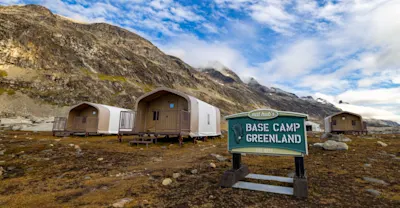
Settle into a private tent cabin at Nat Hab’s remote Arctic base camp
Kayak in the sheltered waters near camp, conditions permitting
Depart by boat for Nat Hab's private wilderness Base Camp, located in the Sermilik Fjord complex on Greenland's ragged east coast. Our destination is across a bay from the tiny village of Tinit, which we'll visit during our stay. This hilltop hamlet is one of the most picturesque outposts in East Greenland, surveying a panorama of Sermilik Fjord littered with huge icebergs, with the Greenland ice sheet in view beyond. Behind the town, glacier-clad peaks rise over a mile high, jutting up like sharp black teeth through the ice. Tinit is home to fewer than a hundred hardy people who live a subsistence lifestyle, fishing and hunting amid the constantly shifting ice. Keep an eye out for whales as we travel, as they are often seen in these waters when ice conditions permit. The area is filled with evidence of ancient habitation, including graves and ruins of old Inuit sod house foundations, and it is an evocative place to learn more about Inuit history and lore.
Reaching Base Camp Greenland, we find ourselves in one the most remote places on the planet. After settling in to our private tent cabins, sit down for coffee or tea in the communal yurt where our Expedition Leader gives an orientation to our environs, followed by a gear fitting to prepare for the Arctic adventures ahead. After lunch, our first exploratory venture is likely to include a paddle among the small icebergs and calm waters of our protected bay, if weather permits. Then we'll gather for dinner and a lecture to acquaint us with the region's natural history. Through presentations and personal visits during our stay, we also learn about Greenland’s cultural heritage and aspects of modern life. Traditional Inuit identity remains dominant in East Greenland, and we share an authentic encounter with this enduring ancient culture that still exists in close harmony with nature.
Days 9 to 11: Explore an Arctic realm of icebergs, whales and glacier-carved peaks
Cruise by Zodiac or kayak among immense icebergs moving through Sermilik Fjord
Watch for whales and seals in the fjord and Arctic foxes and birds on the tundra
Experience life at Base Camp Greenland beneath the 60-mile iceberg highway from Helheim Glacier
Greenland’s isolated and rarely visited east coast is a landscape filled with drama. Great fjords indent the coastline, penetrating far into sheer-sided mountains capped by the world’s second-largest ice sheet—and Sermilik Fjord is the mightiest of them all. The 60-mile-long "iceberg highway" is fed primarily by the highly active Helheim Glacier, the fastest-flowing tidewater glacier on Greenland's east coast. Our Base Camp provides a safe and comfortable outpost from which to explore this wild expanse just below the Arctic Circle. Beyond our camp's location at the mouth of a glacial valley, the wider region is dotted with a few isolated villages where Greenlandic Inuit people have thrived for centuries in this uncompromising Arctic environment. In varied encounters, we learn about their culture and how they are retaining their traditions while adapting to contemporary conditions in the 21st century.
On Zodiac excursions, navigate among a flotilla of blue icebergs in an array of wild shapes, some as big as buildings. While marine life sightings are sporadic, we sometimes see seals and less frequently whales. The latter are found seasonally in these frigid waters, and when ice conditions permit—if we are lucky, we might catch a glimpse of a fin, minke or humpback, all of which are occasionally present. Guided sea kayaking is also an option for an eye-level view on the bobbing ice. Ashore, choose among walks and hikes of varying demand levels as we traverse the mountainsides and wander near glaciers that wind down from the Greenland ice sheet. This huge ice mass—second in size only to Antarctica—stretches more than 1,500 miles from north to south, is nearly 2 miles deep at its thickest point, and covers 80% of the island. Learn about the crucial role the ice sheet plays in regulating Earth’s climate, and see with your own eyes how rapidly it is being affected by a warming climate.
Long hours of summer daylight allow for extensive exploration. Witness the effect of geological forces on naked bedrock, and walk atop patches of tundra. Amid fields of Arctic cotton grass and miniature berry bushes, look for Arctic fox and birdlife including ptarmigan, northern wheatear, and possibly gyrfalcon. Each evening, we retreat to Base Camp for creative meals freshly prepared by our accomplished chef. After dinner, gather for interpretive presentations by our naturalist Expedition Leaders, who share their extensive knowledge of Greenland's geology, glaciology, ecology and human history. And, though the sun gleams late into the evening just below the Arctic Circle, a good night's sleep is in order to refuel for the next day's adventures. Wrapped in profound silence in our isolated cabins, we're sure to get it. On our late-season departures, we may even have a chance to see the northern lights, if the aurora is active in the darkening night sky.
Day 12: Leave Sermilik Fjord for the shores of Kulusuk
Enjoy a final activity from Base Camp Greenland, conditions permitting
Travel to Kulusuk by helicopter or boat through glacier-carved landscapes
Walk along the Kulusuk coast beneath steep peaks and open Arctic sky
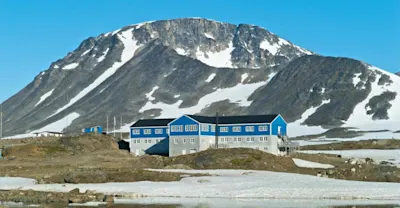
Our day begins with a last morning activity from Base Camp, which may be a hike over the tundra in search of wildflowers, or another option, depending on the weather. Then it's time to begin the journey back to more civilized climes, as we first make our way back to Kulusuk by helicopter or boat, depending on sea and ice conditions. On the return trip, survey jagged peaks and huge U-shaped valleys gouged by glaciers, forever awed by the grandeur of Greenland. On arrival in Kulusuk, we check in to our hotel surrounded by more of East Greenland's imposing mountains—the small town is a well-known gathering point for adventurers and scientists heading out to the ice sheet. This afternoon, we'll make an exploratory walk around Kulusuk before dinner.
Day 13: Walk on a Greenland glacier before returning to Iceland
Travel by boat to a glacier for a guided walk across the ice
Explore Kulusuk and watch a traditional Greenlandic drum dancing performance
Fly to Iceland for an overnight near Keflavik
This morning, board a boat to head out for a half-day glacier walk excursion. In addition to large chunks of ice calved from glaciers that feed the region's fjords, we may also see tabular icebergs—oceangoing slabs of ice, some of which have been drifting for months, driven down the coast by the strong East Greenland Current. Reaching a small island, we disembark to walk on a glacier, surrounded by spectacular views of fjords and mountain ranges. Atop its rough surface, examine unique formations such as moulins, which are whirlpool-like shafts in the ice. Walking farther, we reach a vantage point for a full view of the glacier’s face.
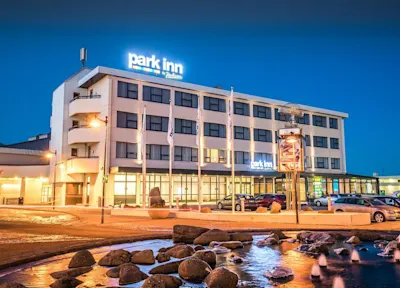
Returning to Kulusuk, we celebrate our extraordinary adventures over a farewell lunch at the hotel. In the afternoon, we'll explore the town and watch a private performance of traditional Greenlandic drumming and dancing. Then it's time to fly back to Iceland's Keflavik International Airport, arriving late this evening. We spend the night at an airport hotel nearby to facilitate easy connections for tomorrow's onward departures.
Day 14: Depart Iceland after your Arctic journey
Transfer to Keflavik International Airport for homeward flights
A transfer is included from the hotel to Keflavik International Airport to meet departing flights.
Please Note: This itinerary is meant as a guideline and can change due to weather and ice conditions. Given the expeditionary nature of our trip, on some occasions, adverse conditions may require us to deviate from our intended itinerary, in which case we will provide the best available alternative. And we’ll make a great adventure of it!