

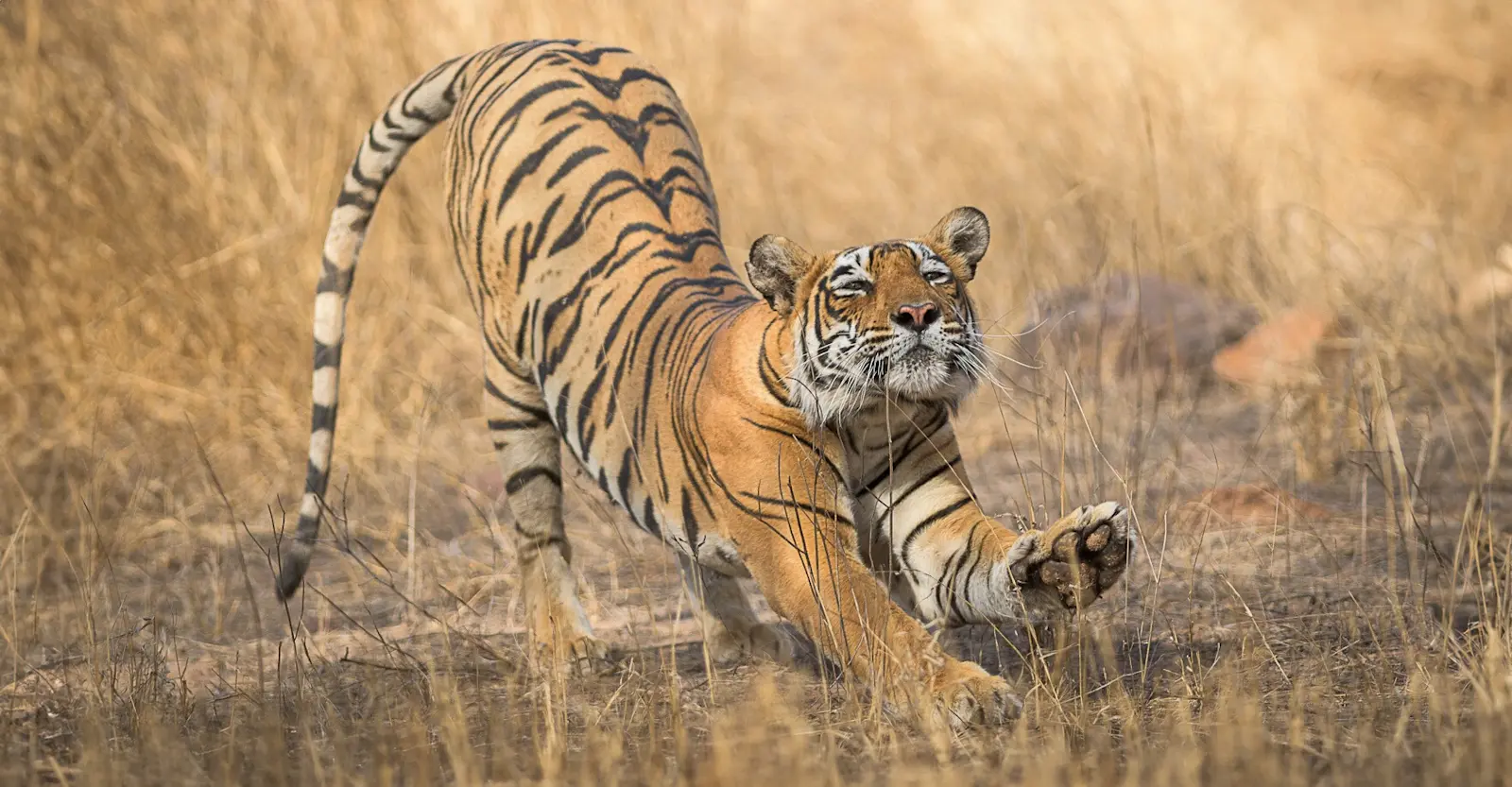
What Is Tadoba National Park Famous For?
Tadoba National Park is one of India’s best destinations for seeing wild Bengal tigers. Located in Maharashtra in central India, this protected area is part of the Tadoba Andhari Tiger Reserve, one of the country’s 58 Project Tiger reserves. It has one of the highest tiger densities in India, offering strong chances to observe these elusive cats in the wild.
The landscape is defined by tropical dry deciduous forest, open grasslands and water sources such as Tadoba Lake and the Andhari River. Teak and bamboo dominate the vegetation, which thins during the dry season, making wildlife easier to spot. This combination of habitat and water availability draws animals into the open, creating excellent viewing conditions.
What Animals Can I See in Tadoba National Park?
While tigers are the main focus, Tadoba supports a wide range of wildlife. Sightings may include sloth bear, dhole (Asiatic wild dog), gaur (Indian bison), striped hyena, jungle cat and Indian civet. Herbivores such as sambar, spotted deer and barking deer are common, and marsh crocodiles inhabit the park’s lakes and waterways.
Birdlife is abundant, with species such as peacock, gray-headed fish eagle and crested serpent eagle frequently seen. Leopards also inhabit the reserve, though they are rarely encountered.
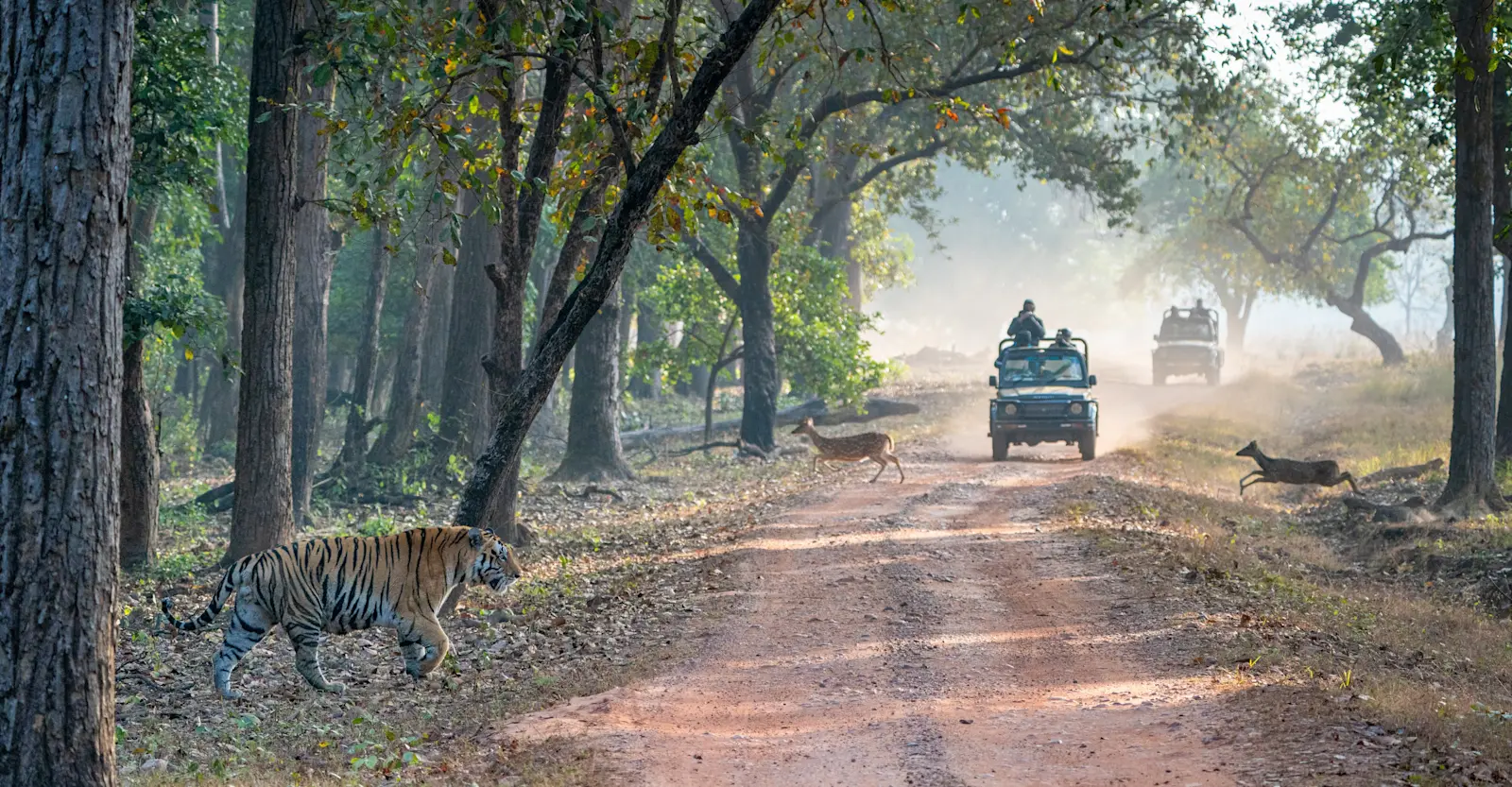
Tiger safari, Tadoba National Park, India. © Nat Hab Expedition Leader Vedant Thite
Where Is the Best Place to See Tigers in India?
Tadoba National Park is widely considered one of the best places in India to see wild tigers. Its relatively open terrain, combined with reliable water sources, increases the likelihood of sightings compared to more densely forested reserves.
During the dry season, tigers regularly emerge from cover to drink at lakes and rivers, making them easier to observe. With expert tracking by experienced naturalist guides, travelers have strong opportunities to witness these animals in their natural habitat.
What Is It Like to Go on a Tadoba Tiger Safari?
A Dedicated Stay in Prime Tiger Habitat
A stay in Tadoba offers multiple opportunities to explore the reserve on safari drives. The timing of visits is designed to maximize wildlife viewing, particularly during the dry season when vegetation is sparse and animals gather near water.
Tigers are often seen moving between shaded forest and open areas, especially in the early morning and late afternoon. These periods offer the best chance to observe natural behavior, including drinking, resting and patrolling territory.
Small Groups and Low-Impact Travel
Safari experiences take place in small groups using 4×4 vehicles, allowing for a quieter presence in the park and a more personal experience. With fewer people per vehicle, guests benefit from better viewing angles and closer guidance from expert naturalists.
Expert Naturalist Guides
Knowledgeable guides play a central role in the safari experience. Skilled in tracking wildlife, they interpret subtle signs such as alarm calls, tracks and movement in the landscape. Their familiarity with the park greatly enhances the chances of locating tigers and other species.
A Typical Day on Safari in Tadoba
Safari drives take place twice daily—early morning and late afternoon—when temperatures are cooler and wildlife is more active. These times also offer the best light for photography.
Unlike African safaris, where wildlife is often visible in open plains, animals in Tadoba require more patience to find. Tigers rely on camouflage and tend to remain hidden in dense vegetation, emerging periodically to access water or move through their territory.
Midday is spent back at the lodge, where guests can rest, read or relax by the pool before heading out again for the afternoon drive.
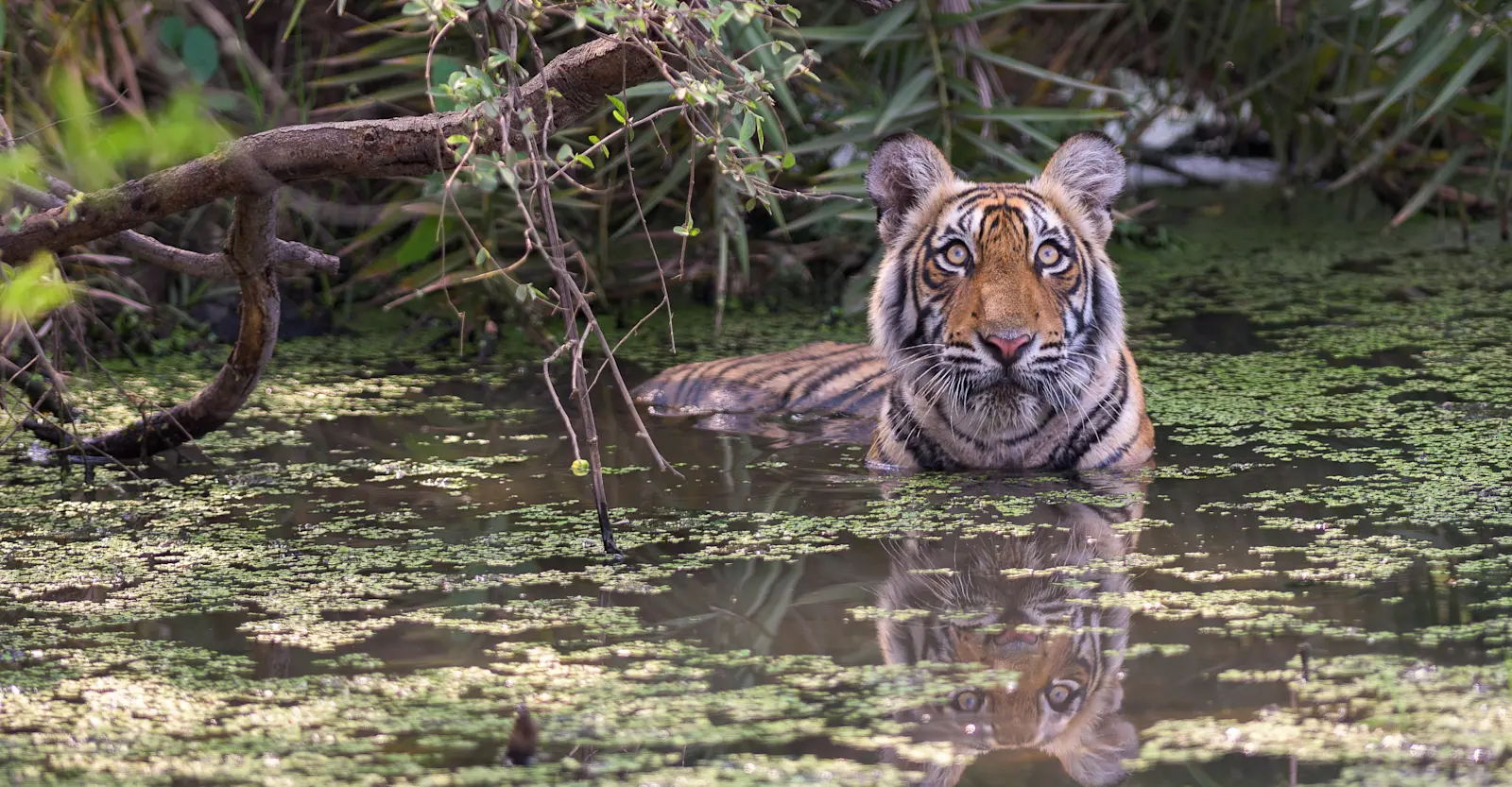
Bengal tiger, Tadoba National Park, India. © Nat Hab Expedition Leader Aditya Panda
How Does Conservation Protect Tigers in India?
India’s tiger population has rebounded in recent decades due to strong conservation efforts, including the establishment of Project Tiger reserves like Tadoba. As wildlife tourism grows, responsible travel plays an important role in supporting these efforts.
When travelers visit protected areas with conservation-focused operators, tourism revenue helps sustain local communities and reinforces the value of protecting wildlife and habitat. This connection between conservation and community support is a key factor in the continued recovery of India’s tiger population.
Experience India’s Wild Heart with Nat Hab
Explore Tadoba National Park with Natural Habitat Adventures and witness one of the world’s most regal predators in its natural environment. From expert-led safaris to immersive time in the forest, this journey offers a deeper connection to India’s wildlife and landscapes.