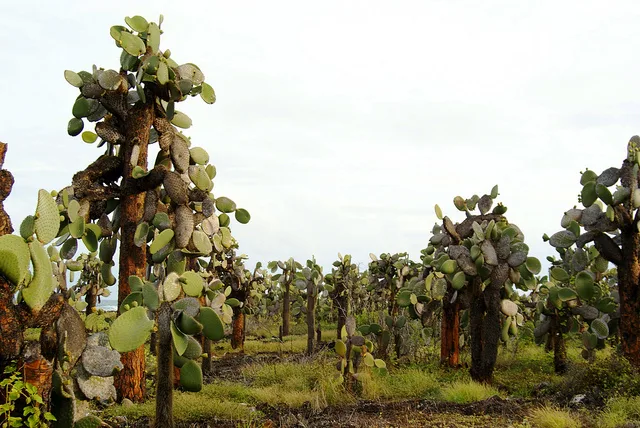
opuntia cacti forest galapagos

Photo of the Day: Opuntia Cactus Forest

opuntia cacti forest galapagos
Dallas Krentzel/ CC BY 2.0/ flickr: Dallas Krentzel

This photo of a veritable forest of Opuntia cacti (Opuntia echios), also known as the Galapagos prickly pear, was taken on the coast of Santa Cruz by Dallas Krentzel. He writes that the cactus on the left is probably around 26 feet tall and that the upper height range for this particular species is around forty feet. Opuntia echios is endemic to the Galapagos Islands and there are five varieties, each with different appearance and distribution, found throughout the archipelago. There are four other species of Opuntia, in addition to Opuntia echios, found in the islands, each with a particular distribution. One species, Opuntia megasperma, is an important source of food, water, and shade for Galapagos giant tortoises.
Tagged

More from Galapagos Islands

All Galapagos Islands stories
  • Galapagos Islands

    Tune In: A Galapagos Binge

    Sep 7, 2026 · Jennie Lay

    The Galapagos Islands might be the single best love-at-first-sight solution for what I call “complacent nature deficit disorder.” These are islands of instant gratification, where you’re almost guaranteed to encounter the cerulean foot of a blue-footed booby, the Godzilla-like gaze of a marine iguana and the lumbering girth of a giant tortoise.

  • Galapagos Islands

    A Wild Day in the Galapagos: Whales, Sharks & an Erupting Volcano

    Sep 6, 2026 · WWF

    First, whales. One morning in September, we woke up earlier than usual. We had been navigating overnight toward Bartolome Island, and our guides, Roberto and Giancarlo, had prepared us for possible whale sightings on the final leg of our voyage. We bundled up and stood on the top deck, hot cups of coffee in hand.

  • Galapagos Islands

    Blue-Footed Boobies in the Galapagos: 8 Fascinating Facts

    Jun 6, 2026 · Julie Waggoner

    The Galapagos Islands are home to some of the world’s most recognizable wildlife, and few species attract more attention than the blue-footed booby. Known for their turquoise-blue feet, comic-looking courtship displays and remarkable diving skills, these seabirds are a highlight of many Galapagos wildlife adventures.