

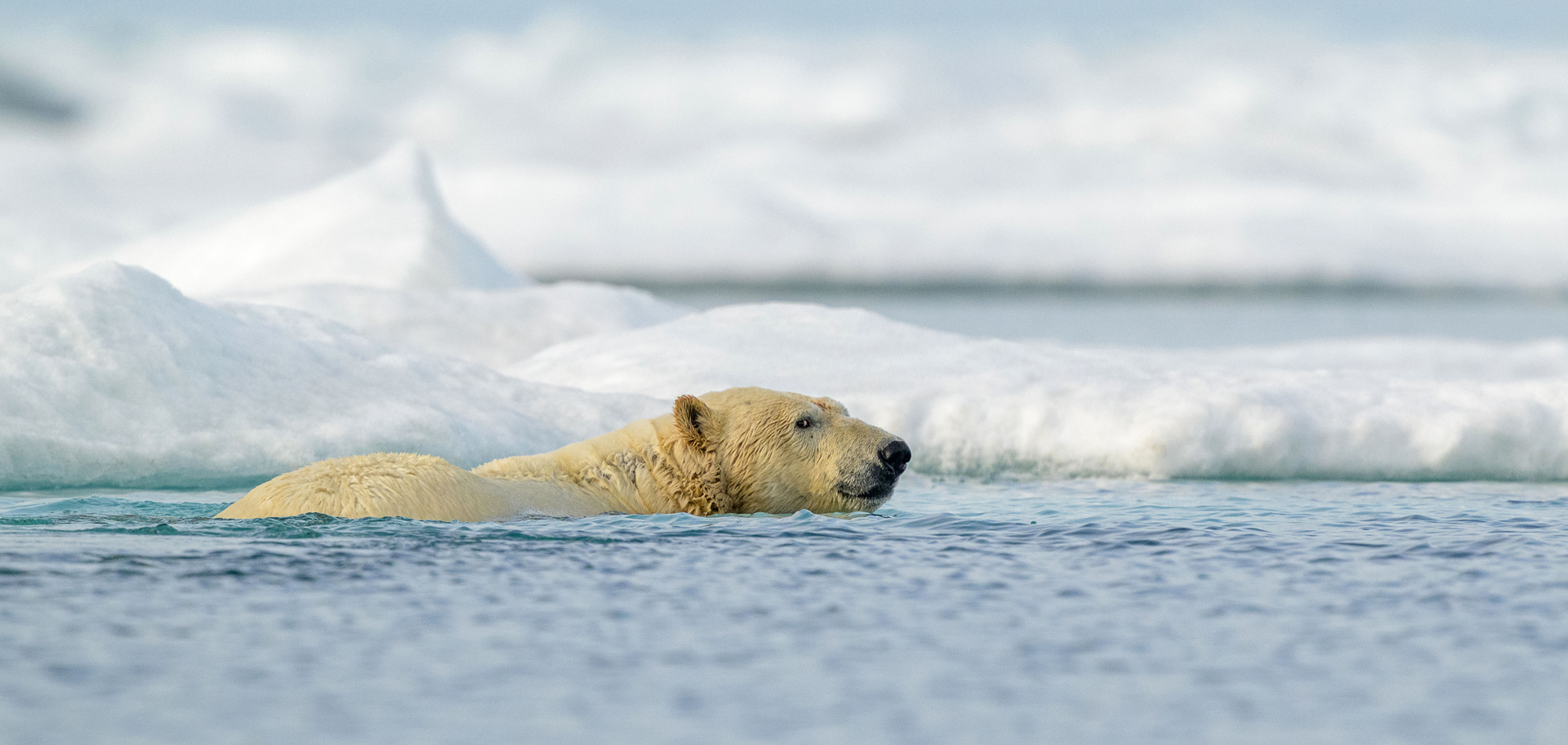
You’re standing on the outdoor platform of a Polar Rover, feeling more alert than you have in a long time as the cold Arctic air sharpens your senses. You wait, breath held, for the moment everyone hopes for. And then there it is—a polar bear moving steadily across the tundra, at first barely visible against the vast white landscape, then drawing closer with every step. You wonder if what you’re seeing is real. Time seems to slow as you watch from your elevated vantage point while the bear satisfies its curiosity, pausing to sniff, paw and investigate the Rover. From a place of safety, you observe one of the Arctic’s most powerful animals at close range, fully present in the moment.
If you’re considering a Nat Hab naturalist-guided polar bear encounter in Churchill, Manitoba, you’re likely already curious about these remarkable marine mammals. How do they survive in such a demanding environment? How far can they swim, and how fast? What happens when sea ice forms later or retreats earlier each year? On Canada’s Premier Polar Bear Adventure, you’ll spend hours exploring these questions with Expedition Leaders who have spent years studying polar bears in the wild. Whether you’re preparing for your journey or simply eager to learn more, we explore a few of those topics here.
© Lianne Thompson
Are Polar Bears Strong Swimmers?
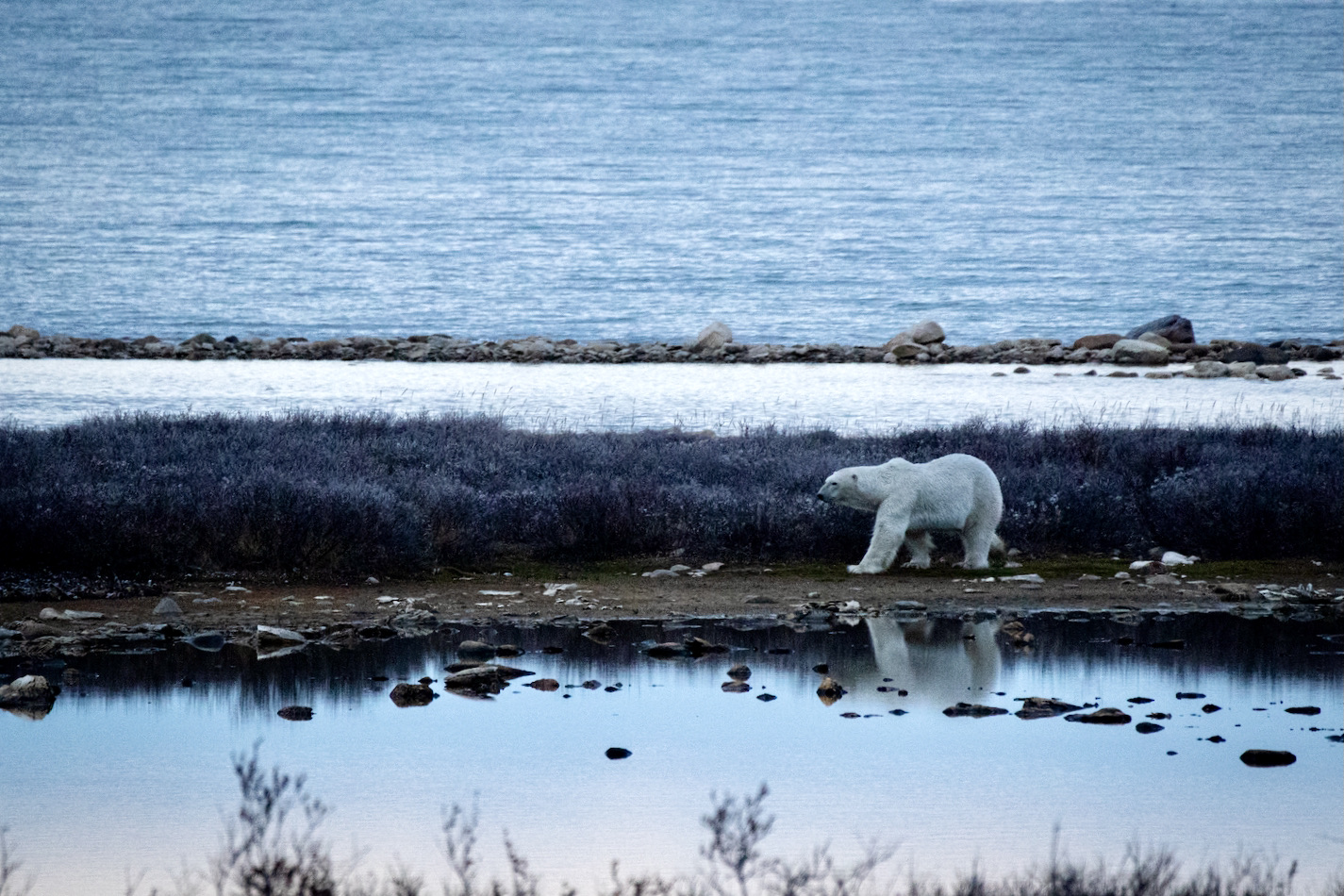
Polar bears are strong and capable swimmers and depend heavily on the marine environment for survival. While they are not fully aquatic like whales or seals, polar bears rely on the sea for hunting and travel and are classified as marine mammals for that reason.
A thick layer of insulating fat—up to 4.3 inches—keeps them warm and helps them float. Polar bears swim using a steady paddling motion, propelling themselves with their powerful front paws and steering with their hind legs. Their paws, which can measure nearly 12 inches across, function like natural paddles and also help distribute weight when walking across thin ice.
Their streamlined heads and elongated bodies reduce drag in the water, allowing polar bears to reach swimming speeds of up to 6.2 miles per hour—faster than the fastest recorded swimming speed of Olympic swimmer Michael Phelps.
© Lianne Thompson
How Far Can Polar Bears Swim?
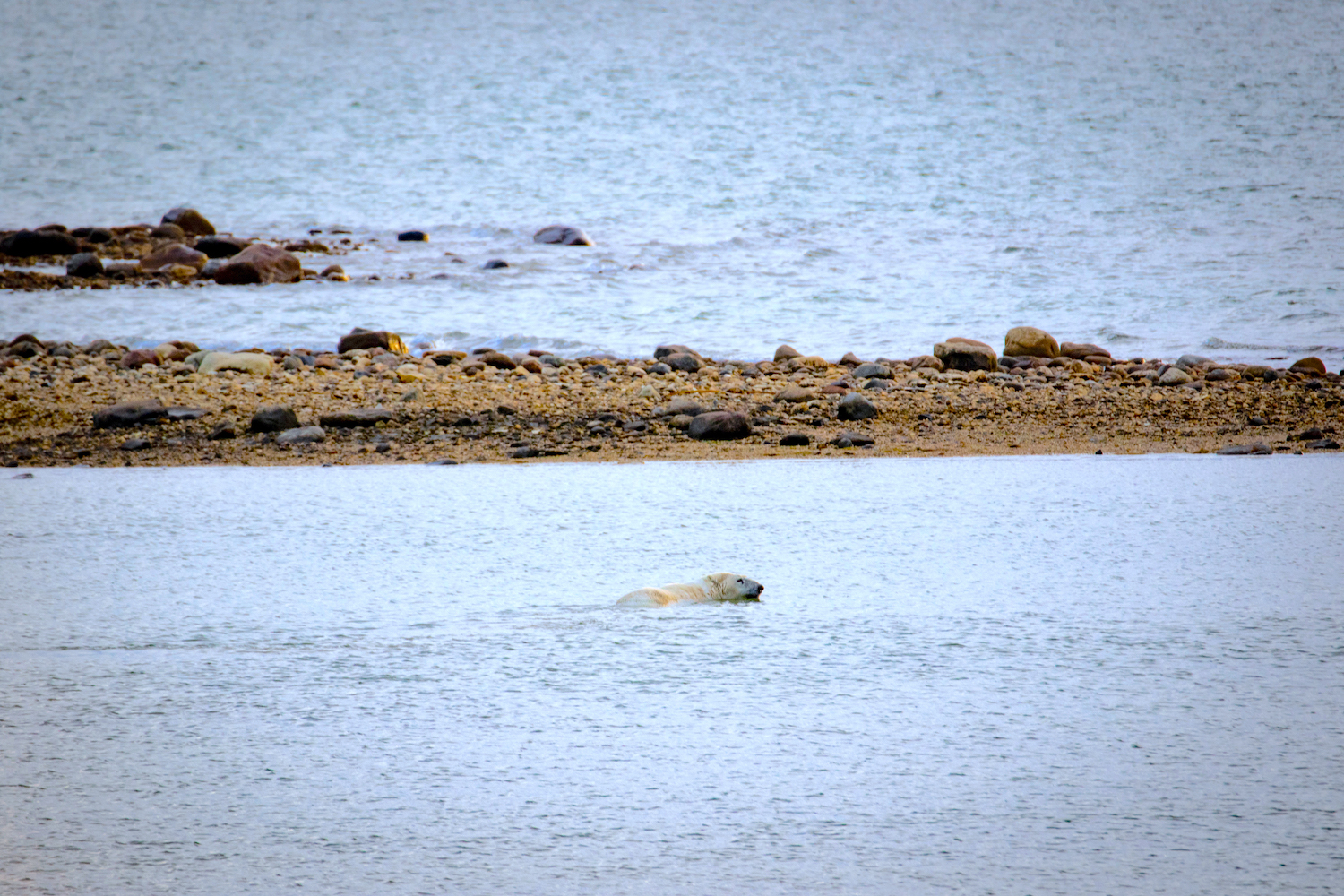
Polar bears are capable of swimming for long distances, sometimes for days at a time. What has changed in recent decades is not their ability to swim but the necessity of doing so.
In 2011, researchers documented a female polar bear swimming 426 miles, or 687 kilometers, over nine consecutive days in the Beaufort Sea. The journey illustrates how increasing stretches of open water are forcing bears to travel farther to reach land or sea ice. For cubs, these swims can be especially dangerous. In this case, the cub did not survive the journey, and the mother lost 22% of her body weight before reaching land.
“These animals didn’t have to do these long swims in the past because open-water distances of that scale rarely occurred during their evolutionary history,” said Steven Amstrup, chief scientist for Polar Bears International. Today, bears are arriving on land exhausted and depleted, which compromises their ability to hunt successfully.
How Sea Ice Loss Is Changing Polar Bear Habitat
In regions like the Beaufort Sea, summer sea ice once remained along the continental shelf, providing access to seals and allowing polar bears to build critical fat reserves. As sea ice retreats earlier in spring and forms later in fall, that habitat is shrinking.
Polar bears in Hudson Bay face a different seasonal pattern. Here, sea ice melts completely in summer, forcing bears to fast on land until freeze-up. Historically, that fast lasted about 120 days. Today, it can stretch to five months. As fasting periods lengthen, bears have less opportunity to recover lost energy, contributing to declining health across the population.
© Lianne Thompson
How Conservation Efforts Support Polar Bears
Seeing polar bears in the wild fosters a deeper understanding of the challenges they face and reinforces the importance of conservation. Researchers and conservation organizations have identified key threats, including sea ice loss, extended swims and declining cub survival, and are working collaboratively to address them.
The United States, Canada, Denmark (Greenland), Norway and Russia work together as Polar Bear Range States and have implemented a coordinated circumpolar conservation plan to guide protection efforts.
On an individual level, traveling with a conservation-focused operator such as Natural Habitat Adventures supports research, education and responsible wildlife viewing. A guided expedition along the western shore of Hudson Bay offers insight into polar bear behavior while emphasizing the broader environmental changes shaping their future.
Viewing Polar Bears on Canada’s Premier Polar Bear Adventure
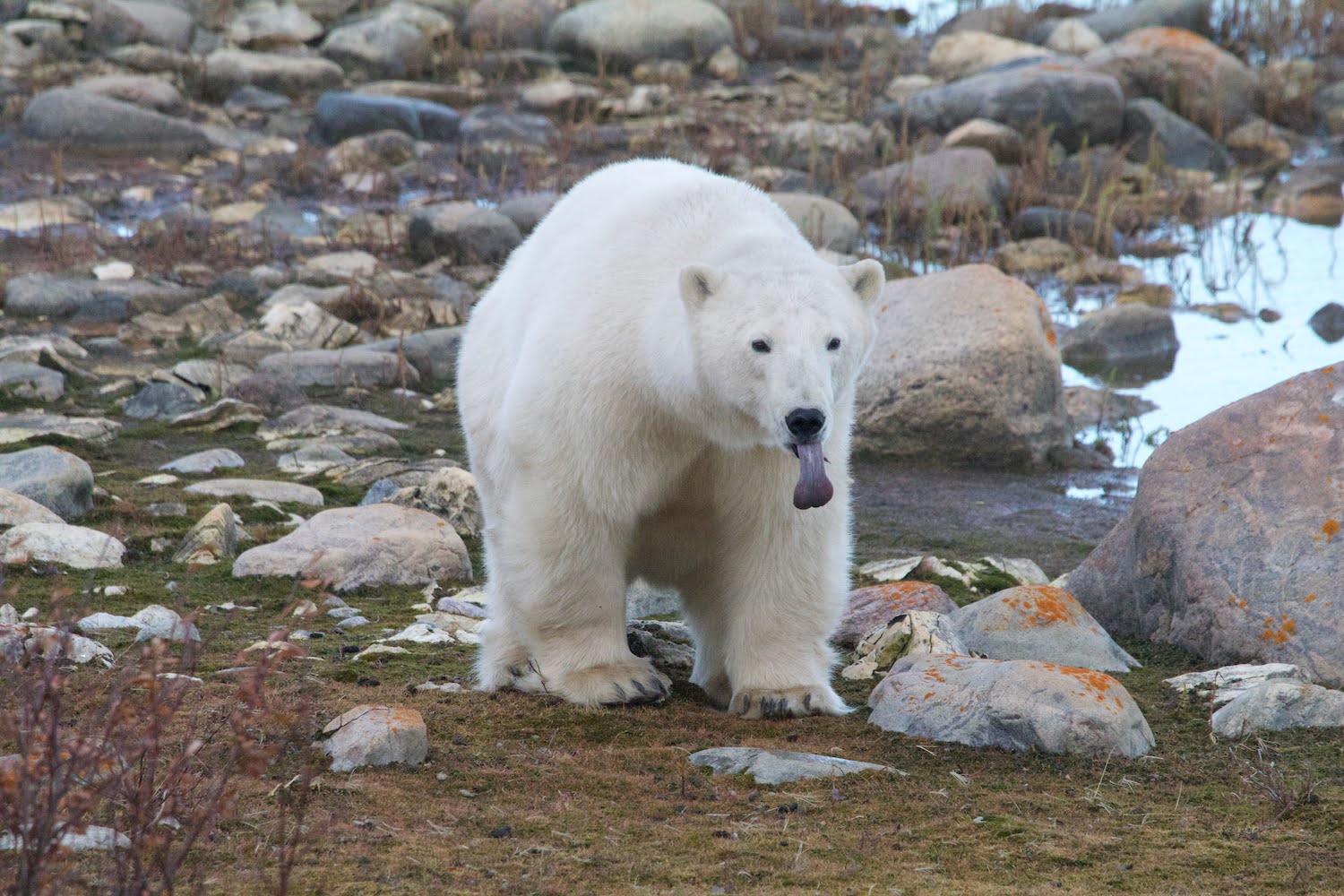
During winter, as long as Hudson Bay remains frozen, polar bears hunt seals on the ice. In spring, ice floes carry them southward. As summer approaches, bears begin moving north again, traveling 800 to 900 miles along the coastline. Between 600 and 1,000 bears often gather near Cape Churchill in the fall, waiting for sea ice to thicken enough to support their weight.
Nat Hab Expedition Leaders know where and when to observe this seasonal congregation. From the safety of Polar Rovers, guests watch bears interact, play and rest while learning how these animals are adapted to life in one of the planet’s most demanding environments—and what can still be done to protect them in the face of climate change and retreating sea ice.