Cuba: A Caribbean Paradox

I’ve traveled throughout the Caribbean, so I before I left for Cuba, I kept wondering if it would be like the other places I’ve been in the region or like no place I’d ever been.
Turns out it’s both.
Cuba has a very Caribbean vibe as soon as you step off the plane. Just like many other islands, everything happens on “Cuba time.” Part of the fun is embracing the laid back attitude. There is that familiar liveliness that runs through it; music, food, and smiles seem to be the life force of the Cuban people. (As an American, any concerns I had that Cubans might not welcome me were quickly dissuaded. In fact, it might be the most happy I’ve ever encountered locals to see Americans.) Warm nights beckon you to go out and partake in one of the two things Cuba unquestionably does well: rum. (The other is tobacco.)
Of course, the similarities make sense. It’s only 90 miles from Key West and even closer to the Bahamas, Haiti, and Jamaica. But then it isn’t any of those other places, it’s Cuba. The events of the last five centuries and especially the 20th century, the US’s involvement (and perhaps more notably the lack thereof) have made it a completely unique place.
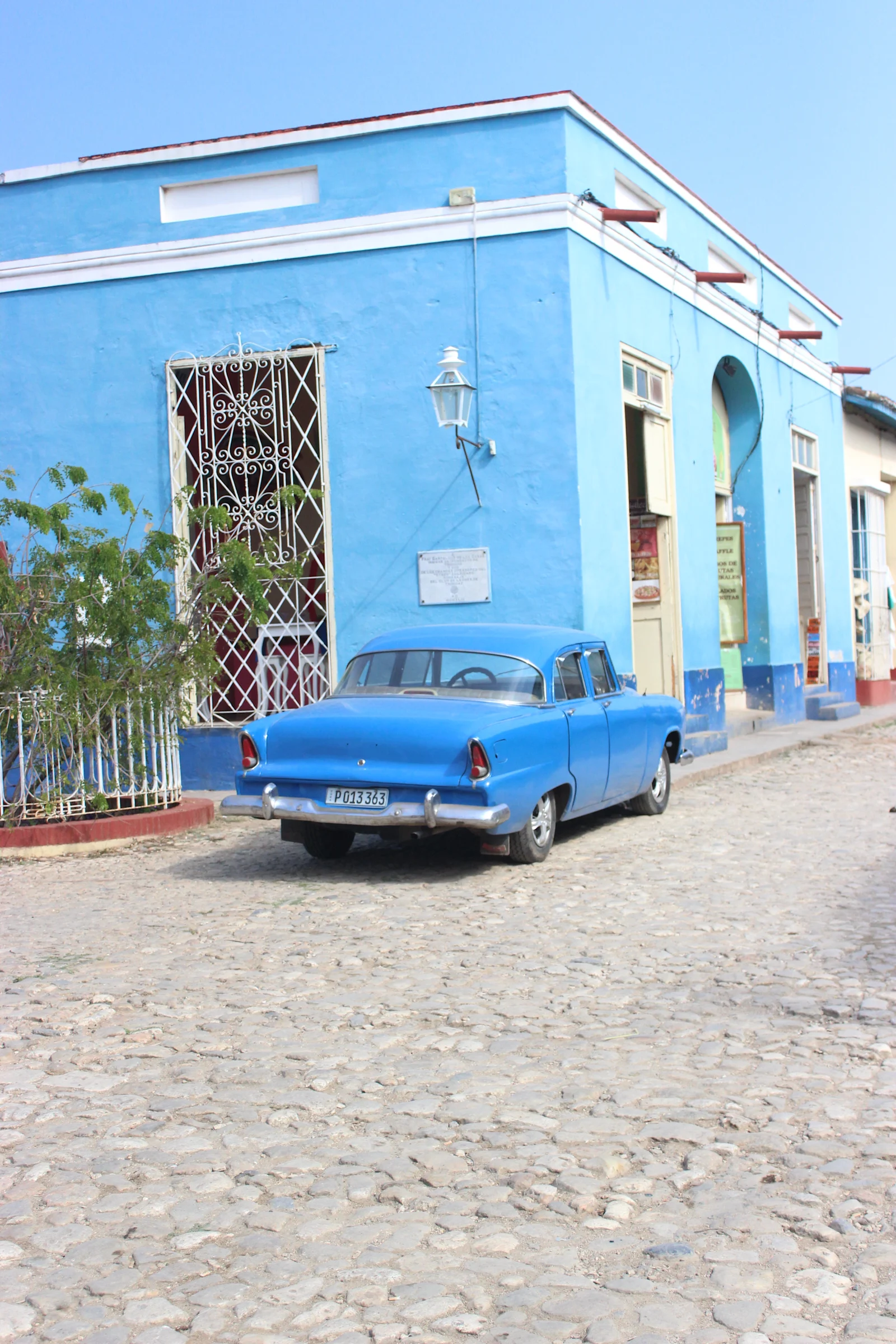
It’s not hard to see the effects of the blockade in Cuba. Of course there are the old American cars but it’s so much more than that. It feels like Cuba invented the “hipster” aesthetic. Trendy restaurants are run out of homes, with mismatching vintage dinnerware and found decor. But here it’s done without a touch of irony. That’s simply all there is. While that’s not completely different than other developing countries, it’s taken to an extreme in Cuba. There isn’t a drop of the consumerism and disposable nature that we are used to in the US. You learn over and over that there are some things you just can’t get. No matter how much money you have. Making do with what you have, reuse, and repair are baked into Cuban culture.
Cubans appreciate socialism, but they aren’t blind to its issues. Education is free (all the way to a PhD level) and the health system is great (and also completely free), but that means an over-educated and aging population that’s hard to sustain. Rent is free, but some of housing stock is falling apart, especially in Havana. The rations don’t provide enough food and Cubans have to figure out how to earn money (often outside the government-approved jobs) to make up the difference or they go hungry. Resist the urge to compare; Cuba is unique. There are a lot of things it gets right and some it gets wrong. And a lot of the reason it’s the way it is, is because of the US’s embargo.
If you love the Caribbean, go to Cuba. It’ll remind you of everything you love about the region. If you don’t love the Caribbean, go to Cuba. It’s totally different. And totally worth it.
By Isabelle Willson, Manager, Web Production, WWF-US