All-White Orca Spotted off Russia’s East Coast

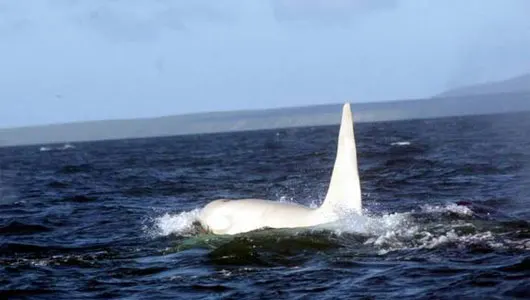
Dubbed “Iceberg” by researchers, an unusual full-grown all-white male orca has been sighted by scientists in the Commander Islands off Kamchatka in the Russian Far East.
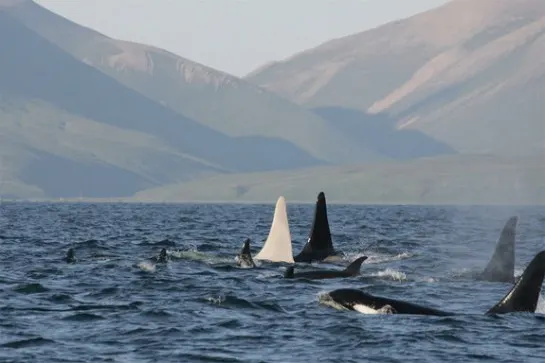
The orca’s 6.5-foot-high dorsal fin stood out among the black fins of the other 12 whales in the pod, making it easily identifiable to the researchers from universities in Moscow and Petersburg who were working in the waters of the marine reserve with the Far East Russia Orca Project, opens in new tab.
Project co-director Erich Hoyt discussed the discovery in his blog post “The Tip of the Iceberg,” published April 22, which recaps the organization’s extensive research in the region. Hoyt said researchers will return to the same waters this summer in hopes of sighting Iceberg again and determining whether he is an albino or if there is some other reason for his white color. Two other immature white orcas has been spotted previously, but none as old as this male, which Hoyt says is at least 16 years old, judging from the size of its dorsal fin.
The Kamchatka region, which boasts more volcanoes than anywhere else on earth, is exceptionally rich in wildlife and natural history. In addition to Iceberg’s pod, these waters are home to six different species of salmon, hundreds of thousands of sea birds, and vibrant populations of seals, sea lions, walruses and sea otters as well as 15 species of whales, dolphins and porpoises.
The researchers’ published statement said they hope the presence of Iceberg will help efforts to expand marine reserves along the Russian coast.
See video footage, opens in new tabof the all-white male orca and read more at Mother Nature Network, opens in new tab.