







Starting in November 2026—11 Days
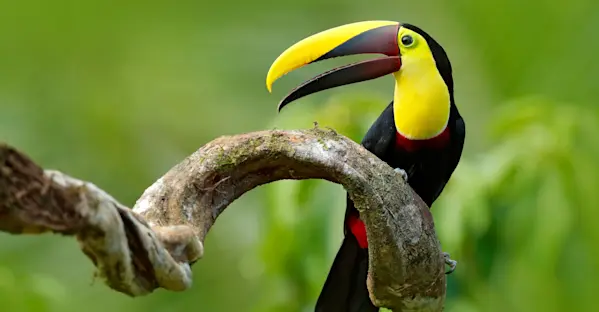
Starting in November 2026, our new 11-day itinerary omits a second day in Thimphu, Bhutan, while adding a half-day visit to Jigme Dorji National Park for scenic forest hikes, bird photography and wildlife scouting in the Punakha region.
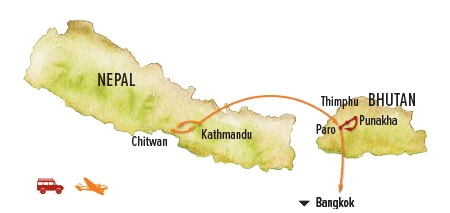
Arrive in Kathmandu, the storied capital of Nepal. For centuries, this city backdropped by the world's highest mountain range has been a center of religious art and architecture in both Hindu and Buddhist traditions, renowned for its intricate temples and public squares. Our representative picks you up at the airport—likely in our electric vehicle, which we use for the majority of our Kathmandu transfers—and accompanies you to our hotel. Settle in at Dwarika's, a luxurious heritage lodge that evokes the palaces of Nepal's Newar kings, appointed with artifacts dating back to the 14th century. This evening, gather with our Expedition Leader for a welcome dinner at our hotel.
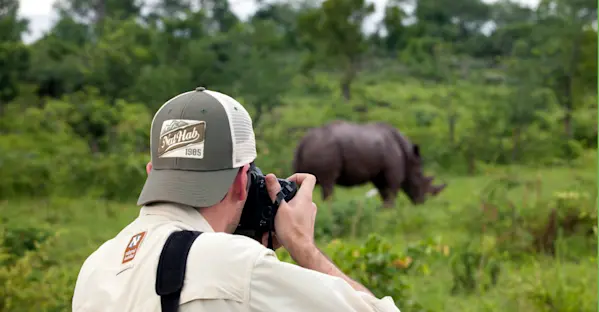
Return to the airport this morning to board our flight to Bharatpur on the Terai plains of southern Nepal. On arrival, transfer to our luxury ecolodge, Meghauli Serai, for the next three nights. This serene safari base on the edge of the Rapti River offers immediate access to Chitwan National Park. Located in the largest area of undisturbed subtropical wilderness along the base of the Himalaya, the lodge is optimally situated for the best wildlife viewing in the Chitwan region, which we take full advantage of during our stay. The area around the lodge has a consistently high sighting rate for one-horned rhinoceros, crocodile and gharial, and other species abound, too.

Chitwan National Park, established in 1973, is Nepal’s first national park and was named a World Heritage Site by UNESCO in 1984. It encompasses 360 square miles of subtropical lowlands and is home to about 50 mammal species and more than 500 species of birds. We spend our days exploring the park on 4x4 safari drives, anticipating views of Chitwan's most famous wild residents. While sightings are never guaranteed, we have good chances to observe one-horned rhinoceros, Asian elephant, crocodile, leopard, sloth bear, sambar deer, wild boar, monkeys and jungle fowl, all in their natural habitat. River safaris are also an option. Conditions permitting, a chance to track tigers is a special highlight, as we join our Expedition Leader and a local guide to search for footprints and pugmarks that mark the tigers' hidden presence in the park.
Return to Bharatpur airport this morning for our flight back to Kathmandu. This afternoon, visit Patan Durbar Square, one of seven designated cultural sites in the Kathmandu Valley that have earned the region UNESCO World Heritage status. Patan lies a few miles outside Kathmandu and is home to the valley’s finest artisans who have preserved ancient techniques used in exquisite sculptures and carvings. The city retains much of its historic charm with its narrow streets, brick houses and multitude of well-preserved Hindu temples, Buddhist monasteries and monuments. As in Kathmandu, Hinduism and Buddhism have co-existed here for centuries, and the cultural and religious harmony is evident. At the city’s heart lies Patan Durbar Square, where the kings of Patan resided. On a guided tour, wander among the melange of palace buildings, artistic courtyards, graceful pagoda temples and shrines—a display of Newari architecture that reached its pinnacle during the reign of the Malla kings in the 17th and 18th centuries. Continue to our hotel in Kathmandu to spend the night.
Fly this morning to the “Land of the Thunder Dragon”—the tiny Himalayan kingdom of Bhutan. If the skies are clear on our flight to Paro, we hope to see the planet’s highest peaks in a serrated white spine, setting a striking backdrop as we approach the green trough of the Paro Valley. Rich in culture, lush in scenic beauty and steeped in history, Paro offers a bucolic welcome to the kingdom. From Paro we drive one hour to Thimphu, Bhutan’s idyllic capital and a stronghold of traditional Bhutanese art, architecture and culture. Surrounded by mountains and monasteries, this seat of government and commerce on the Wang Chuu River is a harmonious mix of modern development and ancient traditions. It's also the only national capital without traffic lights. As we arrive in Thimphu, we visit the Iron Bridge of Tachogang Lhakhang, built 600 years ago by legendary bridge builder Thangtong Gyalpo. This renowned engineer is believed to have pioneered the use of heavy iron chains in suspension bridge construction, which influenced building methods in Europe and Asia.
On a visit to WWF-Bhutan’s national office and Panda Explore Visitor Center, learn about WWF’s important role in promoting conservation and sustainability in tandem with the Royal Government of Bhutan since 1977. Gain insight into why Bhutan is widely known as a conservation leader on the world stage, including its role in protecting 10 flagship species identified by WWF as holding special ecological significance—among them are the red panda, Bengal tiger, snow leopard and black-necked crane.
Later this afternoon, head outside town to hike through a serene forest to a temple complex on the edge of a high ridge. The trail winds through oak, blue pine and rhododendron forests to reach the historic Wangditse Monastery, built in 1715, with panoramic views of the Thimphu Valley and Thimphu Dzong. Once we return to our hotel, there’s time for a break before an enlightening talk by a local scholar on Gross National Happiness, Bhutan’s unique government benchmark for the well-being of its citizenry, a philosophy that values culture, community, health and the environment.
En route to Punakha this morning, cross Dochula Pass, a 10,301-foot saddle marked by 108 chortens, fluttering prayer flags in primary colors, and a panorama of the entire eastern Himalaya. If weather permits, we’ll walk about 3 miles from the summit to reach Lamperi Royal Botanical Park, descending a gentle trail through a forest of oak, rhododendron and hemlock. Opened in 2008, this is the first botanical garden in Bhutan, encompassing 125 acres of lush trees, a lake and walking paths that lead to striking mountain views. Birdwatching opportunities are plentiful year-round, while spring departures offer showy rhododendron blooms—the gardens hold 46 species, 18 of which are native to the park. We may also see musk deer roaming the misty woods.
Descend to Punakha, the former capital of Bhutan and the winter residence of the monastic body. Lunch is served at our intimate luxury hotel, the Punakha River Lodge. Set beside the Mo Chu River and framed by forested hills and distant Himalaya views, the lodge offers a tranquil retreat. After lunch, set off for a short hike to Chimi Lhakhang Temple, a small shrine dedicated to one of Bhutan’s favorite saints, the 15th-century Lama Drukpa Kunley. A rag-clad monk who used humor, songs and outrageous behavior to dramatize his teachings, he became known as the "Divine Madman" and is still beloved as such today. The peace of the Bhutanese landscape is palpable as our path to the temple ambles through green pastures and rice paddies, passing farmers and livestock in the terraced fields.
Later this afternoon, visit the massive Punakha Dzong, known as the "Palace of Great Happiness." Straddling the confluence of the Po (Father) and Mo (Mother) rivers, the monastery is Bhutan’s best-known fortress. Built in 1637, it was the seat of government until 1955 and home to Bhutan’s religious establishment. All of Bhutan's kings are still crowned here before they take the throne in Thimphu. The palace occupies one of the most scenic dzong sites in Bhutan; maroon-robed monks and guests must cross a picturesque wooden footbridge over the river to reach it.
After a leisurely breakfast, set out on a hike to Khamsum Yuelley Namgyal Chorten, a three-story lhakhang, or temple, dedicated to the well-being of the kingdom, its people and all sentient beings. Built atop a high ridge, the temple offers magnificent views of the Punakha Valley. Continue to Jigme Dorji National Park for a picnic lunch. The second largest protected area in Bhutan, the park spans 1,666 square miles and three climate zones, ranging in elevation from 4,600–23,000 feet. Accompanied by a local naturalist/conservationist, we spend a half-day exploring the rich biodiversity of the park. Enjoy birdwatching along scenic forest trails where we may spot the Himalayan monal, blood pheasant and satyr tragopan, among a multitude of species. After an exhilarating afternoon, it’s time to return to our riverside lodge for dinner.
A half-day drive returns us to Paro, with stops en route. Retracing our drive over stunning Dochula Pass, we stop at the summit for another foray into Lamperi Royal Botanic Park for birdwatching in the temperate forest filled with oak, birch and magnolia. Continue to the Paro Valley in the mountainous northwest of Bhutan, a region rich in natural beauty and culture and abounding with myths and legends Over lunch at a restaurant overlooking the valley, learn about conservation of the black-necked crane, a revered bird in Bhutanese culture and a symbol of the country’s dedication to protecting its fragile Himalayan ecosystems.
This afternoon, participate in a sand mandala art experience, a meditative practice that reflects the beauty and impermanence of life. Then visit a local farm where we participate in a traditional archery lesson. Archery is the national sport of the kingdom, and tournaments and competitions are held throughout the country, often during public holidays and local festivals called tsechu. Though archery historically is a martial art, it is practiced by the peace-loving Bhutanese for physical exercise and to hone concentration.
Our final morning in Bhutan holds a most impressive sight: Taktsang Monastery, also known as the “Tiger’s Nest.” The famous subject of many photographs and an icon of Bhutan, this complex of 17th-century temples clings to the side of a precipitous cliff nearly 3,000 feet above the valley floor. Its name is derived from myth, which holds that Guru Rinpoche, the tantric mystic who brought Buddhism from India to Bhutan in the 8th century, landed here on the back of a flying tigress and stayed to meditate in a cave for three months. Gain an initial vista as we hike to a viewpoint opposite the monastery, while those who choose to tackle the entire challenging climb will have their effort well rewarded with unsurpassed views of the temples, surrounding peaks and valley below. Afterward, there may be time to do some last-minute shopping before saying farewell to this most captivating country.
Our Himalayan sojourn concludes as we depart from the Paro airport on a group flight to Bangkok, where we connect with onward flights.