Shot Setting Tips for Close-up Wildlife Photography

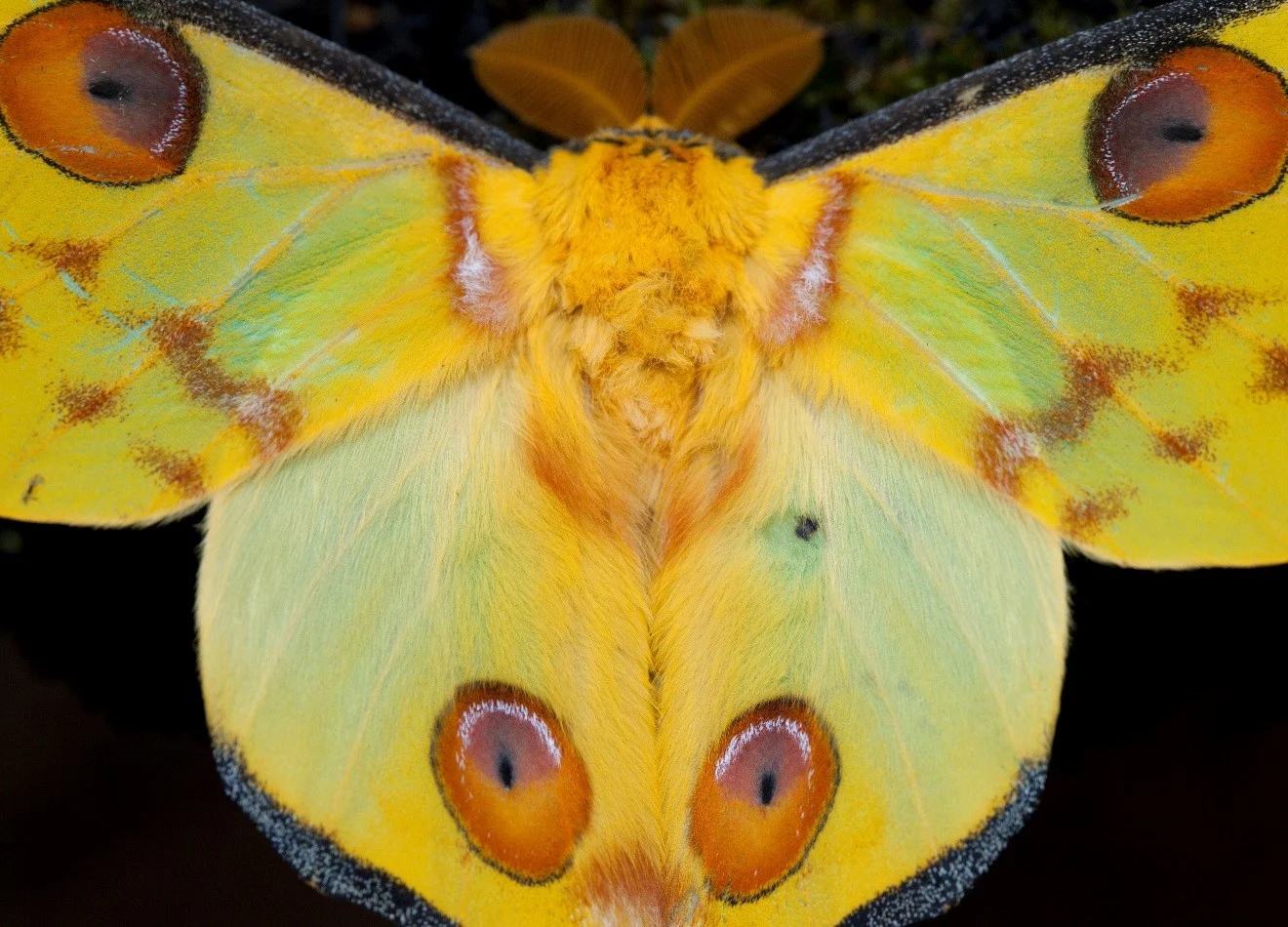
Adventures to the tropical regions of our planet offer an amazing opportunity to “get small” and find some amazingly ornate but small-scale animals. Although this moth is one of the largest in the world, with full size being about the size of a basketball, it takes a different set of eyes to see it as a truly photogenic work of art, opens in new tab.
Here are the steps needed to get this shot:
First, you have to come across such an animal – of course! The good thing is that colorful moths with spectacular eye spots, textures, and colors exist in most countries, and are highly concentrated around tropical regions. The easiest way to spot one is to have a little walk around your jungle lodge at night with a flashlight, and give a good look at each path light or room light you see. They may not always be entirely out in the open, so peek around posts and trees to see if such a creature may be hiding just in the shadows.
Next, you have to have the right lens. Any multipurpose wide angle lens will do just fine, but pay special attention to the “minimum focusing distance” of the lens. It is usually denoted by a small flower icon with a distance in meters and feet (usually something around 0.4m, 1.3 feet, etc.). The closer you can focus, the more exciting the photo becomes.
To get that amazing texture seen here, with each hair in focus, you’ll need to set your camera to a large aperture number, resulting in a great depth of field. Something like f/8, f/11, or higher is often needed.
Pay special attention to the amount of light coming into the camera. Remember from our aperture, opens in new tab section, the larger the aperture number, the smaller the opening that lets in light. Thus, you may need to artificially illuminate the subject with a flashlight or an actual camera flash.
Lastly, composition, opens in new tab matters like always. Just because the subject is extra weird, cool, or photogenic doesn’t mean you can ignore the artistic side of photography and create an evocative end photo. Pay particular attention to leading lines, patterns, and shapes. In the case of this moth, it was so large that if I were to have the entire insect in the frame, there would be a lot of “black space” where the yellow wings do not fill the frame. Because it’s the color and texture I wanted to showcase, I opted to “zoom in” to fill the frame with the brilliance of the moth. It does get a little artsy at this point, but with the incredible pattern of eye spots, it lends itself quite well to this “fill the frame” style of macro photography.
Go forward and give it a shot,