

Jaguar vs. Leopard: How to Tell These Spotted Big Cats Apart in the Wild
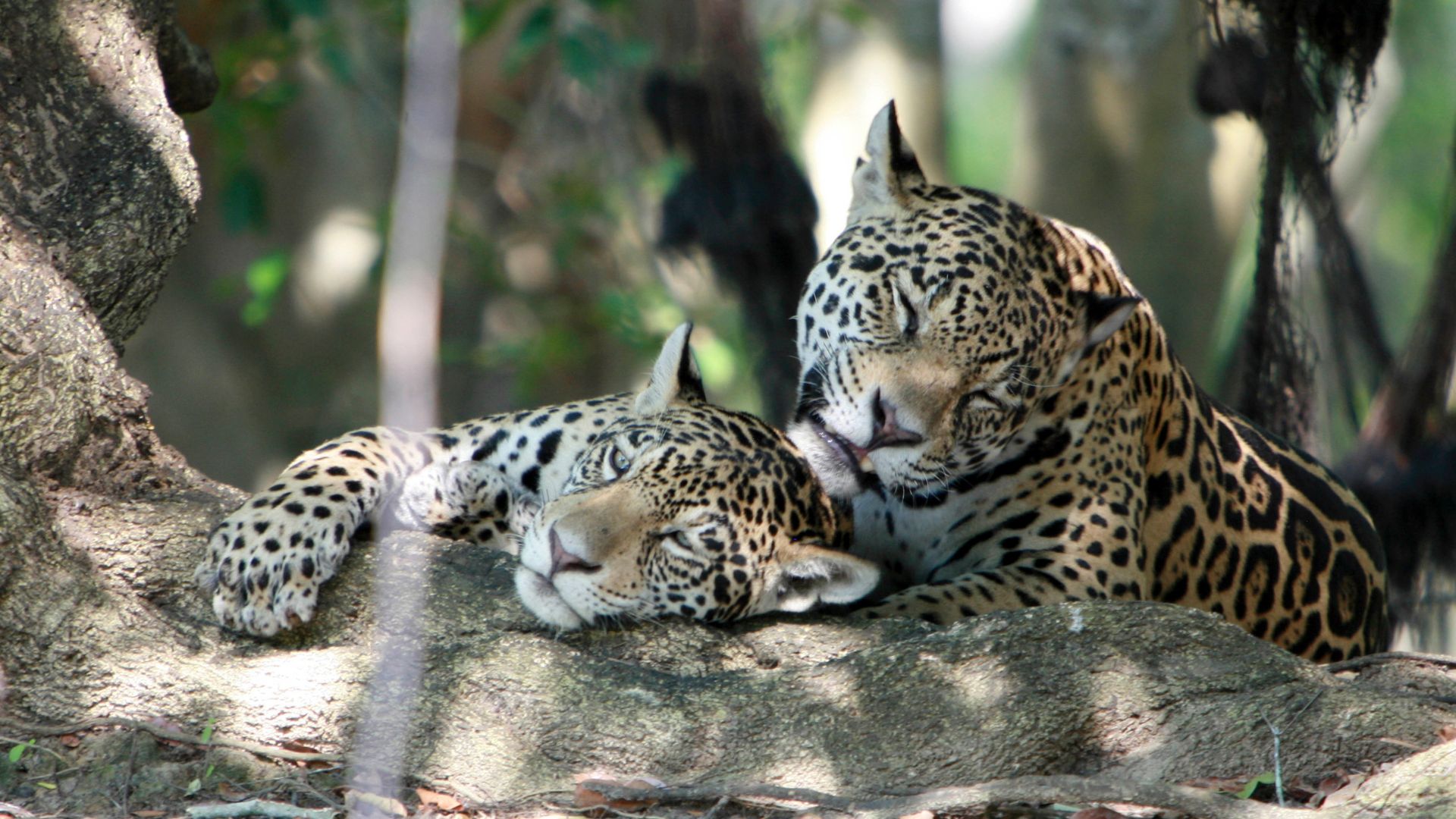
On Nat Hab’s Brazil Pantanal adventure, guests often enjoy close, extended encounters with wild jaguars—one of the few places on Earth where this apex predator can be reliably observed. Seeing a jaguar up close naturally raises a common question: how is a jaguar different from a leopard?
The jaguar vs. the leopard—these two spotted big cats are both members of the Panthera genus, muscular ambush predators and so similar in coat pattern that even experienced wildlife lovers can struggle to tell them apart in photos. While a black panther is easier to recognize because of its dark coloration, many people mistakenly believe it is a separate species. It is not. Let’s take a closer look at what sets jaguars, leopards and black panthers apart.
Where Do Jaguars and Leopards Live?
The fastest and most reliable way to distinguish a jaguar from a leopard is by geographic location. These cats live on entirely different continents.
-
If the spotted cat is in Latin America, it is a jaguar.
-
If it is in Africa, Asia, the Middle East or parts of Russia, it is a leopard.
Cheetahs also have spots, but their much slighter build and different body structure exclude them from the “big cat” category.
What Are the Physical Differences Between Jaguars and Leopards?
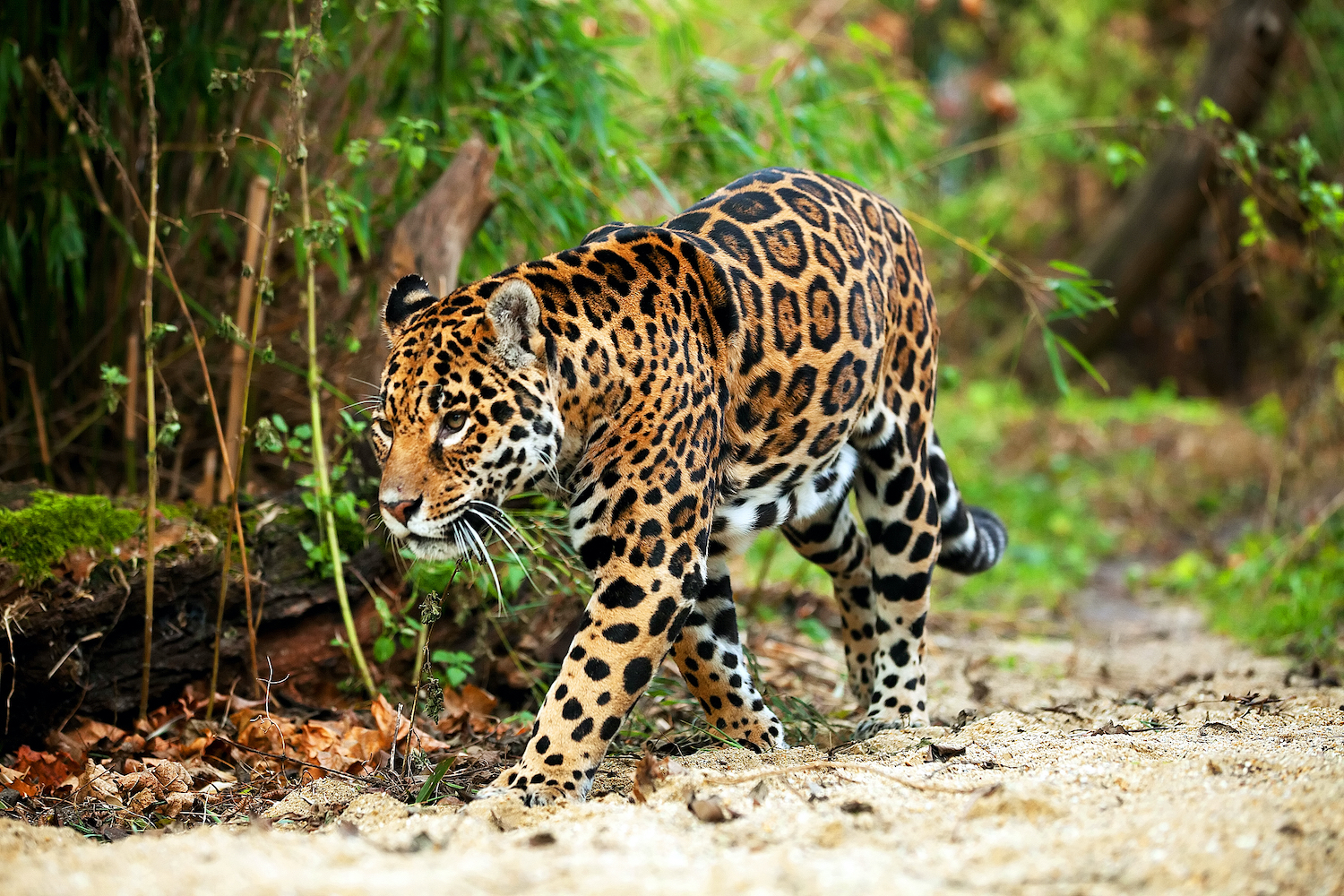
In terms of size and build, jaguars are noticeably heavier and more compact than leopards. Jaguars can weigh up to 250 pounds, compared with roughly 175 pounds for leopards. In the field, however, weight is not a useful metric. Body shape is.
Jaguars are stocky and powerfully muscled, with shorter bodies, shorter legs and a broad chest. They often appear barrel-chested, especially adult males. Leopards are more slender and elongated, with longer legs and a lighter frame. Despite this, leopards are exceptionally strong for their size and are well known for hauling large carcasses into trees.
How Do Jaguar and Leopard Heads and Jaws Differ?
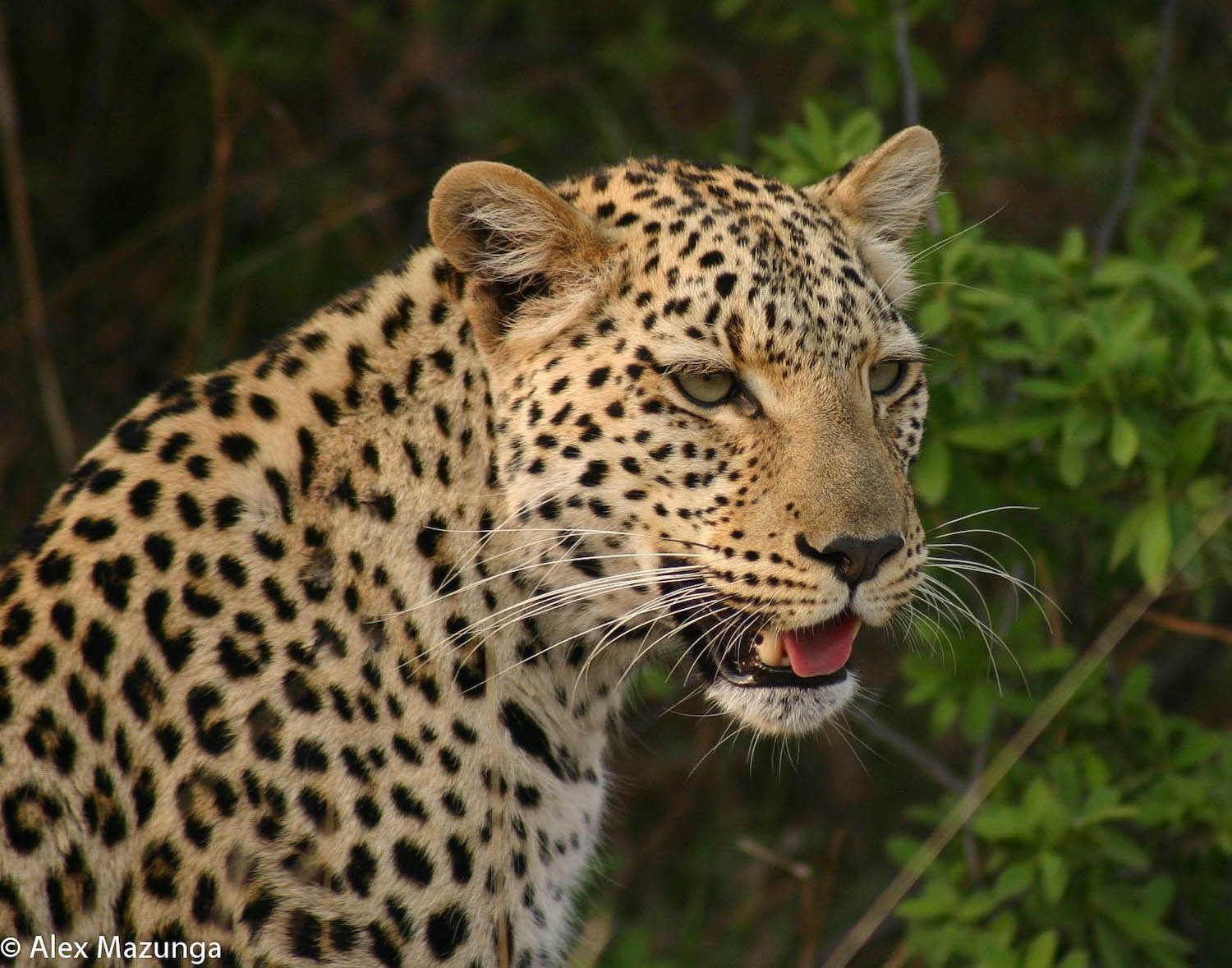
Head shape is another clear distinction. Jaguars have large, broad heads with wide jaws, massive teeth and a rounded facial profile. Their jaw muscles produce the strongest bite force of any big cat, allowing them to crush skulls or pierce the armored shells of caiman and tortoises. Jaguars often kill by biting directly through the skull or severing the spinal column at the back of the neck.
Leopards, by contrast, have smaller heads and rely on a suffocating throat bite for large prey or a bite to the back of the neck for smaller animals.
© Alex Mazunga
How Do Jaguars and Leopards Hunt and Use Their Habitat?
Leopards have longer tails that help them balance while climbing, making them exceptionally agile in trees. Jaguars can climb as well but are generally less arboreal. Unlike leopards, jaguars do not need to haul prey into trees to protect it from competitors. They have no natural predators.
Jaguars are closely tied to water and frequently hunt along riverbanks, targeting caiman and capybaras. Leopards tend to avoid water and focus on terrestrial prey such as antelope and deer. This difference in habitat preference plays a major role in how each species hunts and survives.
How Can You Tell Jaguar and Leopard Spots Apart?
Both species have rosettes, but their patterns differ. Leopard rosettes are smaller, simpler and packed closely together. Jaguar rosettes are larger and more complex, often containing smaller spots within the rosette itself.
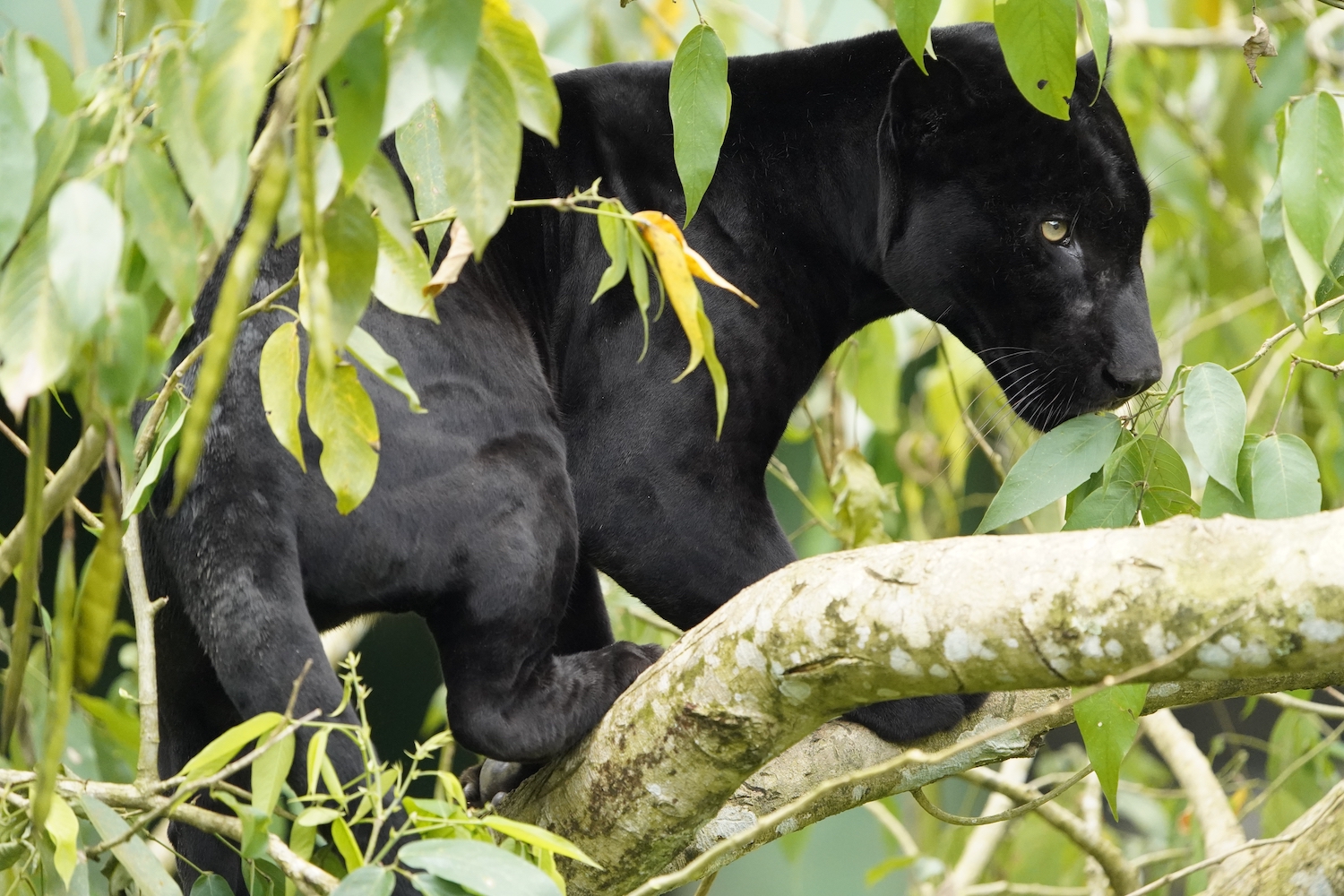
A black panther is the melanistic colour variant of the leopard (Panthera pardus) and the jaguar (Panthera onca).
What Is a Black Panther?
A black panther is not a separate species. It is a melanistic color variant of either a leopard (Panthera pardus) or a jaguar (Panthera onca).
Melanism is caused by genetic variation affecting pigment distribution, resulting in a coat that appears black or very dark brown. Despite their dark coloration, black panthers still have rosettes. These spots become visible when light hits the coat at certain angles.
Where Can You See Jaguars in the Wild?
Habitat loss and poaching continue to threaten jaguars, leopards and black panthers across their ranges. Deforestation has dramatically reduced available territory, and illegal hunting for fur remains a serious concern. Black panthers are especially elusive and are often referred to as “ghosts of the forest.”
Jaguars are generally easier to observe than leopards because of their affinity for rivers and open wetlands. For travelers hoping to see jaguars in the wild, Brazil’s Pantanal offers the highest likelihood of success.
Designated a UNESCO World Heritage Site and Biosphere Reserve, the Pantanal is South America’s largest tropical wetland. The Porto Jofre region has the highest density of jaguars in the ecosystem, with peak viewing from mid-June through mid-October. On Nat Hab’s Pantanal safari, guests explore this landscape by boat, on foot and by 4×4, offering exceptional opportunities to observe jaguars in their natural habitat.