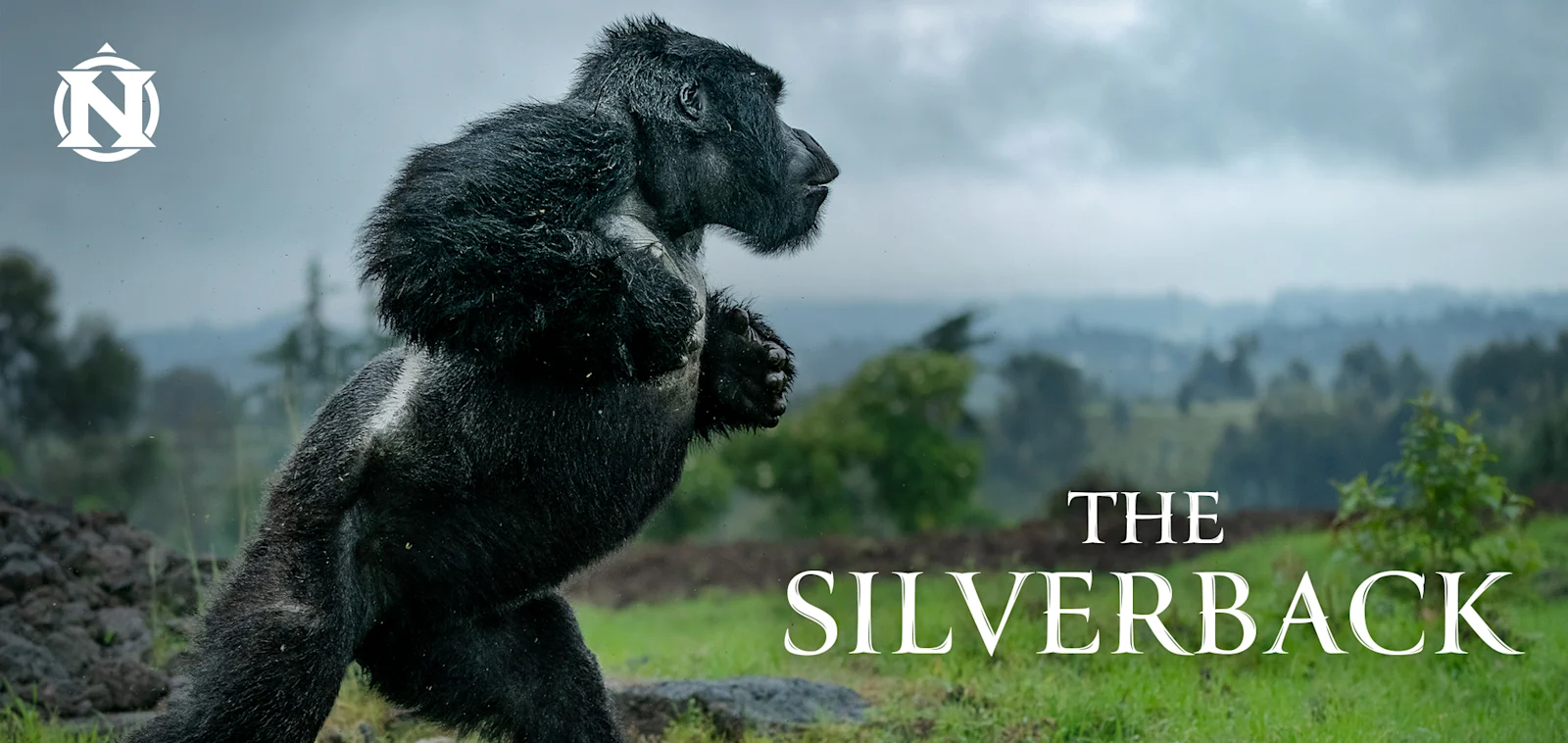
The Silverback

“One of the biggest myths is that you’re not allowed to look into a gorilla’s eyes. Of course, you are,” reveals Richard de Gouveia, Nat Hab Expedition Leader and star of our short film, The Silverback. “It’s the place where you’re going to see their soul.”
The concept of a “soul” is human by design. And although science tells us not to anthropomorphize animals, some species—like the gorilla—are arguably more human than non. In addition to sharing more than 98% of our DNA, gorillas and humans share a kinship that transcends kingdoms.
American wildlife biologist George Schaller famously wrote, “No one who looks into a gorilla’s eyes—intelligent, gentle, vulnerable—can remain unchanged, for the gap between ape and human vanishes; we know that the gorilla still lives within us.”
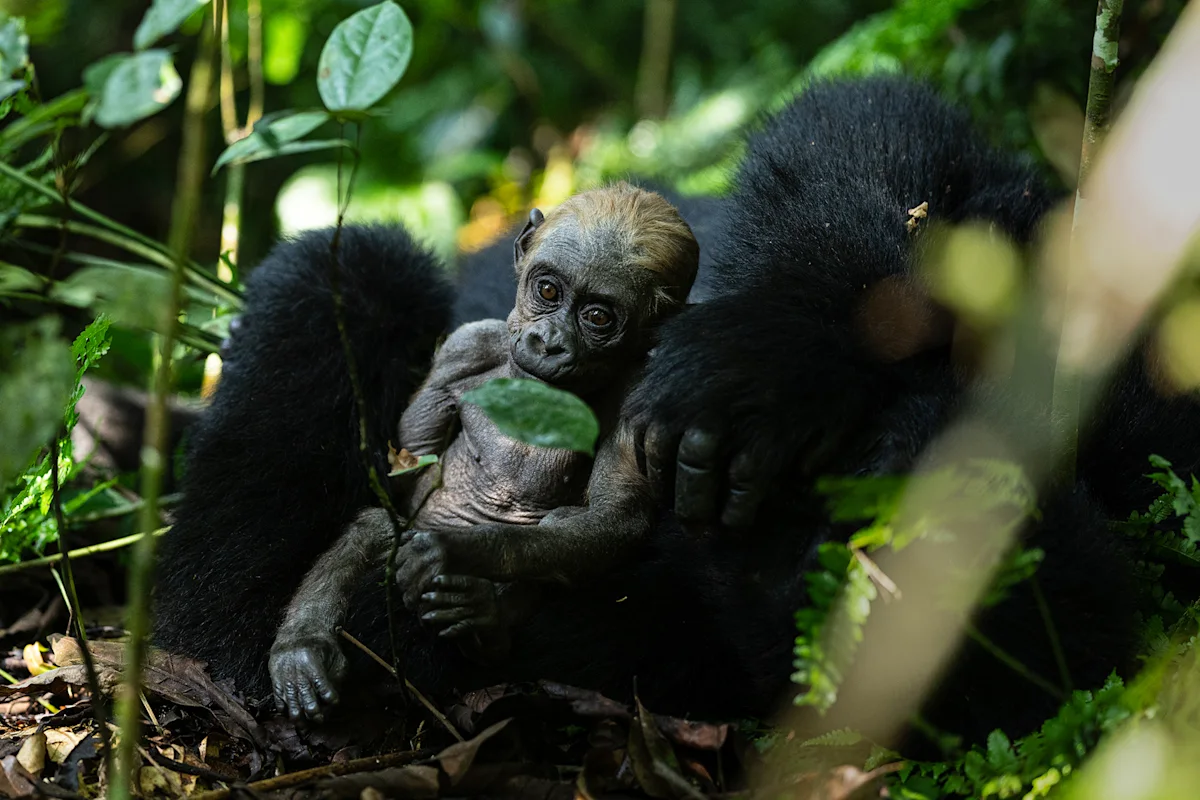
Schaller’s words went on to inform and inspire famed American primatologist and conservationist Dian Fossey’s life work. Collectively, their research on mountain gorillas was seminal in de-villainizing our closest cousins and educating the public about the threats they face, opens in new tab. “Conservation is based on emotion,” Schaller declared. “It comes from the heart, and one should never forget that.”
Meet Richard de Gouveia, Star of The Silverback
Richard de Gouveia’s heart yearned for meaningful connections with animals from an early age, opens in new tab. He recalls being eight or nine years old, standing at the edge of a fence that prevented elephants and rhinos from wreaking havoc in the community. “I’ve always been drawn to the stillness of nature, the beauty of it, and just the mystique,” he says. At that moment, de Gouveia vowed to become a South African game ranger to defend species from people who wished to cause them harm.
Over time, however, de Gouveia’s dream became eclipsed by societal pressures and familial obligations. Then, tragedy struck de Gouveia’s family, and the nightmare that followed led him down a dark path and farther from his childhood vision.
Unsure how to create a new normal and achieve happiness again, de Gouveia set off into the bush one morning at 4 a.m. with his camera, opens in new tab.
That sunrise game drive evolved into weekly excursions, doubling as therapeutic immersion in the wild. By returning to the nature he was so intimately acquainted with in his youth, de Gouveia rediscovered the peace and direction he had lost. “I felt alive again for the first time in many, many years,” he shares.
A decade and a half later, de Gouveia has guided hundreds of travelers into similarly transformative encounters in nature. One memory stands out as particularly moving:
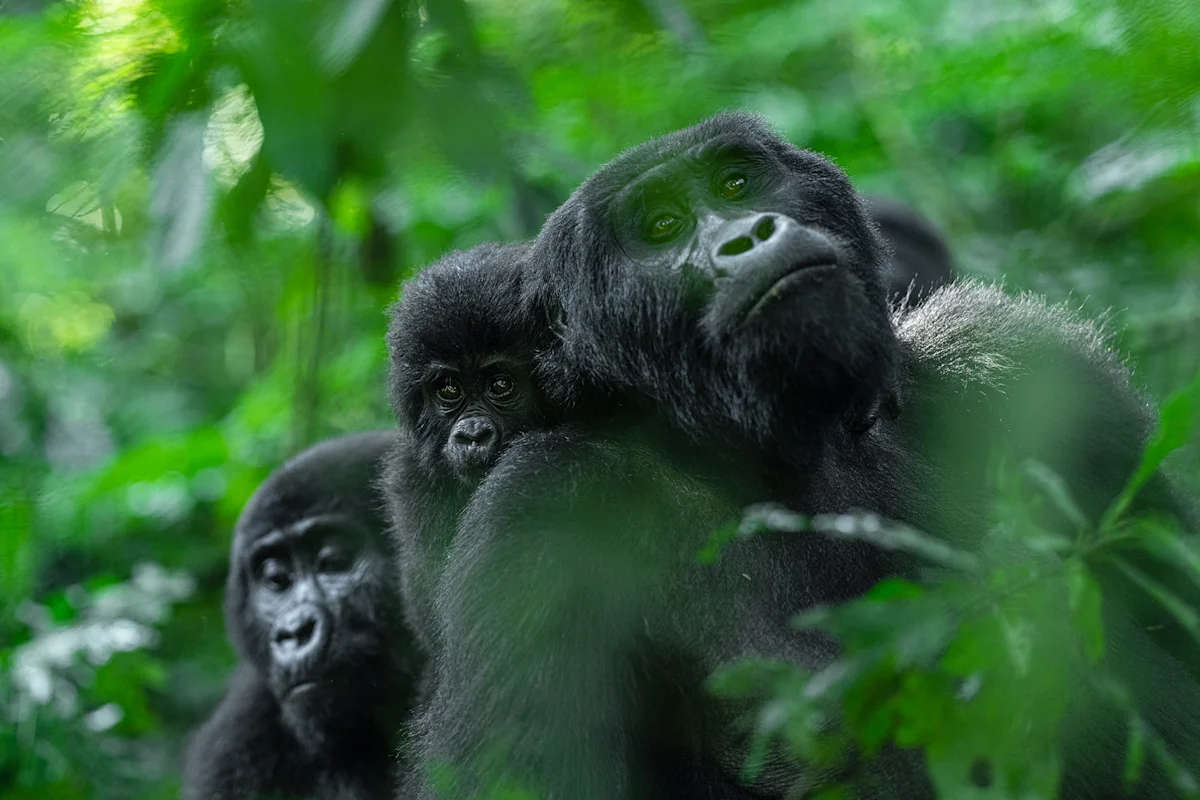
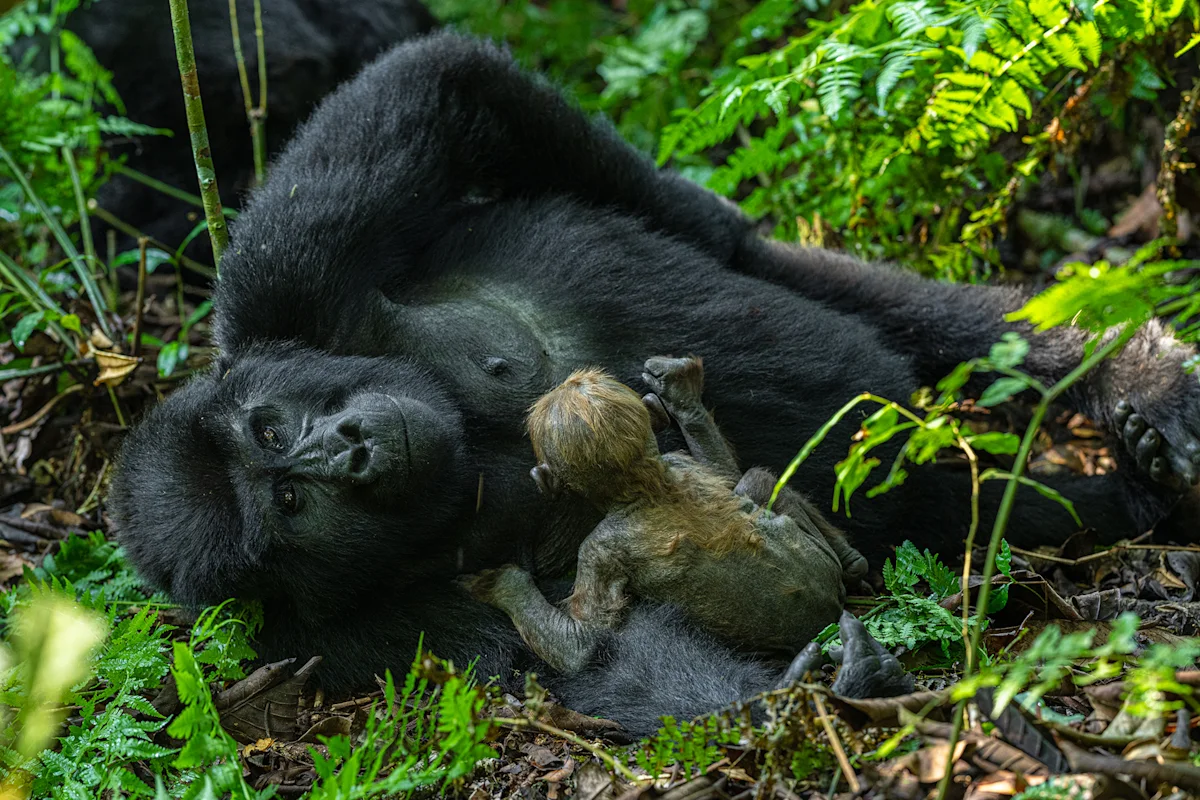
“I had a moment with a gorilla. She had a very young baby, and she let me get into a space I could bring the guests into. And she showed off her baby. And that was emotional for me…You sit there and look at these beautiful brown eyes of theirs. And you can see this all just like you can when you look into the eyes of a person. Each one’s got a different personality. Each one behaves differently. They live in these beautiful family groups run by a silverback.”
Today, much of de Gouveia’s strength is owed to his own family unit—to being a husband and a father. “My role is the silverback,” he explains. “If I could teach my kids anything, it’s that they can do whatever they want with the right purpose. If they find their purpose, they will be able to change lives.”
“We filmed it last fall in Uganda, Rwanda and South Africa, and I think it is one of the most powerful films we’ve made to date. We spent a lot of time with chimpanzees and gorillas, and I can’t wait to show people the footage and the story,” says The Silverback director, Andrew Ackerman, opens in new tab. Ackerman also directed another recent Nat Hab film, The Bear Coast. Watch the video and read his behind-the-scenes interview!