




Itinerary
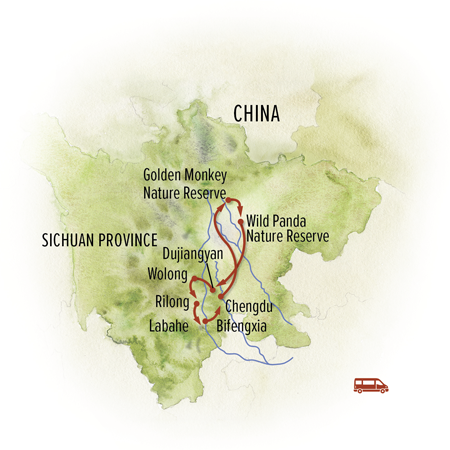

Arrive in Chengdu, the vibrant capital of Sichuan province. Over a group lunch, get to know your Expedition Leader and our local Chinese naturalist guide, and enjoy an ntroduction to the renowned cuisine of Sichuan that will be a highlight of our travels together—Chengdu has received global recognition from UNESCO as a City of Gastronomy. Chengdu is also famed as the home to the Chengdu Research Base of Giant Panda Breeding. Founded in 4th century BC, Chengdu is unique as the only major Chinese settlement that has maintained its name throughout the imperial, republican and communist eras for more than 2,000 years. Today, Chengdu is an important center for higher education and a top global center for scientific research. Learn more about the city as we discover highlights with our Expedition Leader this afternoon, including a walk through serene Bamboo Park on the Jin River, a leafy enclave where locals enjoy strolling, playing mahjong and practicing tai chi. After time to relax at our luxury hotel in the heart of the city, gather for a welcome dinner and an orientation to all the nature adventures that lie ahead.
As we prepare to leave Chengdu, we stop to stroll down Jinli Ancient Street and visit the adjacent Tibetan Quarter. The historic pedestrian street is known for its traditional Ming and Qing Dynasty-style architecture, Tibetan merchants, food stalls, Sichuan snack vendors, handicraft and art shops, teahouses, bars and folk performances. We’ll have lunch in the area, then leave the bustle of the city behind us as we depart on a scenic drive north into the Minshan Mountains. This range in northern Sichuan stretches 250 miles from north to south with its highest peaks rising above 18,000 feet. It’s a wild enclave of lush, densely forested slopes and deep river gorges that shelters an abundance of rare and endangered Chinese wildlife. We stop along the way at impressive viewpoints as we journey deep into the mountains, eventually arriving at our hotel where we unwind and anticipate our first wildlife encounters tomorrow.
Rise early this morning to visit a secluded nature reserve that’s home to a large, lively band of golden snub-nosed monkeys. The sanctuary, which covers nearly 40,000 acres, lies near a UNESCO World Heritage Site and Biosphere Reserve in the Minshan Mountains. Encompassing large tracts of virgin forest, pristine lakes, rivers and waterfalls, it is home to 46 different rare animal species, of which the golden monkeys are arguably the most charming. To reach them, we walk uphill on a forested trail for about 30 minutes, depending on where the monkeys are located today, with rest stops en route. We expect excellent sightings, as the monkeys are habituated to humans and unfazed by our presence. They live in highly social groups, and their animated interactions at close range delight us. With blue faces, a small, upturned nose, and covered with a mantle of long, shaggy reddish-gold fur, they are hardy creatures, tolerating winter snow and colder temperatures better than any non-human primate. They inhabit high mountainous forests at elevations up to 10,000 feet, descending to lower altitudes in winter.
After our morning with the monkeys, we head into an even more remote sector of these misty mountains, stopping en route in the Muslim village of Qing Xi. We have time to wander its narrow lanes, capturing scenes of street life amid 300-year-old wooden buildings that date to the Qing dynasty. It's a peaceful setting, with a stream coursing through the center of the village. Just beyond the small town lies a secret slice of Chinese wilderness, a chain of nature reserves little known to outsiders and visited by a mere handful of Westerners. Our destination is a national wildlife sanctuary that harbors a vital population of wild giant pandas. We don’t choose to name it, as it is virtually undiscovered by tourists, and we are likely to be the only visitors there. As we follow a rushing river up a narrow valley to reach the reserve, keep an eye out for nocturnal wildlife starting to emerge as dusk descends. Eventually, we reach our hotel, tucked away in the forest along the river, in a setting where our nearest neighbors are mostly wild animals that thrive in these remote protected environs.
Our focus today is an isolated 100,000-acre national reserve with a densely forested ecosystem that is among the most diverse and intact in Asia. This wildlife sanctuary, rated Grade I by WWF as a global biodiversity hotspot, holds healthy populations of some of the world’s most endangered and vulnerable aninals, including at least 60 giant pandas. Among its 430 mammal species, the reserve harbors more than 1,200 takin—a large, shaggy relative of wild sheep and goats—as well as more than 2,400 different kinds of plants. Look for wildlife on morning and evening excursions, stopping to drink in stunning vistas of waterfalls, boulder-strewn gorges and mist-shrouded limestone peaks. This is prime panda habitat, and while sightings of this famously elusive mammal are extremely rare, our exclusive permits allow us into distant areas of the reserve where they live and breed freely, affording us the best possible chance to spot signs of them in the wild. Even though we are highly unlikely to spy them in the heavy bamboo understory, just knowing we are in their midst is exhilarating. Search for other species within the reserve’s verdant recesses, too, including Tibetan and rhesus macaques, golden and Sichuan takin, musk deer, muntjac, serow, wild boar and blue sheep. More rarely, we may see endangered moon bears and red pandas. Birding is superb, with more than 150 species in the reserve—the elegant golden pheasant is a prize. We can often spot all of these from the remote roads and trails we explore, although dense vegetation and weather can affect our sightings.
A spectacular drive is in store as we make the full-day journey south from the edge of the Tibetan Plateau to Dujiangyan. Winding through this mountainous region, we pause periodically along our route to admire dramatic landscapes, rural villages and Buddhist temples. Along the way, we pass through the town of Mianyang, known as Fujun in ancient times, with a 2,200-year history that spans the Qin and Han dynasties. We also stop at a local market for a taste of rural life, showcasing the bounty of fruit and vegetables harvested in the Sichuan Basin. Enjoy a traditional dinner this evening, then rest up from the day’s journey at our elegant new resort hotel in Dujiangyan. Either tonight or tomorrow night, we’ll take a night walk to view Nanqiao Bridge, built in traditional Chinese architectural style and spectacularly lit up after dark. The bridge crosses a canal that slices through the center of the city, part of an ancient irrigation system of dams and canals still in use 2,500 years later.
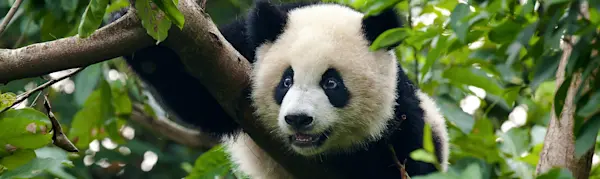
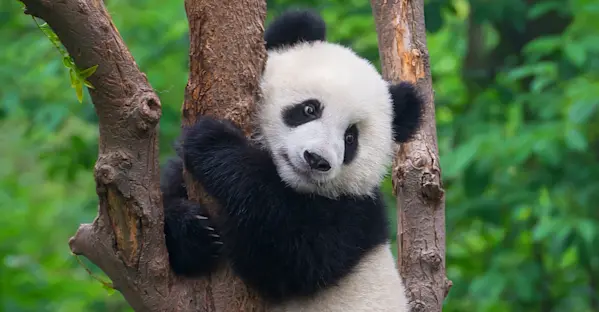
Close-up encounters with China’s beloved giant pandas are in store today as we visit two panda conservation facilities in Dujiangyan. Dujiangyan Panda Base, which opened in 2013 with the arrival of 10 pandas, focuses on rescue, disease control and prevention, and rehabilitation of injured and ill wild pandas. It has expanded its mission, and its numbers, to encompass care for senior and disabled pandas as well as healthy pandas that are part of the preventive research program. A highlight of our time is a special opportunity to volunteer in their care (though it is not guaranteed and depends on the status of the pandas at the time of our visit). Conditions permitting, we’ll have the chance to interact with pandas at close range as we help their keepers care for them, including tasks such as preparing their food and cleaning enclosures.
This afternoon, we visit Dujiangyan Panda Valley, a new facility that is both a panda research and breeding base and a center for conservation education. This quiet setting, landscaped with flowers, provides a natural environs where pandas are gradually habituated and returned to the wild. Reintroduction training experts from around the world gather here for collaborative research. We may see pandas in transitional concrete-block “dens” that are learning to live on their own in the surroundings that mirror their wild habitat. We often see many red pandas here as well.
Today we visit Gengda Wolong Panda Center in the Wolong Nature Reserve, a base that integrates scientific research, captive breeding and reintroduction of pandas into the wild. More than 30 pandas reside at the center, which includes a 680-acre bamboo forest. Get close-up photos of giant pandas in this natural habitat that features a striking mountain backdrop. Then continue to Rilong, a Tibetan village famous as a base camp for climbing 20,505-foot Mount Siguniang. Translating to Four Sisters Mountain, this imposing massif encompasses four separate peaks and is often referred to as the “Chinese Alps.” In Rilong, we are immersed in Tibetan culture, with traditional architecture on display and yak butter tea for sale by local vendors. This high-altitude village, 10,000 feet above sea level, is the center of the Jiarong Tibetan culture, found only in this region of Sichuan province. The rural Jiarong people are known for their intricately embroidered costumes and agricultural lifestyle.
Early risers may catch the sunrise behind the peaks in Rilong, a vista renowned for its singular beauty. We spend the day exploring the dramatic scenery of nearby Siguniangshan National Park. Entering the 25-mile-long Shuangqiao Valley, snow-capped peaks rise in every direction, with Four Sisters Mountain towering above. The valley floor is 10,000 feet above sea level, and the highest mountains nearly double that. Explore the colorful geological features and mirror-like lakes of this subalpine terrain, following boardwalk trails that weave among occasional pagodas and prayer flags. This high-altitude forest is also native habitat for the endangered red panda. Deeper into the valley, we reach the Ginsenguo flatland, with a viewing deck overlooking highland swamps and snowy peaks, and Jiujia Lake, which is actually a group of four seasonal lakes and nine perennial ones—the legendary bathing pools for the “four sisters.” After a full day of exploration in the park, we travel back down the valley to spend a second night in Rilong.
Depart this morning for Labahe Nature Reserve located southwest of Chengdu in the Hengduan Mountains, stopping en route for magnificent mountain vistas, birding opportunities and lunch. Once we reach our destination and check in to our hotel, it’s time to start exploring the reserve. Labahe is one of China’s top spots for seeing the elusive and endearing red panda, and while sightings are never guaranteed, we often spot them in these alpine forests. As the day draws to a close, we may see water deer coming down to a salt lick just outside our hotel.
A full day is dedicated to searching for wildlife, especially red pandas, in the Labahe reserve. Although giant pandas also live here, we are much less likely to see them. Comprised of mixed forests and pockets of dense bamboo, the reserve’s diverse vegetation and altitude create ideal habitat for the red panda, which is adapted to environments above 7,000 feet. A wide variety of other mammals and birds thrives here, too, and we look for Tibetan macaque, Chinese leopard cat, hog badger, serow, sambar deer, golden takin, and red and white giant flying squirrels. Notable birds include the golden-breasted fulvetta, Lady Amherst’s pheasant, crimson-breasted woodpecker and three-toed parrotbill. In our private vehicle, we have the freedom to explore different parts of the reserve, including opportunities for striking landscape photography from higher mountain locations.
Early this morning, depart for Bifengxia Panda Base, a branch of the China Conservation and Research Center for the Giant Panda established in 2003. Previously, as the program at the main Wolong Panda Center continued to grow, conditions became crowded and the threat of an outbreak of disease or infection posed significant concern. If an epidemic were to occur among the captive giant pandas at Wolong, it could destroy the entire population. Splitting the population into two and locating a second panda group at Bifengxia was planned to prevent this from occurring. Within this natural valley forested with the giant panda’s favorite food, bamboo, we see plenty of pandas roaming within large, lushly vegetated enclosures. We then head to scenic Bifengixa Gorge to have lunch before continuing to our hotel conveniently located at Tianfu Airport for departures tomorrow. This evening, join your Expedition Leader, local guide and traveling companions to celebrate our adventures at a farewell dinner.
After breakfast at our hotel, a transfer is included to the nearby airport terminal to meet departing flights.