


Itinerary
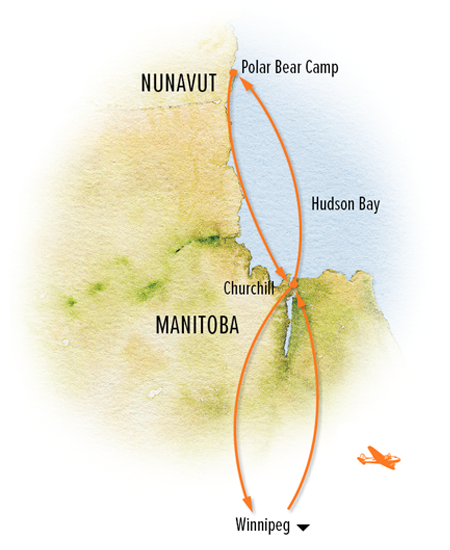
Our Canada polar bear adventure begins in the vibrant city of Winnipeg. Once an important Hudson's Bay Company fur-trading post and later a boomtown for the Canadian Pacific Railway on the eastern edge of the vast Canadian prairie, today Winnipeg is Manitoba’s cultural, commercial and provincial capital. Transfer on arrival to the historic Fort Garry Hotel, grande dame of Winnipeg hospitality and one of the city’s most prestigious landmarks. The hotel was built in 1913 by the Grand Trunk Pacific Railway to provide luxury accommodations for upper-class train travelers as part of an effort to lure them to the Canadian West. Meet your Expedition Leader at a welcome dinner at our hotel this evening. You'll also have a chance to visit our gear room to borrow a heavy parka and winter boots to use during your time on the tundra in Churchill.
Transfer to the airport in Winnipeg this morning for our flight north to Churchill. This remote frontier town of fewer than a thousand residents was originally the site of a Hudson's Bay Company fort and fur trading post established in 1717. It is accessible only by air or rail, or, in summer when the sea ice has melted, via its seaport on Hudson Bay. This evening, enjoy a presentation by our naturalist Expedition Leader on polar bears and northern ecology.
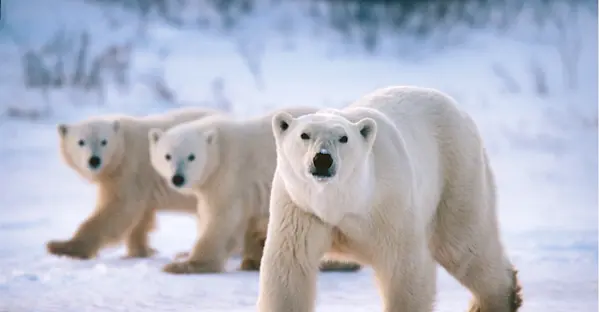
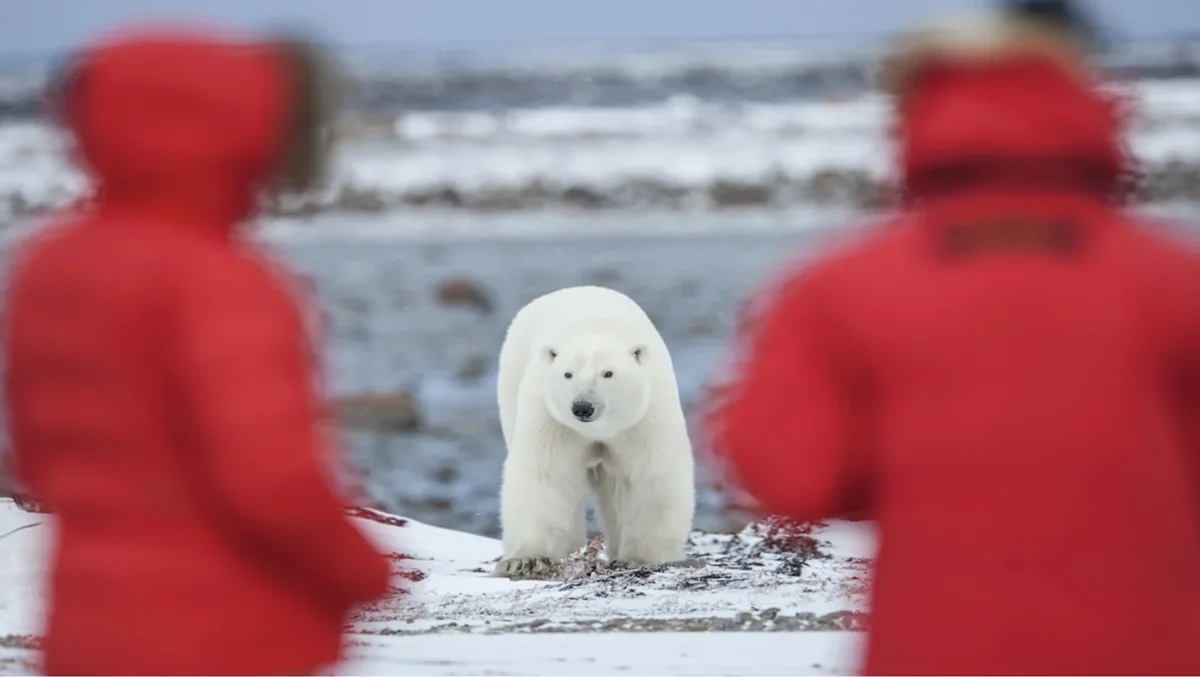
Fly north from Churchill by chartered Twin Otter plane to reach our ultra-remote camp on the northwest edge of Hudson Bay. A collection of four simple cabins and a shared lounge and dining space, the camp provides cozy, comfortable accommodations in the Arctic wilderness. Located directly on the bears’ migratory route, the camp offers potential for exceptionally close, quiet polar bear encounters. The electric fence protecting the camp ensures we observe the bears in safety, yet it feels as if there is nothing between us and them as they move over the tundra, sometimes just yards away. They are headed toward the bay’s edge where the sea ice forms first, signaling the start of their winter seal-hunting season once the saltwater expanse is frozen.
Not only is the experience thrilling, it’s peaceful, too, as we have sole occupancy of the camp for just eight guests. We are alone in the polar bears’ natural habitat, away from crowds, vehicles, roads or other infrastructure. The sense of genuine wilderness is palpable, and we are aware that very few people on the planet will have this opportunity to be in the polar bear’s realm in such profound solitude. Other northern wildlife is occasionally found here, too, and we keep an eye out for Arctic fox and Arctic hare.
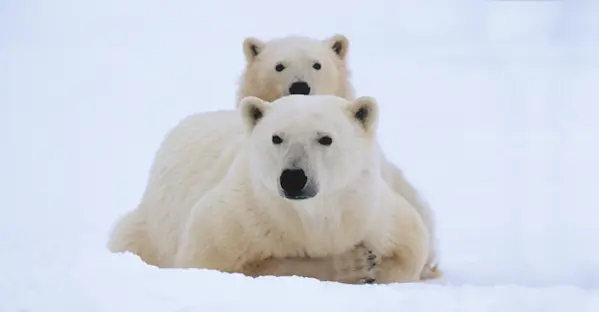
Each day, join our Expedition Leader and local Inuit guides to search for polar bears, called “Nanuq” in the Inuktitut language. At the top of the Arctic food chain, the polar bear is the largest bear species, with males reaching 10 feet tall and weighing up to 1,500 pounds. We may see lone males ambling over the tundra, mothers carefully stewarding cubs, or juvenile males sparring playfully with one another. Each day, we watch and wait, eager to see what encounters nature will offer up to us.
On occasion, when safety permits, we may go outside the camp compound in the company of our guides to look for tracks and signs of smaller northern wildlife, such as Arctic fox and Arctic hare. Once darkness falls, we also keep an eye on the sky for a chance to see the northern lights when the weather is clear. This region is one of the best on the planet for viewing the aurora, and we may get lucky with a dramatic celestial display.
Through our relationships with our local hosts, learn not only about polar bears and wildlife of Nunavut, but also the history, culture, traditions and contemporary subsistence lifestyle of Canada’s Indigenous Arctic people. Nunavut—their ancestral Inuit homeland—was created when the map was redrawn in 1999, dividing the Northwest Territories into two. The newly named eastern sector was given to the Inuit, along with the right to self-government. In their language, Nunavut means “our land.” Today’s Inuit, once called Eskimos by European explorers, are the descendants of the Dorset and Thule peoples who crossed the Bering Strait. Their knowledge of this land and its wild inhabitants extends back millennia, and our time among the polar bears is deeply enriched by their stories and insights.
On Day 7, make the 50-minute flight back to Churchill by private chartered plane. Even though Churchill has just 900 residents, we've clearly returned to civilization, after having spent the last several days utterly alone on the tundra with the polar bears. But more adventures await over the next two days as we discover the rich history, unique cultures and contemporary lifestyles of this vibrant small town that lies where the Canadian North Woods meets the tundra and ocean.
Churchill's people are a melding of cultures, descended from Cree, Dene, Inuit, Metis and European ancestors. On a tour of the town, we learn about its Indigenous heritage, extending back 4,000 years, as well as its significant history in the opening of the Canadian West. Euorpean contact began with Henry Hudson's arrival in 1610, and the Hudson's Bay Company established a fur trading post in 1689, rebuilt in 1717 as Fort Churchill. More than two centuries later, the Hudson Bay Railway was completed in 1929, transforming Churchill into a key northern seaport and facilitating the movement of grain from the prairie provinces.
Northern traditions persist in Churchill, and we'll meet a renowned Metis dog musher who introduces us to his avid team of huskies. Get to the know the dogs, then take a brisk ride through the boreal forest powered by paws, as they pull and yelp with enthusiasm. At the Itsanitaq Museum, learn more about the region’s Inuit heritage. Its collection of Inuit art and artifacts, from soapstone and ivory carvings to ancient weapons and wood-framed kayaks, features some of the finest and oldest objects in the world, dating from Pre-Dorset (3000 B.C.) through Dorset, Thule and modern Inuit times. We also visit the Churchill Northern Studies Center, a nonprofit research station and experiential education center dedicated to understanding and sustaining life in Canada's remote subarctic. See the center's Rocket Greens hydroponic food production project, developed to help provide year-round access to fresh leafy produce for local residents. And throughout our exploration of Churchill, enjoy the town's impressive murals, created through SeaWalls: Artists for Oceans, a 2017 project that commissioned 18 artists from around the world to paint giant scenes that would educate and inspire local people and visitors to protect our wild seas. Today, Churchill residents take great pride in the public art that has revitalized the town's identity.
With one last morning to enjoy Churchill, you may be able to pick up some locally made handicrafts or take an optional helicopter tour over the tundra before we depart. We'll have a final lunch together in town before flying back via chartered plane to Winnipeg, where a farewell dinner at the Fort Garry Hotel concludes our adventure together.
After breakfast, a transfer to the airport is provided to meet homeward flights.