






2027 Itinerary
Itinerary
Day 1: Arrive in Antananarivo for your island expedition
Opt for a tour of the Queen’s Palace and Photography Museum
Join your Expedition Leader for a welcome dinner and preview of the journey ahead
Our adventure begins in Antananarivo, the capital of Madagascar. Known locally as "Tana," Madagascar's largest city is home to roughly 3 million people, while the balance of the country's population lives mostly in rural areas. A transfer is included from the airport to our hotel, located on the outskirts of the city. Those who arrive early may wish to join an optional city tour with our Expedition Leader, which includes a visit to the Queen's Palace and the Photography Museum. This evening, gather for a welcome dinner with our Expedition Leader and traveling companions, with an orientation to all the adventures that lie ahead.

Days 2 to 4: Explore sacred spiny forests and ancient baobabs in remote Mandrare
Walk through endemic spiny forest with an Antandroy guide
Search by flashlight for sportive lemurs, mouse lemurs, chameleons and geckos
Photograph ancient baobabs silhouetted against a Malagasy sunset
Fly by private chartered plane to southeast Madagascar and transfer from the Ifotaka airstrip to Mandrare River Camp, just a few minutes away. The camp hugs the banks of the river that is the lifeblood of this remote ecosystem, well off the typical tourist track. Nine luxury tents are shaded by tamarind trees, with private verandas overlooking the river. The environment is rich in biological diversity and cultural heritage, which we explore during our three-night stay.
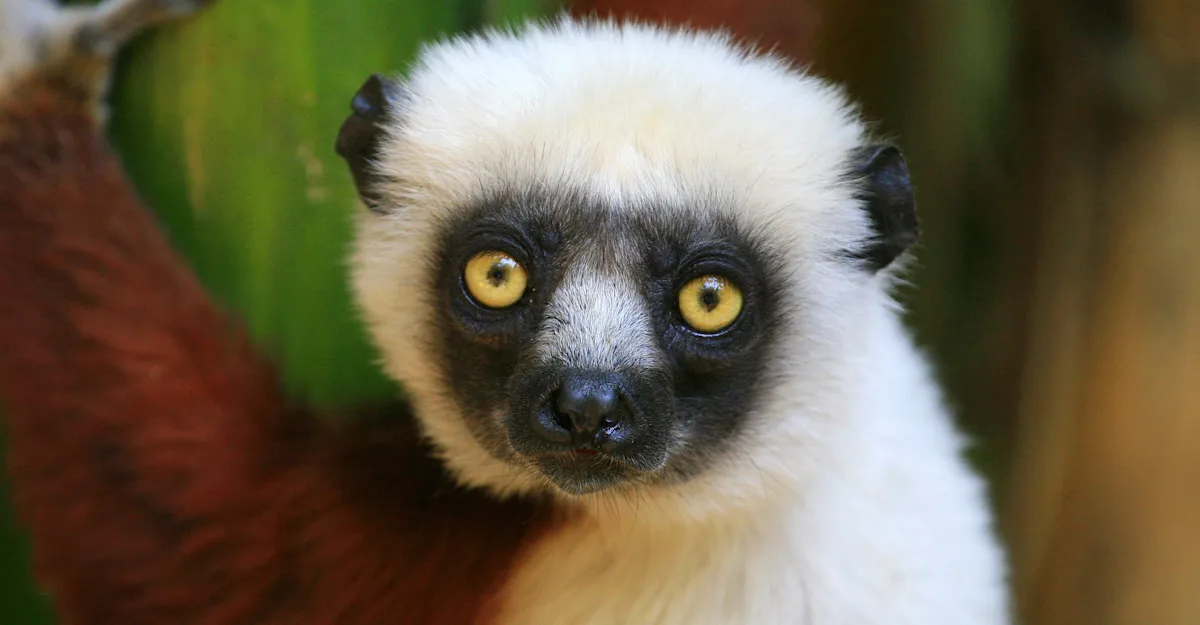
We are surrounded by the sacred ancestral forests of the Antandroy people, who have been sustained by the Mandrare River for centuries. The endemic spiny forest is like no other place on Earth, protected by the local community and WWF in a joint effort. The tall, spiky octopus trees are among the unique flora providing a home for abundant lemurs—primitive primates found only in Madagascar—and other fascinating endemic wildlife. On a walk through the forest, we’re joined by a local Antandroy guide who shares his people’s culture and customs with us. Birdlife is abundant in the nearby wetlands, with painted snipe, malachite kingfishers and egrets often on view. As the sun sets, the dynamic of the spiny forest changes. Ringtail lemurs and Verreaux’s sifakas bed down in the tamarind trees for the night as a whole host of other intriguing creatures starts to stir, including nocturnal birds, chameleons and geckos. A night walk illuminated by flashlights reveals the shining eyes of white-footed sportive lemurs and palm-sized mouse lemurs scurrying through the trees looking for their next meal.
A short drive from the camp leads to another striking forest environment: More than 100 baobab trees provide a spectacular photo opportunity for a Malagasy sunset. These massive trees are a nearly thousand-year-old legacy of the dense tropical forests that once covered this landscape. Over the centuries, as Madagascar’s population grew, the forests were steadily cut down, yet these dramatic specimens remain, icons of the country’s native ecosystems and cultural heritage. Rising almost 100 feet tall, baobabs have straight, cylindrical trunks that grow up to 10 feet in diameter. Their flat-topped crowns create an evocative silhouette at sunset. With rains, baobabs put out a profusion of flowers, drawing bats, beetles, moths and other insects to feed on their sweet nectar. The baobab’s fruit is about the size of a large coconut and is eaten by lemurs as well as humans. The bark of the baobab is used as a fiber for rope, cloth, nets, baskets and paper. The baobab’s status as a keystone species holds special importance in its ecosystem, yet in addition to deforestation, climate change also threatens their survival, and we learn about conservation efforts to protect the remaining trees. Of the seven baobab species that grow in Madagascar, six are endemic to the island.

Days 5 to 6: Hike sandstone canyons in search of ring-tailed lemurs
Explore Isalo’s sculpted canyons, dry grasslands and unusual desert flora
Swim beneath a waterfall in a secluded natural pool
Experience some of Madagascar’s clearest night skies
Fly north by chartered plane to a region of mountainous plateaus and eroded canyons reminiscent of the American Southwest, where massive rock outcrops rise from dry grass plains. Reaching the striking Isalo massif, observe fascinating flora that thrives against this Jurassic-era sandstone backdrop, including the odd-looking swollen pachypodia, or “elephant’s foot,” with its bright yellow flowers.Several varieties of lemur live among the cacti, aloes and palms, especially the ring-tailed lemur we look for on a hike in Isalo National Park. The 200,000-acre park is also home to more than 80 bird species and 33 reptile species. It is the sacred homeland of the tribal Bara people, whose burial sites are marked by mounds of tiny stones placed in crevices in the rock faces. Amid the arid landscape, we come upon a swift stream running through an ancient deep gorge. There's an option to climb a series of steep steps to a natural pool fed by a thundering waterfall that has carved its course into the sandstone. Later, as the sunset fades, look up at the ebony sky for some of the best stargazing on the planet.

Days 7 to 9: Follow the haunting calls of Madagascar’s largest lemur
Track indris and diademed sifakas through misty montane rainforest
Search by night for chameleons, tree frogs and mouse lemurs
Meet rescued lemurs at the Lemur Island sanctuary
Return to the capital city of Tana by private chartered aircraft this morning, then transfer by road to Andasibe-Mantadia National Park, winding past rice paddies and small villages along the way. Within this protected rainforest, we hike in search of abundant lemurs. The country is home to approximately 100 species and subspecies of lemur, and the world’s largest, the indri, is found in this park. As exciting to hear as it is to see, this pied creature has a distinctive call, its loud, eerie wailing ringing out through the trees. We may also spy gray bamboo, Eastern woolly and black-and-white ruffed lemurs, as well as diademed sifakas that spring through the canopy like athletic dancers. On night walks, look for tree frogs, chameleons and brown mouse lemurs that skitter among the strangler figs and giant ferns.
Madagascar’s premier national park is a critical component of the country’s efforts to conserve its biodiversity in the face of extensive deforestation. Besides lemurs, this threatened biome contains orchids that bloom during the rainy season, numerous medicinal plants, frogs (including the endangered golden mantella), and a spiky insectivore called a tenrec, which looks like a striped hedgehog. This protected tract of rare montane rainforest is one of the world's top birding locales. We also visit Lemur Island, a small sanctuary where lemurs rescued from captivity are thriving. Three species, including the common brown lemur, bamboo lemur and black-and-white ruffed lemur, have become habituated to visitors, allowing for close encounters and delightful photo opportunities.

Days 10 to 12: Explore endemic forests and a wild coast at remote Anjajavy
Fly by private charter to a 17,000-acre reserve accessible only by air
Cruise Moramba Bay past limestone islands and towering baobabs
Search mangroves at sunset for Madagascar fish eagles and flying foxes
A truly exclusive journey awaits today, as we board a private flight to the 17,000-acre private nature reserve of Anjajavy. This vast protected area on the Indian Ocean is reached only by chartered small aircraft, with access via the reserve's own airport. Our 4-star resort, Madagascar's only member of the exclusive Relais & Chateaux group, accommodates us in deluxe thatched bungalows overlooking a private white sand beach. The lodge fronting the cerulean waters of the Mozambique Channel is our base for exploring the dry deciduous forest of northwest Madagascar. This remote area, less disturbed than other regions of the country, harbors a striking number of endemic species. Look for the common brown lemur and black-and-white Coquerel’s sifaka during guided forest hikes, though we frequently see them on the lodge grounds as well. Night strolls may reveal Danfoss mouse lemurs, giant hairy crabs and various reptiles. The forest contains some 1,800 plant species, among them richly colored rosewood trees and massive baobab trees shaped like squat bottles.
Private boat excursions offer a close-up view on this secluded region that's mostly uninhabited except for a couple of nearby fishing villages. While we may pass a few fishermen in their dhows with triangular white sails or paddling wooden pirogues, we're largely alone along this wild coastline. It's a scenic landscape of rocky outcrops and tiny indented coves with unspoiled beaches dotted by pale ghost crabs. Travel by boat to Moramba Bay to view eroded limestone formations protruding from the sea, and huge baobab trees that stand sentinel over densely vegetated environs. Search the coastline for the Madagascar fish eagle, rare Madagascar sacred ibis and crested ibis. A sunset cruise through the mangroves reveals more birds, and, if we’re lucky, Madagascar flying foxes leaving their roosts at dusk. From the lodge, you may also opt to explore the coastline by kayak, snorkel over a coral reef from the beach, and explore a subterranean cave where we may spy bats. On the lodge grounds, the "Oasis" provides a garden sanctuary for a wide variety of aquatic and climbing plants, papyrus, tree ferns and palm trees that offer refuge to green kingfisher, red fody and active sifaka lemurs. A saltwater infinity pool overlooking the ocean provides refreshment after a day of discovery.

Day 13: Fly to Antananarivo after your Madagascar safari
Travel by private charter from Anjajavy
Connect with departing flights or continue on a safari extension
After a leisurely breakfast at the lodge, fly by chartered aircraft back to Antananarivo to connect with flights homeward or on to your safari extension.