Email Page
Use the form below to email this page to a friend.Natural Jewels of Bhutan & Nepal - EXPLORATORY TRIP!
A Soulful Journey Through the Cultural and Wildlife Treasures of the Himalayas
Day 1: Bangkok, Thailand / Paro, Bhutan / Thimphu
Our trip begins in Thailand on arrival at Bangkok International Airport. From here we fly as a group to the tiny Himalayan kingdom of Bhutan. If the skies are clear on our flight to Paro, we'll see the highest peaks on the planet visible below in a serrated white spine, setting a striking backdrop as we approach the green trough of the Paro Valley. Rich in culture, lush in scenic beauty, and steeped in history and legend, Paro offers a bucolic welcome to the kingdom.
From Paro we drive to Thimphu, Bhutan’s idyllic capital and a stronghold of traditional Bhutanese art, architecture and culture. Surrounded by mountains and monasteries, this seat of government and commerce on the Wang Chuu River is a harmonious mix of modern development and ancient traditions, and the only national capital without traffic lights.
Day 2: Thimphu
This morning we visit Motithang Takin Preserve on the edge of the city. This large, shaggy hoofed mammal is closely related to the musk ox and is the national animal of Bhutan, so designated due to its prominent place in a popular Bhutanese myth from the 15th century. The preserve is also home to a few sambar and barking deer. Later, we hike through verdant meadows near the preserve, enjoying the colorful prayer flags that flutter from nearby homes and small temples. Depending on time and interest, we may visit the handmade paper factory, handicraft emporium or national library and folk art museum.
Day 3: Punakha Valley
En route to Punakha we cross Dochu La, a 10,000-foot pass marked by 108 chortens, fluttering prayer flags and a grand view of the entire eastern Himalaya. The road drops dramatically into the Punakha Valley, descending through evergreen oak and rhododendron forests into fertile lowlands lush with rice, oranges, bananas and guavas. Punakha is the former capital of Bhutan and the winter residence of the monastic body. On arrival we check in to our traditional hotel, then set off to visit Namgyal Chorten, a temple dedicated to the wellbeing of the kingdom, its people and all sentient beings. Built atop a high ridge, the temple offers magnificent views of the Punakha Valley.
Day 4: Punakha
Today we explore the massive Punakha Dzong, known as the “Palace of Great Happiness.” Straddling the confluence of the Po (Father) and Mo (Mother) rivers, the monastery is Bhutan’s best-known fortress. Built in 1637, it was the seat of government until 1955 and home to Bhutan’s religious establishment. The palace occupies one of the most scenic dzong sites in Bhutan; maroon-robed monks and guests must cross a wooden foot bridge over the river to reach it. We'll also hike to a small temple dedicated to one of Bhutan’s favorite saints, the 15th-century Lama Drukpa Kunley. A rag-clad lotharian who used humor, songs and outrageous behavior to dramatize his teachings, he became known as the “Divine Madman" and is still beloved as such today. The peace of the Bhutanese landscape is palpable as our path to the temple ambles through green pastures and rice paddies, passing farmers and livestock in the terraced fields.
Day 5: Punakha / Paro
We'll explore the lively village market before driving back to Paro. This afternoon we stop at the revered Kyichu Lhakhang, one of the oldest and most sacred temples in Bhutan. This temple is one of 108 built across the Himalayas in the 7th century by the Tibetan emperor Songtsen Gampo to subdue a demoness who prevented the spread of Buddhism—in Buddhist mythology, Kyichu Lhakhang pins down her left foot. Inside, fine statues of the bodhisattvas and the Buddha are considered national treasures. The wooden floor of the temple is inlaid with turquoise and coral gemstones offered by pilgrims.
Day 6: Paro / Tiger's Nest
Our Bhutan sojourn concludes with an impressive finale: famed Taktsang Monastery, also known as the “Tiger’s Nest.” The subject of many iconic photographs, the complex of 17th-century temples clings to the side of a precipitous cliff nearly 3,000 feet above the valley floor. Its name is derived from myth, which holds that Guru Rinpoche, the tantric mystic who brought Buddhism from India to Bhutan in the 8th century, landed here on the back of a flying tigress and stayed to meditate in a cave for three months. We must hike to reach a viewpoint opposite the monastery, but our effort is well rewarded with unsurpassed views of the temples, mountains and valley below.
Day 7: Kathmandu, Nepal
Depart the “Land of the Thunder Dragon” and fly to Kathmandu, storied capital of the Kingdom of Nepal. For centuries the city has been a center of religious art and architecture in both Hindu and Buddhist traditions and is renowned for its ancient temples and urban squares. Our exploration begins with two of the city's most sacred sites: the Hindu temple of Pashupatinath on the sacred Bagmati River, a tributary of the Ganges, and the vibrant Tibetan Buddhist enclave of Boudhanath, whose white-domed stupa is the largest in Nepal and a sacred pilgrimage site for Tibetan Buddhists from around the world. We also visit Durbar Square at the historic center of old Kathmandu. Its sprawl of ancient royal palaces, courtyards and temples dates to the 16th century and was home to Nepal's royal family until 1886.
Day 8: Nepalgunj / Bardia National Park
Fly from Kathmandu to Nepalgunj on the Terai plains near Nepal's southern border with India and transfer by road to Tiger Tops Karnali Lodge. On the edge of Bardia National Park, the largest and best preserved wilderness area in Nepal, our intimate eco-lodge affords the perfect base from which to explore the jungle and its wildlife. Tiger Tops has been a pioneer in responsible tourism in Nepal since its first lodge opened in 1965, and has since collaborated with the Smithsonian Institution and made major contributions to tiger conservation. Expert Tiger Tops trackers assist in the long-term monitoring of tigers, having pioneered the use of camera traps in research.
Days 9 - 11: Bardia National Park
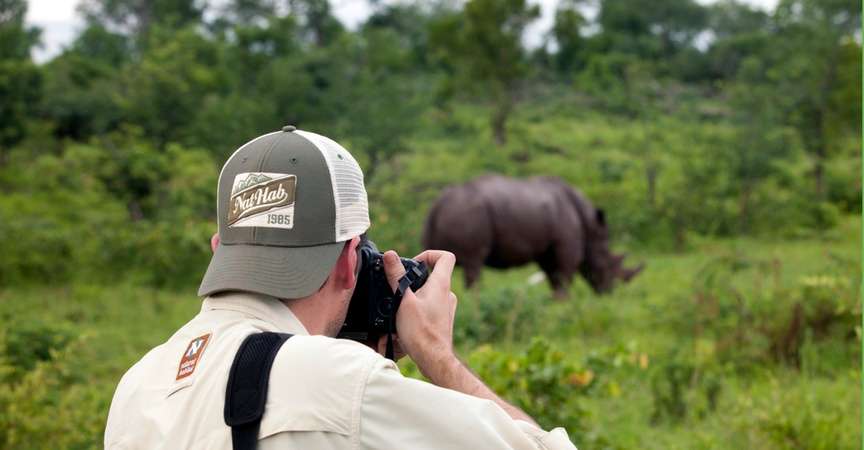
Bardia National Park, covering 374 square miles of subtropical lowlands at the base of the Himalayas, is our focus for the next three days. About 70 percent of the park is covered with forest, with the balance a mixture of grassland, savanna and riverine ecosystems. The wide range of vegetation types provides excellent habitat for a variety of animals, including 53 mammal species and more than 400 species of birds. We spend our days exploring the park on game drives, nature walks, rafting excursions and elephant-back safaris, hoping for views of the park's most famous wild residents. While sightings are never guaranteed, we have good chances to observe rhinoceros, wild elephant, crocodile, leopard, sloth bear and sambar deer, all in their natural habitat—and hopefully a glimpse of the elusive Bengal tiger as well!
Day 12: Nepalgunj / Kathmandu
We return to Nepalgunj airport this morning for our flight back to Kathmandu. This afternoon we'll visit one final sacred site: mystical Swayambhunath temple, its golden spire surveying the city from atop a wooded hill, with impressive views of the entire Kathmandu Valley unfolding below. The Buddhist stupa is nicknamed the “Monkey Temple” for the hundreds of monkeys that scamper about the grounds. We may also see devout monks chanting or at prayer. Tonight we enjoy a farewell dinner together, replete with memories of the many natural and cultural treasures that have enriched our journey to these two Himalayan kingdoms.
Day 13: Bangkok / Home
Today our Bhutan and Nepal safari comes to an end as we fly back to Bangkok to meet onward flights.

Our trip begins in Thailand on arrival at Bangkok International Airport. From here we fly as a group to the tiny Himalayan kingdom of Bhutan. If the skies are clear on our flight to Paro, we'll see the highest peaks on the planet visible below in a serrated white spine, setting a striking backdrop as we approach the green trough of the Paro Valley. Rich in culture, lush in scenic beauty, and steeped in history and legend, Paro offers a bucolic welcome to the kingdom.
From Paro we drive to Thimphu, Bhutan’s idyllic capital and a stronghold of traditional Bhutanese art, architecture and culture. Surrounded by mountains and monasteries, this seat of government and commerce on the Wang Chuu River is a harmonious mix of modern development and ancient traditions, and the only national capital without traffic lights.
Day 2: Thimphu
This morning we visit Motithang Takin Preserve on the edge of the city. This large, shaggy hoofed mammal is closely related to the musk ox and is the national animal of Bhutan, so designated due to its prominent place in a popular Bhutanese myth from the 15th century. The preserve is also home to a few sambar and barking deer. Later, we hike through verdant meadows near the preserve, enjoying the colorful prayer flags that flutter from nearby homes and small temples. Depending on time and interest, we may visit the handmade paper factory, handicraft emporium or national library and folk art museum.
Day 3: Punakha Valley
En route to Punakha we cross Dochu La, a 10,000-foot pass marked by 108 chortens, fluttering prayer flags and a grand view of the entire eastern Himalaya. The road drops dramatically into the Punakha Valley, descending through evergreen oak and rhododendron forests into fertile lowlands lush with rice, oranges, bananas and guavas. Punakha is the former capital of Bhutan and the winter residence of the monastic body. On arrival we check in to our traditional hotel, then set off to visit Namgyal Chorten, a temple dedicated to the wellbeing of the kingdom, its people and all sentient beings. Built atop a high ridge, the temple offers magnificent views of the Punakha Valley.
Day 4: Punakha
Today we explore the massive Punakha Dzong, known as the “Palace of Great Happiness.” Straddling the confluence of the Po (Father) and Mo (Mother) rivers, the monastery is Bhutan’s best-known fortress. Built in 1637, it was the seat of government until 1955 and home to Bhutan’s religious establishment. The palace occupies one of the most scenic dzong sites in Bhutan; maroon-robed monks and guests must cross a wooden foot bridge over the river to reach it. We'll also hike to a small temple dedicated to one of Bhutan’s favorite saints, the 15th-century Lama Drukpa Kunley. A rag-clad lotharian who used humor, songs and outrageous behavior to dramatize his teachings, he became known as the “Divine Madman" and is still beloved as such today. The peace of the Bhutanese landscape is palpable as our path to the temple ambles through green pastures and rice paddies, passing farmers and livestock in the terraced fields.
Day 5: Punakha / Paro
We'll explore the lively village market before driving back to Paro. This afternoon we stop at the revered Kyichu Lhakhang, one of the oldest and most sacred temples in Bhutan. This temple is one of 108 built across the Himalayas in the 7th century by the Tibetan emperor Songtsen Gampo to subdue a demoness who prevented the spread of Buddhism—in Buddhist mythology, Kyichu Lhakhang pins down her left foot. Inside, fine statues of the bodhisattvas and the Buddha are considered national treasures. The wooden floor of the temple is inlaid with turquoise and coral gemstones offered by pilgrims.
Day 6: Paro / Tiger's Nest
Our Bhutan sojourn concludes with an impressive finale: famed Taktsang Monastery, also known as the “Tiger’s Nest.” The subject of many iconic photographs, the complex of 17th-century temples clings to the side of a precipitous cliff nearly 3,000 feet above the valley floor. Its name is derived from myth, which holds that Guru Rinpoche, the tantric mystic who brought Buddhism from India to Bhutan in the 8th century, landed here on the back of a flying tigress and stayed to meditate in a cave for three months. We must hike to reach a viewpoint opposite the monastery, but our effort is well rewarded with unsurpassed views of the temples, mountains and valley below.
Day 7: Kathmandu, Nepal
Depart the “Land of the Thunder Dragon” and fly to Kathmandu, storied capital of the Kingdom of Nepal. For centuries the city has been a center of religious art and architecture in both Hindu and Buddhist traditions and is renowned for its ancient temples and urban squares. Our exploration begins with two of the city's most sacred sites: the Hindu temple of Pashupatinath on the sacred Bagmati River, a tributary of the Ganges, and the vibrant Tibetan Buddhist enclave of Boudhanath, whose white-domed stupa is the largest in Nepal and a sacred pilgrimage site for Tibetan Buddhists from around the world. We also visit Durbar Square at the historic center of old Kathmandu. Its sprawl of ancient royal palaces, courtyards and temples dates to the 16th century and was home to Nepal's royal family until 1886.
Day 8: Nepalgunj / Bardia National Park
Fly from Kathmandu to Nepalgunj on the Terai plains near Nepal's southern border with India and transfer by road to Tiger Tops Karnali Lodge. On the edge of Bardia National Park, the largest and best preserved wilderness area in Nepal, our intimate eco-lodge affords the perfect base from which to explore the jungle and its wildlife. Tiger Tops has been a pioneer in responsible tourism in Nepal since its first lodge opened in 1965, and has since collaborated with the Smithsonian Institution and made major contributions to tiger conservation. Expert Tiger Tops trackers assist in the long-term monitoring of tigers, having pioneered the use of camera traps in research.
Days 9 - 11: Bardia National Park
Bardia National Park, covering 374 square miles of subtropical lowlands at the base of the Himalayas, is our focus for the next three days. About 70 percent of the park is covered with forest, with the balance a mixture of grassland, savanna and riverine ecosystems. The wide range of vegetation types provides excellent habitat for a variety of animals, including 53 mammal species and more than 400 species of birds. We spend our days exploring the park on game drives, nature walks, rafting excursions and elephant-back safaris, hoping for views of the park's most famous wild residents. While sightings are never guaranteed, we have good chances to observe rhinoceros, wild elephant, crocodile, leopard, sloth bear and sambar deer, all in their natural habitat—and hopefully a glimpse of the elusive Bengal tiger as well!
Day 12: Nepalgunj / Kathmandu
We return to Nepalgunj airport this morning for our flight back to Kathmandu. This afternoon we'll visit one final sacred site: mystical Swayambhunath temple, its golden spire surveying the city from atop a wooded hill, with impressive views of the entire Kathmandu Valley unfolding below. The Buddhist stupa is nicknamed the “Monkey Temple” for the hundreds of monkeys that scamper about the grounds. We may also see devout monks chanting or at prayer. Tonight we enjoy a farewell dinner together, replete with memories of the many natural and cultural treasures that have enriched our journey to these two Himalayan kingdoms.
Day 13: Bangkok / Home
Today our Bhutan and Nepal safari comes to an end as we fly back to Bangkok to meet onward flights.


(800) 543-8917 for Availability
Print Page
Every 1st & 3rd Tuesday of the month, starting on February 5th! 

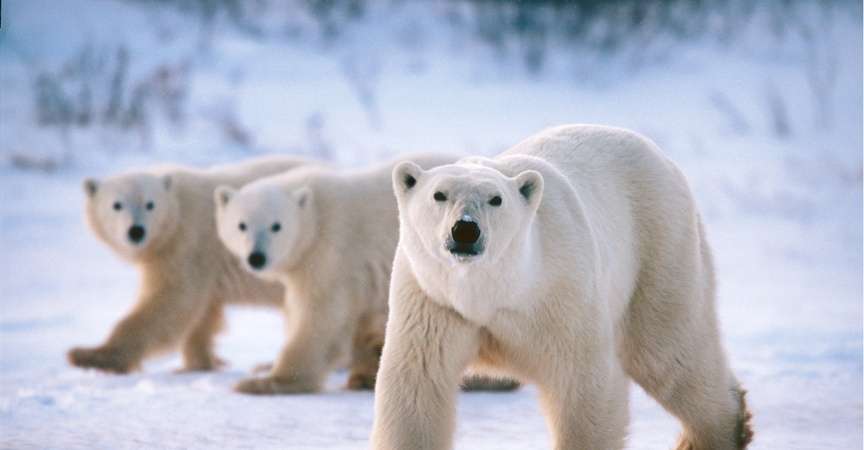
Studies suggest that two-thirds of the world’s polar bear population could be gone by 2050. And if current warming trends continue unabated, WWF scientists and other researchers believe that polar bears may disappear altogether within 100 years. WWF is intent on preventing this from happening.
Our exclusive Quality & Value Guarantee gives our travelers the confidence to make their travel plans knowing that they will have their lofty expectations met and that the fees we charge reflect the quality of the experience provided on our trips.