

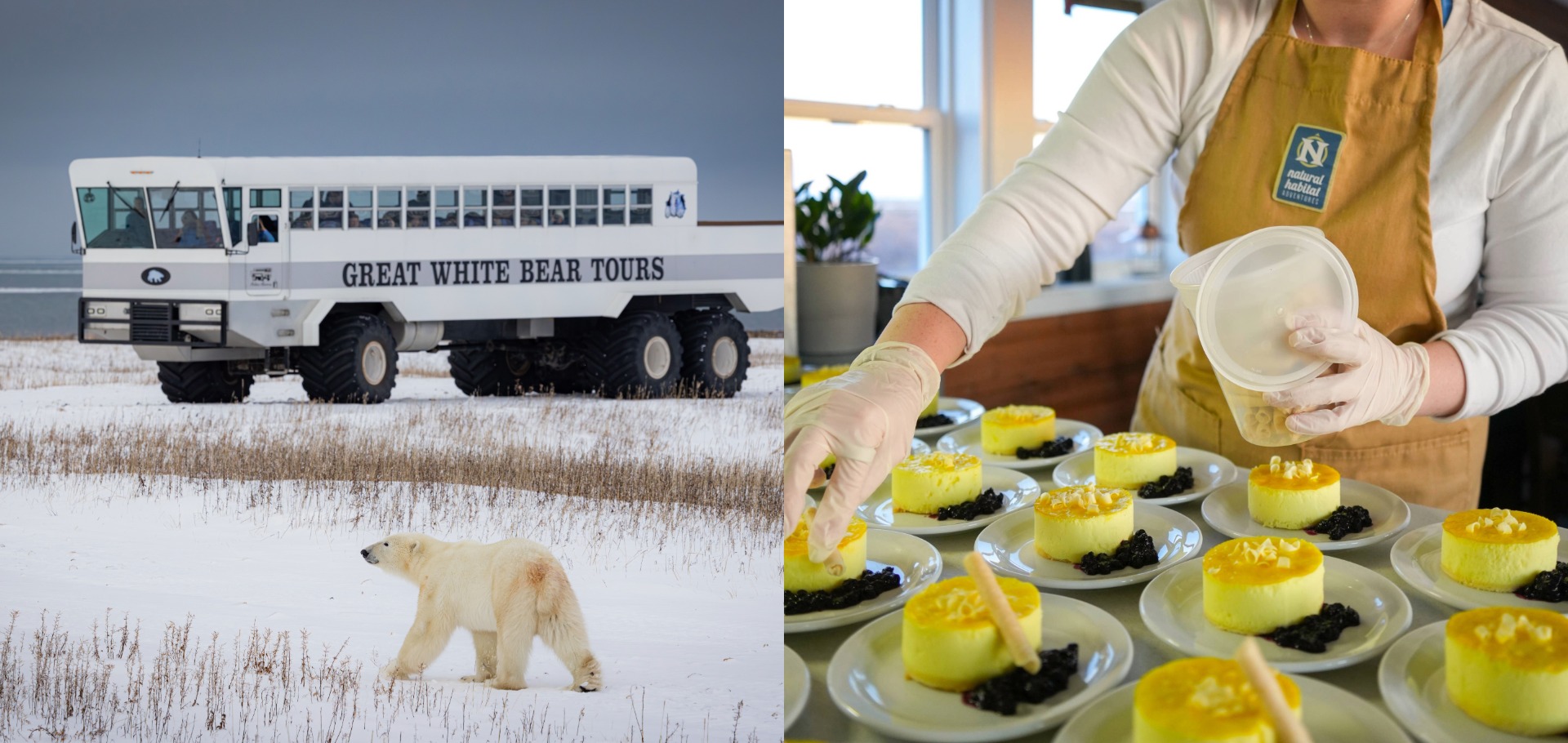
If you’re headed to Churchill to see polar bears on a Tundra Lodge adventure this fall, you’ll meet an integral member of our Nat Hab team—one whose special talents will enhance your experience. In this case, we’re not talking about wildlife tracking or interpreting bear behavior or explaining the physics of the northern lights. The skills Mary Savage brings to the Tundra Lodge will keep you fed, full and wowed by what’s possible to prepare in such a remote and isolated location.
After two seasons as chef at Nat Hab’s Base Camp Greenland on the Arctic island’s rarely visited east coast, Mary is transitioning this fall to the Tundra Lodge, Nat Hab’s isolated train-style hotel located on Hudson Bay outside Churchill, Manitoba. Here, surrounded by wild polar bear territory, Mary will oversee cooking for approximately 30 guests and several staff members.

Mary Savage prepping dishes at Nat Hab’s Base Camp Greenland
Mary’s passion for food began during her childhood in Quebec, making jams, pies, and tourtières with her French-Canadian family, and poring over cookbooks and pastry photos. Her grandmother, who had 10 children, was a special influence, preparing impressive homecooked fare for many mouths at a time. Mary’s professional career started unexpectedly at a backcountry ski lodge in the mountains of British Columbia, where she cooked for guests of Valhalla Mountain Touring. The post was an impromptu fill-in for a friend, but Mary found she was instantly hooked on the appeal of the setting and the challenge and reward of cooking for a crew in a remote setting. She loved the wild environment and being part of a hospitality team, but she also discovered that she enjoyed the creativity of food preparation and working with her hands. She went on to attend the Institut de tourisme et d’hotellierie (the Quebec Institute of Tourism and Hospitality) in Montreal, where she earned a diploma.
Since 2008, Mary has worked as a professional chef specializing in remote settings. Her posts have included high-end wilderness resorts on the west coast of British Columbia that are accessible only by boat, She was also the chef aboard a boat offering marine-based trips to the Great Bear Rainforest and other Inside Passage destinations on the BC coast and in Southeast Alaska.
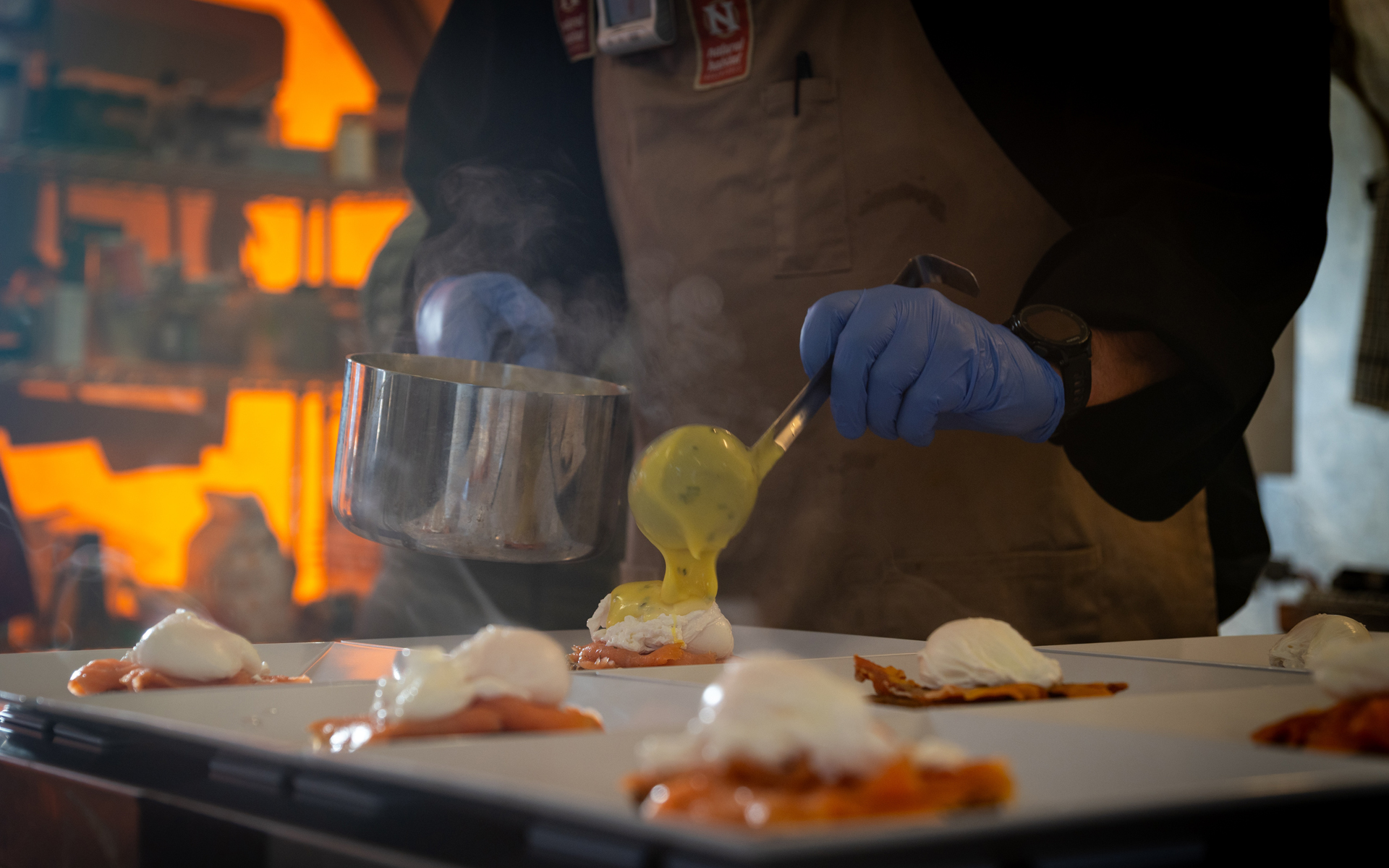
Delectable dishes made in the Nat Hab kitchen © Alexandre Bilodeau Desbiens
Mary takes special pride in creating wholesome, healthy meals made from scratch with a bit of gourmet flair, influenced by her training in French cuisine at the renowned culinary school she attended in Montreal. Over the years she has refined her skills at wilderness resorts and aboard boutique expedition ships. Drawn by her love of travel, Mary chooses contracts in remote locations as a way to see the world while sharing it with guests through food that offers both comfort and a sense of place. She is eager to explore a new opportunity at the Tundra Lodge, bringing creativity and adaptability to another of the world’s most remote kitchens.
While simple fare is the foundation of the meals Mary creates in these challenging destinations, she doesn’t skimp on creative ways to add color and flavor. She likes to create appealing plates that please the eye, adding lemon, cilantro and basil to sauces to add freshness. While sourcing fresh produce can be hard in some far-flung locales, Mary was fortunate at Base Camp Greenland to find locally grown options from a tiny town near the camp, reached by boat across the fjord. A local youth organization is behind the project, growing salad greens, radishes, Japanese turnips and various herbs. Otherwise, produce comes from Denmark and had to be ordered in Danish. Items came on a large ship from Denmark every two weeks, including meats like duck and beef Sometimes, she doesn’t always get what she expects, and she recalls the challenge she faced when she ran out of eggs at one point, having to adapt recipes and “get creative” when it came to breakfasts.
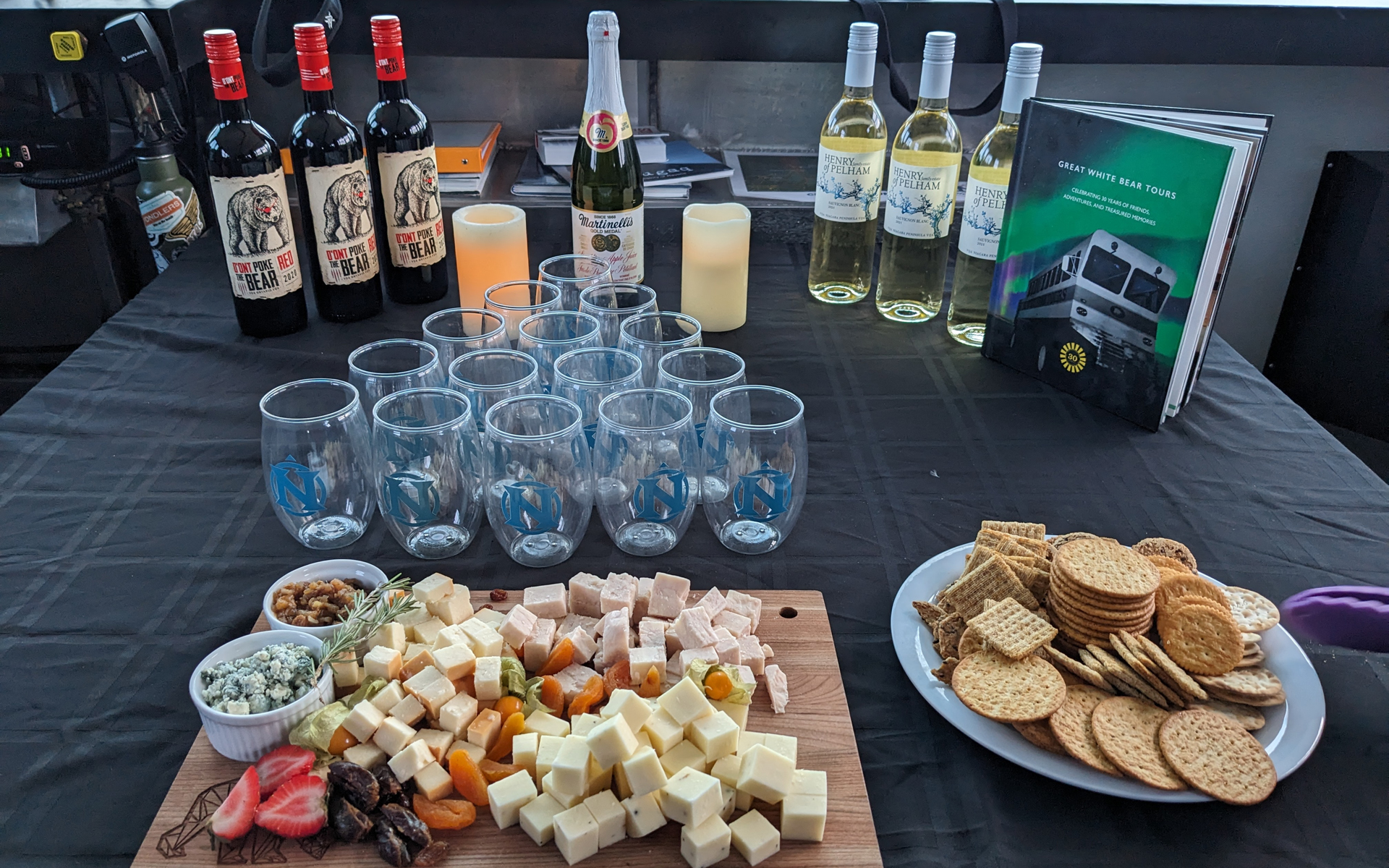
Wine and cheese served on the Polar Rover in Churchill, Manitoba © Jocelyn McLean
While the Tundra Lodge is a bit more accessible, it’s still not a place you can drive to—nor is Churchill. The tiny community of less than 1,000 on Hudson Bay can only be reached by air, ship (in summer) or via a two-day rail journey from Winnipeg. So, sourcing fresh fare for her meals will entail the same kind of careful planning Mary has relied on in previous posts.
Mary uses a lot of high-quality frozen fruits and vegetables that she turns into flavorful dishes when fresh produce isn’t available. Combined with locally sourced proteins (such as fresh fish from the bay in Greenland, including a steady source of Atlantic cod from a local fisherman) and pantry staples, her menus are hearty, satisfying and memorable—even in the most isolated kitchens. Guest favorites include classics like grilled cheese with tomato basil soup and beef chili with cornbread, welcome after a cold day spent exploring the wild, along with more elevated fare like baked fresh salmon with chimichurri sauce.
So, when it’s time to come in from the frigid tundra temps after an exhilarating day of polar bear viewing, Mary will be there to greet you—with a smile and a meal to impress.
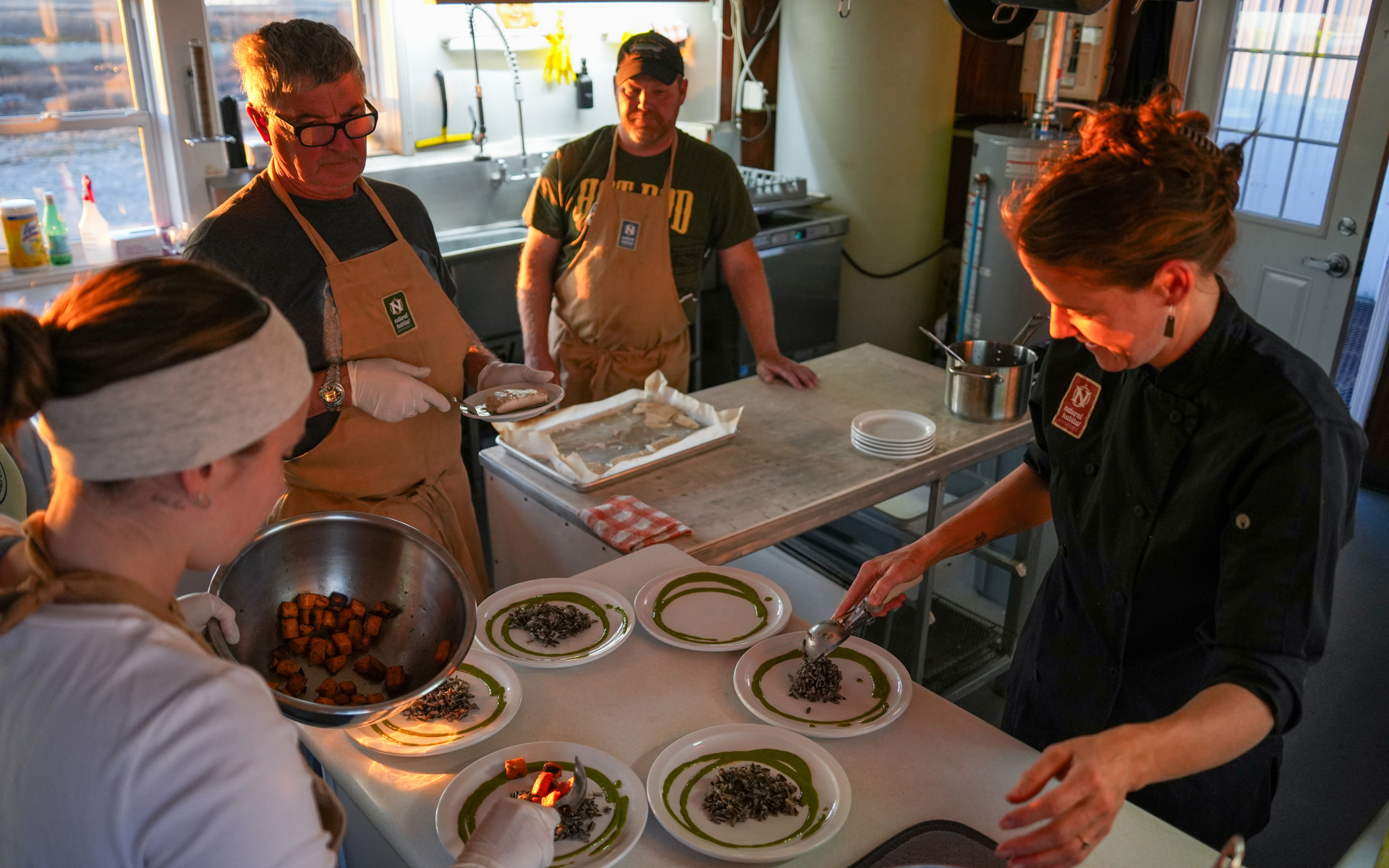
Chefs and staff making magic at Nat Hab’s Tundra Lodge in Churchill, Manitoba © Petr Gheorghe