








Itinerary
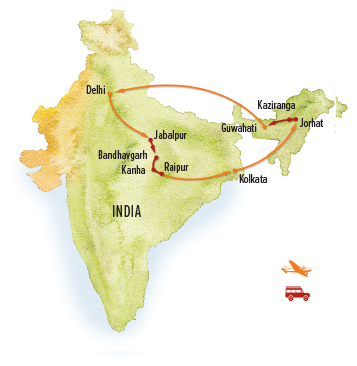
Arrive in New Delhi and transfer to the 5-star Taj Mahal Hotel, optimally located in the leafy heart of the Lutyens Delhi district with its broad boulevards, historic homes and government enclaves. This afternoon, explore the older parts of this sprawling, vibrant city on a rickshaw tour that reveals the many layers of Delhi's captivating history. Stroll through the bylanes of Old Delhi and visit bustling Chandni Chowk Market and Jama Masjid, India's largest mosque and the architectural magnum opus of Mughal Emperor Shah Jahan. Built in the mid-17th century, the striking edifice is constructed of alternating vertical strips of red sandstone and white marble, with a vast inner courtyard that can hold 25,000 people. Depending on our timing, we may also visit a memorial to Mahatma Gandhi, or Bangla Sahib, one of the country's most revered Sikh temples. The complex is associated with Guru Har Krishan and includes the main temple, a school, a sacred water tank and a large community kitchen that generously prepares over 10,000 free meals each day, known as langar, all cooked by volunteers using donated ingredients from Sikh farmers. Return to our hotel with time to refresh before a welcome dinner this evening, with an orientation to our India wildlife safari by our Expedition Leader.
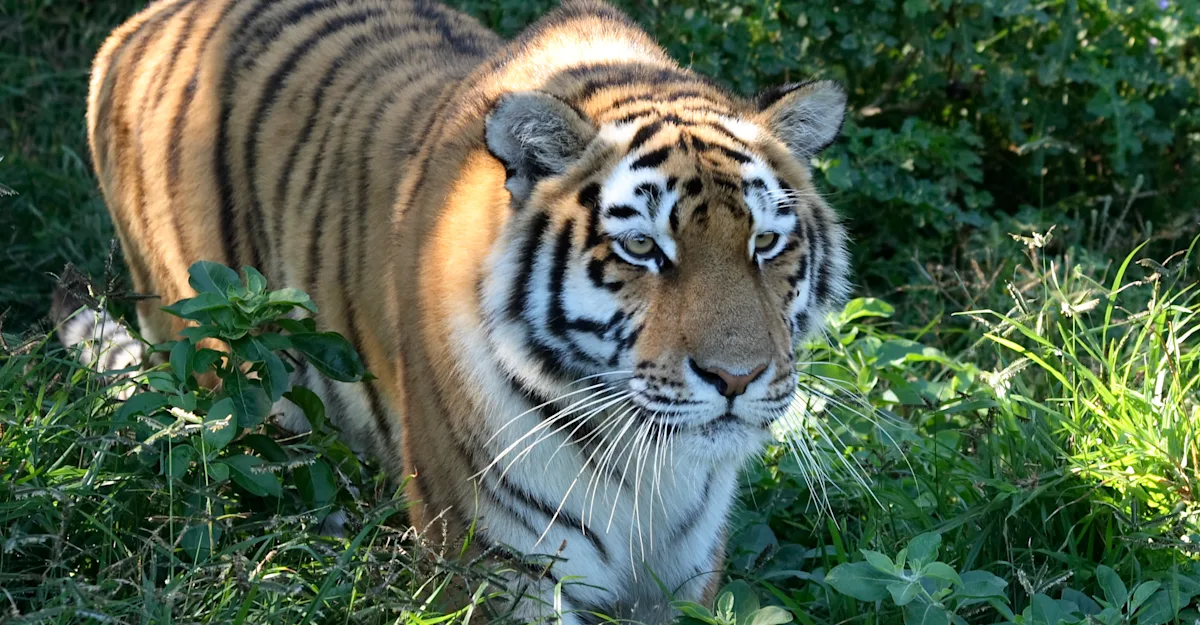
Transfer to the airport very early this morning for our flight south to Jabalpur. Continue on a half-day's drive through the countryside of Madhya Pradesh to reach Bandhavgarh National Park. An essential stop on any serious India safari, Bandhavgarh is renowned for one of the country's highest concentrations of Bengal tigers. Originally established as a national park in 1968, Bandhavgarh was declared a protected tiger reserve under Project Tiger in 1993. At 444 square miles, it is a relatively small park with a thriving tiger population, offering visitors a good chance of encountering them, as well as other distinctive Indian wildlife. Check in to Kings Lodge, a leading ecolodge surrounded by wild natural forest just outside the park boundary. Then, time permitting, we'll set out on our first wildlife drive in open 4x4 safari vehicles.
Over the next two days, explore Bandhavgarh’s varied habitats on morning and afternoon wildlife drives. Covered predominantly with sal and mixed deciduous forest, thickets of bamboo and expansive grasslands that line the stream valleys, the park’s hilly terrain harbors one of the world's highest densities of tigers. Bandhavgarh was once a prime hunting reserve for the Maharajas of Rewa, where Maharaja Raman Singh alone shot an astounding 111 tigers by 1914. Today it is a pacesetter in tiger protection. With tigers at the apex of the food chain, Bandhavgarh’s rich biodiversity includes a multitude of other wildlife. We expect to see a sampler of its 37 mammal species, among which are leopard, jungle cat, civet, wild boar, sambar, spotted deer, muntjac (barking deer), gaur, sloth bear and Asiatic jackal. Some 250 bird species, 70 different butterflies and various reptiles round out the diverse wildlife population.
After breakfast, embark on a half-day drive to Kanha National Park. Situated in the Satpura Hills of central India, the park covers 750 square miles of rich and varied wildlife habitat. Its lush sal and bamboo forests, grassy meadows and ravines provided inspiration to Rudyard Kipling for his famous collection of stories in The Jungle Book . Kanha was established as a national park in 1955 and forms the core of the Kanha Tiger Reserve, created in 1974 under India's Project Tiger. The park's landmark achievement is the preservation of the rare barasingha, an endangered swamp deer with 12-point antlers, saving it from near-extinction. Strict conservation programs for the overall protection of the park's fauna and flora make Kanha one of the most exemplary national parks in Asia. From our luxurious ecolodge base in the tiger heartland of the world, learn in depth about the Bengal tiger and its habitat and observe how conservation travel directly benefits local communities and the tiger reserve. Following lunch on arrival, enjoy a leisurely afternoon at the lodge, perhaps choosing a swim or a massage. Then, after dinner, we'll take an exciting night safari. Enveloped by the sounds of the jungle, we head out in search of nocturnal wildlife, including after-dark hunters like jackal, civet cats and Bengal fox. Very rarely, we might even spy a leopard on the prowl.
Scenic Kanha, once a hunting ground for imperial rulers and viceroys, is now one of India’s most important conservation reserves. We spend three days exploring this premier national park in search of Bengal tigers and other wildlife on excursions in open 4x4 vehicles. With ideal habitat for tigers and their prey, it offers some of India’s best tiger viewing, though it can take effort to locate them in the sun-dappled forest that provides superb camouflage for many species. On our first two days, we greet the dawn with an early wildlife drive, entering the park just as the sun’s rays are breaking over the jungle. The open meadows where herbivores graze attract tiger, leopard and dhole (wild dog) to the edges of the clearings, and we'll hope to see some of these predators on the hunt. The Banjaar River bordering the park provides a steady water source for wildlife. Dense jungle interspersed with vast grassy meadows called maidans support a range of species similar to those in Bandhavgarh. Other mammals we might see include barasingha (swamp deer), common langur, gaur (the world's largest wild ox) and rhesus monkeys. After returning to our ecolodge for lunch, we head back out for afternoon wildlife drives, anticipating more chances to search for tigers and other wildlife.
Enjoy a leisurely breakfast followed by a walk through the village, including a visit to a local school. Gain insight into the daily lives and traditions of the Indigenous Baiga and Gond tribal people who have been at home in the jungle for centuries. Learn about their enduring culture and customs, including foraging practices, medicinal plants and subsistence hunting and fishing, with a chance to sample some of their foods and the floral alcohol they brew inside mud-plastered homes. We also admire their art, handicrafts, silver jewelry and intricate tattoos as we witness these rich artistic expressions. This afternoon, we have a final game drive in Kanha National Park, for one last chance to spot tigers and other notable wildlife amid the photogenic landscape of rolling hills, dense forest and grasslands. Later this evening, after we gather for dinner, join in some festive dancing around the campfire during a cultural presentation at our lodge.
As the morning mists lift, we take a walk with our Expedition Leader in the buffer zone on the edge of the park's core area, following the Bahmani Nature Trail through pristine sal forest along the banks of the Banjar River. To be on foot in the jungle offers an intimate, primal encounter with this dense habitat and its wild inhabitants, in a manner that touches all five senses. Feel the leathery texture of a tendu leaf or size-up a tiger’s pugmark with your hand. Smell the medley of fragrances, from blooming flowers to the aromatic herbs trampled by herds of deer. Hear birdsongs, taste wild berries, and feel the thrill of walking on paths imprinted by predators as we listen for alarm calls that resound through the jungle. Our guide shows us how to interpret tracks and other signs of animal activity, and it's especially exciting to find fresh pugmarks on the sandy riverbank. Look, too, for scratch marks, scat, droppings and scent marks that foster our awareness of the multitude of hidden creatures that surround us. Get a glimpse into the ancient geological history of this region, standing on the metamorphic rocks that edge the river, with gneiss, basalt and quartz exposed by the erosive power of water flowing for millions of years. We also learn more about the local Indigenous people who have been hunter-gatherers in the jungle for millennia, living as part of the intricate web of life.
After our jungle walk, we drive a half-day to Raipur, watching scenes of daily rural life unfold along the roadside, then fly to Kolkata late this afternoon. Our luxury hotel not far from the Kolkata airport provides a restful night's sleep after a long day of travel as we transit from one region of the country to another, with convenient access for our early flight tomorrow morning.
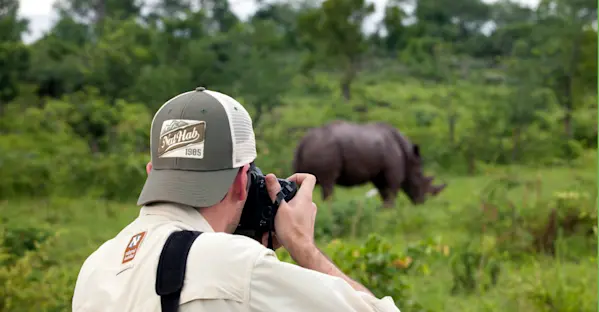
Fly from Kolkata to Jorhat and continue by road into far-eastern India to reach Kaziranga National Park in the state of Assam. The park, which borders the sacred Brahmaputra River, was created in 1926 as a refuge for the one-horned rhinoceros. Once hunted nearly to extinction, this 2-ton beast today is a conservation success story, its population rebounding to more than 2,000 individuals. Two-thirds of the world’s one-horned rhinos are found within the park, and we're sure to see plenty of them grazing in the open. In addition to the rhino, Kaziranga is home to some of India’s other largest mammals including Asian elephant, Asian water buffalo and barasingha. Stay at Diphlu River Lodge, whose verdant grounds contain more than 40 species of trees and some 200 species of shrubs, creepers and climbers.
Morning and afternoon wildlife drives reveal Kaziranga’s diverse habitats—a mix of elephant grass, thorny rattan cane, tracts of semi-evergreen forest and shallow marshes. Stretching from the banks of the Brahmaputra River to the dense forests of the Mikir Hills, the reserve hosts an impressive variety of animals. In addition to one-horned rhinoceros, keep a close eye out for buffalo, elephant, wild boar, hog deer, hoolock gibbons, sloth bears and pythons, as well as the elusive Bengal tiger. The national park has been declared an Important Bird Area by Birdlife International and is home to a great variety of resident and migratory birds. Drawn to the life-giving artery of the Brahmaputra River, waterfowl abounds, and we may see egrets, pond herons, river terns, black-necked storks, fishing eagles and pelicans. In the river, look for otters and rare Gangetic dolphins.
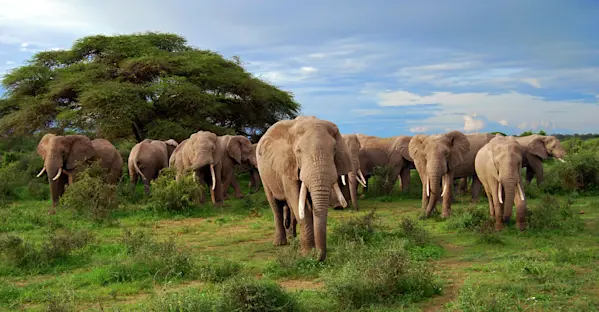
A special event during our time in Kaziranga is a chance to meet the park's working elephants up close. These elephants, which accompany rangers on regular patrol missions, are accustomed to interacting with guests. Conditions permitting, on one afternoon an elephant will be brought to our lodge where we can help wash it under the guidance of its handler. On our final evening, revel in memories of our Indian safari adventures as we gather for a farewell dinner.
After breakfast, drive to Guwahati to catch our afternoon flight back to Delhi. Upon arrival at the Delhi airport, we transfer to our nearby hotel, just minutes away. An overnight stay is included along with a transfer to the international airport to meet departing flights, most of which leave late this evening.
Please Note: National parks in central India are closed on Wednesday afternoons. Should a portion of our visit to Kanha or Bandhavgarh fall on a Wednesday, we will have alternate afternoon activities planned in place of a wildlife drive.