Call (800) 543-8917
Atlas Mountains, MoroccoSahara Desert, MoroccoBarbary Macaque, Middle Atlas, MoroccoCamels, Sahara Desert, MoroccoArgan Biosphere, Agadir, MoroccoSahara Desert and Atlas Mountains, MoroccoJnane Tamsna Guest House, Marrakech, MoroccoSouss Massa National Park, MoroccoLocal market, Marrakech, Morocco
14 days / From $9,995 (800) 543-8917 for Availability Print Page Email Page

Email Page

Use the form below to email this page to a friend.

To


From

The Wonders of Morocco - EXPLORATORY TRIP!

Discover the Natural Side of this North African Kingdom on a Mountain & Desert Adventure
Day 1: Casablanca, Morocco / Rabat
Arrive in Casablanca and transfer to the imperial city of Rabat where we'll enjoy a welcome dinner and an overview of our Morocco tour from our Expedition Leader. Our hotel is centered on a private courtyard with interior garden and pool, offering a serene escape from the city the moment one passes through its sheltering outer walls.

Day 2: Lac Sidi Boughaba / Volubilis / Fes
En route to Fes, we stop first at Lac Sidi Boughaba, a freshwater lake divided from the ocean by a sand dune system, which is a magnet for migrating birds. Lunch awaits at a vineyard in Meknes, Morocco's most fertile agricultural region known for its wine and olives. This afternoon we visit Volubilis, a site of extensive Roman ruins including well-preserved mosaics. And while none of the many presses remain, the Romans once produced prolific amounts of olive oil from Volubilis. We continue to Fes, the best-preserved medieval city in the Arab world, to spend the next two nights.

Day 3: Ifrane National Park / Fes
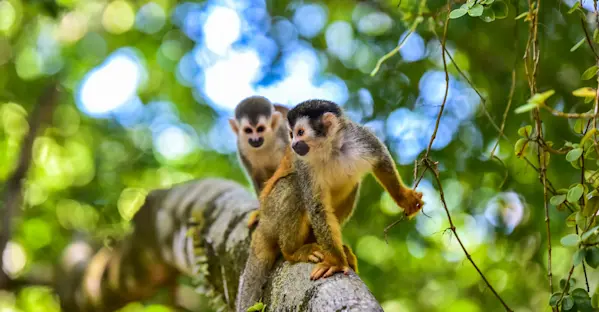
Fes is our base for exploring Ifrane National Park, home to most of the world’s Barbary macaques. This Old World monkey species is the only wild primate found in Europe—a population lives on Gibraltar—though most inhabit the cedar, oak and pine forests of Morocco, in troops of 10-30 individuals. The monkeys are used to seeing people and we will observe them at close range. Look, too, for birds of prey. We’ll also take a nature walk through the Cedre Gouraud Forest, an important habitat for Barbary Macaques and rare birdlife. More than a thousand species of flora, including 250 endemics, thrive in these forests that are watered by the abundant rivers and lakes of the Middle Atlas. These mountains hold enough snow to support a Moroccan ski area nearby! Before returning to Fes we enjoy a sumptuous lunch at the Michlefin Ifrane Hotel, a gorgeous mountain lodge marrying wood and stone with heavy Berber carpets, roaring fireplaces and traditional Moroccan décor.

Day 4: Casablanca / Agadir
We drive back to Casablanca where we’ll have lunch before transferring to the airport for an afternoon flight to Agadir on Morocco’s Atlantic coast, one of Africa’s most historic trading ports. We overnight at Atlas Kasbah, a historic fortress converted into an award-winning ecolodge just outside town in the UNESCO Argan Biosphere Reserve. Argan forests flourish here in the Middle Atlas range, the world’s only source for the coveted oil produced from their nuts that is used in many beauty and culinary products. These ancient and endangered endemic trees were once found across northern Africa but now exist only in southwest Morocco They represent the last barrier to the encroaching desertification of the Sahara. On arrival we’ll tour the ecolodge grounds, including the splendid gardens and saltwater pool, and learn about the property’s innovative sustainability practices amid the challenges of an arid region.

Day 5: Souss Massa National Park
Nowhere in Morocco’s many national parks do we find a more spectacular variety of bird life than in the Souss Massa, including the highly endangered northern bald ibis. The park protects 75 of the 100 breeding pairs that remain. Souss Massa's impressive diversity of habitats -- beaches, imposing sand dunes, rocky cliffs and Argania forests—draw a wide range of species including jackal, Algerian hedgehog, African wild cat, red fox, wild boar, leopard lizards and a host of other reptiles and rare amphibians. In the springtime, a bright array of wildflowers adds a showy touch. We spend a full day touring the park, breaking for lunch at the atmospheric guesthouse Ksar Massa, which surveys a 4-mile expanse of wild beach. We return to the Atlas Kasbah to spend the night.

Day 6: Argan Oil Co-Op / Paradise Valley / Immouzer 
This morning we tour a local argan oil co-op to see how the precious nut oil is extracted. All argan oil sold today is produced by a Berber women's collective that shares the profits. We’ll learn about the ecosystem reforestation project developed by the cooperative to ensure a sustainable supply of argan oil and the income it provides to support many southern Morocco communities. We also tour the botanical garden on site and have a chance to purchase argan oil and herbal products directly from these local producers.

We continue with a scenic drive into Paradise Valley. This deep gorge cut by the River Tamrhakht is flanked by terraced crops and undulating plateaus covered with argan, almond, juniper, olive and palm trees. Also called the Valley of Honey, the region is known for the different varieties that are produced using thyme, orange blossom and even cactus, which is very popular in Morocco. It is also home to several traditional Berber villages, and we ascend into the mountains to the market town of Immouzer, centered on a palm oasis. The town is best known for its seasonal waterfalls—rain-dependent cascades that only flow in winter.

Day 7: Tarroudant / Saffron Fields / Ait Ben Haddou
A full day’s drive takes us from Agadir to Ait Ben Haddou, with several stops along the way as we traverse the Souss plateau. The town of Tarroudant is a center for Berber arts and crafts, where we may have an opportunity to purchase ceramics, woven rugs with intricate geometric designs, and the spectacular silver Berber jewelry for which the city is famous. 

This is a rich agricultural region, and we’ll see vast fruit and vegetable plantations, especially citrus. It is also a center for argan oil production, as well as the world’s rarest and most costly spice, saffron. Morocco is the world’s fourth-largest producer of the treasured “red gold,” all of which is grown around the village of Taliouine. We stop to see the fields where most of the work is done by hand, including the painstaking harvesting each fall. Bent low to the ground, farmers must separate the tiny purple flowers of the saffron crocus to retrieve the fragile red stigmas that are dried to create the spice. It takes about 150,000 flowers to produce a single kilogram of saffron. Saffron contains a carotenoid dye called crocin, which imparts a rich golden-yellow hue to dishes and textiles.

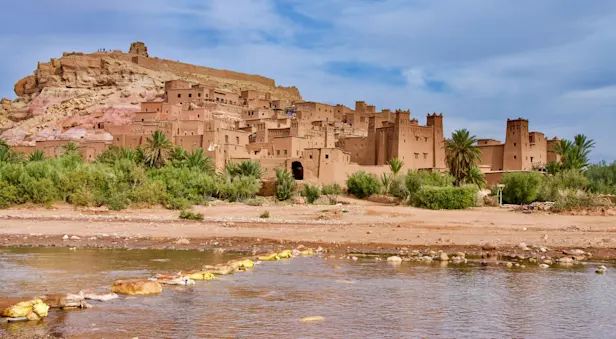
We continue into ever more arid country till we reach Ait Ben Haddou, a fortified mud-brick city, or ksar, along the former caravan route that linked ancient Sudan to Marrakesh via the Sahara. The earthen houses are crowded together within high defensive walls, an eminent example of southern Moroccan architecture dating from the 17th century. We overnight in the adjacent village, settling in to the elegant desert retreat of Ksar Ighnda with views of red cliffs and olive orchards.

Day 8: Draa Valley / Zagora 
Our drive to Zagora takes us first up and over the volcanic Jebel Sarhro mountains, then down steep cliffs into the magnificent Draa Valley, a lush date palm oasis nearly 150 miles long that’s known for its kasbahs, or citadel towns. Flowing seasonally from the High Atlas, the Draa is Morocco’s longest river, cutting a deep channel between the Jebel Sarhro and Anti Atlas mountain ranges through a series of rocky canyons. The valley floor is a verdant patchwork of fruit orchards, vegetables crops, rose farms, and of course date palms; 18 different varieties of dates are grown here, watered by a sophisticated system of ancient underground irrigation canals.

The Draa Valley’s multicultural inhabitants are a mixture of Arab, Berber, Jew and the descendants of Mauritanian slaves. Under constant attack from pillaging nomads, they clustered together in fortified villages surrounded by fields and palm groves. We soon realize we are approaching the Sahara as we observe dromedary camels along the way. Our destination, the town of Zagora, is the last outpost of civilization before reaching the Sahara's vast expanse, earning it the title “Gateway to the Desert.” 

Day 9: Sahara Desert Exploration / Erg Chicaga 
The legendary Sahara beckons today, and we venture into its mystical depths on an all-day excursion culminating with a night beneath the stars in a traditional desert encampment. We travel first on a narrow one-lane paved road, then into the undulating dunes by 4x4. A cursory glance might lead one to think the desert is nothing but an empty, endless expanse of sand, but the Sahara dunes are actually an ecosystem with living organisms, despite the intense climatic conditions. We learn about its nuanced details, observing fossils and discovering how the dunes were formed, as we explore by 4x4. 

As evening falls and the heat of the day abates, we retreat to the comforts of our exclusive private camp, where we’re greeted with mint tea and fresh dates. It’s hard to believe such luxury exists in this remote, harsh environment, but we relax on leather sofas and poster beds, dine on exquisite tagines and other Moroccan dishes, and enjoy the crackle of a campfire beneath the dark, starry sky overhead. Nothing can compare with the silence permeating this ocean of sand. We sleep in rustic luxury in spacious canvas tents, feeling like we’ve walked right into a scene from Arabian Nights.

Day 10: Erg Chicaga / Ait Ben Haddou
Rise early this morning to watch the sunrise over the dunes, casting an ethereal golden glow. After breakfast we continue our exploration of the desert environment as we return through the shifting dunes on our way to M’Hamid and back through the Draa Valley to Ait Ben Haddou. It is a full day’s drive, and while our route retraces sections we have covered before, the landscape is so captivating that it feels as if we are embracing it anew on the return journey. Tonight we enjoy a second stay at Ksar Ighnda near the red earthen blocks of the fortified city, a most welcome oasis of luxurious hospitality at the close of a long day.

Day 11: High Atlas Mountains / Imlil
The scenery becomes ever more dramatic as we ascend into the High Atlas today, traversing the highest paved mountain road in Morocco over Tizi n’ Tichka Pass en route. Berber villages cling to the steep mountain slopes, and we finally reach Imlil, where we’ll spend the next two nights at the award-winning Kasbah du Toubkal. The small auberge-style hotel is situated at the foot of snow-dusted Jbel Toubkal, the highest peak in North Africa at 13,671 feet, and enjoys spectacular 360-degree views from its perch atop a rocky bluff. Embodying legendary Berber hospitality, the Kasbah has been transformed using classic Berber style, design and building methods from the home of a feudal caïd into one of Morocco’s most impressive hostelries. Adjacent to Toubkal National Park, it provides the perfect base from which to explore the High Atlas region.

Day 12: Exploring the High Atlas
We spend the day discovering a sector of the High Atlas Mountains. The range transects Morocco diagonally in a 600-mile span that separates the Sahara from the Atlantic and Mediterranean coasts. Via 4x4 and on foot, we follow narrow tracks that pass through ochre-colored Berber villages and nature trails through neighboring valleys. In the springtime, blooming wildflowers add touches of color to the region, while our fall trips enjoy rich seasonal tones.

The mountains slopes are a variegated tapestry of trees, from juniper, Atlas cedar, Holm and Kermes oak to Barbary thuya, Aleppo pine, carob and argan. The forests harbor a number of plant and animal species that are unique in Africa, often more like those of Europe, many of which are endangered. We may come across Moorish geckos, butterflies such as the Moroccan copper, desert orange tip and painted ladies flying between England and West Africa. Birds to watch for include the Moussier’s redstart, crimson-winged finch, rock bunting and flocks of brilliantly colored bee-eaters. Overhead, look for the Lannier falcon.

We also encounter authentic rural Moroccan life in the villages as we meet the famously friendly local people, learning about their traditional culture and marveling at their walnut and fruit orchards that thrive in this steep, rugged terrain. Along the way we’ll enjoy a picnic lunch in the open air, then return to the warmth of our guesthouse for dinner and a quiet night in the cool mountain air.

Day 13: Imlil / Marrakech
After a last tranquil morning in the mountains, we drive to Marrakech, Morocco’s most entrancing medieval city. A guided tour of the famous Medina, with its winding lanes and pungent fragrances, is a sensory extravagance. Our hotel, Jnane Tamsnaa, is located in the exclusive area of Le Palmeraie—a vast palm grove just outside Marrakech that was once a natural oasis—and boasts magnificent gardens. On a tour of the gardens we learn about Moroccan horticulture and the plantscape as a habitat for wildlife. This evening we savor one last superb Moroccan meal at our farewell dinner, with many of the ingredients sourced from the lavish gardens on the premises. Tonight, our epic Morocco nature adventure draws to a close.

Day 14: Depart
Transfer to the airport for homeward flights.

Manage Light Boxes

Manage Light Boxes

Use the editor (TAB Key) to edit the light box repeaters below.

Page Light Boxes

Global Light Box

  • Custom Zimbabwe Safaris
    #customzim

    Custom Zimbabwe Safaris

    We offer two options for arranging your private, customized Zimbabwe safari!


    Natural Habitat has been crafting private, custom Botswana safaris for travelers from around the world for nearly three decades. Arranged by our professional adventure staff, which has an average of 14 years’ experience, these safaris range from 6 days to several months in length. Please call us at 1-800-543-8917 to speak with an Adventure Specialist.
    iSafari is a custom safari reference and planning website. Research countries, wildlife, national parks and hundreds of lodges & camps. Build your own personalized safari, create a journal, share it, and send your handcrafted itinerary to us. Nat Hab's safari specialists will then work with you to perfect it!
    Visit iSafari.com

    Thank You

  • Custom Zambia Safaris
    #customzam

    Custom Zambia Safaris

    We offer two options for arranging your private, customized Zambia safari!


    Natural Habitat has been crafting private, custom Botswana safaris for travelers from around the world for nearly three decades. Arranged by our professional adventure staff, which has an average of 14 years’ experience, these safaris range from 6 days to several months in length. Please call us at 1-800-543-8917 to speak with an Adventure Specialist.
    iSafari is a custom safari reference and planning website. Research countries, wildlife, national parks and hundreds of lodges & camps. Build your own personalized safari, create a journal, share it, and send your handcrafted itinerary to us. Nat Hab's safari specialists will then work with you to perfect it!
    Visit iSafari.com

    Thank You

  • Custom Namibia Safaris
    #customnam

    Custom Namibia Safaris

    We offer two options for arranging your private, customized Namibia safari!


    Natural Habitat has been crafting private, custom Botswana safaris for travelers from around the world for nearly three decades. Arranged by our professional adventure staff, which has an average of 14 years’ experience, these safaris range from 6 days to several months in length. Please call us at 1-800-543-8917 to speak with an Adventure Specialist.
    iSafari is a custom safari reference and planning website. Research countries, wildlife, national parks and hundreds of lodges & camps. Build your own personalized safari, create a journal, share it, and send your handcrafted itinerary to us. Nat Hab's safari specialists will then work with you to perfect it!
    Visit iSafari.com

    Thank You

  • Custom Uganda Safaris
    #customug

    Custom Uganda Safaris

    We offer two options for arranging your private, customized Uganda safari!


    Natural Habitat has been crafting private, custom Botswana safaris for travelers from around the world for nearly three decades. Arranged by our professional adventure staff, which has an average of 14 years’ experience, these safaris range from 6 days to several months in length. Please call us at 1-800-543-8917 to speak with an Adventure Specialist.
    iSafari is a custom safari reference and planning website. Research countries, wildlife, national parks and hundreds of lodges & camps. Build your own personalized safari, create a journal, share it, and send your handcrafted itinerary to us. Nat Hab's safari specialists will then work with you to perfect it!
    Visit iSafari.com

    Thank You

  • Custom Rwanda Safaris
    #customrw

    Custom Rwanda Safaris

    We offer two options for arranging your private, customized Rwanda safari!


    Natural Habitat has been crafting private, custom Botswana safaris for travelers from around the world for nearly three decades. Arranged by our professional adventure staff, which has an average of 14 years’ experience, these safaris range from 6 days to several months in length. Please call us at 1-800-543-8917 to speak with an Adventure Specialist.
    iSafari is a custom safari reference and planning website. Research countries, wildlife, national parks and hundreds of lodges & camps. Build your own personalized safari, create a journal, share it, and send your handcrafted itinerary to us. Nat Hab's safari specialists will then work with you to perfect it!
    Visit iSafari.com

    Thank You

  • Photographer Michael Poliza
    #photographer_MichaelPoliza

    Photographer Michael Poliza

    A Lifetime Behind the Lens and In Front of the Animals


    After an extensive career in German television and film, plus a business in the IT sector, photographer Michael Poliza began focusing on digital media in 1997. His adventures led him to turn his attention to the game reserves and nature parks of southern Africa. Thanks to a friendship with Wilderness Safaris, he had freedom of access in return for the use of his images – a truly symbiotic relationship that saw the development of a significant body of wildlife and landscape imagery. The resultant book, Africa, was launched to massive acclaim in 2006.

    Since then, he has continued to photograph some of the most breathtaking views of nature, including the beauty and fragility of polar life in his coffee table book Antarctic, and aerial views of the entire African continent and its wildlife in Eyes Over Africa.  In December 2009 he was named as an ambassador of the World Wildlife Fund (WWF).

    Visit Michael Poliza’s website to learn more.

    Thank You

  • WWF in Action: Monarchs
    #WWFinaction_mb

    WWF in Action: Monarchs


    See the path that monarch butterflies take on their annual migration. © WWF

    How Mexico is Protecting Monarchs from Unsustainable Logging

    Every year, monarch butterflies take one of the most amazing migrations on Earth. Fluttering between 1,200 to 2,800 miles over the course of two months, they leave their summer breeding areas in Canada and the United States to return to hibernation colonies in the forests of central Mexico.

    These same forests are inhabited and managed by agrarian communities. Local landownership is divided between ejidos (communal forestry and agriculture endeavors), indigenous communities, and small property owners. As the communities struggle with widespread poverty and lack of employment opportunity, they lean heavily on the forest and its resources for survival—the same forests in which the monarchs congregate.

    To protect the area from unsustainable logging that threatens the butterflies’ unique habitat, the Mexican government took action. The Monarch Butterfly Biosphere Reserve was established, and later expanded with WWF support.

    To assist local communities in keeping the forest intact, WWF helps establish alternative income-generating ventures—including sustainable mushroom and tree nurseries.

    Today, nine mushroom nurseries provide protein to local households and income from sales. Mushroom producers have access to seeds, bio-material, and training with financial support from the Mexican government and WWF, and participation of local scientists. They learn cultivation techniques, administration processes, and how to manage the facilities’ equipment.

    At the same time, 10 tree nurseries now produce around 1.5 million native trees every year for reforestation of local areas, with income supporting many full- and part-time jobs. WWF forest engineers help with the work of growing trees—including seed planting, bagging and plant location, installing irrigation systems, and managing administrative tasks.

    For the communities involved in these endeavors there is a new appreciation of the forest they call home—and a change of conscience about how to use the forest in a sustainable way. Sustainable forest management can ensure their communities’ continued wellbeing—as well as the winter habitat of the butterflies that make their area so unique.

    “It’s not only protecting the monarchs, it’s not only protecting the forest, but it’s helping the local communities develop in an economic and social way. Without their participation, without their commitment, we cannot move forward,” says Eduardo Rendón-Salinas, head of WWF-Mexico’s Monarch Butterfly Program.

    Thank You

  • WWF in Action: Primates
    #WWFinaction_pw

    WWF in Action: Primates

    David Greer, WWF´s African Great Apes Leader (L) and Carlos Drews, WWF´s Director of the Global Species Programme ( R) discussing in Dzanga Sangha, Central African Republic. Photo © WWF-Canon/Carlos Drews

    Measures Taken to Prevent Illegal Trading and Killing of Great Apes

    Governments at the Convention on International Trade in Endangered Species (CITES) agreed to develop a comprehensive reporting mechanism on the illegal killing and trade of great apes.

    According to the United Nations Great Apes Survival Partnership (GRASP) Stolen Apes report, launched at the CITES meeting, 22,218 great apes were taken from the wild between 2005 and 2011 to be traded illegally on international markets, primarily for the pet trade.

    WWF believes that the real number of apes killed and traded is double or even triple this figure, due to the larger, more influential and significant bushmeat trade. Especially in Central Africa, ape meat is still a sought after commodity for mid-high level socio-political functions.

    Measures needed to ensure the conservation of African great apes include implementation of existing legislation, strengthened enforcement controls including anti-poaching measures, market survey and control, and anti-smuggling measures at international borders, meanwhile eliminating the widespread corruption which blocks the legal system and facilitates illegal trade.

    Although there are recent exceptions, range state governments do not regularly reinforce the ongoing work of anti-poaching teams. According to WWF, well patrolled protected areas, with demonstrated cases of imprisonment of illegal wildlife traders, offers the best chance of securing African great apes in the wild.

    Most of the apes captured for the pet trade are infants, the preferred bounty for poachers. But adult apes are not willingly letting their young go, and often defend their families to the death.

    Great ape populations in Africa often share their habitat with civil wars, illegal logging and the expansion of agriculture and other industrial activities which threaten their habitat. Conservation efforts are also threatened by highly infectious diseases which can kill vast numbers of great apes in single outbreaks.

    TRAFFIC, the wildlife trade monitoring network, has supported work to mitigate the effect of illegal meat trade on apes in Central Africa.

    “Illegal domestic and international trade in great apes and their parts continues to have a strong detrimental effect on the survival of wild orangutans, gorillas and chimpanzees,” said Roland Melisch, TRAFFIC’s Director for Africa and Europe.

    Thank You

  • WWF in Action: Whale Sharks
    #WWFinaction_ws

    WWF in Action: Whale Sharks

    Swimming with Sharks, Lessening the Impacts

    Gentle giants. That’s what pops into my head each time I think about being in the water, swimming alongside a whale shark. The first time I did it, it was the experience of a lifetime: Swimming six feet away from one of these gargantuan creatures, looking directly into his eye, kicking with all my might to keep up with him as he skimmed the surface of the plankton-rich water with his mouth wide open.

    I’m not sure what it is about being so near a creature so large; on the one hand, thrilling, and on the other hand, a palpable sense of calm. When I returned this past summer, I had the chance to swim with a “youngster” – only about 15 feet long; much easier to keep up with. We also had the special treat of spotting several large schools of golden rays, glittering as the sun bounced off them on the swells

    WWF got involved with the small fishing community of Holbox on the northern coast of the Yucutan Peninsula about five years ago when the region began its transformation from a shark-fishing village to a premier whale shark watching destination. When the shark fisheries began to decline, the fishermen started taking tourists out to see the whale sharks and asked WWF for help developing a code of conduct for the swim-with-a-whale outings. Some of the guides were letting people ride the sharks and—no surprise—the sharks were making themselves scarce.

    With the help of experts—and from learning about whale shark watching experiences in Belize, Honduras and Australia—the fishermen drew up a list of practices that would constitute a high-quality experience for the guests with less impact on the sharks.

    At issue now is the competition from less conscientious operators from Cancún and beyond. WWF conducted an analysis of the business model used by the local operators, with the goal of keeping the shark-watching business healthy as an incentive for protecting the whale sharks and their habitat. We’re also interested in learning more about the whale sharks’ habits, and so we’ve been working closely with Mexico’s National Park agency and have provided funding for satellite tags to track the movements of the sharks, which will help identify habitat in need of additional protection. Two of the sharks are now outfitted with the tags and the researchers have begun tracking them.

    - Gina DeFerrari, WWF Senior Policy Advisor

    Thank You

  • WWF in Action: Galapagos Islands
    #WWFinaction_gi

    WWF in Action: Galapagos Islands

    Working to Protect the Galapagos Islands

    If you landed in the Galapagos Islands a century or two ago, you would see giant tortoises lumbering across grassy fields, marine iguanas by the hundreds sprawled on rocks and sea lions cooling off at the water’s edge.

    It sounds, in fact, exactly what you’d still witness there in the 21st century. Except today, there’s a new influential species that has invaded the islands: the human being.

    The Galapagos archipelago was once a virtually untouched oasis with no human inhabitants. In the 1920s, European and North American settlers began to arrive, as well as Ecuadorians who came to fish and farm. The human population has grown from roughly 3,000 in the 1960s to about 30,000 in 2012. In addition to residents, more than 160,000 tourists visit the Galapagos each year.

    WWF has worked in the Galapagos for more than 50 years , launching its work in the islands with the Charles Darwin Research Station, which you’ll visit on NHA’s tour.

    Here’s a list of some of WWF’s other current initiatives in the Galapagos:

    Waste management
    Increased human activity results in an increased demand on ecosystems. This is an especially big challenge in the Galapagos. Litter and other poorly managed waste easily becomes marine debris, resulting in, among other things, the death of animals that become entangled in pieces of string or plastic bags or that consume floating trash.

    WWF is working to create a successful waste management and recycling system on the inhabited islands. Currently the organization is helping to construct a new type of landfill on Santa Cruz that will offer environmentally safe disposal of solid waste. Another important component of WWF’s work is to create a culture of responsible consumption by educating local communities on the need to reduce waste and recycle.

    Enforcing laws
    In 1998, WWF helped establish the 50,000-square-mile Galapagos Marine Reserve. Since then, the Galapagos National Park has struggled to enforce the law that protects the reserve from harmful fishing activity. Park managers were faced with high operating costs and inadequate resources to patrol the large marine reserve.

    With key partners, WWF has helped create more efficient ways to monitor vessels in the marine reserve, using such technology as satellite, radio and radars. These systems help detect illegal fishing activities and minimize the risk of vessel accidents, which could lead to oil spills. The organization also supports training park wardens on how to use these technologies.

    Illegal fishing

    The Galapagos Marine Reserve’s diversity of marine life makes it attractive to illegal fishing interests. As a result, almost all of the Galapagos’ commercially important coastal species are being overfished. Overfishing destroys marine environments and hurts communities that depend on the fish. WWF collaborates with fishing communities to embrace sustainable practices that protect the fishing industry and the marine ecosystems.

    Sustainable tourism support
    Worldwide fame has turned the Galapagos Islands into one of the most popular tourist destinations on the planet. More tourists means a bigger demand for tourism and hospitality employees, which grows permanent or seasonal populations on some islands. It also leads to a higher demand for imported goods and fossil fuels.

    WWF wants to ensure that tours like yours become a tool for conservation and sustainable development. WWF helps the Galapagos design and implement business models that both support conservation and improve people’s livelihoods. This is done through collaboration with partners, governments and communities. WWF is intently working on reducing the ecological footprint caused by the industry and visitors.

    Thank You

  • WWF in Action: Polar Bears
    #WWFinaction_pb

    WWF in Action: Polar Bears

    WWF Works to Save Polar Bears in the Arctic

    Three researchers exit from a helicopter onto the sea ice of Arctic Canada and approach the lifeless polar bear. He’s not dead, just sedated from a dart gun the researchers shot from the air. They have an hour before he begins to wake up. They move quickly.

    First they measure length and—with the help of a fold-up tripod, a net and an engine hoist—weight. Next they collect biological samples: a vestigial tooth, which helps determine age, along with blood, serum, hair, fat and feces to identify any toxic contamination. Then the researchers paint a big number on the bear’s back with temporary, biodegradable fur dye, so that he can be identified from the air in the near-future, and they give him an ear tag or radio collar so that he can be identified in the years to come.

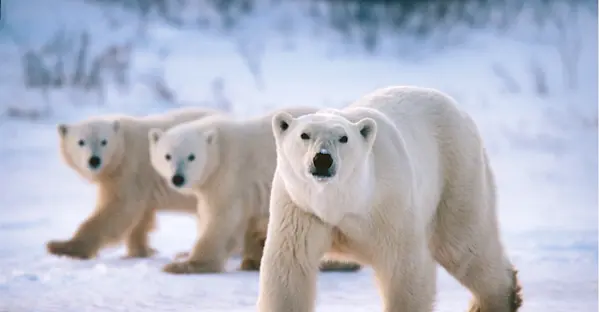
    Polar bears are not currently endangered—20 – 25,000 live in the wild—but the species’ future is far from certain. As a result of climate change, sea ice in the Arctic is melting earlier in the spring and forming later in the autumn, leaving the bears with less time on the ice to hunt for food to build up their fat reserves, and more time fasting on land.

    Studies suggest that two-thirds of the world’s polar bear population could be gone by 2050. And if current warming trends continue unabated, WWF scientists and other researchers believe that polar bears may disappear altogether within 100 years. WWF is intent on preventing this from happening.

    The organization and its partners are working to understand the impact of different threats. In addition to climate change, oil and gas development is a concern. By tracking polar bears, scientists can map a polar bear's range and examine how habitat use may alter over time in response to changes in the sea ice. Over time this information reveals changes and adaptations. WWF also provides funding for polar bear researchers to travel to Russia and the U.S. to share and exchange scientific information about polar bears with other researchers.

    As climate change forces polar bears to spend longer time onshore, they come in contact more often with Arctic communities. WWF is working to make sure these interactions do not end badly for humans or the bears.

    Scientists believe that a natural “safety net” of ice in the High Arctic of Canada and Greenland, ice covering 500,000 square miles, or twice the size of Texas, may persist longer than the ice anywhere else. WWF and its partners are working to preserve this region while simultaneously negotiating with governments, businesses and individuals to reduce greenhouse gas emissions that are causing climate change.

    Thank You

  • Learn About the World of Nature Adventures!
    #test

    Learn About the World of Nature Adventures!

    So you're interested in an extraordinary nature travel experience? Sign up for our eNewsletters – we'll keep you up to date on new trips, special offers & more!
    Required
    Required
    Required

    Thank You

  • Custom Botswana Safaris
    #custombots

    Custom Botswana Safaris

    We offer two options for arranging your private, customized Botswana safari!


    Natural Habitat has been crafting private, custom Botswana safaris for travelers from around the world for nearly three decades. Arranged by our professional adventure staff, which has an average of 14 years’ experience, these safaris range from 6 days to several months in length. Please call us at 1-800-543-8917 to speak with an Adventure Specialist.
    iSafari is a custom safari reference and planning website. Research countries, wildlife, national parks and hundreds of lodges & camps. Build your own personalized safari, create a journal, share it, and send your handcrafted itinerary to us. Nat Hab's safari specialists will then work with you to perfect it!
    Visit iSafari.com

    Thank You

  • Custom Kenya Safaris
    #customken

    Custom Kenya Safaris

    We offer two options for arranging your private, customized Kenya safari!


    Natural Habitat has been crafting private, custom Botswana safaris for travelers from around the world for nearly three decades. Arranged by our professional adventure staff, which has an average of 14 years’ experience, these safaris range from 6 days to several months in length. Please call us at 1-800-543-8917 to speak with an Adventure Specialist.
    iSafari is a custom safari reference and planning website. Research countries, wildlife, national parks and hundreds of lodges & camps. Build your own personalized safari, create a journal, share it, and send your handcrafted itinerary to us. Nat Hab's safari specialists will then work with you to perfect it!
    Visit iSafari.com

    Thank You

  • Custom South Africa Safaris
    #customsa

    Custom South Africa Safaris

    We offer two options for arranging your private, customized South Africa safari!


    Natural Habitat has been crafting private, custom Botswana safaris for travelers from around the world for nearly three decades. Arranged by our professional adventure staff, which has an average of 14 years’ experience, these safaris range from 6 days to several months in length. Please call us at 1-800-543-8917 to speak with an Adventure Specialist.
    iSafari is a custom safari reference and planning website. Research countries, wildlife, national parks and hundreds of lodges & camps. Build your own personalized safari, create a journal, share it, and send your handcrafted itinerary to us. Nat Hab's safari specialists will then work with you to perfect it!
    Visit iSafari.com

    Thank You

  • Custom Tanzania Safaris
    #customtanz

    Custom Tanzania Safaris

    We offer two options for arranging your private, customized Tanzania safari!


    Natural Habitat has been crafting private, custom Botswana safaris for travelers from around the world for nearly three decades. Arranged by our professional adventure staff, which has an average of 14 years’ experience, these safaris range from 6 days to several months in length. Please call us at 1-800-543-8917 to speak with an Adventure Specialist.
    iSafari is a custom safari reference and planning website. Research countries, wildlife, national parks and hundreds of lodges & camps. Build your own personalized safari, create a journal, share it, and send your handcrafted itinerary to us. Nat Hab's safari specialists will then work with you to perfect it!
    Visit iSafari.com

    Thank You

  • Learn More About the World of Nature Adventures!
    #itinerary

    Learn More About the World of Nature Adventures!

    So you’re interested in an extraordinary nature travel experience!? Sign up for our E-Newsletters – we’ll keep you up to date on new trips, special offers & more.

    Thank You

  • Nairobi
    #NHSnairobi

    Nairobi

    Our staff is based out of Nairobi, Kenya.  Welcome to our home base!  Learn more about our local office here.

    Thank You

  • Email Newsletter Sign-Up
    #eNews

    Email Newsletter Sign-Up

    Our weekly e-newsletter highlights exclusive offers, webinars, nature news, travel ideas, photography hints and more. Use the form below to submit your name and email address.

    Thank You

  • Quality Value Guarantee
    #QualityValueGuarantee

    Quality Value Guarantee

    Our exclusive Quality & Value Guarantee gives our travelers the confidence to make their travel plans knowing that they will have their lofty expectations met and that the fees we charge reflect the quality of the experience provided on our trips.

    1) We’ll Deliver on Our Promises:
    We are so confident the quality of our trips will meet your expectations and our Expedition Leaders will provide you with the best possible nature travel experience, that should you be dissatisfied we’ll gladly give you credit towards a future trip. This is, to our knowledge, the best guarantee in the travel industry! Of course, expectations have to match what we've promised, but our standards are so high that we are happy to make this unique and exclusive guarantee.

    2) The Best Trip at the Best Fare:
    We don’t think any other company has comparable trips when you take into account our unique itineraries, stunning locations, small groups, and quality Expedition Leaders. But, should you come across a matching itinerary of our quality offered by a US-based company, even within 30 days AFTER booking with us, we will gladly refund the difference. This guarantee is designed to assure you that even though our trips are of the highest standard you will still not pay more than you have to for the very best nature-based expeditions.

    3) Don’t Worry...We Won’t Cancel!
    While other companies often cancel their trips due to low participation, we guarantee our scheduled departures! This means that we will never cancel a trip because of low enrollment, giving our travelers the unique ability to feel secure that their travel plans are guaranteed. If you've ever experienced the disappointment of having your long-anticipated vacation cancelled unnecessarily at the last minute, you’ll appreciate this important feature. This guarantee applies to all of our regularly scheduled Natural Habitat Adventures and Natural Habitat Photo Tours departures.

    Thank You

  • Eric Rock
    #ericRockBio

    Eric Rock

    Eric’s role as NHA’s Head Naturalist not only allows him to lead a wide range of adventures around the world, but also to play an essential role in improving existing trips and developing new ones. His illustrious career began in Alaska in 1989, where he worked as a field researcher on many of the state’s diverse animal species, including river otters, waterfowl, moose and reindeer. He also served as the Head Naturalist at Kantishna Roadhouse Lodge in Denali National Park. His involvement in many of our North American destinations, including Alaska, British Columbia, Churchill, Canyons and Yosemite, has been integral to their continued success and popularity, and his participation in more exotic adventures, like Bhutan and Papua New Guinea, will undoubtedly serve to enhance travelers’ experiences in those areas as well. When not guiding for Natural Habitat, he works as a freelance documentary photographer. Eric’s knowledge, compassion and deep love of the natural world have a long and lasting impact on those who travel with him.

    Thank You

Page vs. Global : Page light boxes exist on this page only. Global light boxes exist on every page.