

Know Before You Go
Anteater Facts | Peruvian Amazon Wildlife Guide
These insectivores feed solely on termites and ants. An anteater flicks its long tongue in and out of the winding galleries of excavated insect nests. Termites and ants stick to the tongue’s surface and are scraped off inside the anteater’s tiny mouth, which is a toothless tube. Anteaters also ingest bits of sand and soil that aid in grinding up insects during stomach contractions.
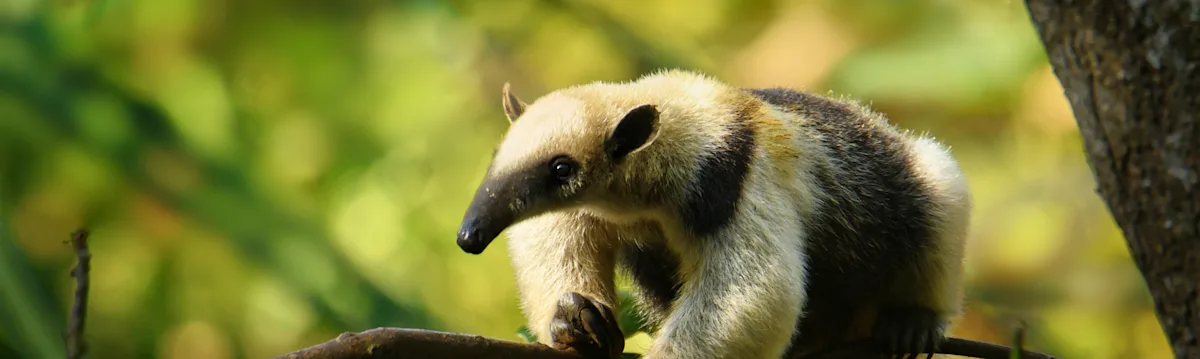
Smaller, tree-dwelling anteaters known as tamanduas are common in lowland and middle-elevation habitats. Also found in the trees is the nocturnal silky anteater, which grasps branches with its semi-prehensile tail. The giant anteater is a rare sight in the Amazon with its enormous bushy tail and unique coat. Also known as the ant bear, it is primarily terrestrial, unlike other anteaters.

