







Itinerary
Our monarch butterfly tour begins in Mexico City, with a transfer from the airport to our downtown hotel in the upscale Polanco district. Gather for a welcome dinner with our Expedition Leader, followed by an orientation to the wonders that lie ahead. One of the world’s most astounding natural events occurs each year in North America, featuring one of its most unlikely creatures: the delicate monarch butterfly. Every autumn, tens of millions of monarchs set flight on a remarkable 3,000-mile journey from the northeastern U.S. and Canada to their ancestral wintering grounds in the volcanic mountains of central Mexico. The location of their breeding grounds remained a mystery until 1977, and how an infant generation of butterflies finds it anew each year is still an enigma. Filled with anticipation, we look forward to tomorrow's journey into the mysterious kingdom of the monarchs.
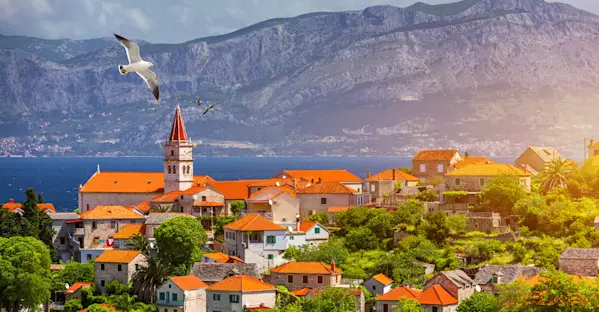
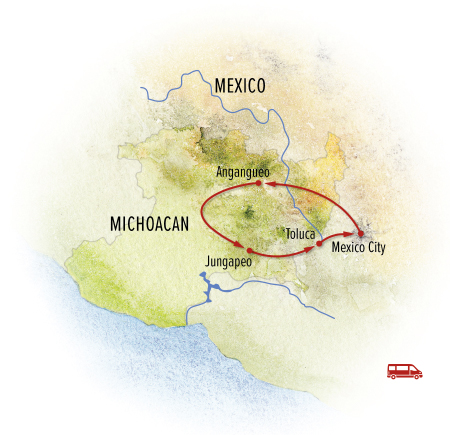
Leaving Mexico City, we drive into the Central Highlands past vistas of the snowcapped Nevado de Toluca volcano, bound for the small mountain town of Angangueo. Once a copper and silver mining town, today it thrives on butterfly tourism and local agriculture. The village is very picturesque, a tumble of pastel buildings set along narrow cobblestone streets that hug the steep mountain slopes. Enjoy a hearty lunch of homemade Mexican fare before making our first foray into the monarch kingdom at El Rosario Butterfly Sanctuary, one of several sanctuaries within the 129,000-acre Monarch Butterfly Biosphere Reserve.
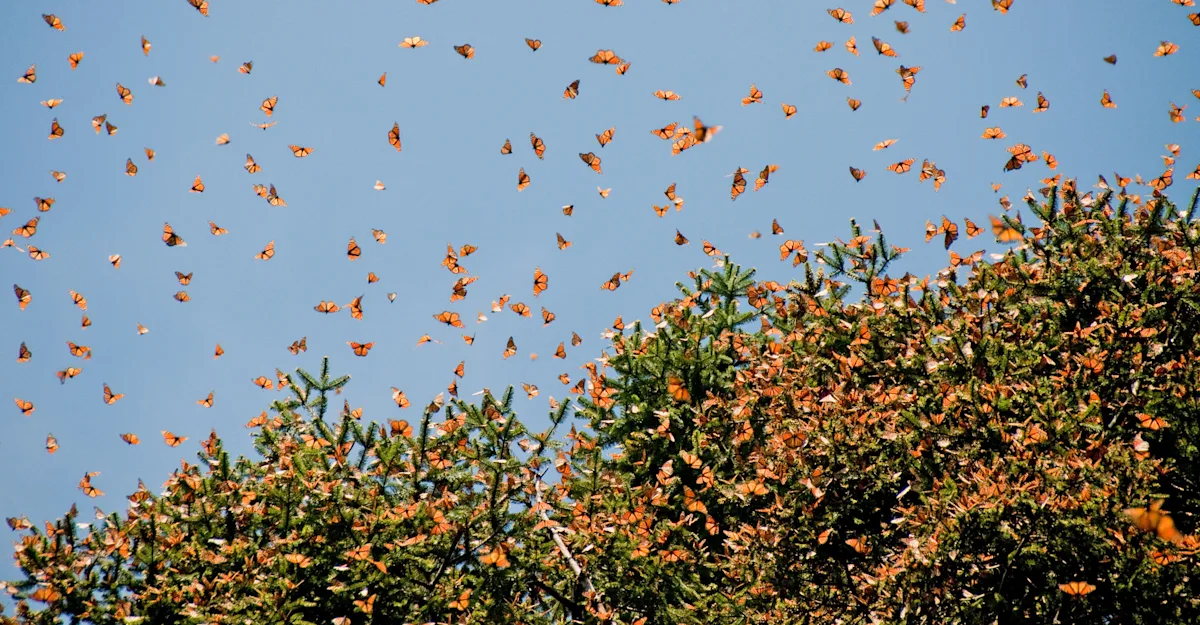
As we drive high into the hills in an open-topped truck, a few butterflies flit about, offering a hint of what awaits ahead. Riding small Mexican horses provided by the local community (and led by your own caballero, so no prior horseback experience is necessary), we ascend the trail through the forest as hummingbirds and red warblers accompany us to the heart of the monarchs' migration site. What we find is an almost surreal sight. At first glance, it looks as though the trees are covered with rusty autumn leaves. But soon we realize we are looking at millions of butterflies, covering the oyamel fir trees in a delicate, quivering blanket of black and orange. Boughs bend beneath their numbers, though each butterfly weighs less than half an ounce. Massed together in a colony, they cling to the trees in huge clusters to survive the cool winter temperatures. When the sun warms their parchment-thin wings, the monarchs take to the sky in a fluttering cloud of orange—so many that the air hums with their movement. Mexico's sanctuaries are the only place in the world where you can actually hear butterflies' wings beating. Their beauty is so ethereal that many Mexicans still hold the Aztec belief that the souls of the dead are reborn as monarchs.
At Chincua Butterfly Sanctuary, another magical encounter with the monarchs awaits. Riding horses along the established trail most of the way, we hike in the last bit to reach the mariposas. Sometimes the stream along the forest floor appears to flow orange, covered completely by butterflies as they descend to drink. As Mexican butterfly conservationist Carlos Gottfried said, "When you stand in a monarch sanctuary, your soul is shaken and your life is changed." During our visit, we hear about efforts to preserve this fragile forest ecosystem that is the key to the monarchs' survival, learning about what WWF–Mexico is doing in conjunction with local communities to protect the butterflies' habitat. Our visit is one way to assist, demonstrating to the local people that ecotourism can be a more viable and sustainable source of economic sustenance than logging. Later this afternoon, there's time to discover more of the village of Angangueo, known for its magnificent murals celebrating the importance of monarchs to the community.
This morning we return to El Rosario to observe the butterflies in the early morning light. In contrast to our previous afternoon visit, we'll witness the monarchs as they awaken for the day, hoping the sun will shine and warm their wings, prompting lively activity. As the butterflies take flight, we may see them float down to drink nectar from flowers or even alight on an arm or shoulder. The largest of the monarch sanctuaries in the region, El Rosario offers the best opportunity to view large numbers of monarchs in one location. After lunch, we travel to Jungapeo to reach our ecolodge and spa, tucked into the mountains of Michoacan. Renowned for its mineral thermal springs and soaking pools, our hotel’s lush grounds are home to myriad species of tropical birds. Spend the afternoon soaking it all in. Take a dip in the legendary springs, scout for birds across the verdant grounds, hike to a nearby waterfall, book a spa treatment, or simply relax.
Awaken to a symphony of tropical birdsong emanating from surrounding trees and bushes as we enjoy a peaceful morning at our eco-resort After lunch we begin our return journey to Mexico City, stopping en route in Toluca, originally a 13th-century indigenous settlement, to visit Cosmovitral Botanical Garden. The building's interior, which houses 500 plant species from Mexico and around the world, glows with the ethereal light of stained-glass panels created by Tolucan artist Leopoldo Flores. Say farewell over a classic Mexican feast before returning to the capital this evening for a late check-in at our hotel.
Our monarch butterfly tour concludes with a transfer to the airport for flights home.