Email Page
Use the form below to email this page to a friend.Ultimate Madagascar Adventure
An In-Depth Exploration of the Planet's Most Unique Biodiversity Hotspot
Day 1: Johannesburg, South Africa Our Madagascar tour begins as you arrive in Johannesburg where we'll gather for a welcome dinner.
Day 2-4: Antananarivo / Pèrinet, Andasibe-Mantadia National Park
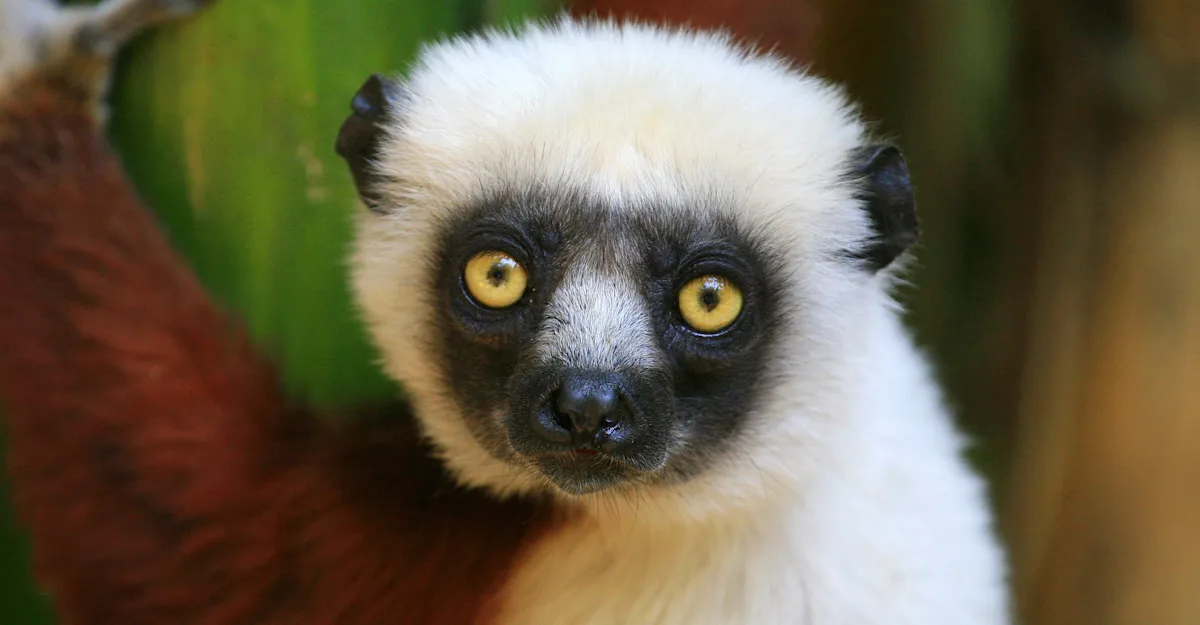
Fly to Antananarivo, Madagascar’s capital, and drive to Pèrinet Reserve in Andasibe-Mantadia National Park. Madagascar has more than 70 species and subspecies of lemur, and the world’s largest, the indri indri, is found here in the montane rainforest. It is easily identified by its arresting call that sounds like loud, eerie wailing. We may also spy diademed sifakas or the palm-sized brown mouse lemurs. The park is a critical component of Madagascar’s efforts to conserve its biodiversity. Besides lemurs, this threatened biome contains a thousand different orchid species, a plethora of medicinal plants, and a neon spectrum of chameleons. One evening we'll take a night walk to spot nocturnal creatures. We also visit Lemur Island, a small sanctuary where orphaned lemurs are thriving. Four species, including the bamboo lemur, black & white ruffed lemur, brown lemur and diademed sifaka have become habituated to visitors, allowing for close-up encounters and outstanding photo opportunities.
Days 5 & 6: Ranomafana National Park
We take Take a chartered flight to Fianarantsoa, then drive to Ranomafana National Park, created in 1991 following the discovery of the golden bamboo lemur. It has since served as a model for subsequent parks and reserves in the country and abroad. Comprised of steep, mountainous terrain, the range of altitudes covered in the park encompass habitats ranging from lowland rainforest to cloud forest to high plateau forest. Verdant cliffs and waterfalls abound in this rugged wilderness. The park is home to 12 species of lemur, various chameleons and other reptiles, the fascinating but rarely seen fossa, and more than a hundred bird species.
Days 7 & 8: Isalo
Our flight to southern Madagascar takes us into a land in stark contrast with the lush northeast. This is an arid zone of odd spiny forests and rocky canyons, where otherworldly trees pepper the landscape including massive baobabs, spindly didiera and the swollen-footed, bottle-shaped pachypodia. We drive south to look for ring-tailed lemurs among the cacti in Isalo National Park and cool off in secret swimming holes set deep in ancient canyons.
Day 9: Zombitse & Vohibasia National Parks / Ifaty
Drive to Tulear today, then on to Zombitse and Vohibasia national parks, offering some of Madagascar’s finest birdwatching. In the dry forest we look for the rare Appert’s greenbul, iridescent souimanga sunbird and, always, lemurs. Continuing to Ifaty, we check in to our lodge before exploring nearby Reniala Reserve, one of the world’s most endangered biomes. Many resident species are found nowhere else on earth, including incredibly rare birds and octopus trees. In Ifaty we stay at Le Paradisier, a collection of thatched bungalows tucked along a beach on the Mozambique Channel.
Day 10: Ifaty / Antananarivo
After another early morning visit to Reniala, drive to Tulear and fly back to Antananarivo. We stay at Palissandre Hotel & Spa, situated on a hillside in the heart of the city.
Days 11-13: Anjajavy
Board our chartered flight to the fishing village of Anjajavy. Seaside Anjajavy Hotel is our base for exploring the dry deciduous Anjajavy Forest in northwest Madagascar. This remote area, less disturbed than other regions of Madagascar, boasts a striking number of endemic species. We’ll look for Coquerel’s sifaka and the common brown lemur during guided forest walks, as well as a wide variety of birds and reptiles. Our lodge has access to a private white-sand beach and excellent snorkeling opportunities.
Day 14: Antananarivo / Johannesburg
Enjoy a final morning at the lodge, then fly to Johannesburg for connecting flights homeward.


(800) 543-8917 for Availability
Print Page
Every 1st & 3rd Tuesday of the month, starting on February 5th! 

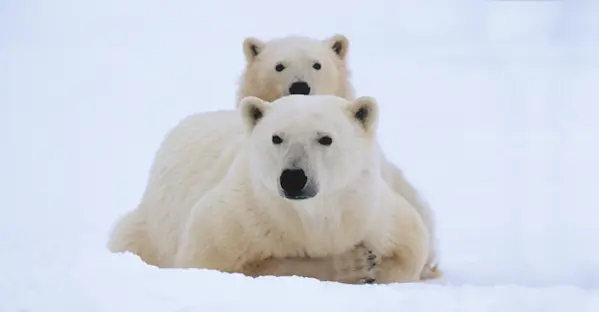
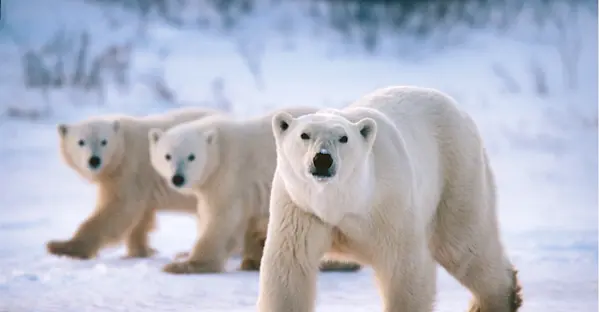
Studies suggest that two-thirds of the world’s polar bear population could be gone by 2050. And if current warming trends continue unabated, WWF scientists and other researchers believe that polar bears may disappear altogether within 100 years. WWF is intent on preventing this from happening.
Our exclusive Quality & Value Guarantee gives our travelers the confidence to make their travel plans knowing that they will have their lofty expectations met and that the fees we charge reflect the quality of the experience provided on our trips.