


Email Page
Use the form below to email this page to a friend.The Magic of Machu Picchu & Easter Island
Ponder Myth, Nature and Mystery Among the Ruins of Two Enchanting Cultures
Day 1: Lima, PeruArrive in Lima and transfer to our hotel near the airport.
Day 2: Cusco
Fly this morning to Cusco, heart of the once-grand Inca Empire. Its name, from the indigenous Quechua word “qosq’o,” means “navel of the earth.” Set in a high Andean valley, gilded Cusco thrived until Spanish conquistadors destroyed the Inca civilization in their 16th-century colonial quest. Our accommodations at the ornate Hotel Libertador, a restored colonial palace, evoke the material splendor of that era. We take a walking tour of the city this afternoon.
Day 3: Sacred Valley of the Incas
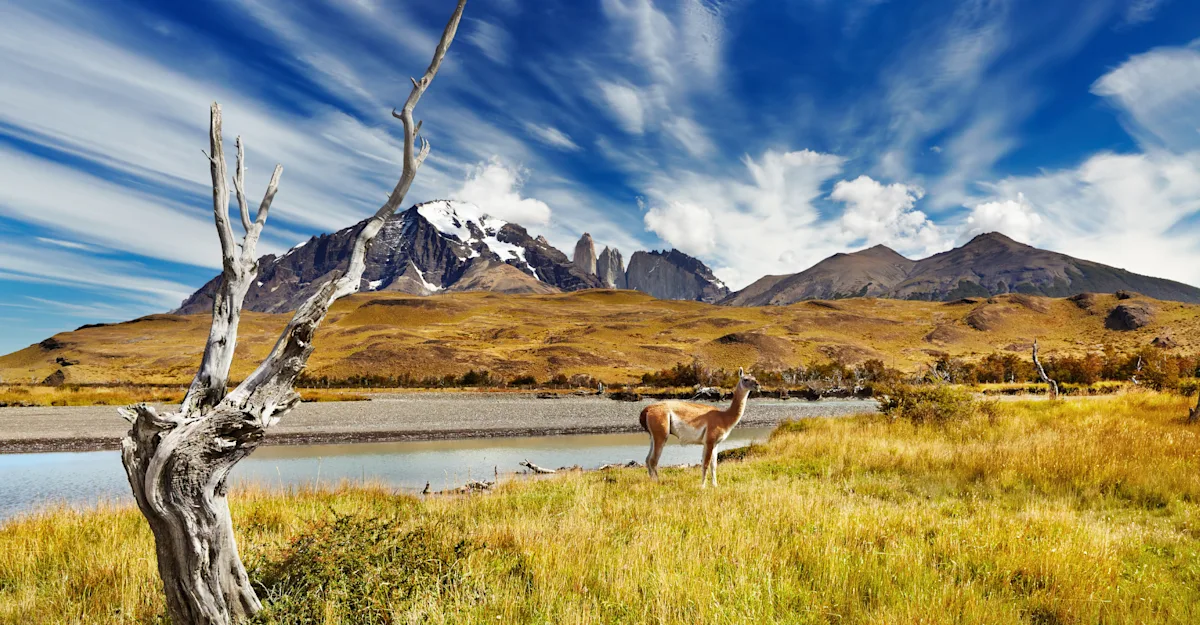
The treasures of the Sacred Valley unfold today as we travel along the Urubamba River past farms, villages and Incan architectural ruins. At Pisac, we visit the famous market, where the local Quechua Indians dressed in vivid attire sell their handicrafts. Bright embroidery and woolen garments are favorite purchases. We see llamas and alpacas at Purikuq, a local weavers cooperative set up to support three local communities.
Day 4: Maras & Moray
Visit the salt mines of Maras today, 3,000 small pools mined by the Incas centuries ago and still worked by locals today. We’ll also visit Moray, an Inca site more than 500 years old where giant natural sinkholes have been converted into terraced farming areas. Some archaeologists believe these served as an agricultural experiment where Inca cultivators took advantage of microclimates provided by different elevations.
Day 5: Machu Picchu
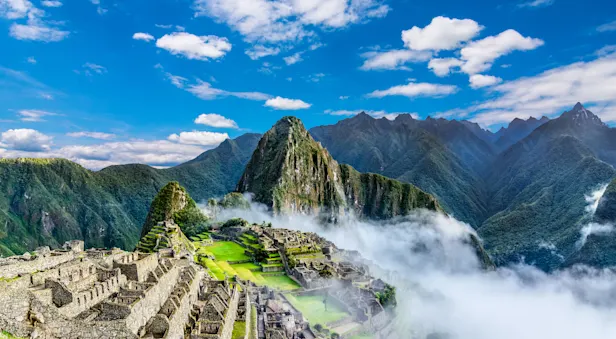
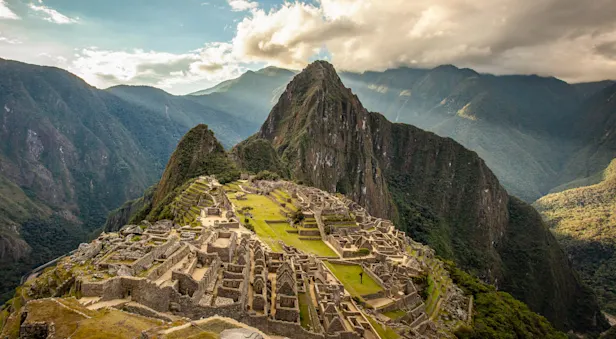
This morning we board the train at Ollantaytambo for a 1-1/2-hour journey along the Urubamba River to Aguas Calientes, where we disembark and continue a short distance by bus to Machu Picchu. The ruins of the mystical city rise into the sky, surrounded by green mountain ramparts draped in jungle. We immerse ourselves in the lore and legend of one of the world’s most astounding archaeological sites. Our Expedition Leader interprets all we see as we explore the labyrinth of granite houses, temples, walls and cisterns. Llamas wander among terraced steps that once grew maize and potatoes for some 1,200 inhabitants. Archaeologists believe Machu Picchu may have been a royal estate and religious retreat, based on its sacred geography and astronomical orientation. Important ceremonies were conducted here, including a winter solstice rite at which a priest would “tie the sun” to a hitching post stone to prevent it from disappearing altogether. Leaving the ruins behind, we overnight in private casitas at Inkaterra Machu Picchu Hotel, a luxury retreat on the river where 300 species of native orchids bloom.
Day 6: Machu Picchu & Cusco
The morning is free to return to the ruins, explore the trails and gardens around the hotel, or soak in the hot springs. This afternoon we return to Cusco.
Day 7: Cusco / Lima / Fly to Easter Island
Fly to Lima, where we enjoy lunch and a tour of Museo Larco, home to an impressive collection of Pre-Columbian art. We'll have time to relax at our hotel near the airport before our overnight flight to Santiago, Chile, continuing on to Easter Island. The island’s remoteness, stunning geography and rich culture led UNESCO to declare Rapa Nui a world heritage site in 1995. Even though Thor Heyerdahl's Kon Tiki expedition theorized the island was settled from South America, it's widely believed that Easter Island was colonized by Polynesians from the Marquesas island or Mangareva, around 4th or 5th century.
Day 8: Easter Island: Ahu Tepeu / Ahu Tahai / Hanga Roa
We arrive at Easter Island around midday and transfer to our hotel for lunch. This afternoon our immersion into Rapa Nui mystery and legend begins as we encounter the stone monoliths, called moai, for which Easter Island is famous. The majority of the statues, believed to represent the living faces of deified ancestors, were carved between 1250 and 1500 and weigh up to 80 tons. The ceremonial shrines with rectangular stone platforms on which the moai sit are known as ahu, meaning “sacred altar.” The first such site we visit is Ahu Akivi, one of the later constructions dating to the mid-15th century. Unlike the other sites, Ahu Akivi lies inland and faces the ocean, with a commanding view of the western part of the island. Its seven moai stand about 14 feet tall and weigh approximately 12 metric tons each. The statues were raised and the site restored in 1960 by famed American archaeologist William Mulloy and his Chilean colleague Gonzalo Figueroa García-Huidobro. Then, we’ll walk along a rocky coastal trail that borders steep cliffs, with sweeping views of the Pacific, to reach more moai archaeological sites including Ahu Tepeu and Ahu Tahai. We’ll also see the island of Motu Tautara and spectacular Dos Ventanas cave, part of the extensive system of caves along this coastline. We return the short distance to our hotel by van.
Day 9: Tongariki / Coastal Walk / Anakena Beach
More of Easter Island's mysteries are unveiled today at Tongariki, where we view a long line of 15 moai. Continue to Mahatua, the starting point for our walk along the island’s north coast. We view Maunga Parehe Mountain and the fishing village of La Perouse, finally arriving at Ovahe Beach. We return by van to our hotel for lunch, then head to Anakena Beach for some swimming and snorkeling. Anakena was the home of Easter Island's paramount chiefs and the legendary landing place of Hota Matua, the island's mythical founder, who arrived by canoe. This evening, enjoy another side of Rapa Nui’s traditional culture at a Polynesian dance show.
Day 10: Ahu Tahira / Tangata Manu
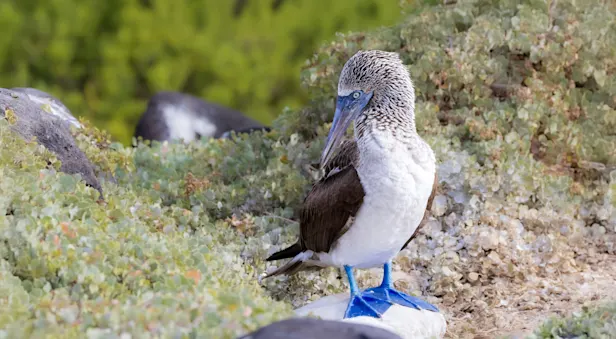
This morning, choose between a snorkeling excursion, where you’ll see schools of colorful fish and sea turtles, or a boat ride. After lunch we view the amazing fitted stonework at Ahu Tahira, then drive to Rano Kau volcano and ascend a trail to the ceremonial village of Orongo, perched on the crater rim. The views of the ocean and crater interior are as amazing as the site’s history: until the mid-19th century, islanders performed sacred “birdman rituals” here. Each spring a chosen member of each tribe raced to retrieve a manutara egg, scrambling down a sheer cliff face, swimming across shark-infested water, stealing an egg, and doing the same trip in reverse. High on the cliffs, we drink in panoramic views of the offshore islets where boobies, terns and manutara have nested for centuries.
Day 11: Ara O Te Moai / Rano Raraku / Fly to Lima
Our exploration continues today at Rano Raraku volcano, whose border is ringed with moai leading toward a quarry inside the vast crater rim. Ninety percent of the moai were hand-carved here from volcanic tuff, before relocation across the island—some up to 10 miles away. To date, 887 moai have been identified; nearly 400 remain inside the crater in varying stages of completion, silent witnesses to the mystery that suddenly halted their construction. Back at the lodge, we enjoy a special farewell lunch together before departing on our return flight for Lima.
Day 12: Lima / Depart
After breakfast, transfer to the airport for departing flights. If your schedule permits, an optional city tour is available.


(800) 543-8917 for Availability
Print Page
Every 1st & 3rd Tuesday of the month, starting on February 5th! 

Studies suggest that two-thirds of the world’s polar bear population could be gone by 2050. And if current warming trends continue unabated, WWF scientists and other researchers believe that polar bears may disappear altogether within 100 years. WWF is intent on preventing this from happening.
Our exclusive Quality & Value Guarantee gives our travelers the confidence to make their travel plans knowing that they will have their lofty expectations met and that the fees we charge reflect the quality of the experience provided on our trips.